Patent Trademark Law With Ai In King
Description



Get your form ready online
Our built-in tools help you complete, sign, share, and store your documents in one place.
Make edits, fill in missing information, and update formatting in US Legal Forms—just like you would in MS Word.
Download a copy, print it, send it by email, or mail it via USPS—whatever works best for your next step.
Sign and collect signatures with our SignNow integration. Send to multiple recipients, set reminders, and more. Go Premium to unlock E-Sign.
If this form requires notarization, complete it online through a secure video call—no need to meet a notary in person or wait for an appointment.
We protect your documents and personal data by following strict security and privacy standards.

Make edits, fill in missing information, and update formatting in US Legal Forms—just like you would in MS Word.

Download a copy, print it, send it by email, or mail it via USPS—whatever works best for your next step.

Sign and collect signatures with our SignNow integration. Send to multiple recipients, set reminders, and more. Go Premium to unlock E-Sign.

If this form requires notarization, complete it online through a secure video call—no need to meet a notary in person or wait for an appointment.

We protect your documents and personal data by following strict security and privacy standards.
Looking for another form?





Form popularity
FAQ
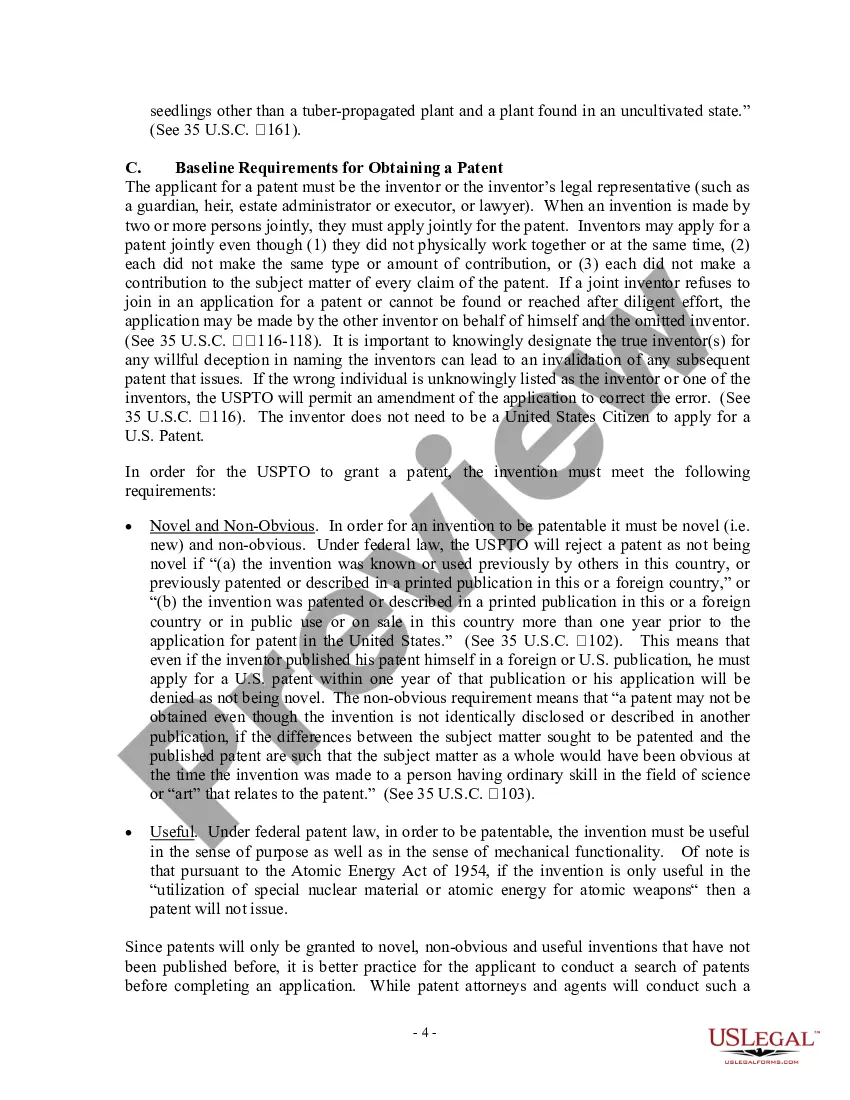
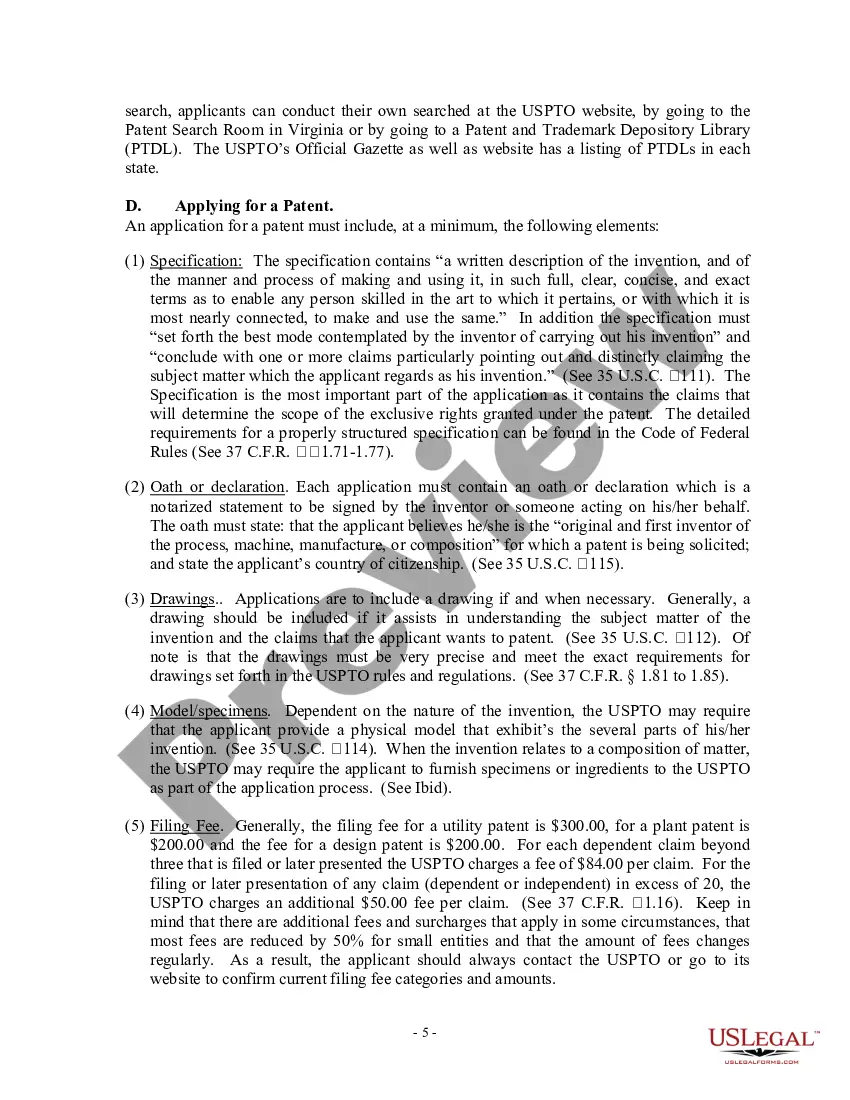
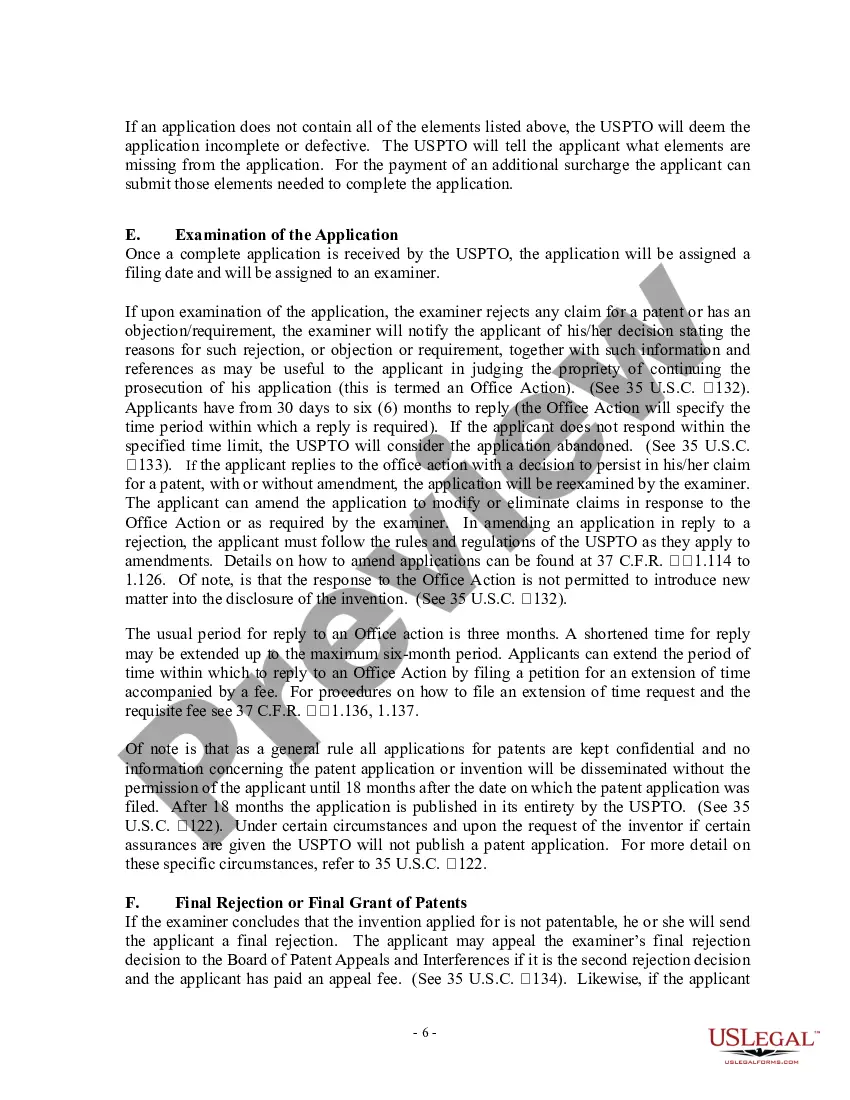
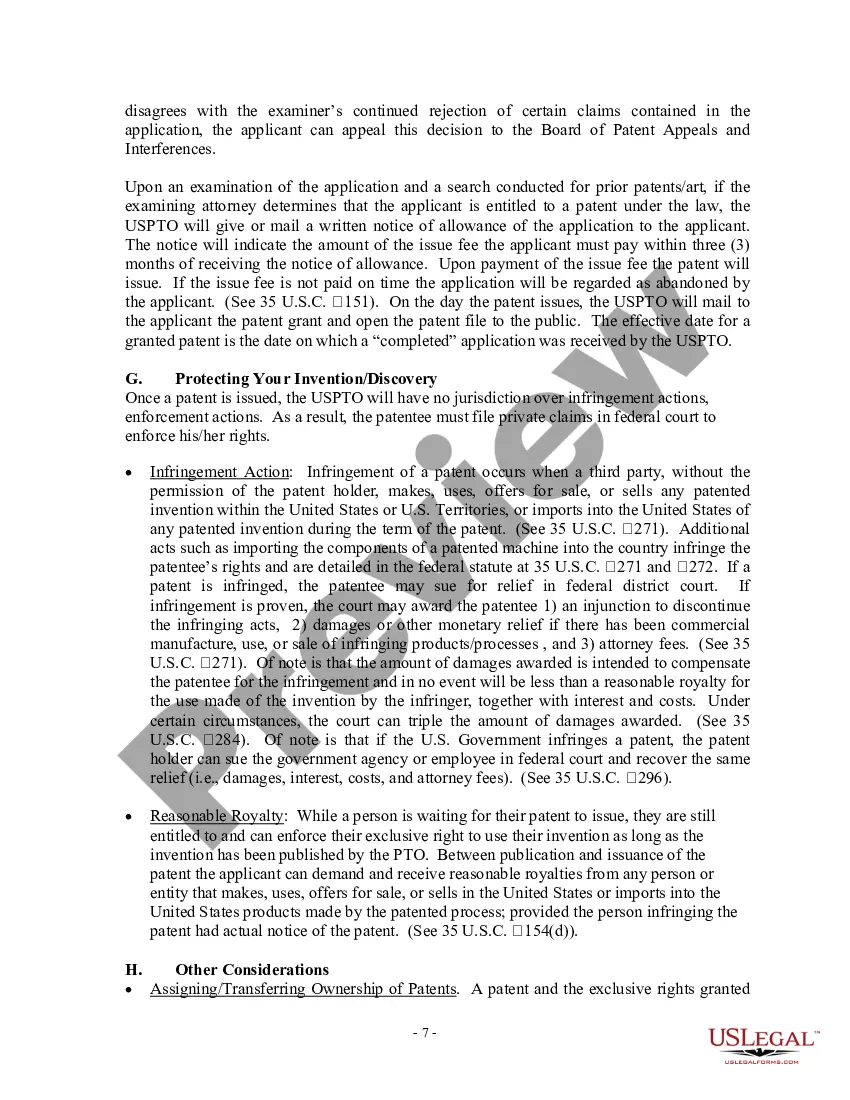
The complex network of trademarks and the rapidly developing field of artificial intelligence (AI) present a symphony of opportunities and difficulties. This convergence creates a confusing environment where the growing powers of AI collide with conventional ideas of trademarks.
The future of patent law is poised to be a harmonious blend of human expertise and AI efficiency. In this future, AI does not replace attorneys but rather complements their work. Platforms like Drafting LLM, with their advanced AI capabilities, are set to become indispensable assistants to patent attorneys.
While AI systems and other non-natural persons cannot be listed as inventors on patent applications or patents, the use of an AI system by a natural person(s) does not preclude a natural person(s) from qualifying as an inventor (or joint inventors) if the natural person(s) significantly contributed to the claimed ...
Patentability? AI inventions often fall under the categories of software, algorithms, or machine learning models. In these cases, the patent offices typically assess whether the AI system offers a tangible technological improvement over existing processes or tools.
