Patent For Application In Fairfax
Description



Get your form ready online
Our built-in tools help you complete, sign, share, and store your documents in one place.
Make edits, fill in missing information, and update formatting in US Legal Forms—just like you would in MS Word.
Download a copy, print it, send it by email, or mail it via USPS—whatever works best for your next step.
Sign and collect signatures with our SignNow integration. Send to multiple recipients, set reminders, and more. Go Premium to unlock E-Sign.
If this form requires notarization, complete it online through a secure video call—no need to meet a notary in person or wait for an appointment.
We protect your documents and personal data by following strict security and privacy standards.

Make edits, fill in missing information, and update formatting in US Legal Forms—just like you would in MS Word.

Download a copy, print it, send it by email, or mail it via USPS—whatever works best for your next step.

Sign and collect signatures with our SignNow integration. Send to multiple recipients, set reminders, and more. Go Premium to unlock E-Sign.

If this form requires notarization, complete it online through a secure video call—no need to meet a notary in person or wait for an appointment.

We protect your documents and personal data by following strict security and privacy standards.
Looking for another form?









Form popularity
FAQ
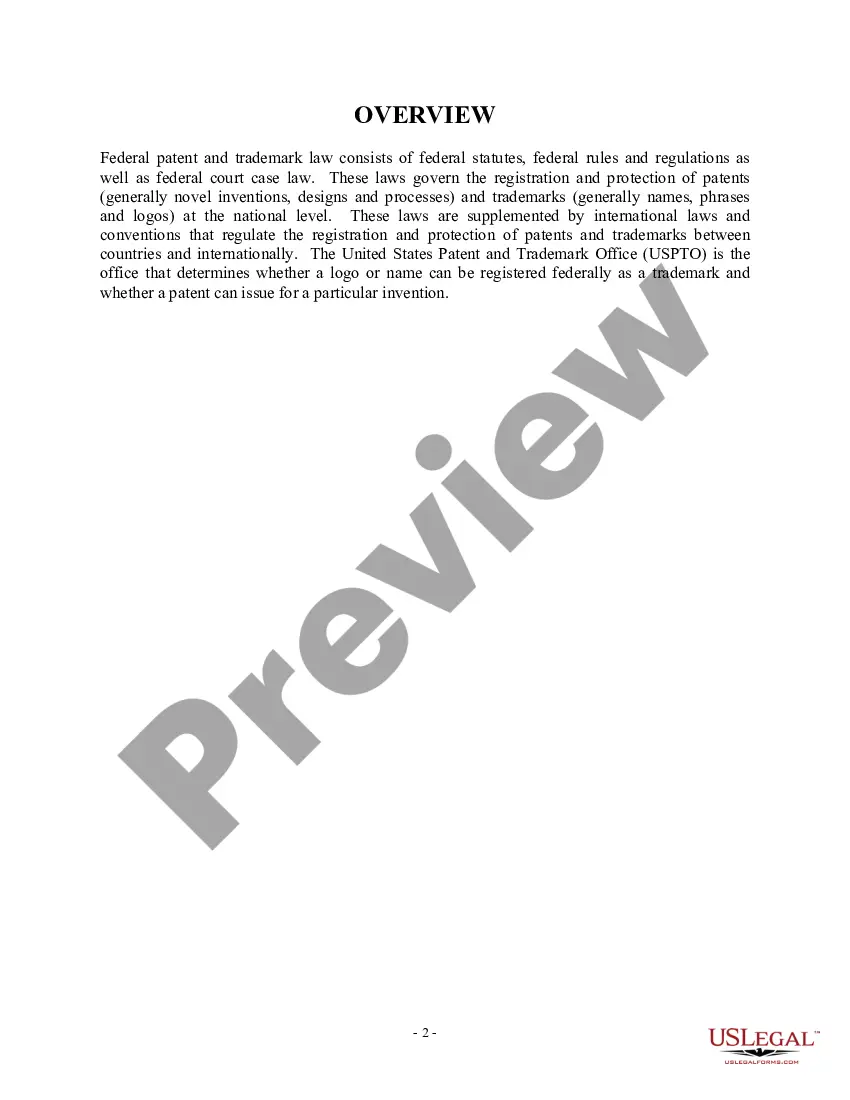
Patent Registration or Grant in India is provided by the Indian Patent Office (IPO) for the Invention. Once the Patent is registered, it gives a monopoly to the inventor for his/her Invention for a prescribed period of time (Normally twenty years from the Patent filing date).
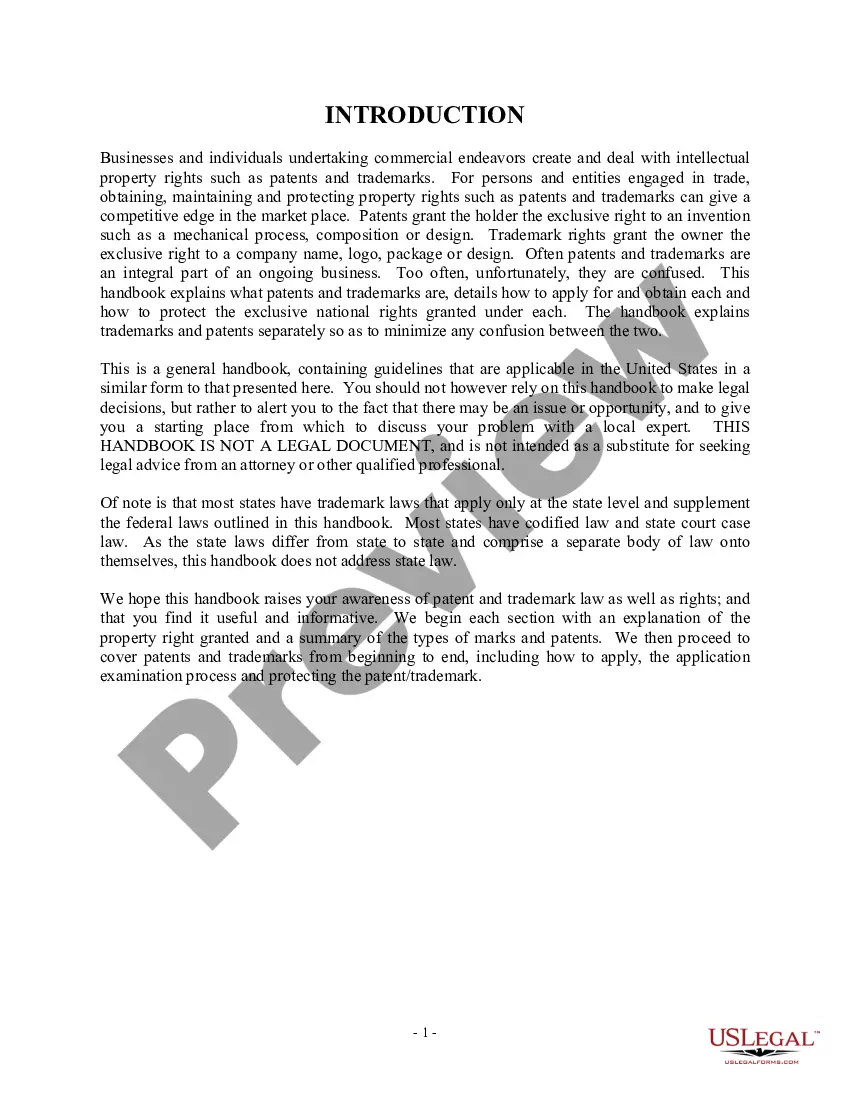
The United States requires that a patent application for any invention made in the United States be either filed first in the USPTO or that the subject matter be submitted for a security review and issued a foreign filing license before filing in any other patent office.
Which offices received the most patent applications? China. 47.2% US. 16.8% Japan. 8.4% Republic of Korea. 6.8% EPO 5.6% 6.9%
This Act suggests that either the inventor, his assignee, or one of his legal representatives (in case the inventor is deceased) can apply for one in the head office of the Indian Patent Office or the branches of the office, depending on the jurisdiction of the applicant.
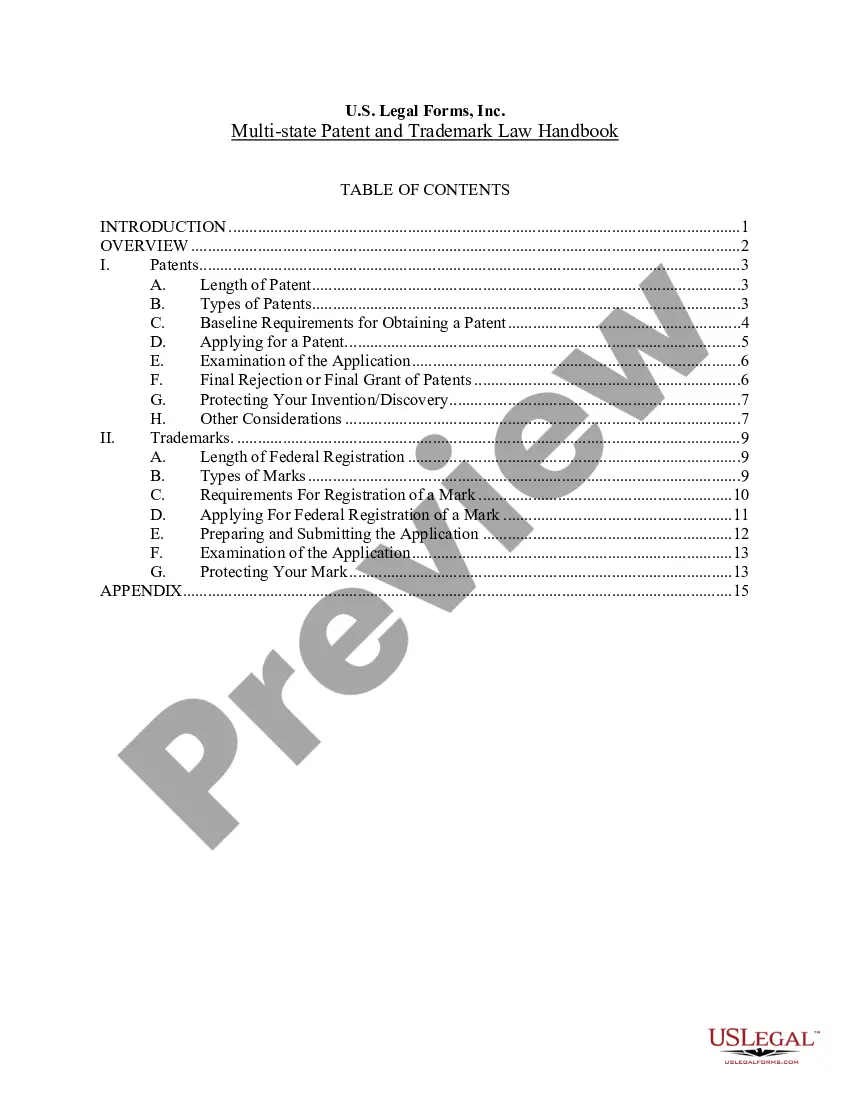
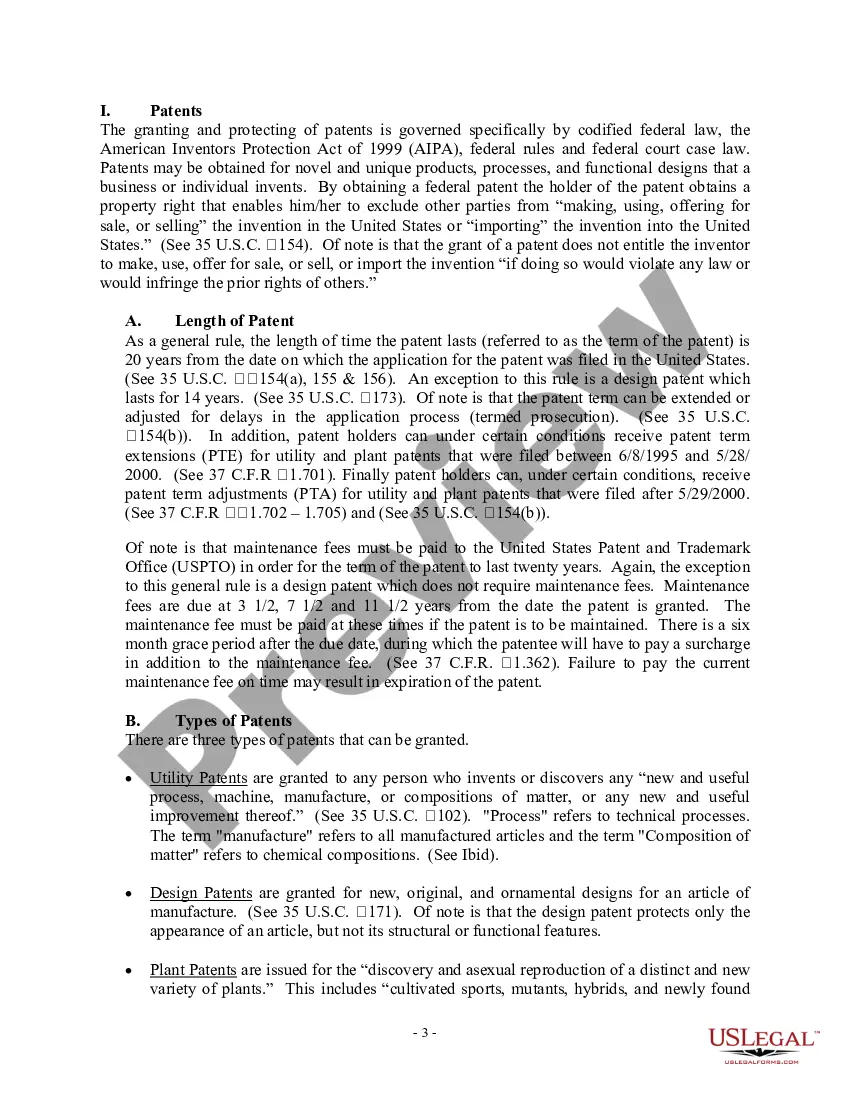
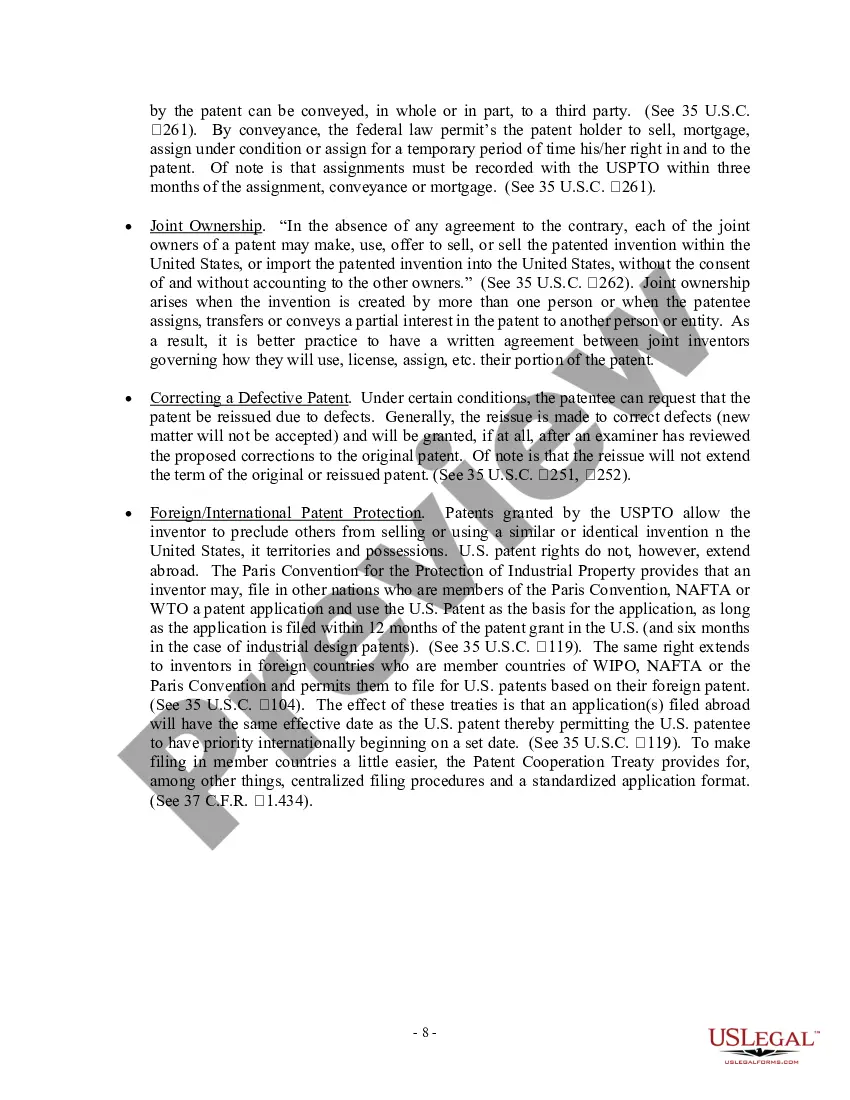
The five primary requirements for patentability are: (1) patentable subject matter; (2) utility; (3) novelty; (4) non-obviousness; and (5) enablement. Like trademarks, patents are territorial, meaning they are enforceable in a specific geographic area.
If you want to protect your software through the patent system, you must submit a patent application. Your application must describe your invention in detail (the specification), should include drawings, and must truthfully name the inventors of the invention.
A patent application often includes the following primary sections: Invention Title. The title's objective is to provide a clear understanding of the invention or idea. Prior Art: Context and Novelty. Invention Summary. Drawings and Descriptions. Detailed Description. Claims. Scope. Characteristics.
Yes. You can patent your idea for an app. Are you bothered that someone might take it away from you and use it before you could apply it?
Here are eight ways you can protect your app idea legally. Copyright your app. Register the trademark. Apply for a patent. Have everyone sign a non-disclosure agreement. Ask those involved to sign a non-compete agreement. Choose a reliable development partner. Document everything. Pursue cases of infringement.
