Patent Rights Examples In Chicago

State:
Multi-State
City:
Chicago
Control #:
US-003HB
Format:
Word; 
PDF; 
Rich Text
Instant download

Description

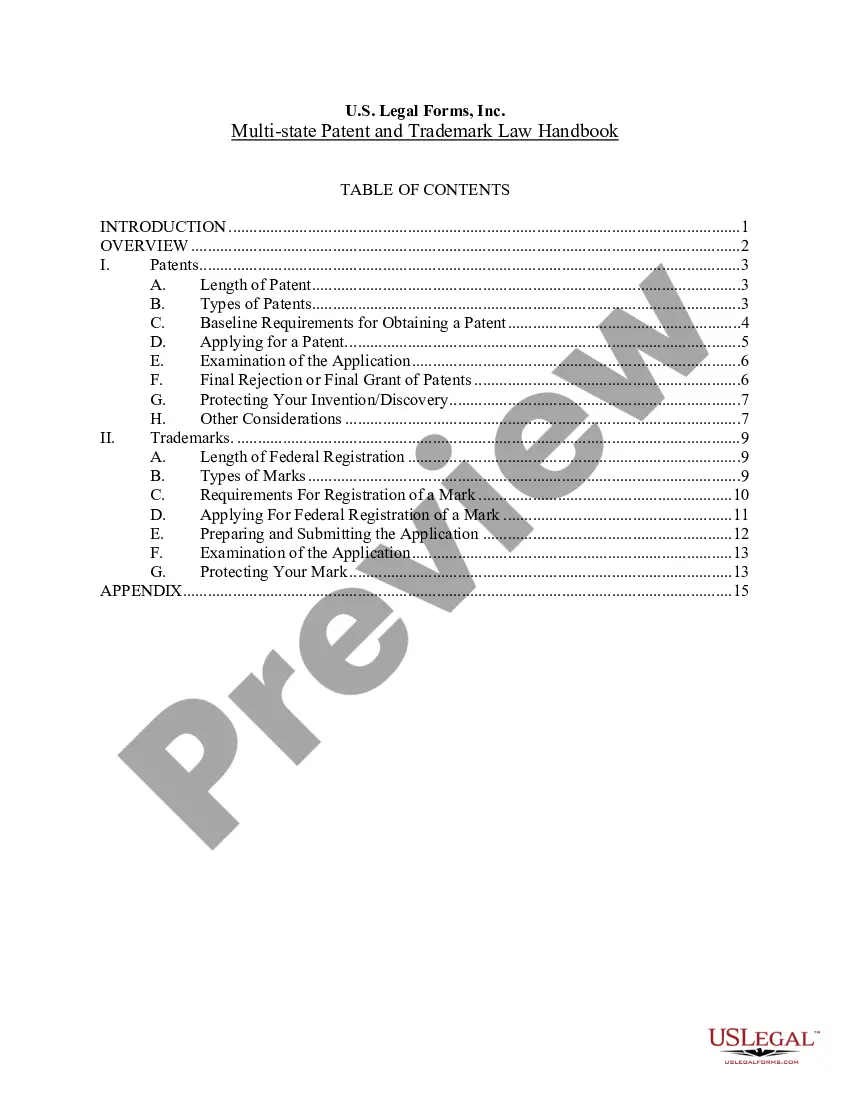
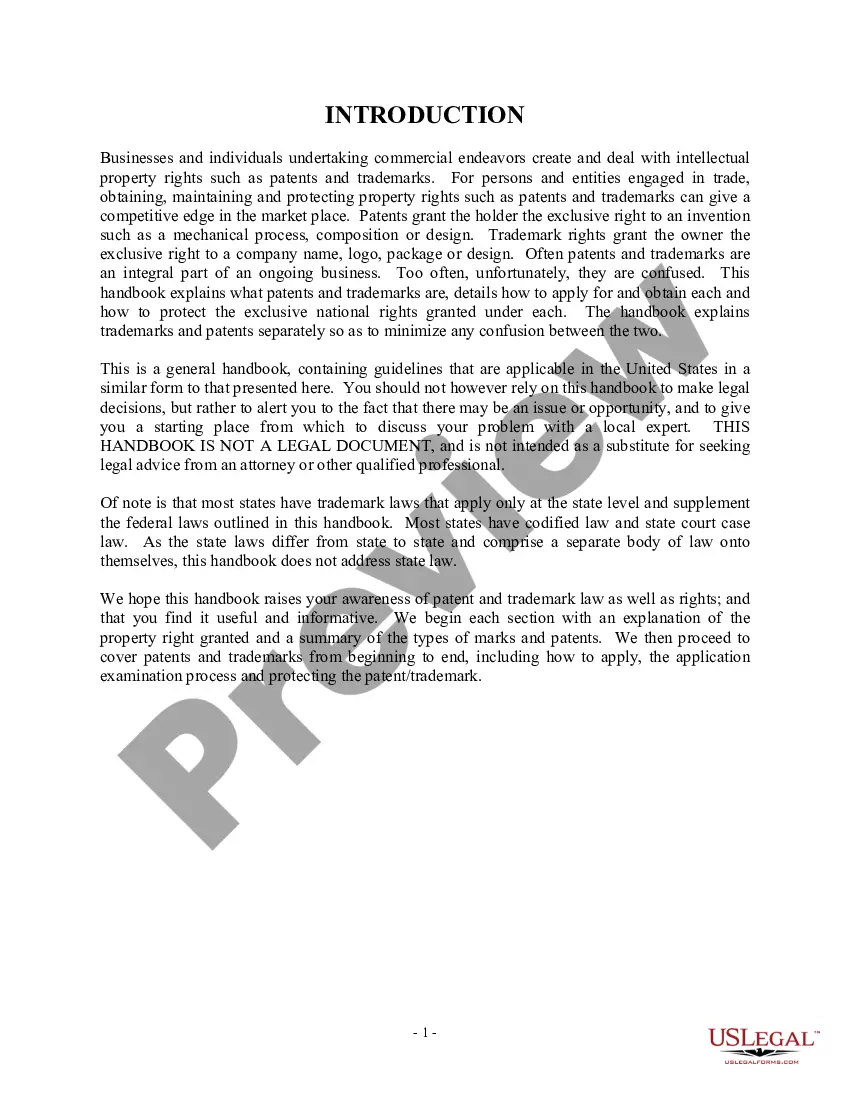
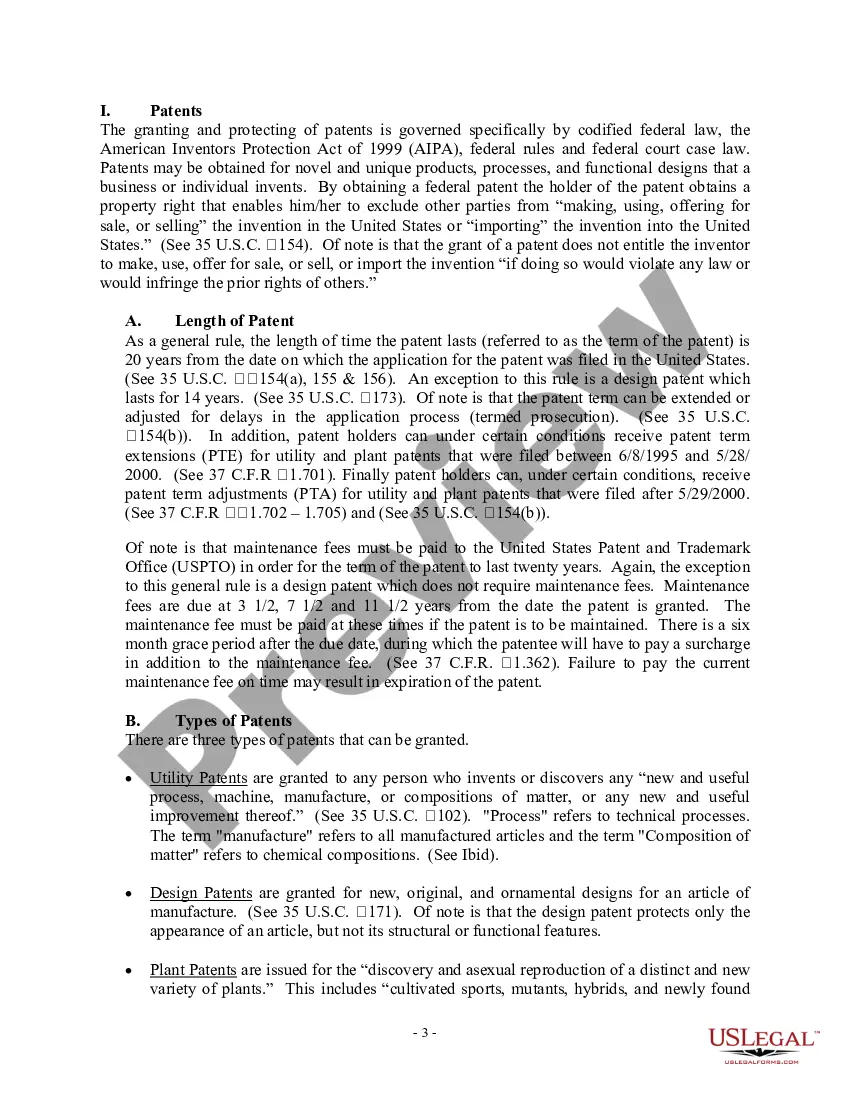
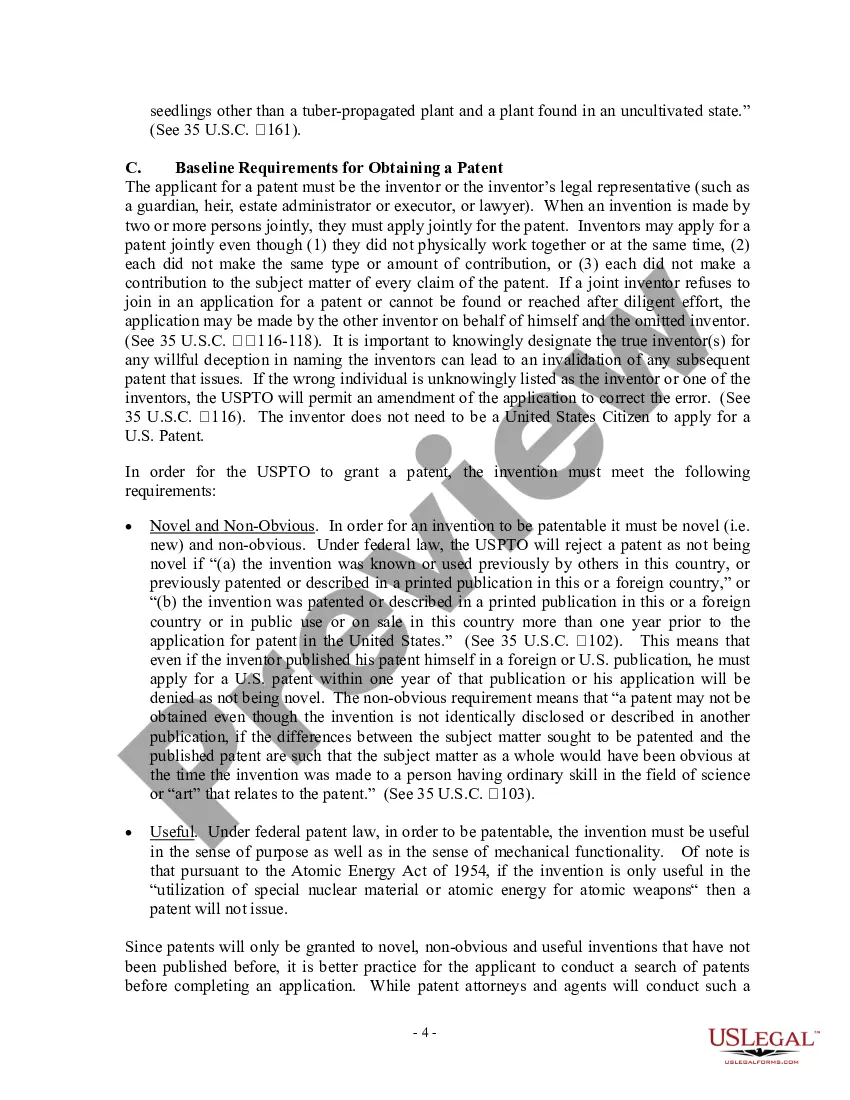
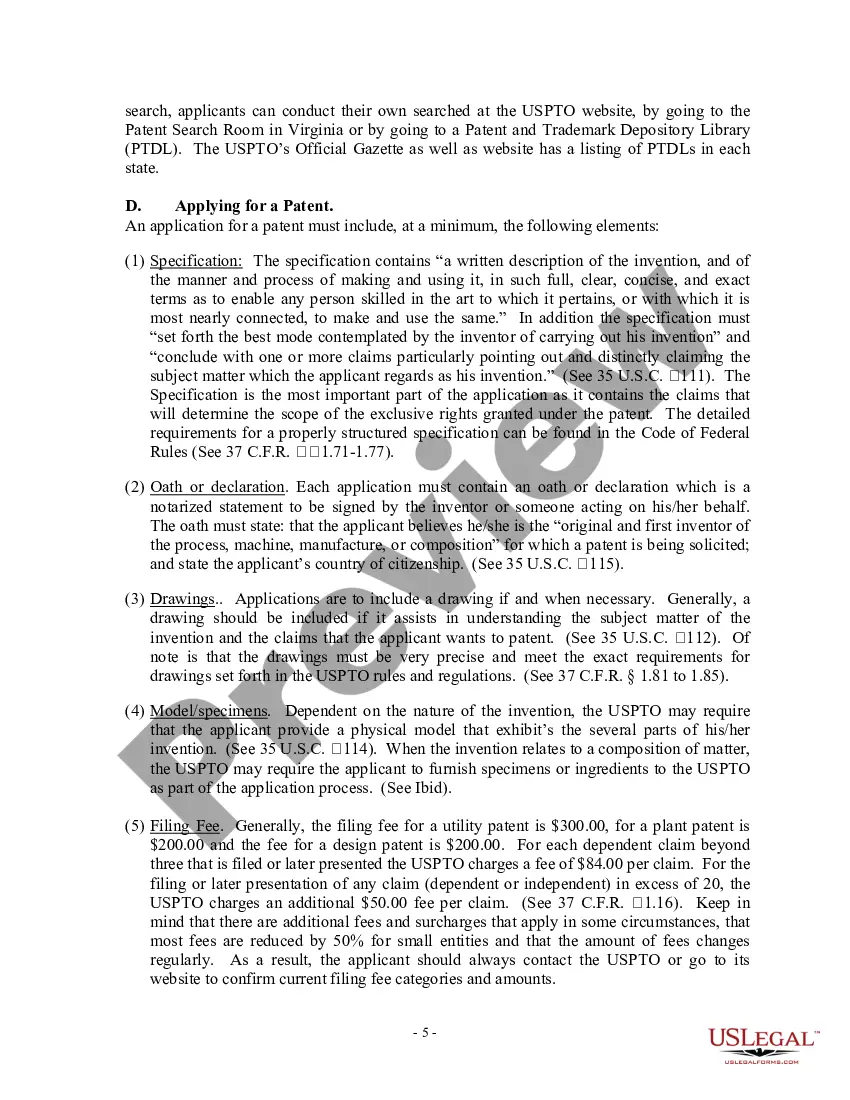
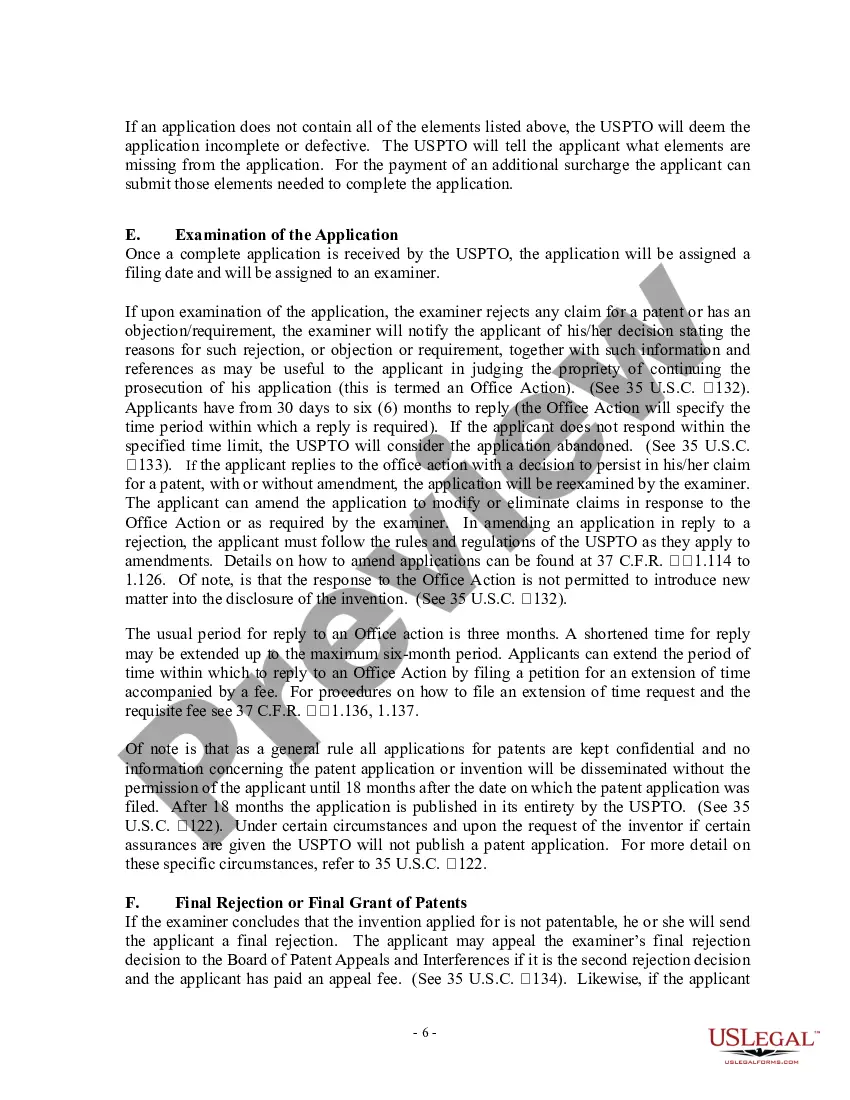
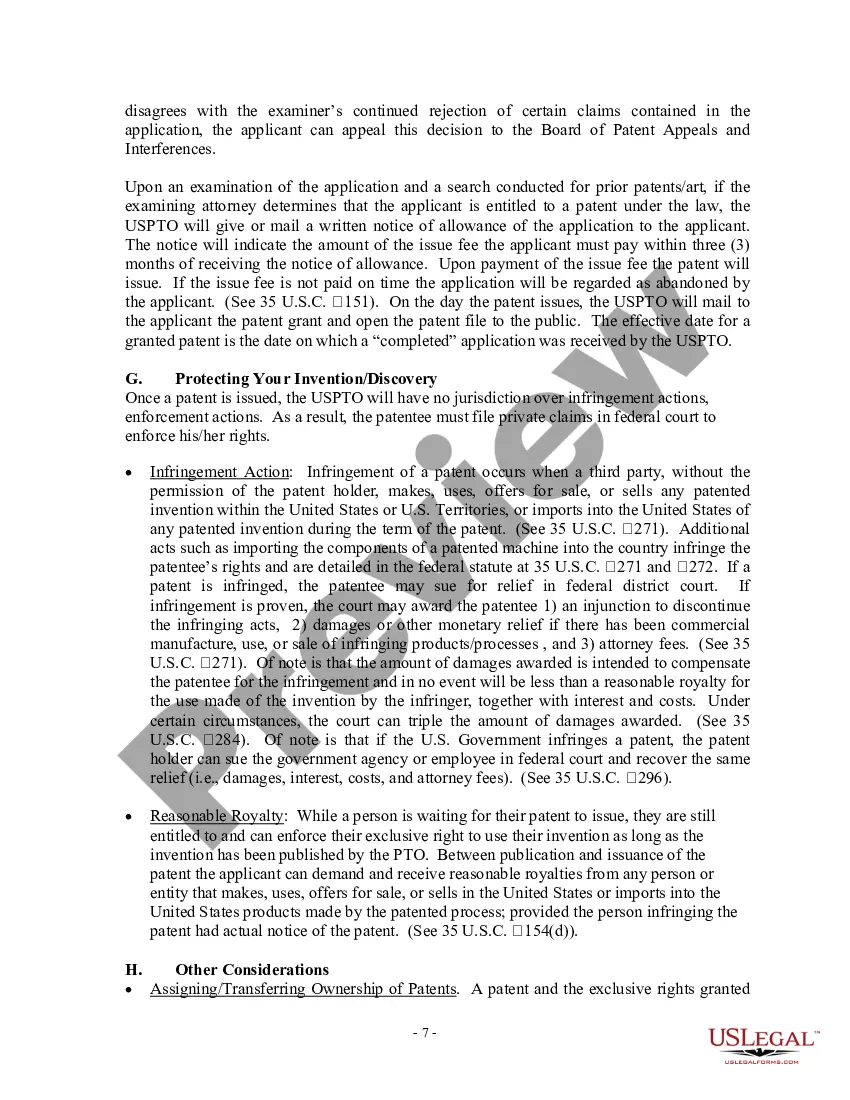
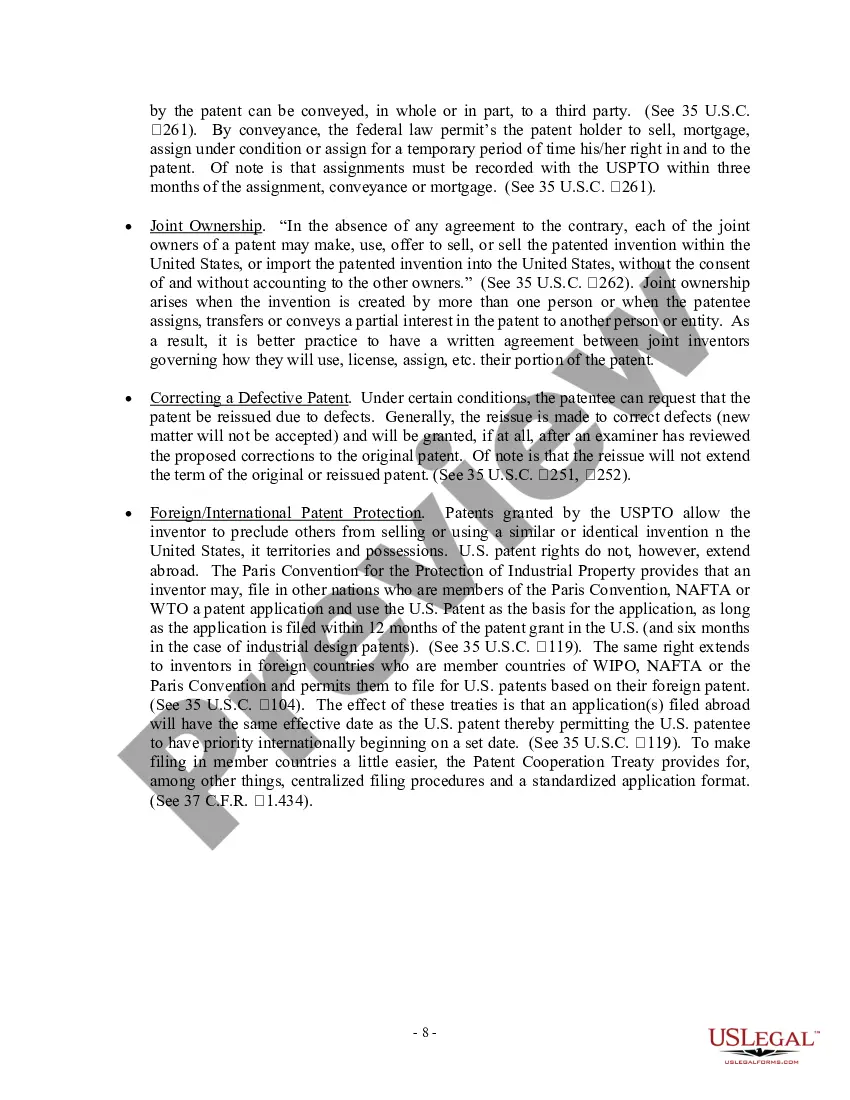
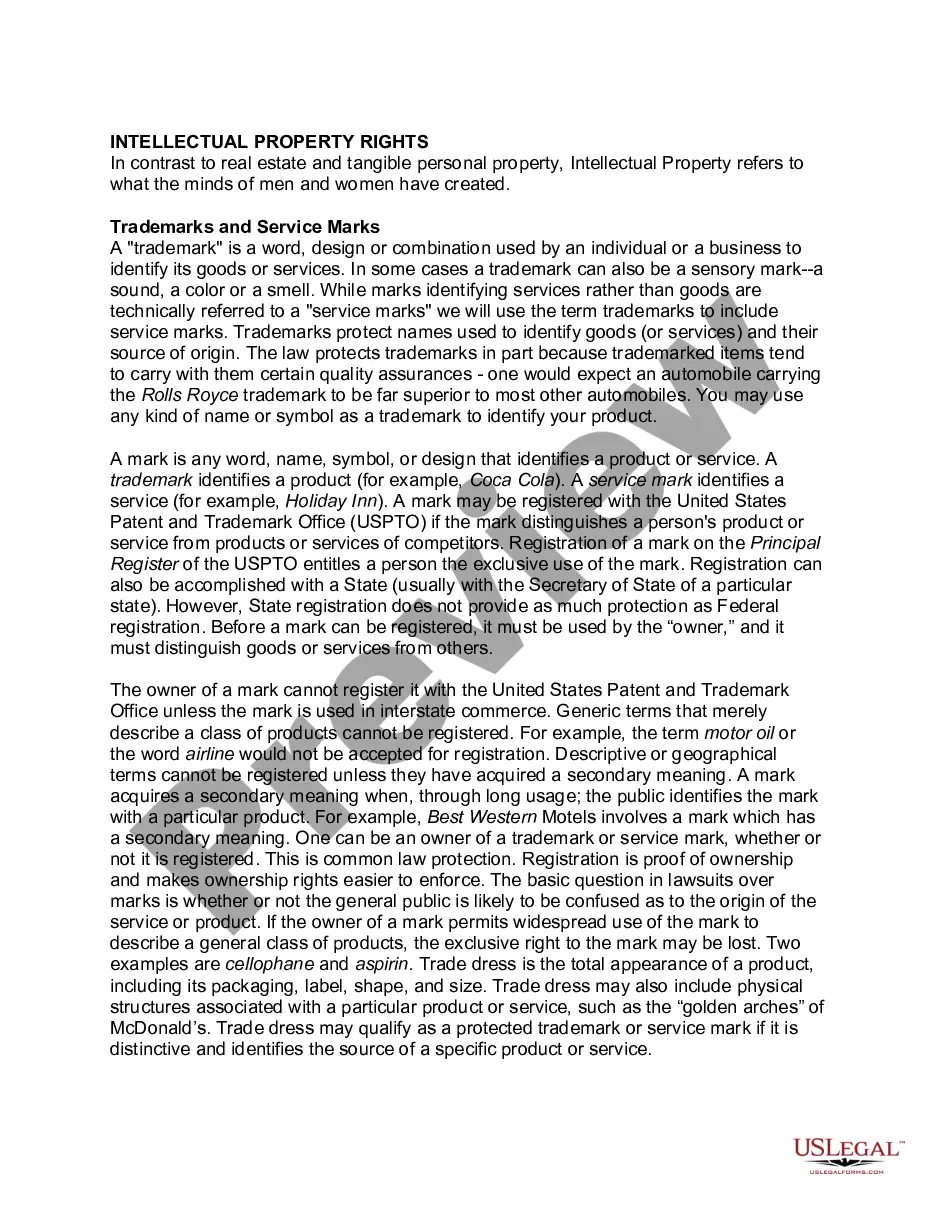
The U.S. Legal Forms Multi-state Patent and Trademark Law Handbook serves as a foundational resource for understanding the complexities of patent rights and trademarks in Chicago and across the U.S. It outlines critical aspects of patent rights, including the types of patents available—utility, design, and plant—as well as their respective application requirements and examination processes. Users will find filling and editing instructions essential for submitting patent applications correctly, emphasizing the importance of a detailed specification, drawings, and relevant fees. The handbook distinguishes between patents and trademarks to prevent confusion, offering guidance on how to secure and maintain those rights effectively. Its utility extends to various legal professionals such as attorneys, partners, owners, associates, paralegals, and legal assistants who may navigate patent rights in their work. They can leverage this handbook not only to gain insight into the legal frameworks but also as a reference point for drafting applications and responding to office actions by the USPTO. This resource empowers users to make educated decisions about protecting their intellectual property rights.
Free preview
  • Preview USLF Multistate Patent and Trademark Law Handbook - Guide
  • Preview USLF Multistate Patent and Trademark Law Handbook - Guide
  • Preview USLF Multistate Patent and Trademark Law Handbook - Guide
  • Preview USLF Multistate Patent and Trademark Law Handbook - Guide
  • Preview USLF Multistate Patent and Trademark Law Handbook - Guide
  • Preview USLF Multistate Patent and Trademark Law Handbook - Guide
  • Preview USLF Multistate Patent and Trademark Law Handbook - Guide
  • Preview USLF Multistate Patent and Trademark Law Handbook - Guide
  • Preview USLF Multistate Patent and Trademark Law Handbook - Guide
  • Preview USLF Multistate Patent and Trademark Law Handbook - Guide
  • Preview USLF Multistate Patent and Trademark Law Handbook - Guide

Get your form ready online

Our built-in tools help you complete, sign, share, and store your documents in one place.

Built-in online Word editor

Make edits, fill in missing information, and update formatting in US Legal Forms—just like you would in MS Word.

Export easily

Download a copy, print it, send it by email, or mail it via USPS—whatever works best for your next step.

E-sign your document

Sign and collect signatures with our SignNow integration. Send to multiple recipients, set reminders, and more. Go Premium to unlock E-Sign.

Notarize online 24/7

If this form requires notarization, complete it online through a secure video call—no need to meet a notary in person or wait for an appointment.

Store your document securely

We protect your documents and personal data by following strict security and privacy standards.

Form selector

Make edits, fill in missing information, and update formatting in US Legal Forms—just like you would in MS Word.

Form selector

Download a copy, print it, send it by email, or mail it via USPS—whatever works best for your next step.

Form selector

Sign and collect signatures with our SignNow integration. Send to multiple recipients, set reminders, and more. Go Premium to unlock E-Sign.

Form selector

If this form requires notarization, complete it online through a secure video call—no need to meet a notary in person or wait for an appointment.

Form selector

We protect your documents and personal data by following strict security and privacy standards.

Looking for another form?
This field is required
Ohio
Select state

Form popularity

FAQ

Format of a Patent Application The Specification. The Title. The Description. The Claims. The Drawings. The Abstract. Sample Specifications. Minimum Requirements for a Filing Date.

In clear, full, and concise terms) necessary to define the invention. – The body of the claim is not merely a list of components/parts or steps. The body of the claim should also recite how the essential elements are interrelated.

Patents have been used in their modern definition since the 1500s to provide inventors the exclusive right to produce and sell their inventions. Some famous examples of products that have been patented include: The Telephone: Patented by Alexander Graham Bell in 1876. The Lightbulb: Patented in 1878 by Thomas Edison.

General rules. Chicago Style – notes and bibliography (17th ed.) requires the following elements to be given when referencing a patent: author of the patent (inventor), title, country, patent number, date when the application was filed, and date when the patent was issued.

Trusted and secure by over 3 million people of the world’s leading companies

Patent Rights Examples In Chicago