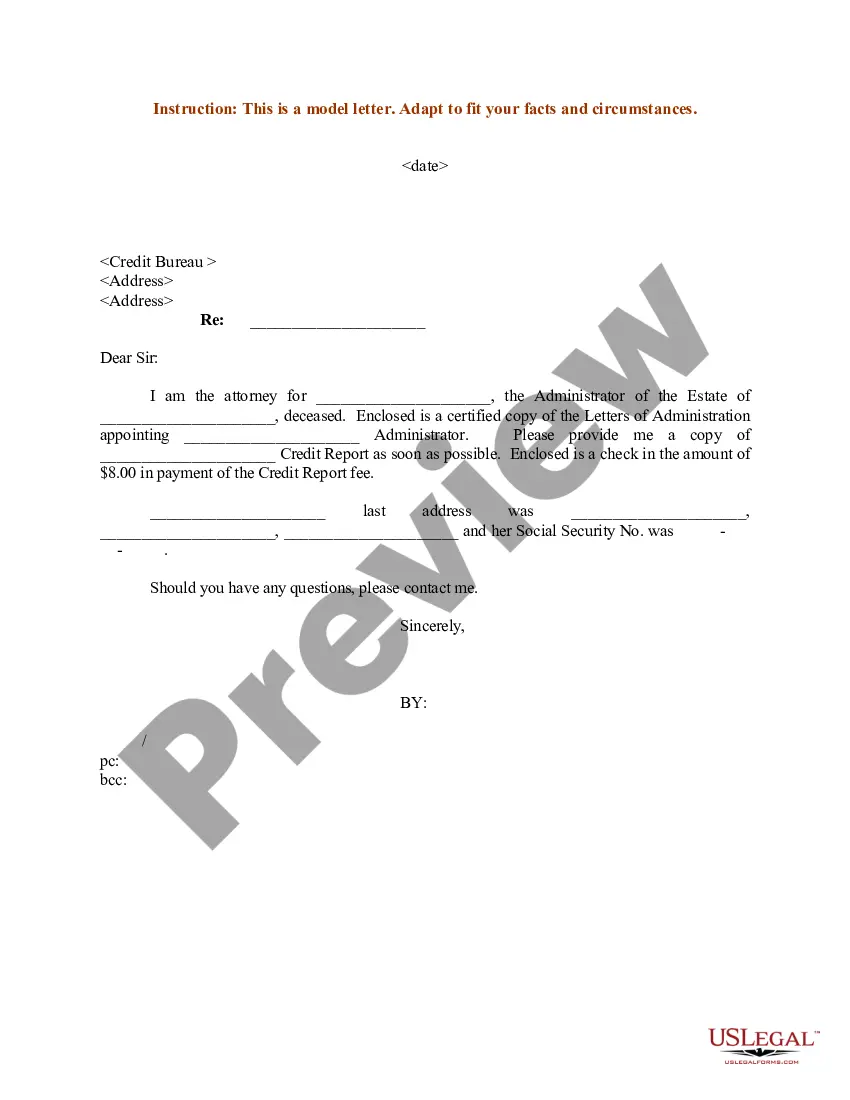
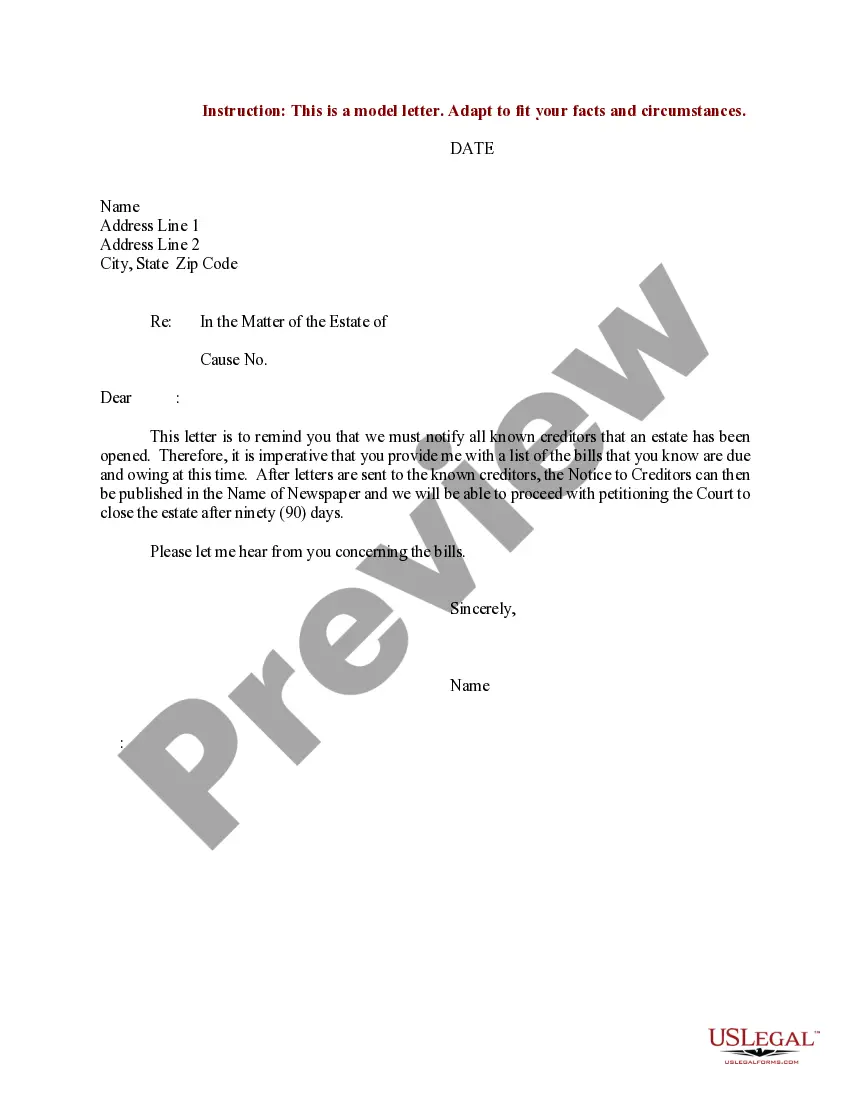
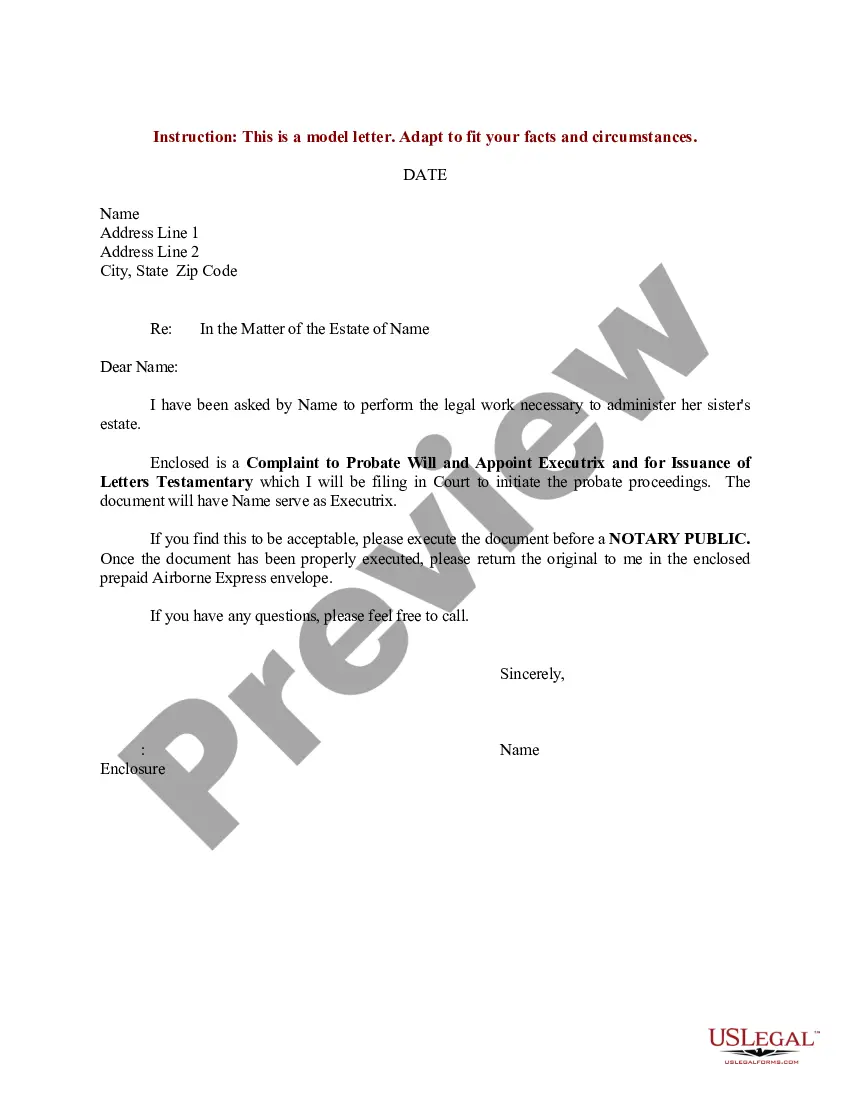
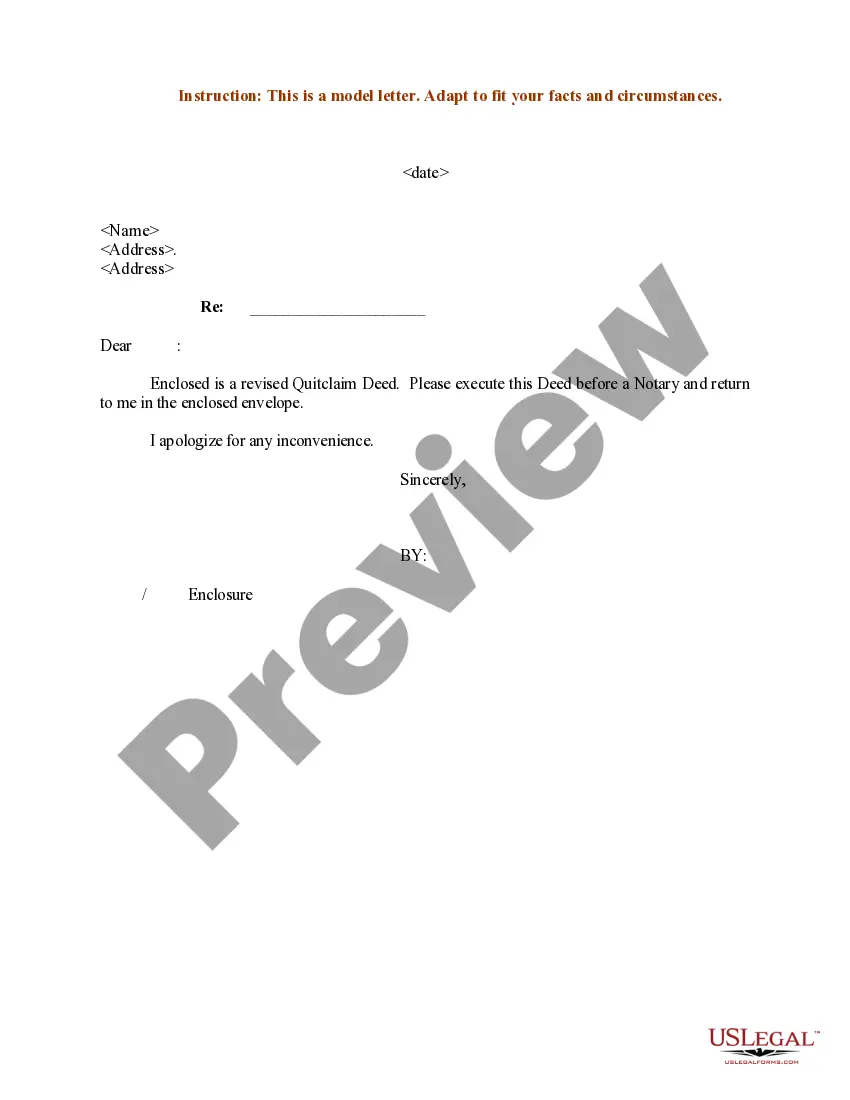
Credit Letter Example For Students In Illinois
Description

Get your form ready online
Our built-in tools help you complete, sign, share, and store your documents in one place.
Make edits, fill in missing information, and update formatting in US Legal Forms—just like you would in MS Word.
Download a copy, print it, send it by email, or mail it via USPS—whatever works best for your next step.
Sign and collect signatures with our SignNow integration. Send to multiple recipients, set reminders, and more. Go Premium to unlock E-Sign.
If this form requires notarization, complete it online through a secure video call—no need to meet a notary in person or wait for an appointment.
We protect your documents and personal data by following strict security and privacy standards.

Make edits, fill in missing information, and update formatting in US Legal Forms—just like you would in MS Word.

Download a copy, print it, send it by email, or mail it via USPS—whatever works best for your next step.

Sign and collect signatures with our SignNow integration. Send to multiple recipients, set reminders, and more. Go Premium to unlock E-Sign.

If this form requires notarization, complete it online through a secure video call—no need to meet a notary in person or wait for an appointment.

We protect your documents and personal data by following strict security and privacy standards.
Looking for another form?







Form popularity
FAQ
You, your dependent or a third party pays qualified education expenses for higher education. An eligible student must be enrolled at an eligible educational institution. The eligible student is yourself, your spouse or a dependent you list on your tax return.
To claim the American opportunity credit complete Form 8863 and submit it with your Form 1040 or 1040-SR. Enter the nonrefundable part of the credit on Schedule 3 (Form 1040 or 1040-SR), line 3. Enter the refundable part of the credit on Form 1040 or 1040-SR, line 29.
Your enrollment status was less than half-time. You weren't enrolled in a degree program. You're under age 24 and don't support yourself. You're claimed as a dependent on another person's tax return, like your parents. You're filing as married filing separate.
You're an eligible educator if, for the tax year you're a kindergarten through grade 12 teacher, instructor, counselor, principal or aide for at least 900 hours a school year in a school that provides elementary or secondary education as determined under state law.
A qualifying child is a student who, during the tax year, must have been an Illinois resident, under age of 21 at the close of the school year, and a full-time student enrolled in kindergarten through 12th grade at a qualifying school. Qualifying education expenses include tuition, book fees, and lab fees.
Who can claim an education credit? You, your dependent or a third party pays qualified education expenses for higher education. An eligible student must be enrolled at an eligible educational institution. The eligible student is yourself, your spouse or a dependent you list on your tax return.
For the American Opportunity Credit the education credit income limit is as follows: Single, head of household, or qualifying widow(er) — $80,000-$90,000. Married filing jointly — $160,000-$180,000.

