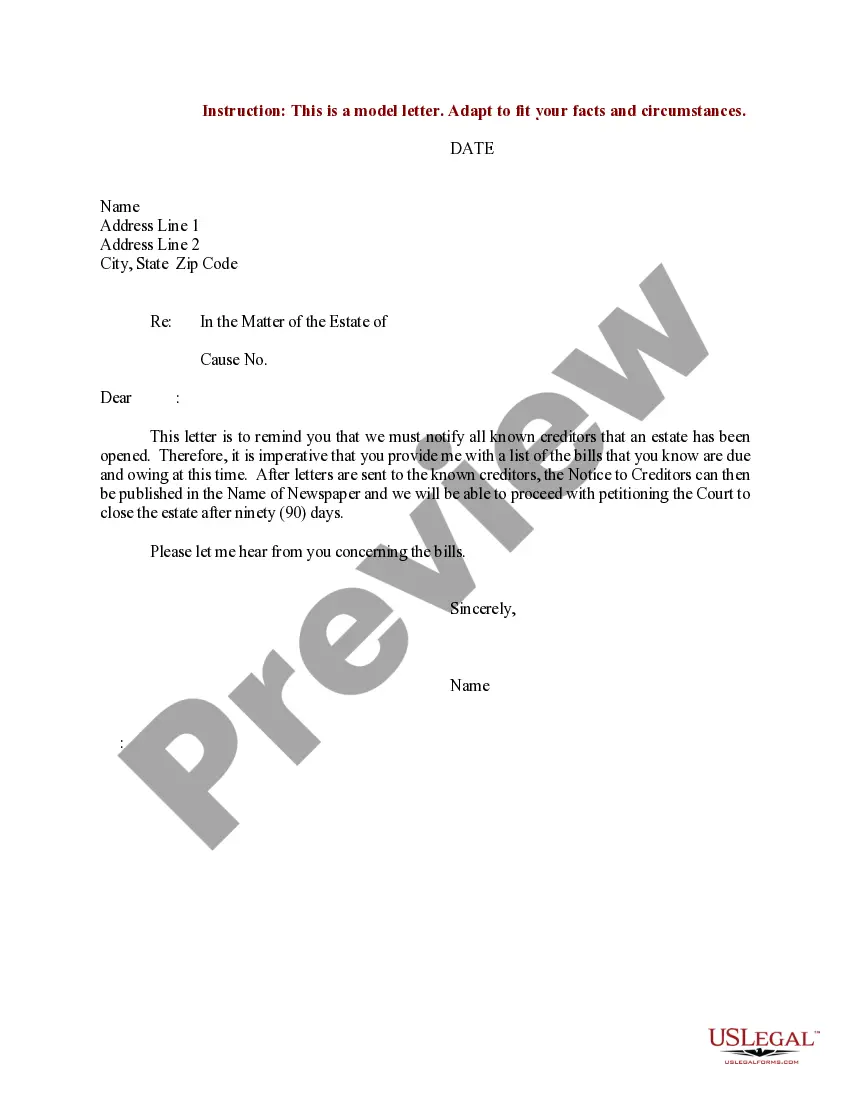
Credit Letter Example With Dear In Franklin
Description


Get your form ready online
Our built-in tools help you complete, sign, share, and store your documents in one place.
Make edits, fill in missing information, and update formatting in US Legal Forms—just like you would in MS Word.
Download a copy, print it, send it by email, or mail it via USPS—whatever works best for your next step.
Sign and collect signatures with our SignNow integration. Send to multiple recipients, set reminders, and more. Go Premium to unlock E-Sign.
If this form requires notarization, complete it online through a secure video call—no need to meet a notary in person or wait for an appointment.
We protect your documents and personal data by following strict security and privacy standards.

Make edits, fill in missing information, and update formatting in US Legal Forms—just like you would in MS Word.

Download a copy, print it, send it by email, or mail it via USPS—whatever works best for your next step.

Sign and collect signatures with our SignNow integration. Send to multiple recipients, set reminders, and more. Go Premium to unlock E-Sign.

If this form requires notarization, complete it online through a secure video call—no need to meet a notary in person or wait for an appointment.

We protect your documents and personal data by following strict security and privacy standards.
Looking for another form?







Form popularity
FAQ
Starting your email with “Dear,” is always a good, professional option—especially if you know the name of the person you are addressing. Including their name is more personal and shows that you care about the business relationship.
Use "Dear". It is one of the most preferred salutations in all forms of business communication. Although "Hello" and "Greetings" are sometimes used, whenever in doubt, use "Dear."
“Dear Name, …” Use this salutation when you're addressing someone or sending business documents such as a cover letter to show your respect, professionalism, and politeness. In this case, you can use “Dear” followed by a person's title (Mr., Ms.) and their last name: “Dear Mr.
You might want to use a less formal greeting in your business correspondence when you know the recipient's name. You could begin your email or letter with "Dear Name" or "Hello Name." It is also appropriate to use "Dear Title" as an opening greeting if you know the professional title of the recipient.
Open with “Dear” only if it's appropriate Most business situations allow this opening to be used, but if you feel it may not be appropriate, simply starting off with the recipient's name is a good alternative.
You may have noticed that fewer and fewer people begin their letters and notes with "Dear." Many people, including business etiquette consultants, say that one is never wrong by being formal, but one can often be completely wrong if they are too casual."
Salutations for business letters The most formal salutation is Dear, title, then the last name. If you're unsure of the person's pronouns, it's a good idea to use Dear First and last name or Dear First name. When you don't know the recipient's name, you can use Hello or Greetings.
