Sample Letter Release Contract For Employment In Arizona
Description
Get your form ready online
Our built-in tools help you complete, sign, share, and store your documents in one place.
Make edits, fill in missing information, and update formatting in US Legal Forms—just like you would in MS Word.
Download a copy, print it, send it by email, or mail it via USPS—whatever works best for your next step.
Sign and collect signatures with our SignNow integration. Send to multiple recipients, set reminders, and more. Go Premium to unlock E-Sign.
If this form requires notarization, complete it online through a secure video call—no need to meet a notary in person or wait for an appointment.
We protect your documents and personal data by following strict security and privacy standards.

Make edits, fill in missing information, and update formatting in US Legal Forms—just like you would in MS Word.

Download a copy, print it, send it by email, or mail it via USPS—whatever works best for your next step.

Sign and collect signatures with our SignNow integration. Send to multiple recipients, set reminders, and more. Go Premium to unlock E-Sign.

If this form requires notarization, complete it online through a secure video call—no need to meet a notary in person or wait for an appointment.

We protect your documents and personal data by following strict security and privacy standards.
Looking for another form?










Form popularity
FAQ
Dear Recipient's Name, I am writing to formally notify you of the termination of our contract, dated Contract Date, for Description of the Contract/Services. ing to the terms of our agreement, this letter serves as a Number of Days days' notice, and the contract will officially end on Termination Date.
Terminating is when one party declares the contract is at an end. Releasing the contract means both parties agree that it's over.
Employees are typically asked to sign a release agreement by their employer when they are terminated. While it depends on the specific language of the agreement, releases generally involve an employee giving up their rights to most employment or human rights claims after their employment ends.
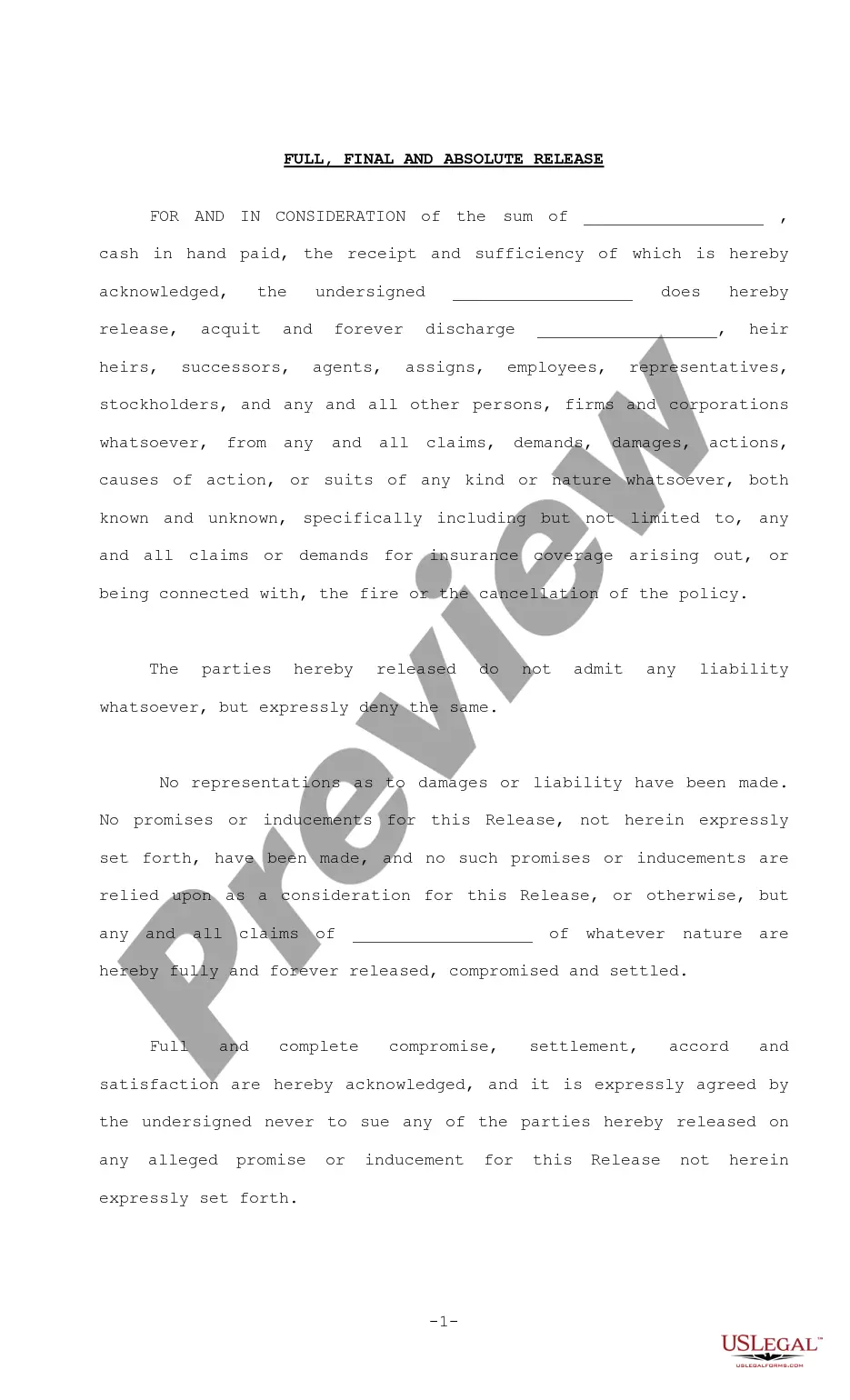
A contract release is an agreement in which one party agrees it has no claims against the party that's named in the release. A release is commonly known as a release of liability or any of the following: Release agreement. Release form.
The purpose of a release agreement is to provide certainty to an employer that they will not have to address the future claims of a terminated employee. In most cases, the employee would be provided a severance package or benefit upon termination in exchange for signing the release.
A release is a legal document that records an employee's agreement to relinquish their right to make any future claims against their employer relating to their employment or the termination of their employment. A release is essentially a contract between the terminated employee and the employer.
Understanding termination letters The date of termination. The reason for the termination (while not always required, many include it) Any severance benefits or other compensation the employee is entitled to. Instructions for the return of company property. Details regarding the final paycheck and accrued vacation time.
Use a termination letter. This is rarely required by law, but drafting a termination letter gives managers time to carefully think through what to say and how to say it. A termination letter should explain the decision to terminate employment and a general statement of the reasons behind it.
Party A and Party B do hereby irrevocably and unconditionally release, cancel, and forever discharge the other Party and its directors, officers, employees, subsidiaries, affiliates, agents, and representatives from any and all claims, complaints, causes of action, demands, damages, obligations, liabilities, losses, ...
Contents Introducing the Purpose of a Mutual Release Agreement. Explaining the purpose of the agreement. Identifying any applicable laws. Understanding the Parties Involved. Delineating the parties involved. Identifying the parties' responsibilities. Defining the Scope of the Agreement.

