Acknowledge Letter For Receipt In Utah
Description
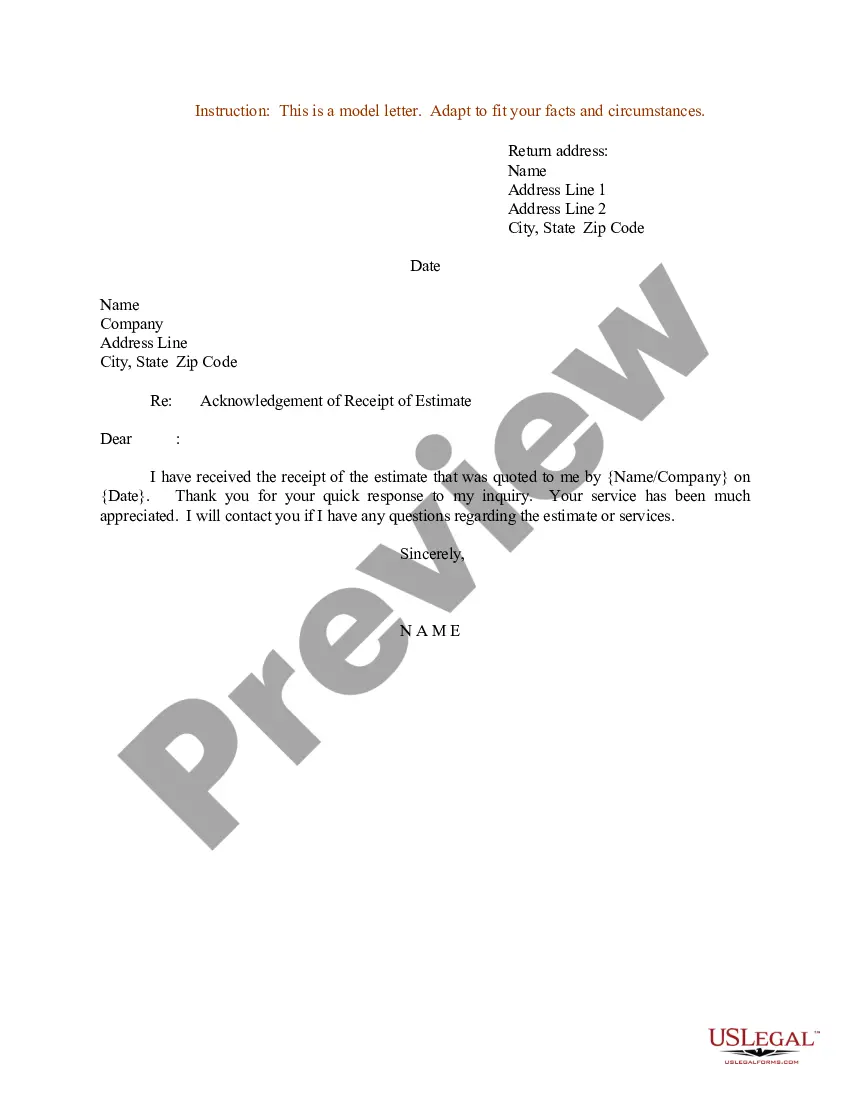



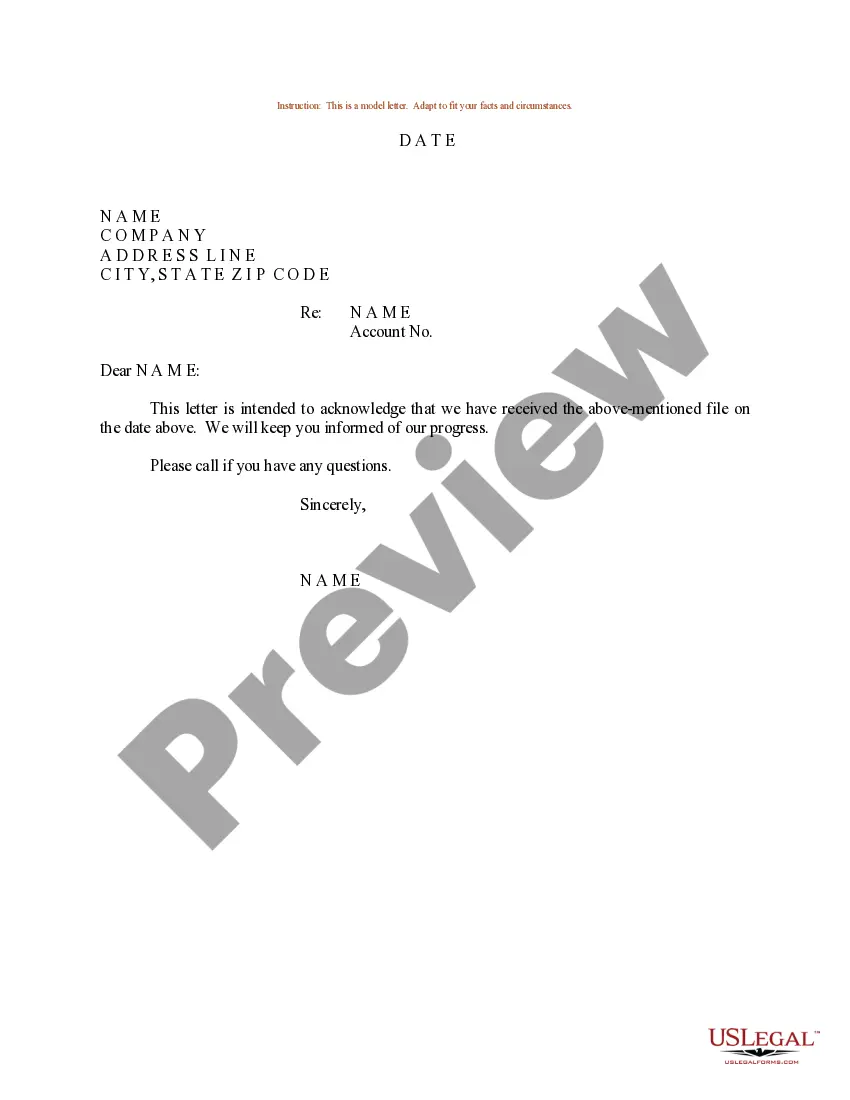
Get your form ready online
Our built-in tools help you complete, sign, share, and store your documents in one place.
Make edits, fill in missing information, and update formatting in US Legal Forms—just like you would in MS Word.
Download a copy, print it, send it by email, or mail it via USPS—whatever works best for your next step.
Sign and collect signatures with our SignNow integration. Send to multiple recipients, set reminders, and more. Go Premium to unlock E-Sign.
If this form requires notarization, complete it online through a secure video call—no need to meet a notary in person or wait for an appointment.
We protect your documents and personal data by following strict security and privacy standards.

Make edits, fill in missing information, and update formatting in US Legal Forms—just like you would in MS Word.

Download a copy, print it, send it by email, or mail it via USPS—whatever works best for your next step.

Sign and collect signatures with our SignNow integration. Send to multiple recipients, set reminders, and more. Go Premium to unlock E-Sign.

If this form requires notarization, complete it online through a secure video call—no need to meet a notary in person or wait for an appointment.

We protect your documents and personal data by following strict security and privacy standards.
Looking for another form?









Form popularity
FAQ
The purpose of an acknowledgment is for a signer, whose identity has been verified, to declare to a Notary or notarial officer that he or she has willingly signed a document. Click to expand. An acknowledgment requires the following steps: The signer must appear in person before you.
How to create an acknowledgment receipt Use a company letterhead. Use electronic or paper letterhead. Write acknowledgment statement. Referring to the document by name, version number if applicable and state that the recipient has received the document. Sign and date. Explain the next step. Provide contact information.
Confirming actions ask the user to verify that they want to proceed with an action. Acknowledging actions provide text to let the user know whether an action they chose has been completed.
1) To accept, recognize, confirm, or admit the existence or truth of something. 2) To validate an identity or claim. 3) To authenticate an instrument or writing by declaration or statement under oath by the person who executes the instrument or writing, in the presence of a notary, officer, or other impartial party.
Summary. Use declarations or acknowledgments to both communicate and confirm that a person understands their obligations and the consequences for non-compliance. The declaration could be written or verbal, and should encourage compliance and deter fraud.
The signer can sign the document before or when appearing in front of the notary. (Civ. Code, § 1181.1.) They must also declare or acknowledge signing the document for its intended purpose. This acknowledgment is both to confirm the identity of the signer and confirm they are the one who signed it.

