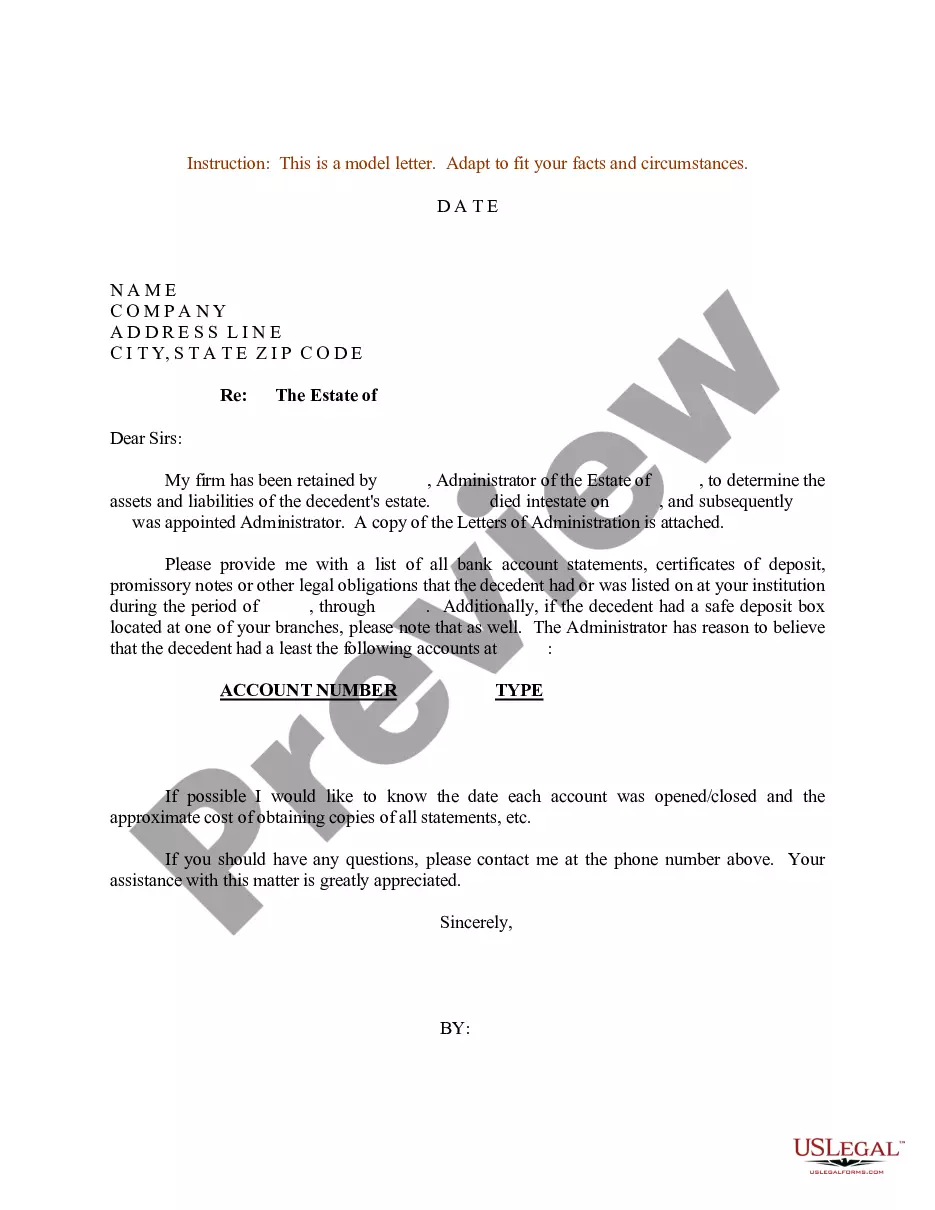
Letter To Close Account After Death With No Estate In Wake
Description






Form popularity
FAQ
If there's no will, the bank could ask for evidence of your relationship to the deceased. You'll also need the death certificate. When you've registered the death, you will be issued with a death certificate. This will act as formal notification for the bank to begin closing the account.
If someone dies without a will, the bank account will typically go through probate, where state laws of intestacy will determine how the funds are distributed.
Respected Sir/Madam, I am writing to you with a heavy heart to inform you of the demise of my husband, Mr. Rajeev Singh, who had a savings account in your esteemed bank. It is a difficult time for our family, and I need to settle his financial affairs.
If there's a will without a named executor, the court will issue a Letter of Testamentary; if there's no will, the court will issue a Letter of Administration. Present either of these letters to the bank along with the death certificate to close the account.
While every bank differs differently, and why there is a need to close a bank account after death. If the account was a joint one, it wouldn't need to be canceled because it will automatically transfer into the sole name of the other account holder after the bank has been notified of the death.
Directly suing a deceased individual isn't feasible, as they can't be legally pursued after death. However, it's possible to initiate legal action against their estate. Probate courts manage this process, using the deceased person's assets to address claims from creditors or compensate victims.
