Sample Letter To Close Trust Account With Attorney In Riverside
Description




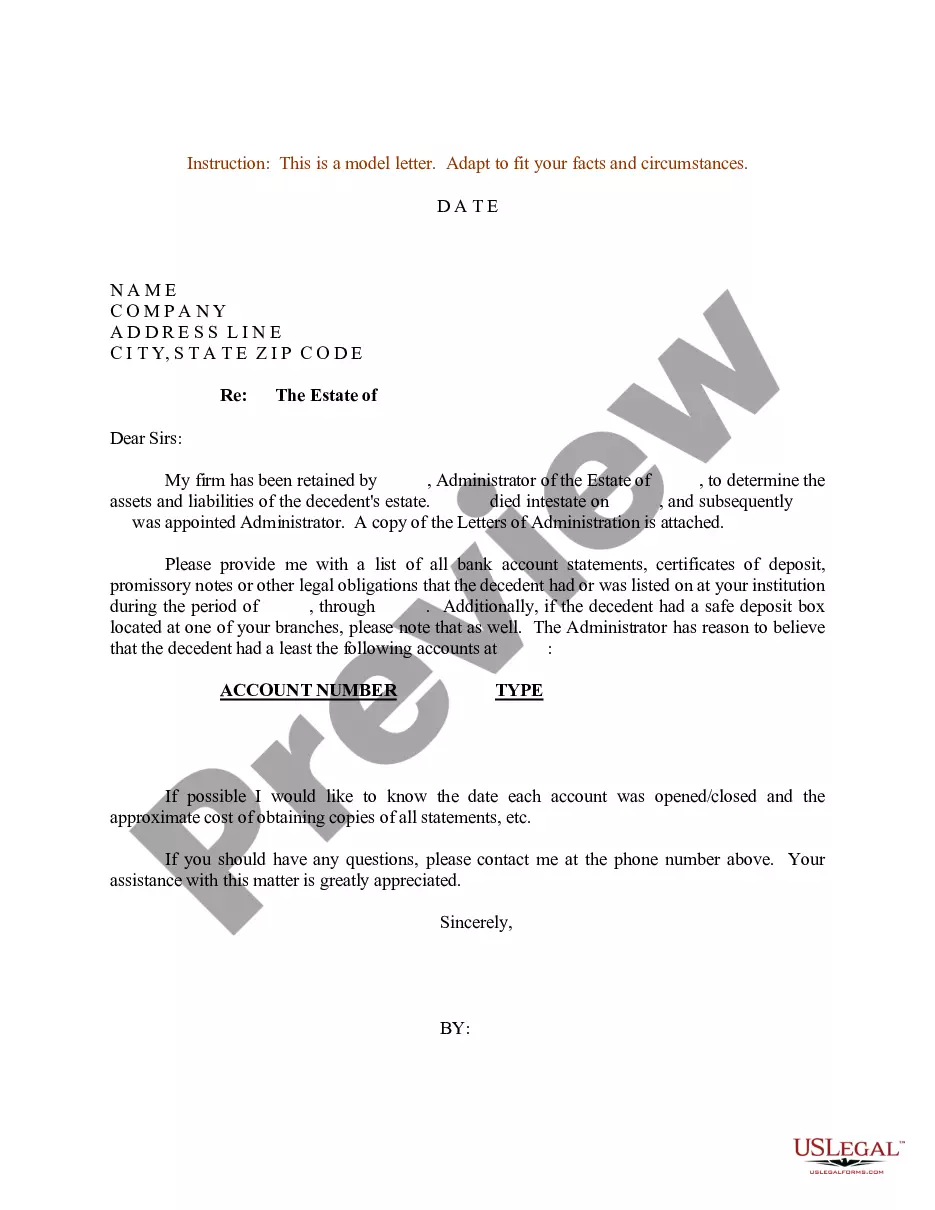
Get your form ready online
Our built-in tools help you complete, sign, share, and store your documents in one place.
Make edits, fill in missing information, and update formatting in US Legal Forms—just like you would in MS Word.
Download a copy, print it, send it by email, or mail it via USPS—whatever works best for your next step.
Sign and collect signatures with our SignNow integration. Send to multiple recipients, set reminders, and more. Go Premium to unlock E-Sign.
If this form requires notarization, complete it online through a secure video call—no need to meet a notary in person or wait for an appointment.
We protect your documents and personal data by following strict security and privacy standards.

Make edits, fill in missing information, and update formatting in US Legal Forms—just like you would in MS Word.

Download a copy, print it, send it by email, or mail it via USPS—whatever works best for your next step.

Sign and collect signatures with our SignNow integration. Send to multiple recipients, set reminders, and more. Go Premium to unlock E-Sign.

If this form requires notarization, complete it online through a secure video call—no need to meet a notary in person or wait for an appointment.

We protect your documents and personal data by following strict security and privacy standards.
Looking for another form?


Form popularity
FAQ
Irrevocable trusts generally end after the death of the grantor, when all of the assets are distributed by the trustee to the beneficiaries. The grantor can also specify an end date or a condition that must be met before the assets can be distributed.
Seeking Legal Counsel The trustee should have a trust lawyer to guide them through how to dissolve a trust after the grantor's death. Your trust lawyer can help to identify any dissolving trust tax implications. A trust lawyer can help you understand can a trustee revoke a revocable trust.
To terminate an active trust, a party with standing must petition the court and provide evidence that persuades a judge to issue an order dissolving the trust or all beneficiaries of the trust must agree to its termination.
An attorney case closing letter, also known as a termination of representation, is a formal document that officially ends their representation of a client in a matter.
A trust may be terminated by the written consent of the settlor and all beneficiaries without court approval, but with notice to the Attorney General.
