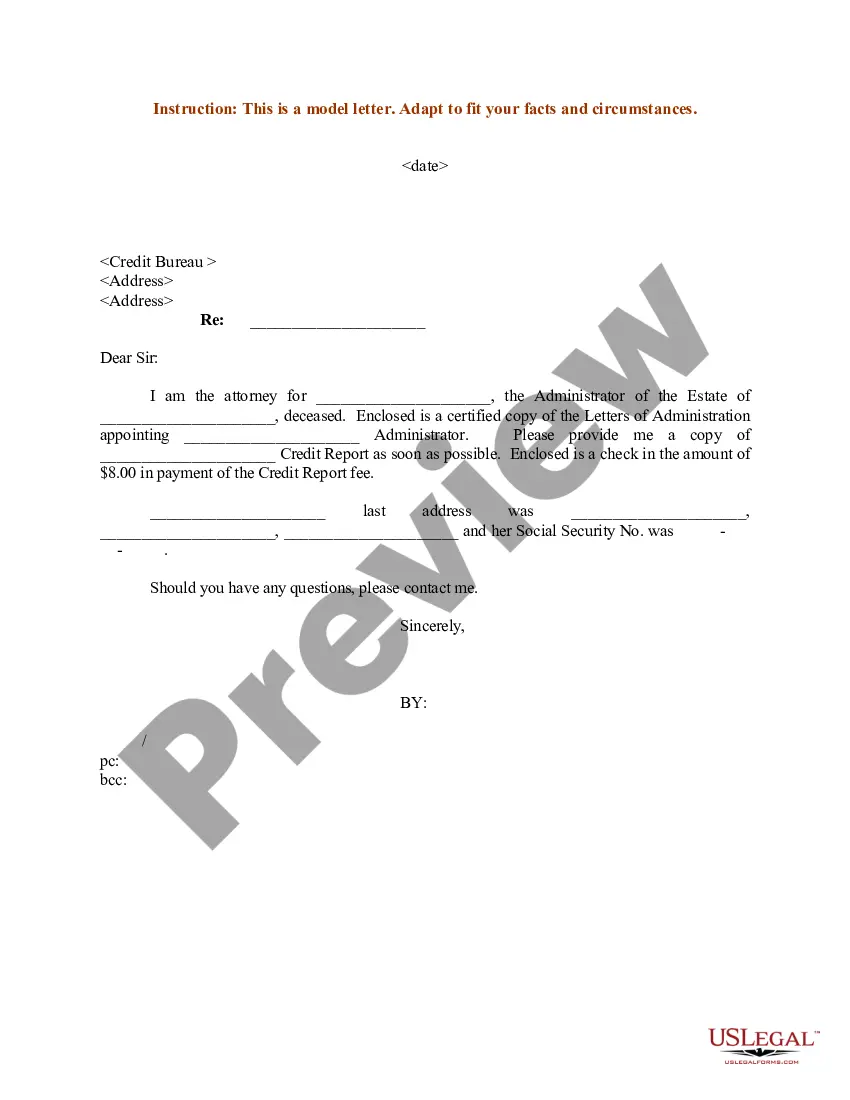
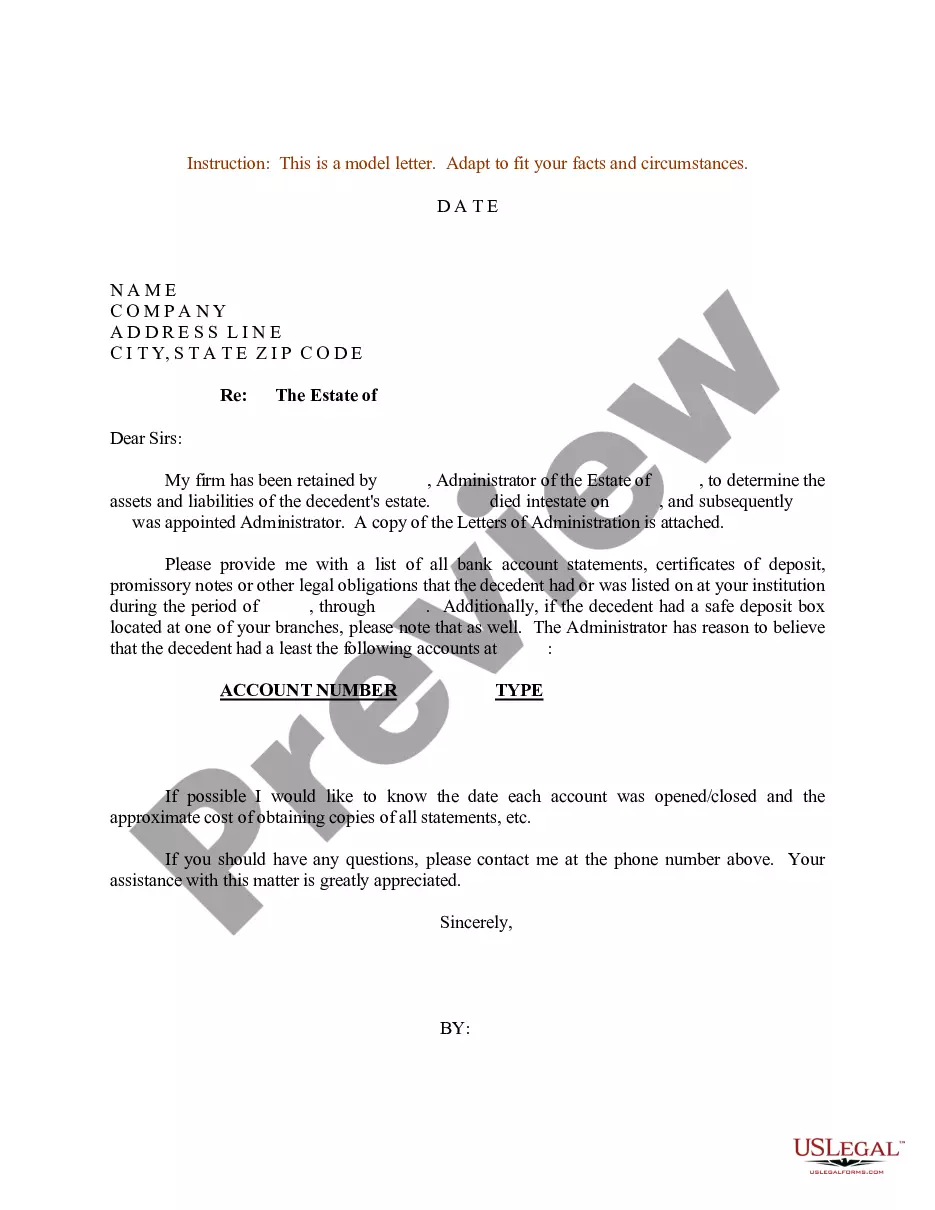
Sample Letter To Close Trust Account With Bank Account In Florida
Description



Get your form ready online
Our built-in tools help you complete, sign, share, and store your documents in one place.
Make edits, fill in missing information, and update formatting in US Legal Forms—just like you would in MS Word.
Download a copy, print it, send it by email, or mail it via USPS—whatever works best for your next step.
Sign and collect signatures with our SignNow integration. Send to multiple recipients, set reminders, and more. Go Premium to unlock E-Sign.
If this form requires notarization, complete it online through a secure video call—no need to meet a notary in person or wait for an appointment.
We protect your documents and personal data by following strict security and privacy standards.

Make edits, fill in missing information, and update formatting in US Legal Forms—just like you would in MS Word.

Download a copy, print it, send it by email, or mail it via USPS—whatever works best for your next step.

Sign and collect signatures with our SignNow integration. Send to multiple recipients, set reminders, and more. Go Premium to unlock E-Sign.

If this form requires notarization, complete it online through a secure video call—no need to meet a notary in person or wait for an appointment.

We protect your documents and personal data by following strict security and privacy standards.
Looking for another form?





Form popularity
FAQ
Tell your banker you would like to transfer a bank account into a trust. Remove any existing bank account beneficiaries. Present an official copy of the trust to your banker. Sign new signature and ownership cards.
Most banks prefer that you and your spouse come to a local branch of the bank and complete their trust transfer form. Typically this is a one or two page document that will ask you to list the name of your trust, the date of the trust and who the current trustees are.
In the state of California, for instance, you may hold up to $166,250 in assets, property, or accounts outside of a Trust and still avoid Probate. But if you have over $166,250 in your account, you should consider transferring it to your Trust so that your Beneficiary can receive their inheritance outside of Probate.
Having the accounts in your trust will help if you become incapacitated. (2/3 of Americans will be incapacitated for some time in their lifetime). Banks are much more hesitant to honor powers of attorney today. I have never had hesitation from a bank to honor a successor trustee during incapacity.
Only the trustee can close the trust account. Check the bank's requirements for closing accounts to see what documentation you need to bring with you, usually personal identification and any papers you received when you first set up the trust account.
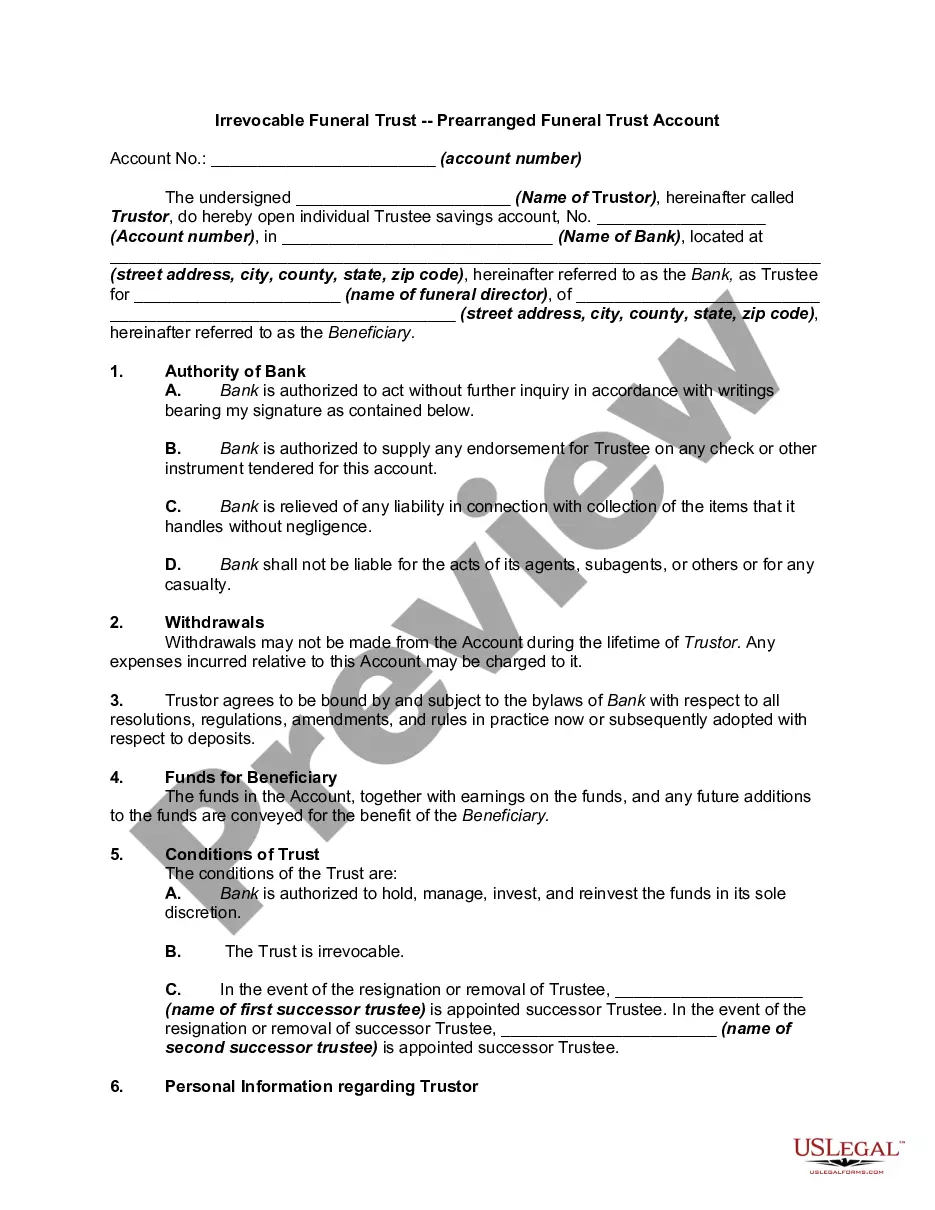
A trust account is a special type of account that holds funds specifically identified in a trust document for a specific beneficiary or group of beneficiaries.
