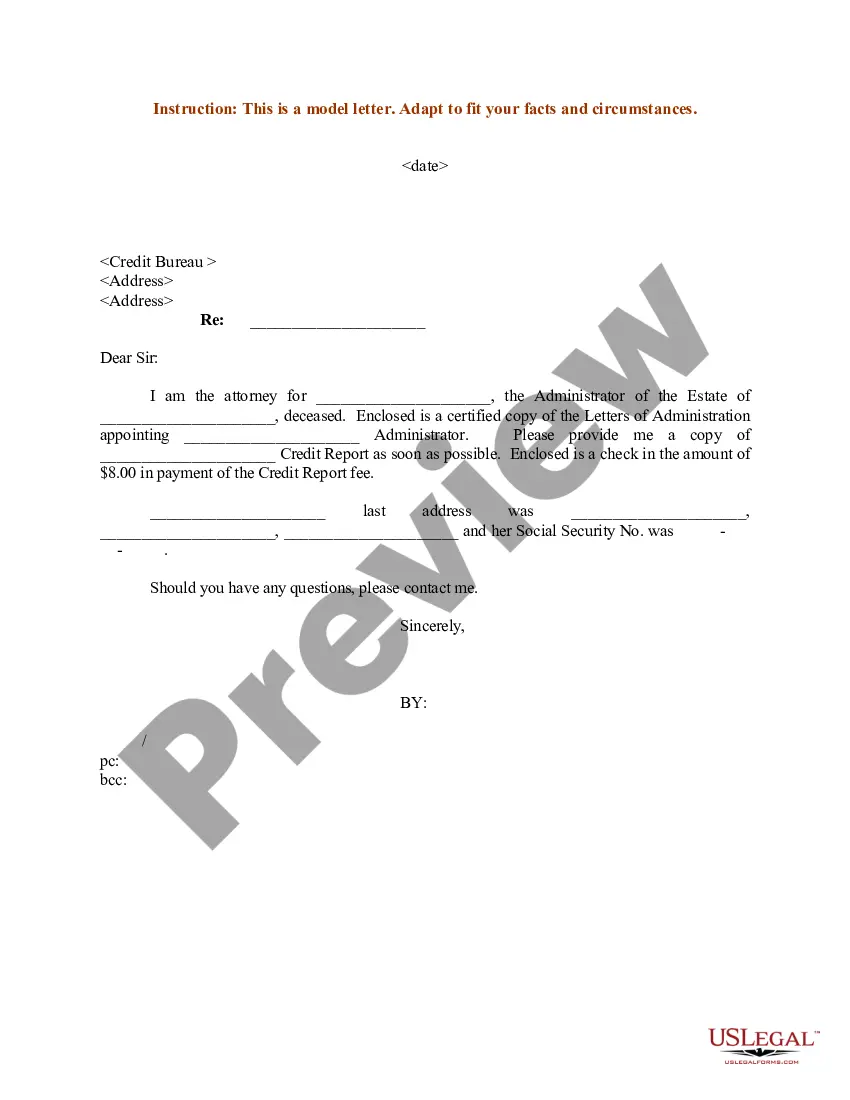
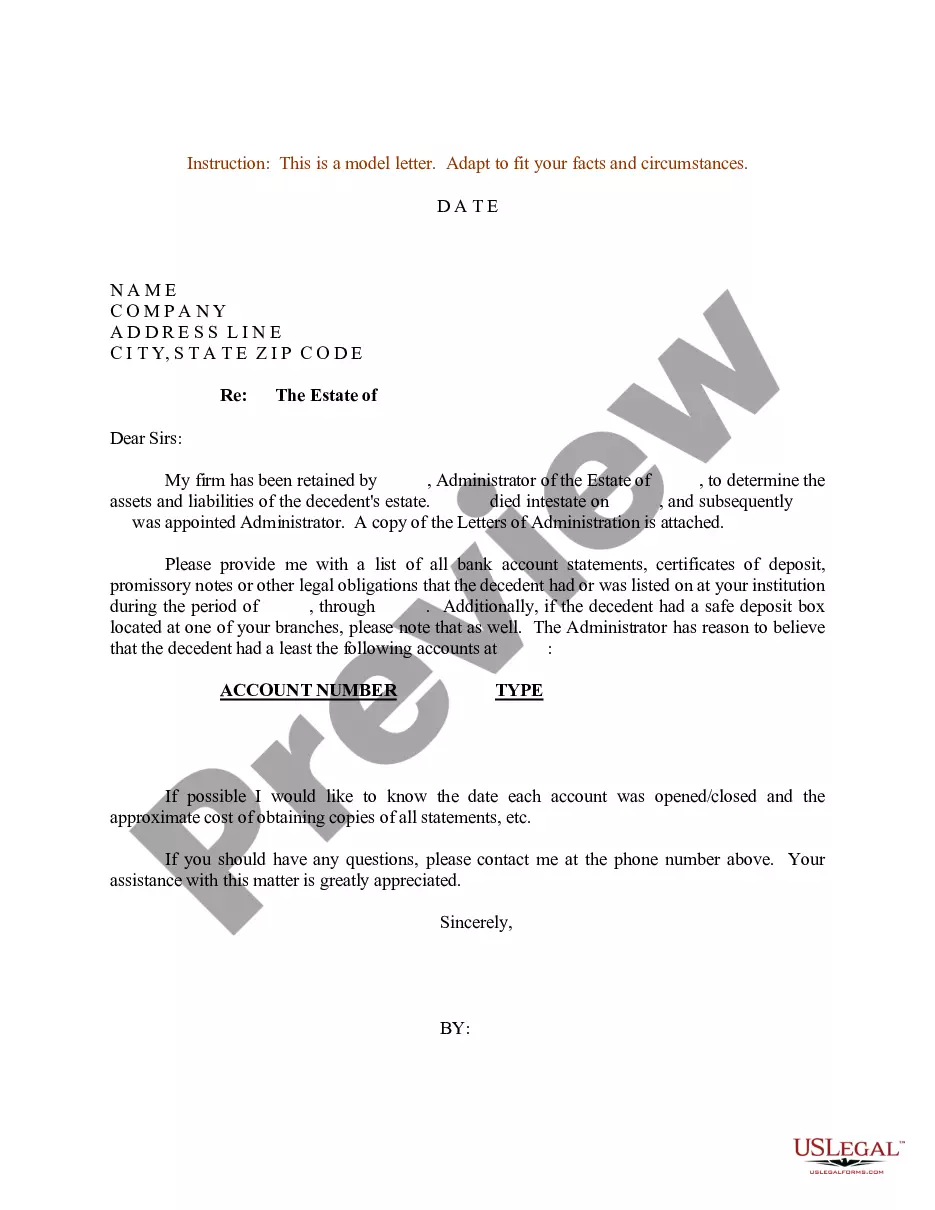
Letter To Close Account After Death Without Will In Dallas
Description



Get your form ready online
Our built-in tools help you complete, sign, share, and store your documents in one place.
Make edits, fill in missing information, and update formatting in US Legal Forms—just like you would in MS Word.
Download a copy, print it, send it by email, or mail it via USPS—whatever works best for your next step.
Sign and collect signatures with our SignNow integration. Send to multiple recipients, set reminders, and more. Go Premium to unlock E-Sign.
If this form requires notarization, complete it online through a secure video call—no need to meet a notary in person or wait for an appointment.
We protect your documents and personal data by following strict security and privacy standards.

Make edits, fill in missing information, and update formatting in US Legal Forms—just like you would in MS Word.

Download a copy, print it, send it by email, or mail it via USPS—whatever works best for your next step.

Sign and collect signatures with our SignNow integration. Send to multiple recipients, set reminders, and more. Go Premium to unlock E-Sign.

If this form requires notarization, complete it online through a secure video call—no need to meet a notary in person or wait for an appointment.

We protect your documents and personal data by following strict security and privacy standards.
Looking for another form?








Form popularity
FAQ
If there's no will or no executor named in the will: If there is no will or the person who should handle the estate is not named in the will, a relative or legal representative must request permission from the probate court to close the account.
Respected Sir/Madam, I am writing to you with a heavy heart to inform you of the demise of my husband, Mr. Rajeev Singh, who had a savings account in your esteemed bank. It is a difficult time for our family, and I need to settle his financial affairs.
In California, an account holder should complete a Totten trust document. A Totten Trust is a payable-on-death account with a named beneficiary. When the account owner dies, the contents of the Totten Trust automatically pass to the beneficiary.
If the deceased person was the sole owner of the bank account and named a beneficiary, then the bank can release the funds to the beneficiary without probate. If there is no named beneficiary, then the bank will require probate before releasing any funds.
Your valid ID, such as a state-issued driver's license or ID card, U.S. passport, or military ID. Proof of death, such as certified copies of the death certificate. Documentation about the account and its owner, including the deceased's full legal name, Social Security number, and the bank account number.
What Not to Do When Someone Dies: 10 Common Mistakes Not Obtaining Multiple Copies of the Death Certificate. 2- Delaying Notification of Death. 3- Not Knowing About a Preplan for Funeral Expenses. 4- Not Understanding the Crucial Role a Funeral Director Plays. 5- Letting Others Pressure You Into Bad Decisions.
Procedure — An affidavit of heirship is prepared that details the decedent's heirship facts and the assets of the estate. The affidavit is then signed before a notary public by two disinterested witnesses. The affidavit is then filed in the real property records on file with the county clerk's office.
If someone dies without a will, the bank account will typically go through probate, where state laws of intestacy will determine how the funds are distributed.
