Account Estate Bank Withdrawal In Alameda
Description




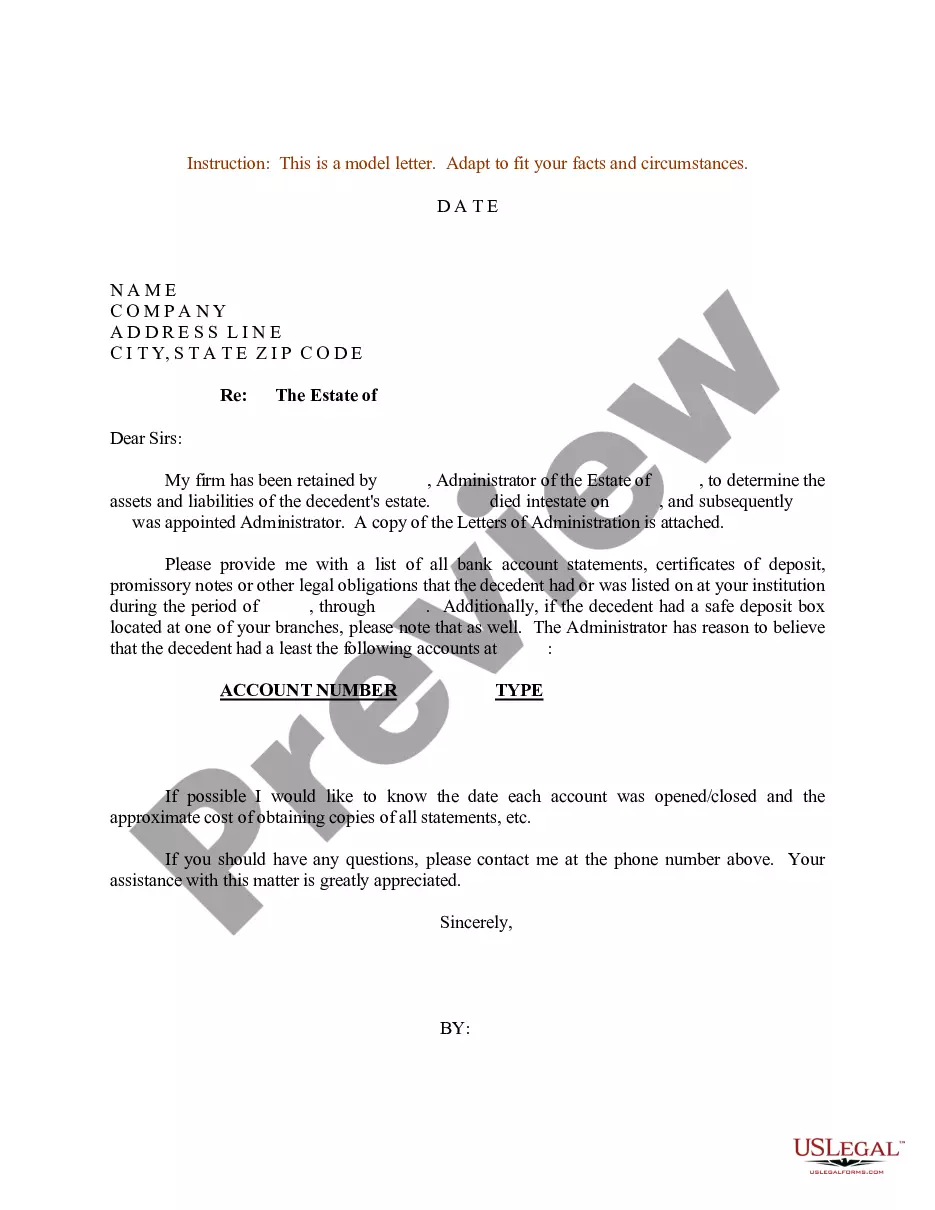
Get your form ready online
Our built-in tools help you complete, sign, share, and store your documents in one place.
Make edits, fill in missing information, and update formatting in US Legal Forms—just like you would in MS Word.
Download a copy, print it, send it by email, or mail it via USPS—whatever works best for your next step.
Sign and collect signatures with our SignNow integration. Send to multiple recipients, set reminders, and more. Go Premium to unlock E-Sign.
If this form requires notarization, complete it online through a secure video call—no need to meet a notary in person or wait for an appointment.
We protect your documents and personal data by following strict security and privacy standards.

Make edits, fill in missing information, and update formatting in US Legal Forms—just like you would in MS Word.

Download a copy, print it, send it by email, or mail it via USPS—whatever works best for your next step.

Sign and collect signatures with our SignNow integration. Send to multiple recipients, set reminders, and more. Go Premium to unlock E-Sign.

If this form requires notarization, complete it online through a secure video call—no need to meet a notary in person or wait for an appointment.

We protect your documents and personal data by following strict security and privacy standards.
Looking for another form?


Form popularity
FAQ
Real or personal property that the person who died owned with someone else (joint tenancy) Property (community, quasi-community, or separate) that passed directly to the surviving spouse or domestic partner. Life insurance, death benefits or other assets not subject to probate that pass directly to the beneficiaries.
An order for final distribution in California probate is conclusive to the rights of heirs and devisees in a decedent's estate. The order also releases the personal representative from claims by heirs and devisees, unless, of course, there is fraud or misrepresentation present.
A typical probate process in California takes a year to 18 months to settle. In some cases, it can be completed in as little as nine months, but this isn't a common occurrence. If there are any problems, the process can be prolonged for up to two years.
A: In the simplest terms, yes, all bank accounts that were owned by a deceased individual are subject to probate in California if the total value of the estate exceeds $166,250. However, if a bank account is placed into a revocable living trust, it may not be subject to probate court.
Estates valued at $166,250 or less or $184,500 or less may qualify for a non-formal probate case, allowing for a simplified transfer process. This limit is based on the value of the property at the date of death, excluding certain types of assets like vehicles, property outside California, and joint tenancy property.
In other words, heirs receive their inheritance at the end of the probate proceeding. Generally, this is at least 10-18 months after the probate petition is initially filed with the court. Once the judge has issued the order for distribution, estate heirs can expect to receive an inheritance check within a few weeks.
Typically, a beneficiary can claim the proceeds from a payable-on-death account—sometimes called a “POD” account—by going to the bank with a death certificate and proof of identification.
Open a case You (the person who starts the case) are called the “petitioner." You must file forms with the court to “open probate.” You file a Petition for Probate (form DE-111) along with other court forms. File the case in the county where the person who died (the decedent) lived.
§ 15103.3. Intangible Personal Property. The term “intangible personal property” includes stocks, bonds, notes (whether secured or unsecured), bank deposits, accounts receivable, patents, trademarks, copyrights, goodwill, partnership interests, life insurance policies, and other choses in action.