Outstanding Shares Formula In Houston
Description



Get your form ready online
Our built-in tools help you complete, sign, share, and store your documents in one place.
Make edits, fill in missing information, and update formatting in US Legal Forms—just like you would in MS Word.
Download a copy, print it, send it by email, or mail it via USPS—whatever works best for your next step.
Sign and collect signatures with our SignNow integration. Send to multiple recipients, set reminders, and more. Go Premium to unlock E-Sign.
If this form requires notarization, complete it online through a secure video call—no need to meet a notary in person or wait for an appointment.
We protect your documents and personal data by following strict security and privacy standards.

Make edits, fill in missing information, and update formatting in US Legal Forms—just like you would in MS Word.

Download a copy, print it, send it by email, or mail it via USPS—whatever works best for your next step.

Sign and collect signatures with our SignNow integration. Send to multiple recipients, set reminders, and more. Go Premium to unlock E-Sign.

If this form requires notarization, complete it online through a secure video call—no need to meet a notary in person or wait for an appointment.

We protect your documents and personal data by following strict security and privacy standards.
Looking for another form?







Form popularity
FAQ
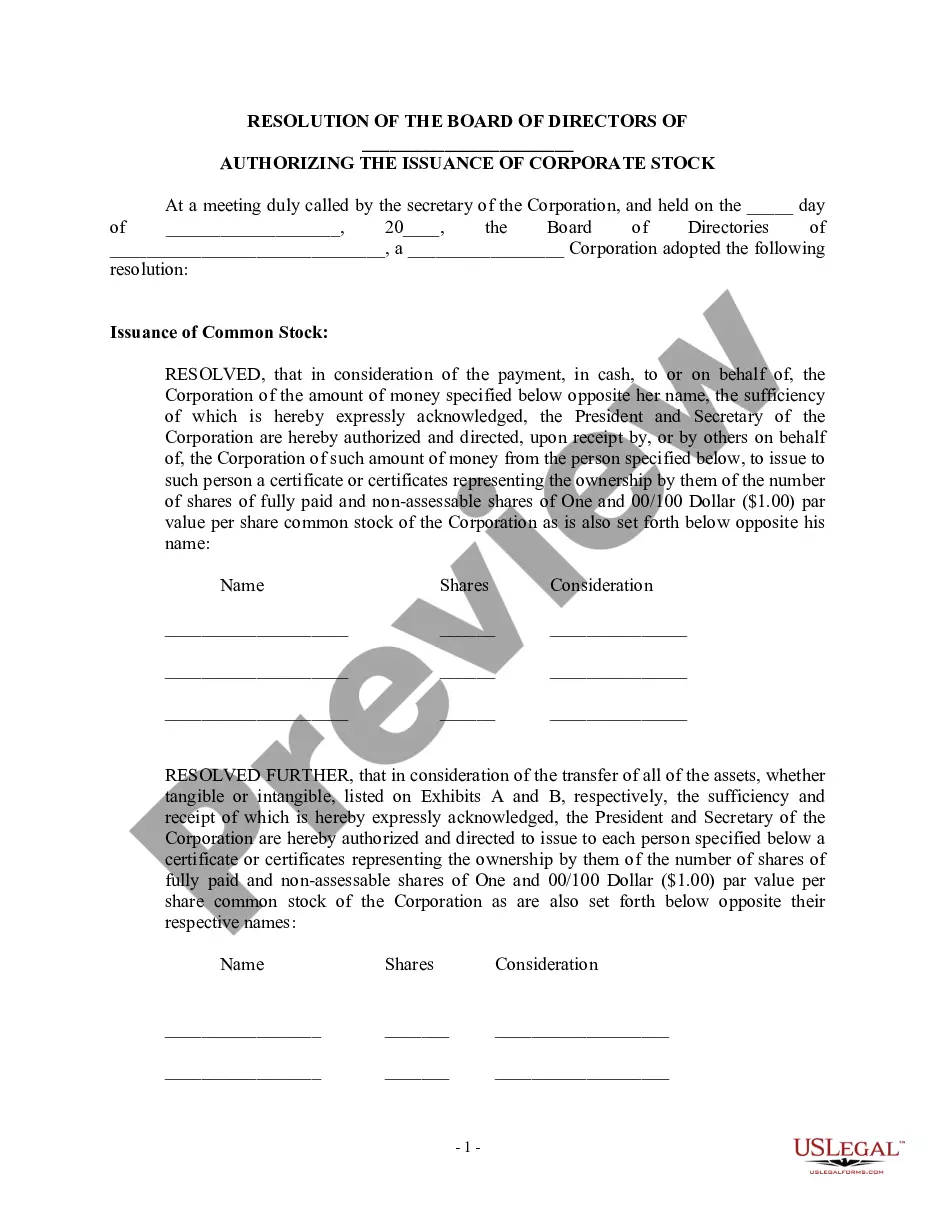
The formula for calculating the shares outstanding consists of subtracting the shares repurchased from the total shares issued to date.
Shares outstanding are the stock that is held by a company's shareholders on the open market. Along with individual shareholders, this includes restricted shares that are held by a company's officers and institutional investors. On a company balance sheet, they are indicated as capital stock.
The number of outstanding shares is also in the capital section of a company's annual report. The number of issued and outstanding shares, which is used to calculate market capitalization and earnings per share, are often the same.
The firm's balance sheet includes outstanding shares. Shareholders' equity includes total authorized shares and total outstanding shares. Companies generally post the number of outstanding shares on their websites in the investor relations section, and can also be found on stock exchange websites.
Total outstanding is the amount that customers owe to the company as on date. It is calculated by deducting the total credit amounts from the total debit amount. Calculation: Total Outstanding = (Total Debit amount as on date) - (Total Credit amount as on date).
The firm's balance sheet includes outstanding shares. Shareholders' equity includes total authorized shares and total outstanding shares. Companies generally post the number of outstanding shares on their websites in the investor relations section, and can also be found on stock exchange websites.
