1031 Exchange Agreement Form In Nassau
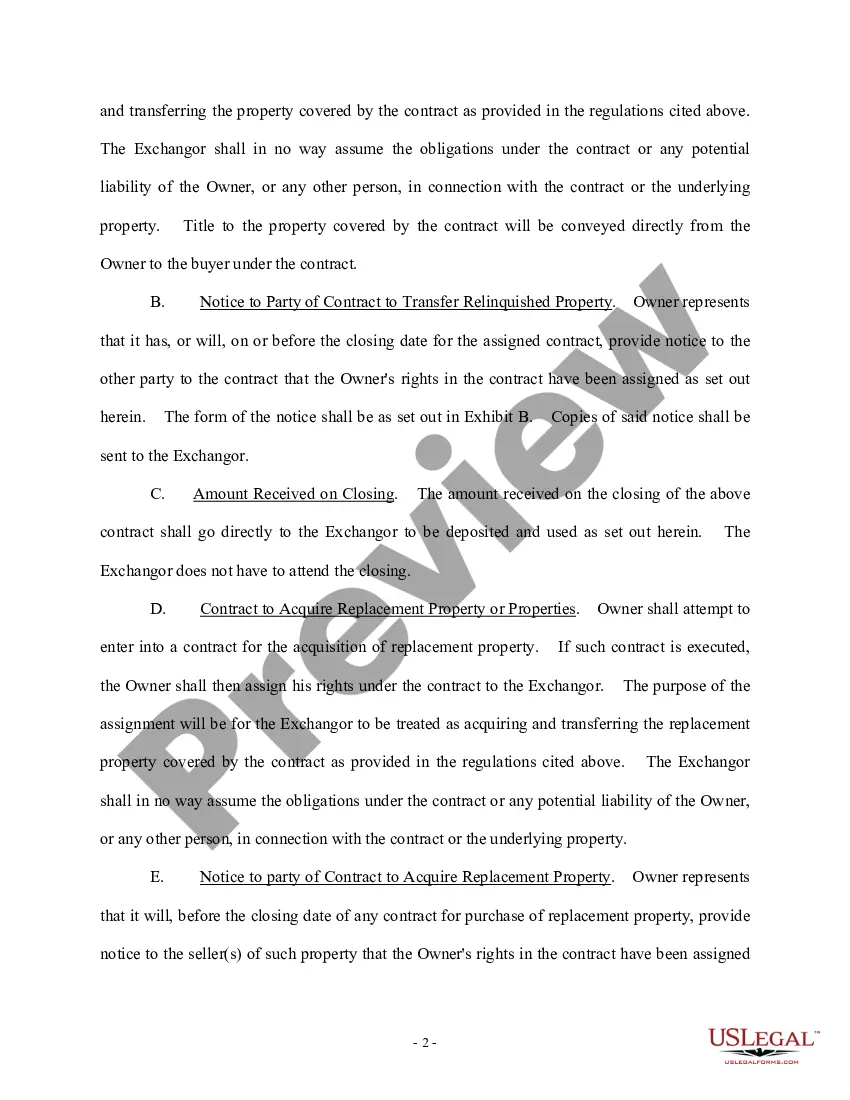
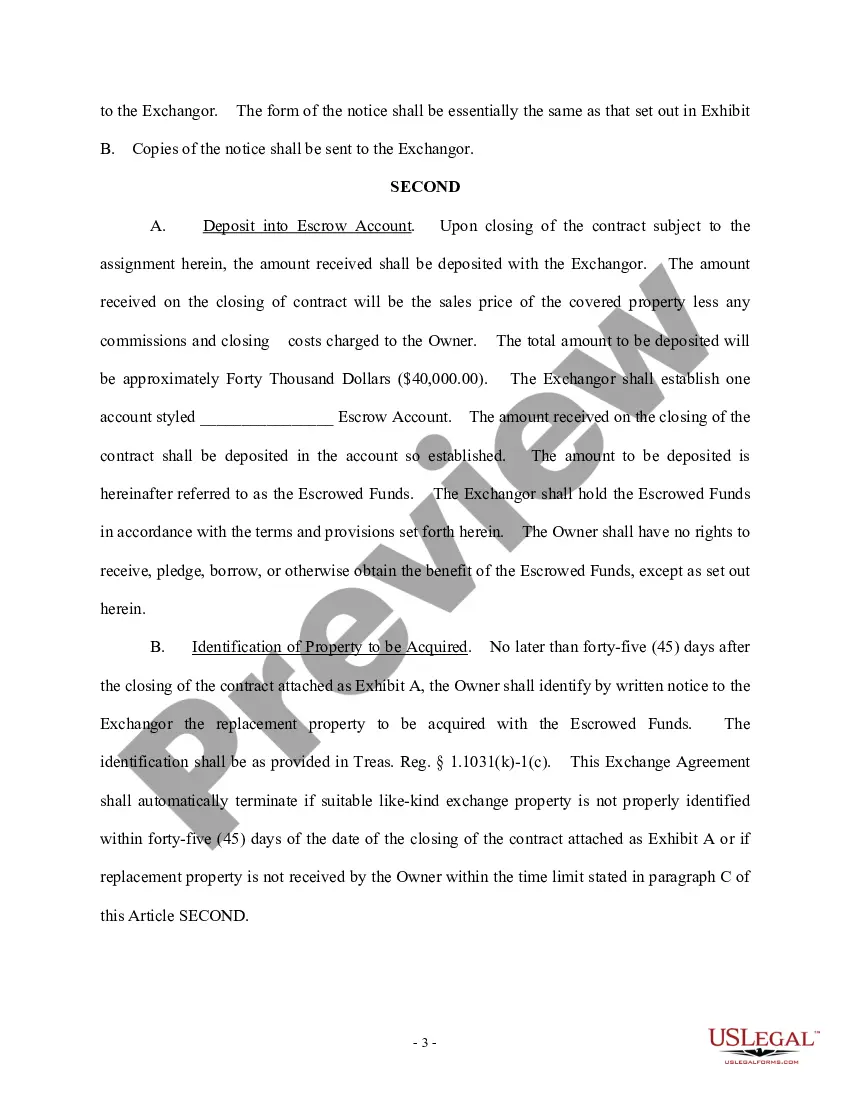
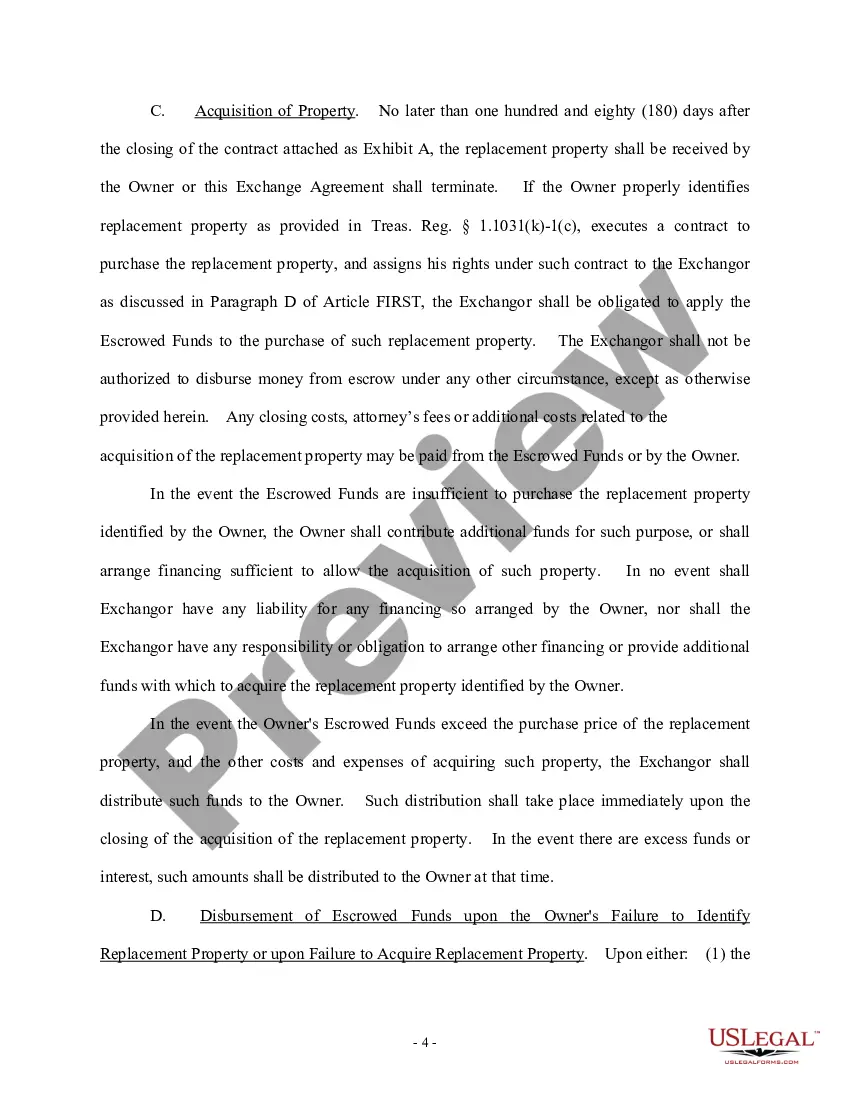
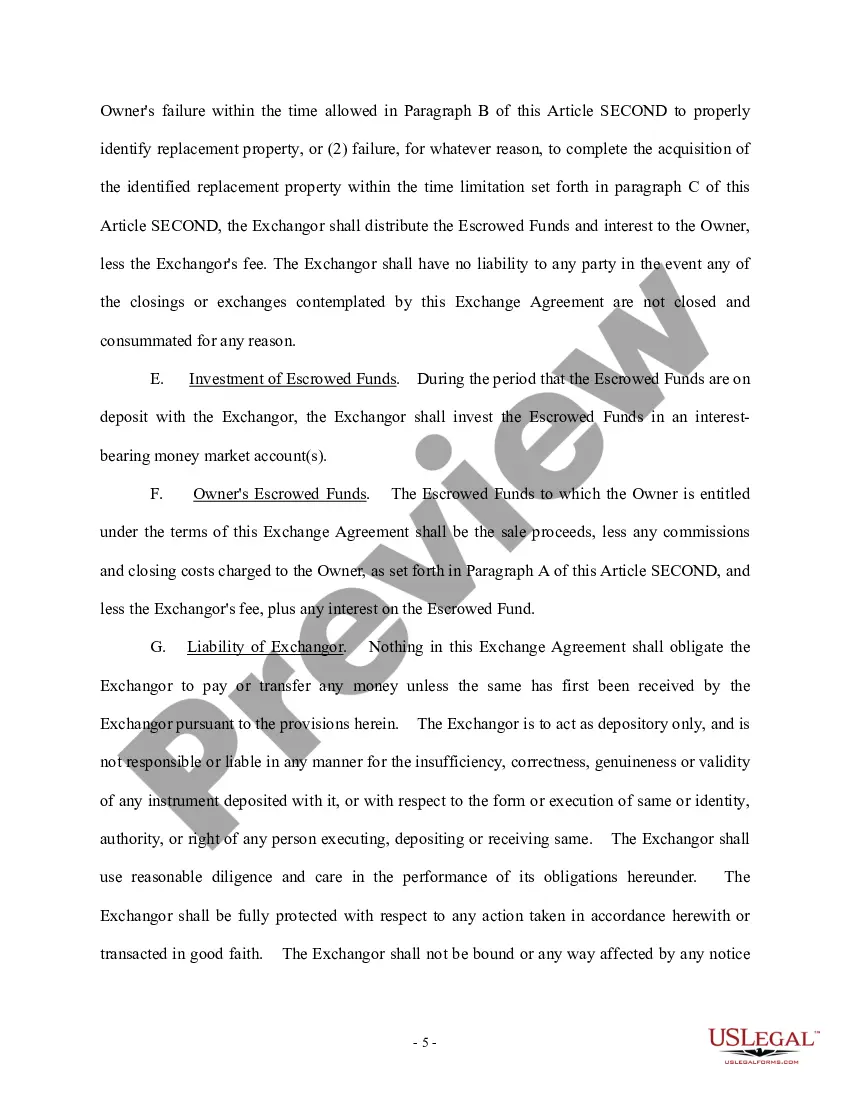
Description

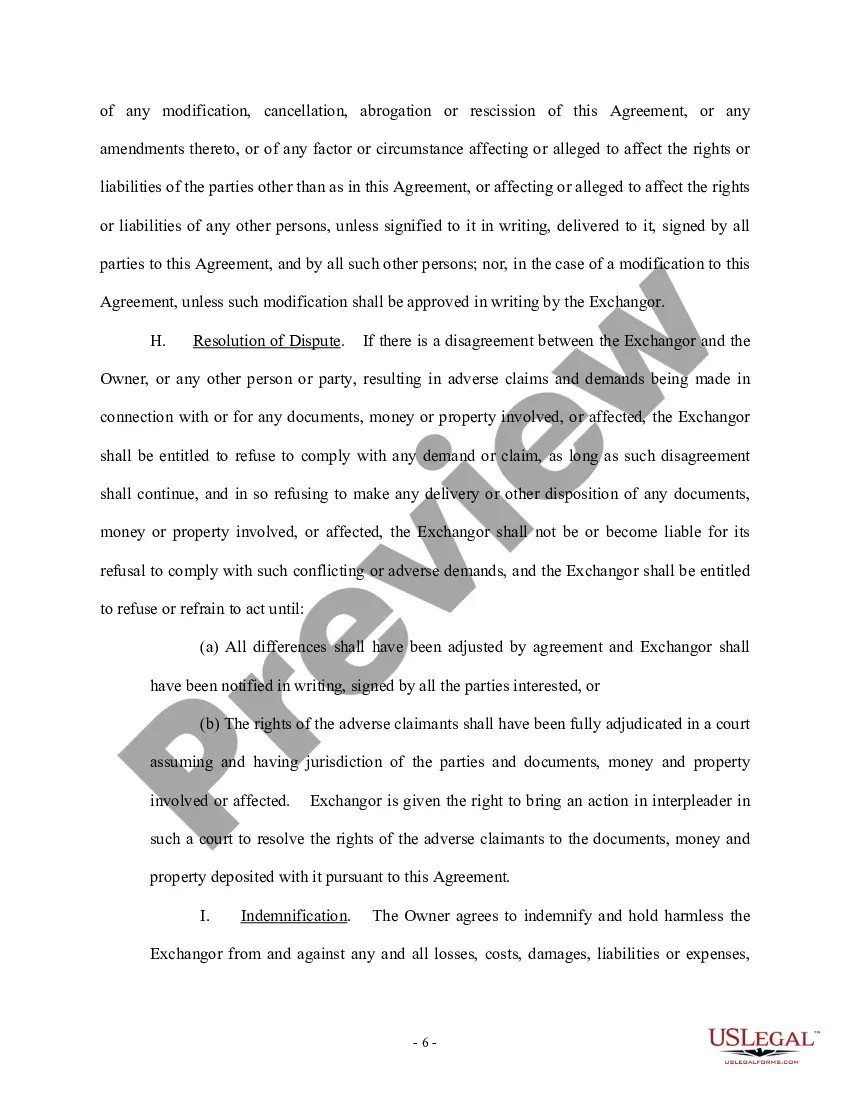
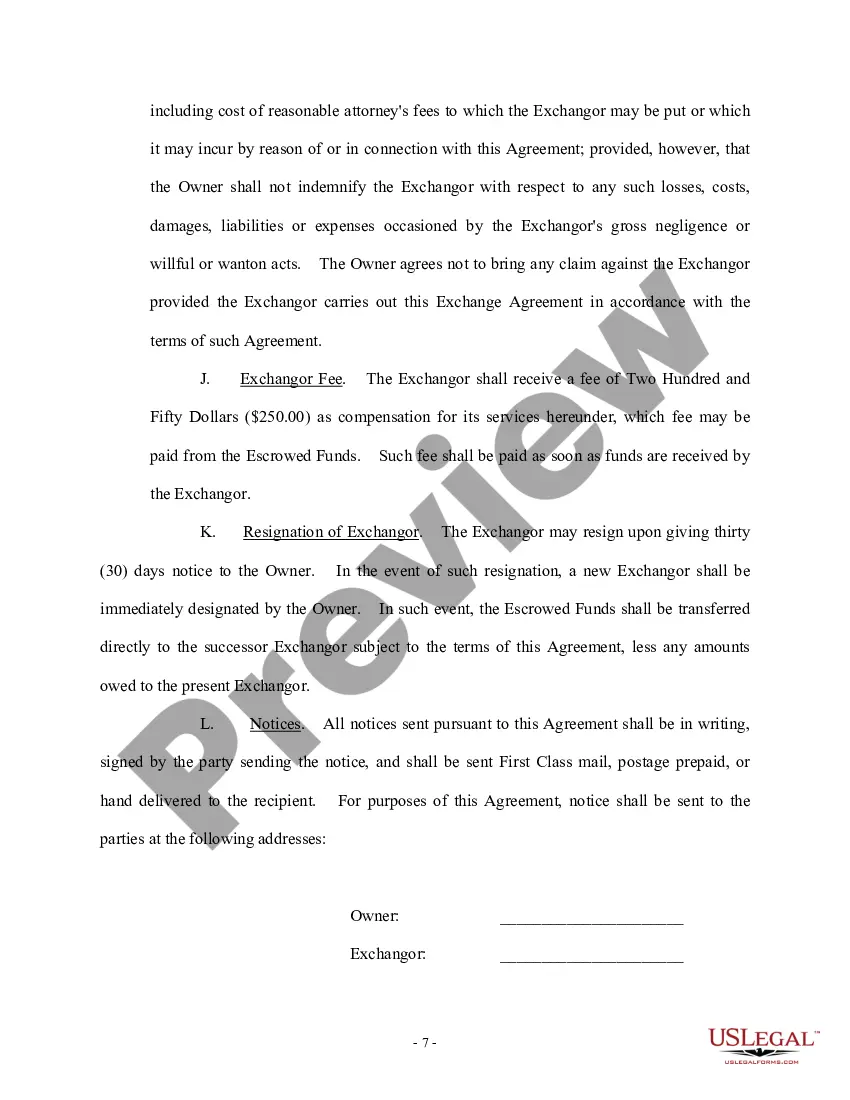
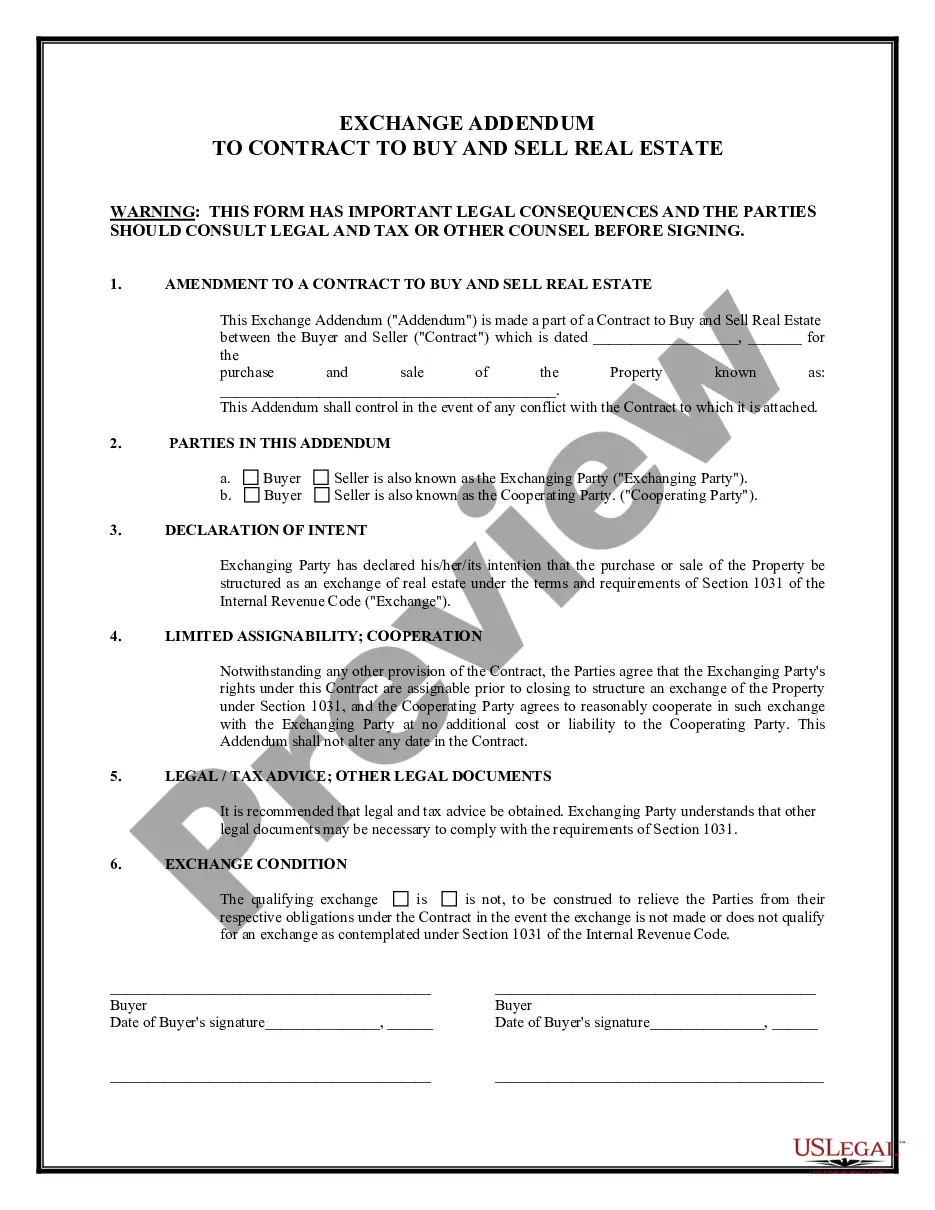
Get your form ready online
Our built-in tools help you complete, sign, share, and store your documents in one place.
Make edits, fill in missing information, and update formatting in US Legal Forms—just like you would in MS Word.
Download a copy, print it, send it by email, or mail it via USPS—whatever works best for your next step.
Sign and collect signatures with our SignNow integration. Send to multiple recipients, set reminders, and more. Go Premium to unlock E-Sign.
If this form requires notarization, complete it online through a secure video call—no need to meet a notary in person or wait for an appointment.
We protect your documents and personal data by following strict security and privacy standards.

Make edits, fill in missing information, and update formatting in US Legal Forms—just like you would in MS Word.

Download a copy, print it, send it by email, or mail it via USPS—whatever works best for your next step.

Sign and collect signatures with our SignNow integration. Send to multiple recipients, set reminders, and more. Go Premium to unlock E-Sign.

If this form requires notarization, complete it online through a secure video call—no need to meet a notary in person or wait for an appointment.

We protect your documents and personal data by following strict security and privacy standards.
Looking for another form?









Form popularity
FAQ
During a 1031 exchange, a title or escrow company is typically engaged to manage the movement of funds and the essential paperwork. Their involvement is integral to effectively and securely presiding over the transference of ownership from the given-up property to the substituted property.
Use Parts I, II, and III of Form 8824 to report each exchange of business or investment property for property of a like kind.
A Qualified Intermediary, or QI, is an independent third party to the transaction whose function is to prepare the documents necessary to create the exchange, as well as to act as the independent escrow agent for the exchange funds.
Key Steps in the 1031 Exchange Process Determine if a 1031 Exchange is Right for You. Develop a Tax-Deferred Transition Strategy. Inform Your Advisors & Attorney About your 1031 Exchange. Enter into a Contract to Sell Your Existing Investment Property. Select a Qualified Intermediary and Open an Exchange.
Your 1031 exchange must be reported by completing Form 8824 and filing it along with your federal income tax return. If you completed more than one exchange, a different form must be completed for each exchange. For line-by-line instructions on how to complete form, download the instructions here.
A 1031 exchange gets its name from Section 1031 of the U.S. Internal Revenue Code, which allows you to avoid paying capital gains taxes when you sell an investment property and reinvest the proceeds from the sale within certain time limits in a property or properties of like-kind and equal or greater value.
How to Do a 1031 Exchange Choose a qualified intermediary to coordinate the exchange. Sell your current real estate property. You have 45 days to identify potential replacement properties. You have 180 days to close on a replacement property. File IRS Form 8824.
Lack of Liquidity- Exchanging properties continually can tie up funds in real estate, making it hard for an investor to access liquid capital if required. While real estate can be a profitable investment, it's not as liquid as some other assets.
After completing a 1031 exchange, you must report the transaction to the IRS using Form 8824 to maintain the transaction's tax-deferred status.
