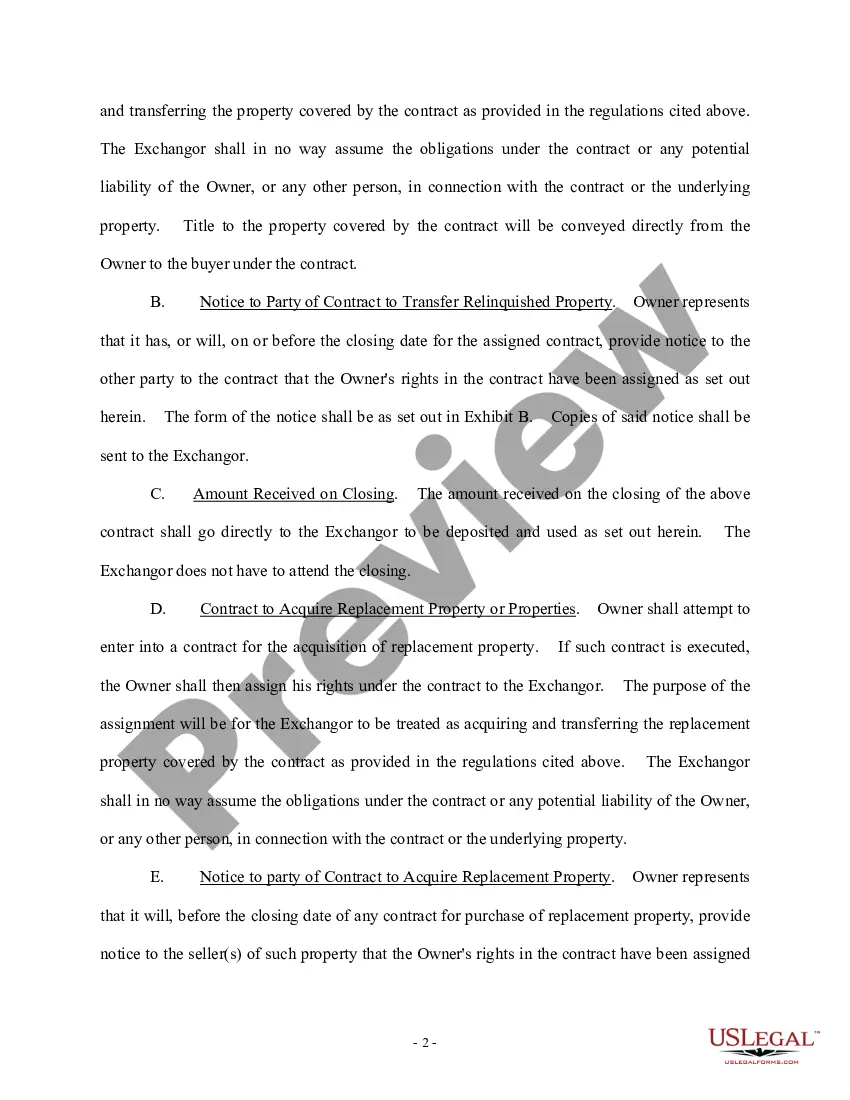
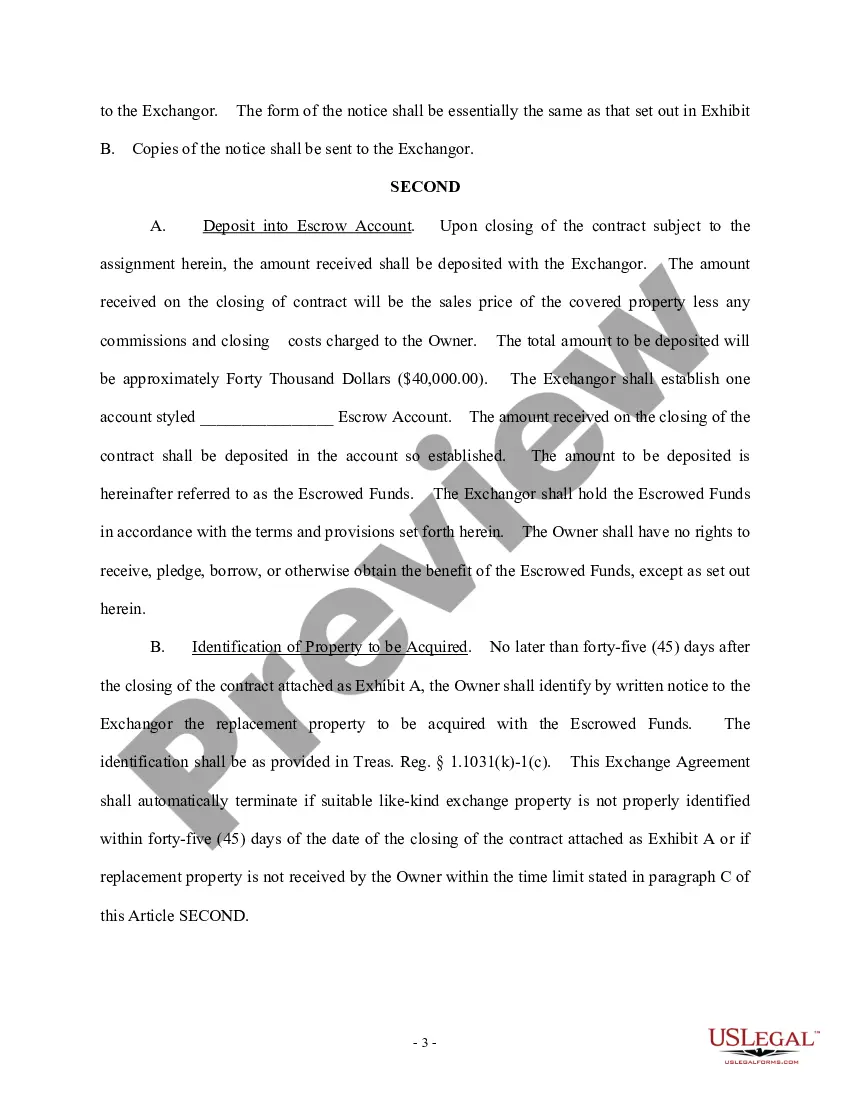
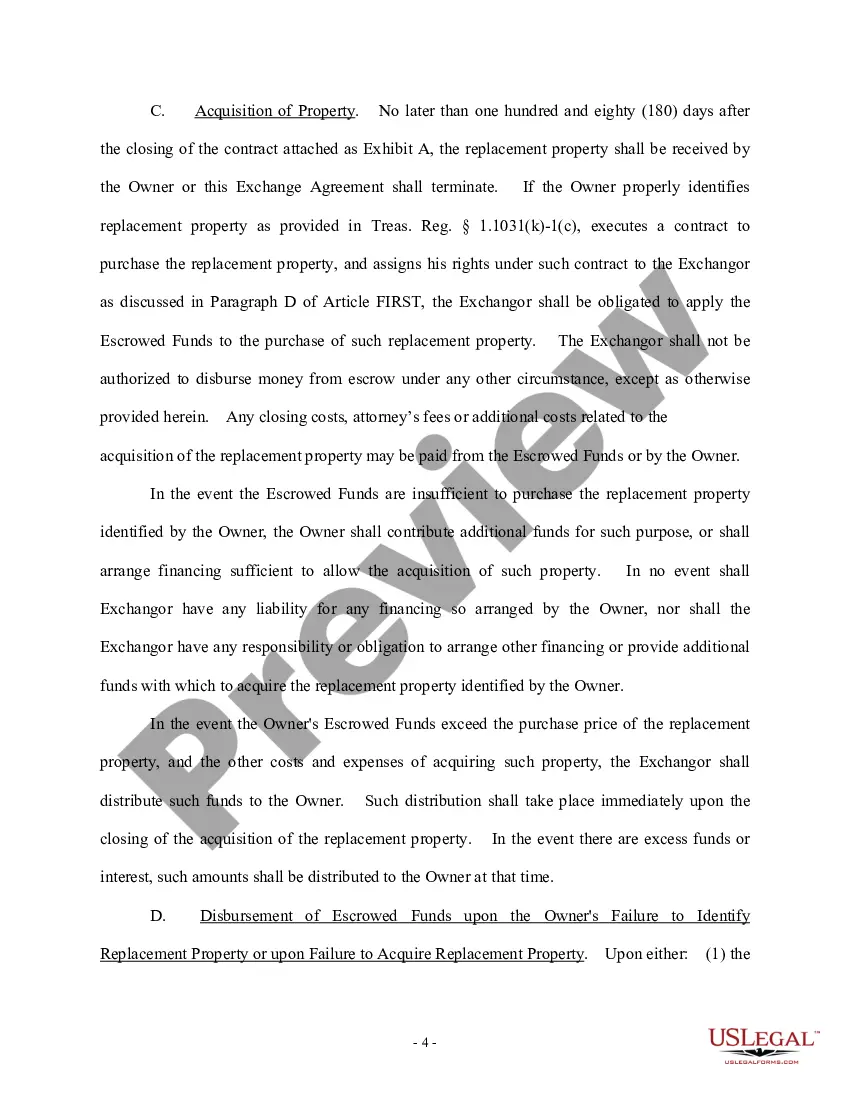
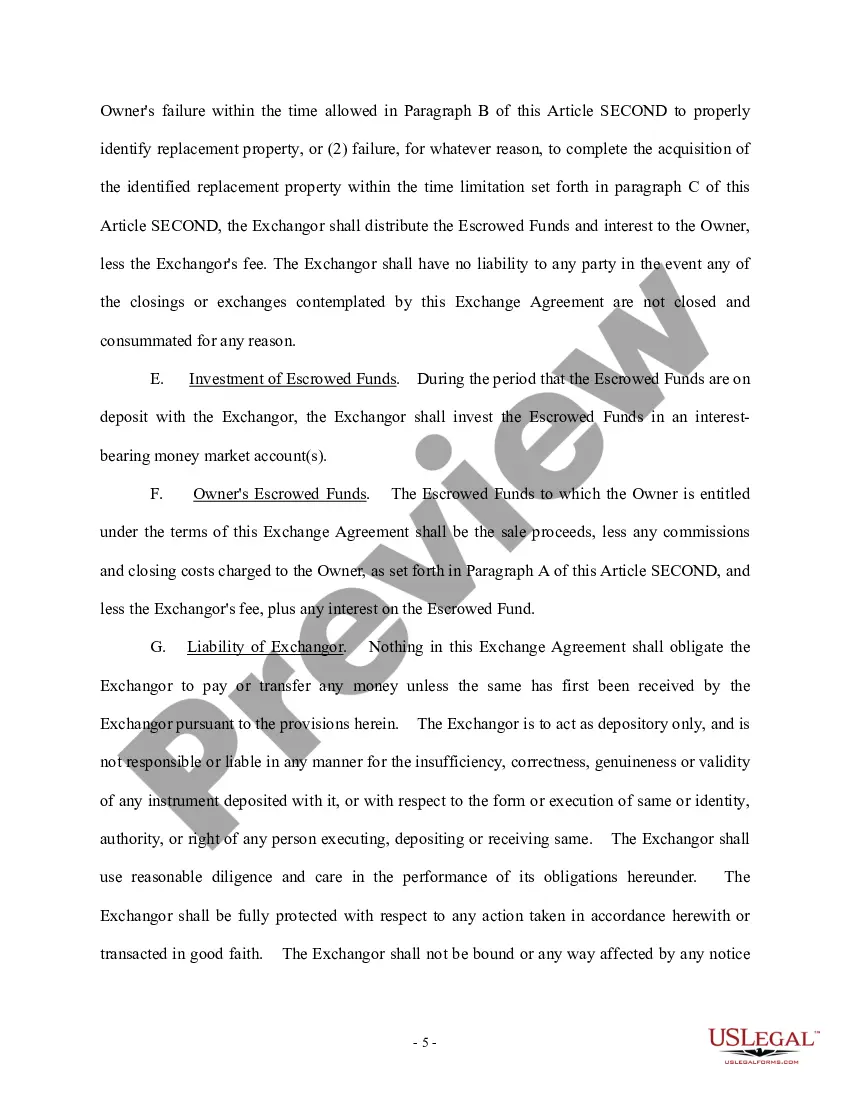
1031 Exchange Agreement Form For Uk In Florida
Description

Get your form ready online
Our built-in tools help you complete, sign, share, and store your documents in one place.
Make edits, fill in missing information, and update formatting in US Legal Forms—just like you would in MS Word.
Download a copy, print it, send it by email, or mail it via USPS—whatever works best for your next step.
Sign and collect signatures with our SignNow integration. Send to multiple recipients, set reminders, and more. Go Premium to unlock E-Sign.
If this form requires notarization, complete it online through a secure video call—no need to meet a notary in person or wait for an appointment.
We protect your documents and personal data by following strict security and privacy standards.

Make edits, fill in missing information, and update formatting in US Legal Forms—just like you would in MS Word.

Download a copy, print it, send it by email, or mail it via USPS—whatever works best for your next step.

Sign and collect signatures with our SignNow integration. Send to multiple recipients, set reminders, and more. Go Premium to unlock E-Sign.

If this form requires notarization, complete it online through a secure video call—no need to meet a notary in person or wait for an appointment.

We protect your documents and personal data by following strict security and privacy standards.
Looking for another form?







Form popularity
FAQ
You can perform a 1031 exchange with foreign properties, so long as your relinquished and replacement properties are both located outside the United States.
TIMELINE REQUIREMENTS Measured from when the relinquished property closes, the Exchangor has 45 days to nominate (identify) potential replacement properties and 180 days to acquire the replacement property. The exchange is completed in 180 days, not 45 days plus 180 days.
Navigating the 1031 Exchange Process in Florida Step 1: Plan and Consult. Before selling your property, assess your investment objectives. Step 2: Sale of Relinquished Property. Step 3: Identify Replacement Property. Step 4: Buy the Replacement Property. Step 5: Reporting and Compliance.
While there are no specific minimum or maximum values for the replacement property, it's important to note that a successful 1031 exchange must adhere to certain other requirements: Like-Kind Property: The replacement property must be of “like-kind” to the relinquished property.
2) Stocks, bonds or notes: Although stocks can be exchanged in a corporate reorganization under IRC Section1036(a) and certain United States bonds under IRC Section 1037, none of these types of transactions qualify for tax deferral under §1031.
The identification must be in writing, signed by you and delivered to a person involved in the exchange like the seller of the replacement property or the qualified intermediary. However, notice to your attorney, real estate agent, accountant or similar persons acting as your agent is not sufficient.
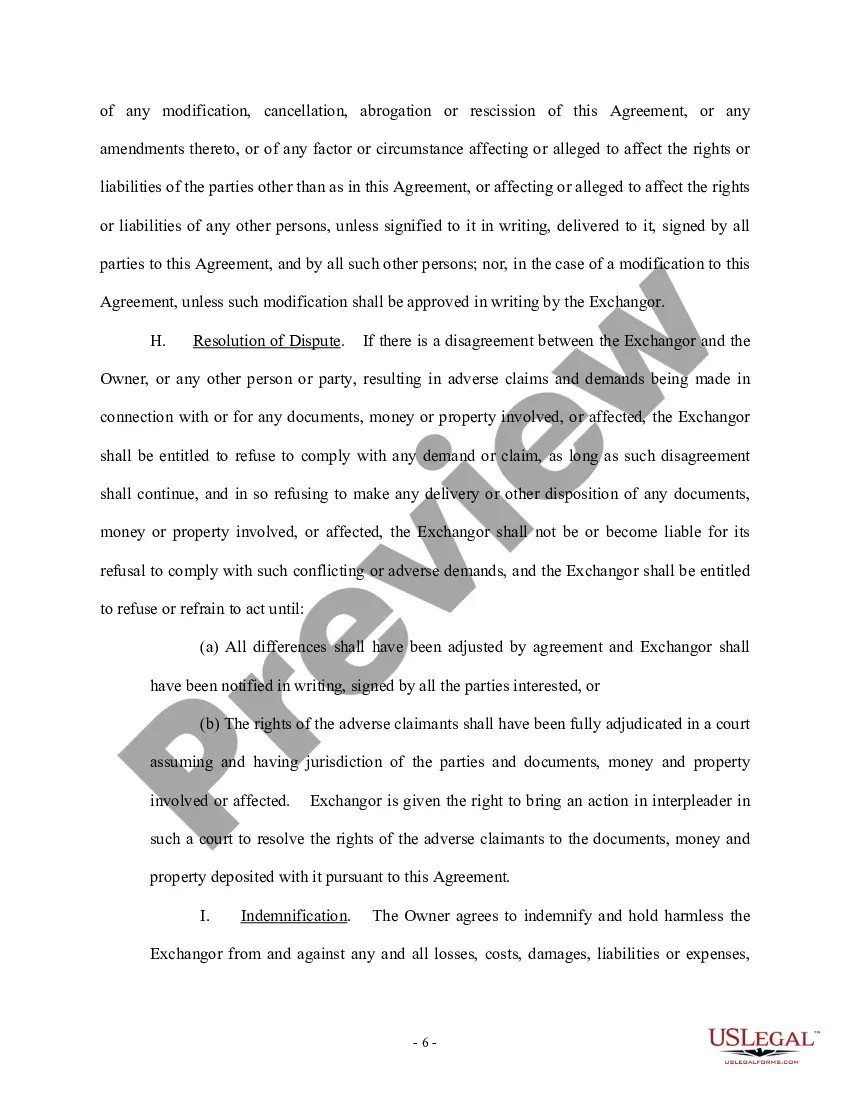
A Qualified Intermediary is typically required to complete a 1031 exchange. To maintain the exchange's tax-deferred status, the IRS requires that the taxpayer not have direct access to the proceeds from the sale of the relinquished property.
A primary residence usually does not qualify for an exchange because it is not used in trade or business or investment. That said, that portion of the primary residence that is used in a trade or business or for investment may qualify for a 1031 Exchange.
