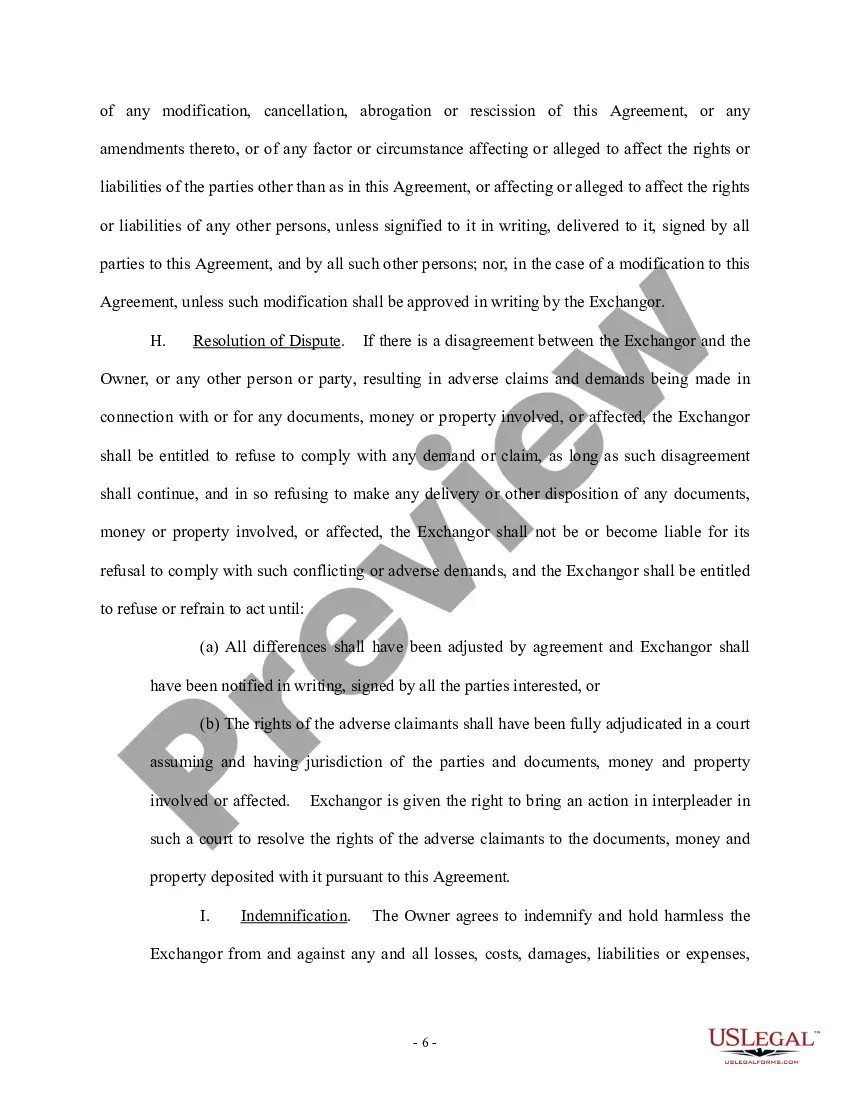
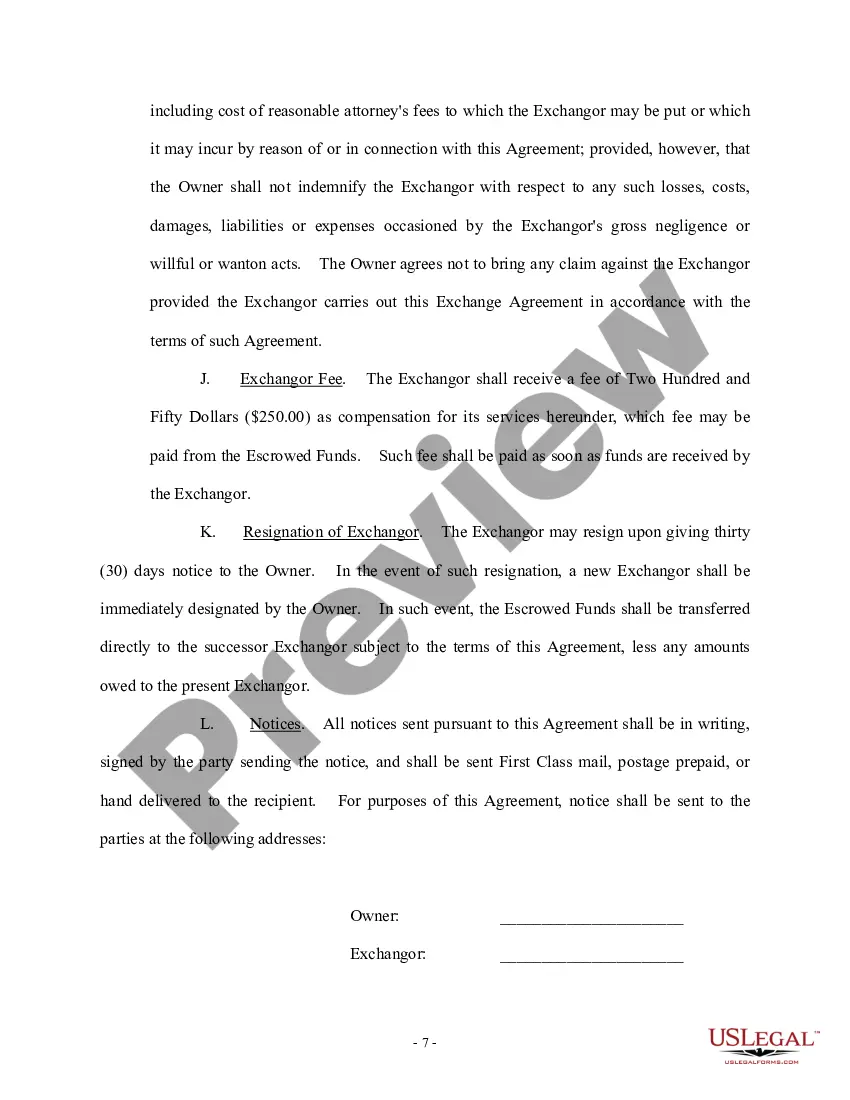
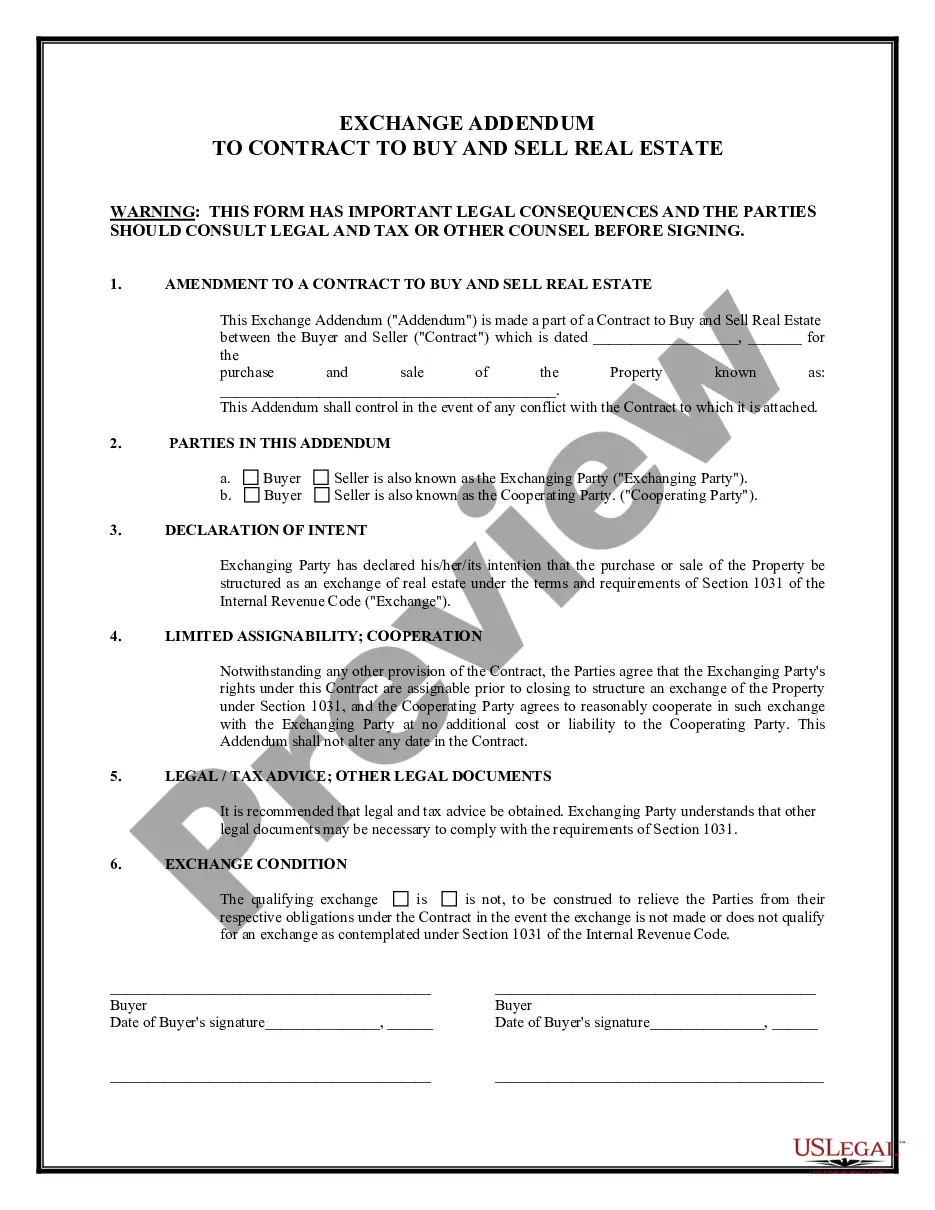
1031 Exchange Agreement With Qualified Intermediary In Cook
Description

Get your form ready online
Our built-in tools help you complete, sign, share, and store your documents in one place.
Make edits, fill in missing information, and update formatting in US Legal Forms—just like you would in MS Word.
Download a copy, print it, send it by email, or mail it via USPS—whatever works best for your next step.
Sign and collect signatures with our SignNow integration. Send to multiple recipients, set reminders, and more. Go Premium to unlock E-Sign.
If this form requires notarization, complete it online through a secure video call—no need to meet a notary in person or wait for an appointment.
We protect your documents and personal data by following strict security and privacy standards.

Make edits, fill in missing information, and update formatting in US Legal Forms—just like you would in MS Word.

Download a copy, print it, send it by email, or mail it via USPS—whatever works best for your next step.

Sign and collect signatures with our SignNow integration. Send to multiple recipients, set reminders, and more. Go Premium to unlock E-Sign.

If this form requires notarization, complete it online through a secure video call—no need to meet a notary in person or wait for an appointment.

We protect your documents and personal data by following strict security and privacy standards.
Looking for another form?





Form popularity
FAQ
As the nation's largest Qualified Intermediary, IPX1031 provides industry leading exchange services including guidance, expertise and security for 1031 Tax Deferred Exchanges.
In a three or four party exchange, including the Taxpayer, Buyer of the old property and Seller of the replacement property, then yes, a Qualified Intermediary is required. The g(6) constructive receipt limitations of the 1031 code prohibit the taxpayer from touching the exchange funds or the net equity from the sale.
How To Find a Qualified Intermediary for a 1031 Exchange Asking your local escrow officer for recommendations. Speaking to fellow investors in your network for references. Using national directories for QIs registered with regulatory groups, such as the Federation of Exchange Accommodators.
The Qualified Intermediary (QI) Program administers agreements between foreign entities, or foreign branches of certain U.S. entities, and the IRS regarding tax withholding and reporting requirements for certain U.S. source income.
Employing a bank-owned qualified intermediary for a 1031 exchange can greatly enhance your financial management. The bank holds the proceeds from the sale of your property and ensures they are correctly reinvested into a replacement property.
In a three or four party exchange, including the Taxpayer, Buyer of the old property and Seller of the replacement property, then yes, a Qualified Intermediary is required. The g(6) constructive receipt limitations of the 1031 code prohibit the taxpayer from touching the exchange funds or the net equity from the sale.
Get Referrals from Trusted Sources Your attorney, tax advisor, and realtor should be in a good position to make a recommendation as well because they will be familiar with the specifics of your property transaction, and can ideally recommend a QI who has worked on a similar type of exchange in the past.
owned qualified intermediary is instrumental in guiding individuals through the process and maximizing the benefits of the 1031 exchange, but you also get expert guidance.
