1031 Exchange Agreement Form With Us In Arizona
Description




Form popularity
FAQ
As such, the process is uniformly recognized across all 50 states and DC.
Since 1031 Exchange is a section of the federal tax code, it is applicable to all fifty United States. So if you are a customer that's interested in selling a piece of real estate in Arizona and exchanging elsewhere, you are perfectly fine doing that through a 1031 Exchange.
A Qualified Intermediary, or QI, is an independent third party to the transaction whose function is to prepare the documents necessary to create the exchange, as well as to act as the independent escrow agent for the exchange funds.
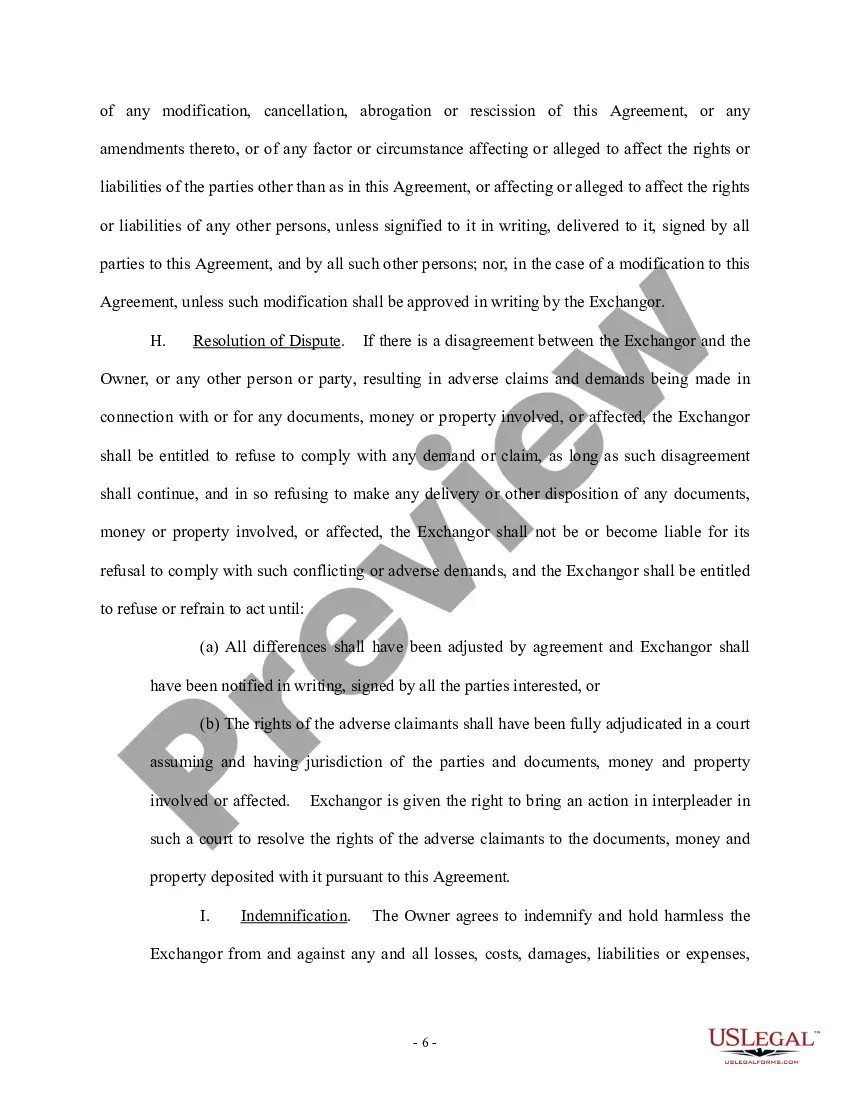
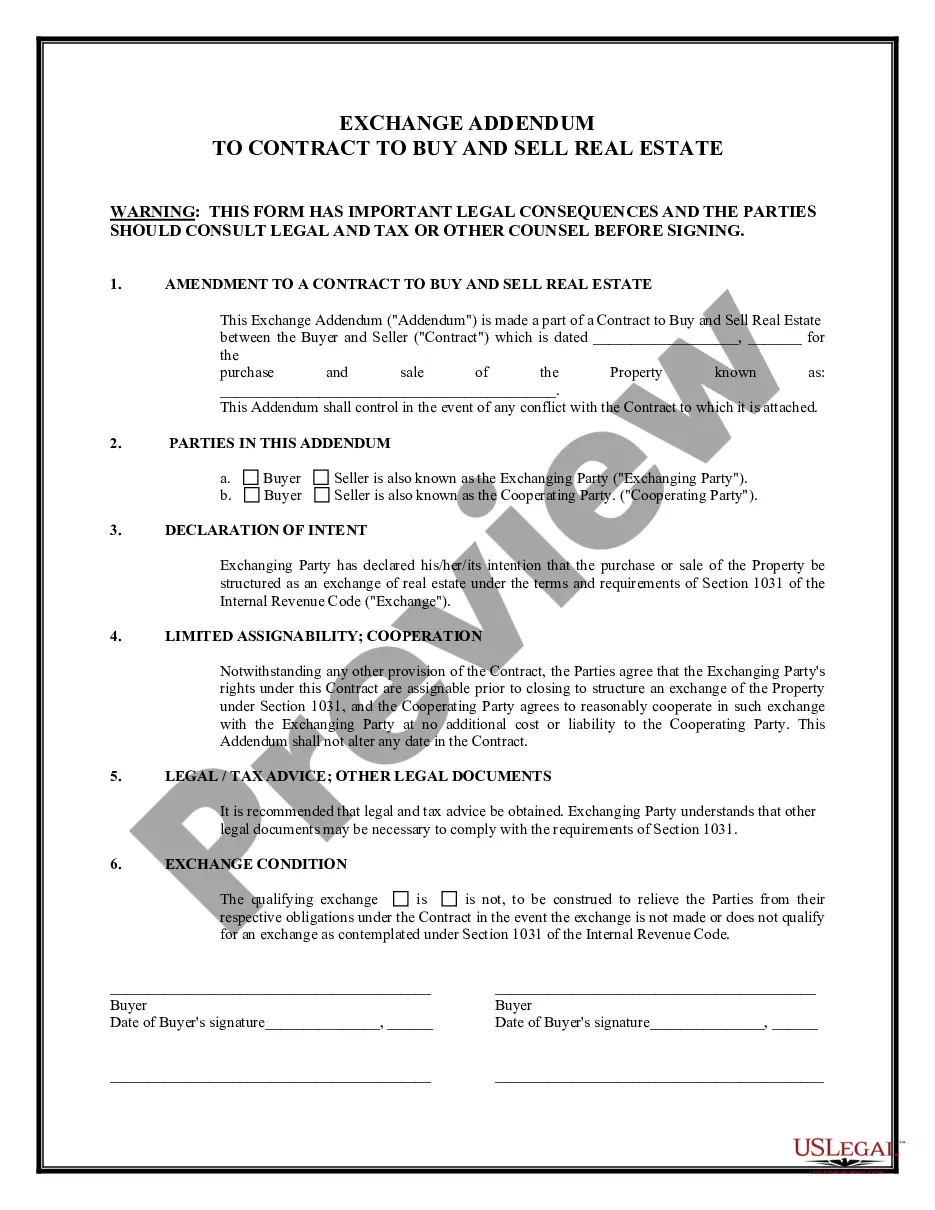
TIMELINE REQUIREMENTS Measured from when the relinquished property closes, the Exchangor has 45 days to nominate (identify) potential replacement properties and 180 days to acquire the replacement property.
States like Florida, Texas, and Nevada are great options for 1031 exchanges due to their lack of state income tax and strong real estate markets. On the other hand, states like California, New York, and Oregon can be less attractive due to their high state income tax rates and strict real estate laws.
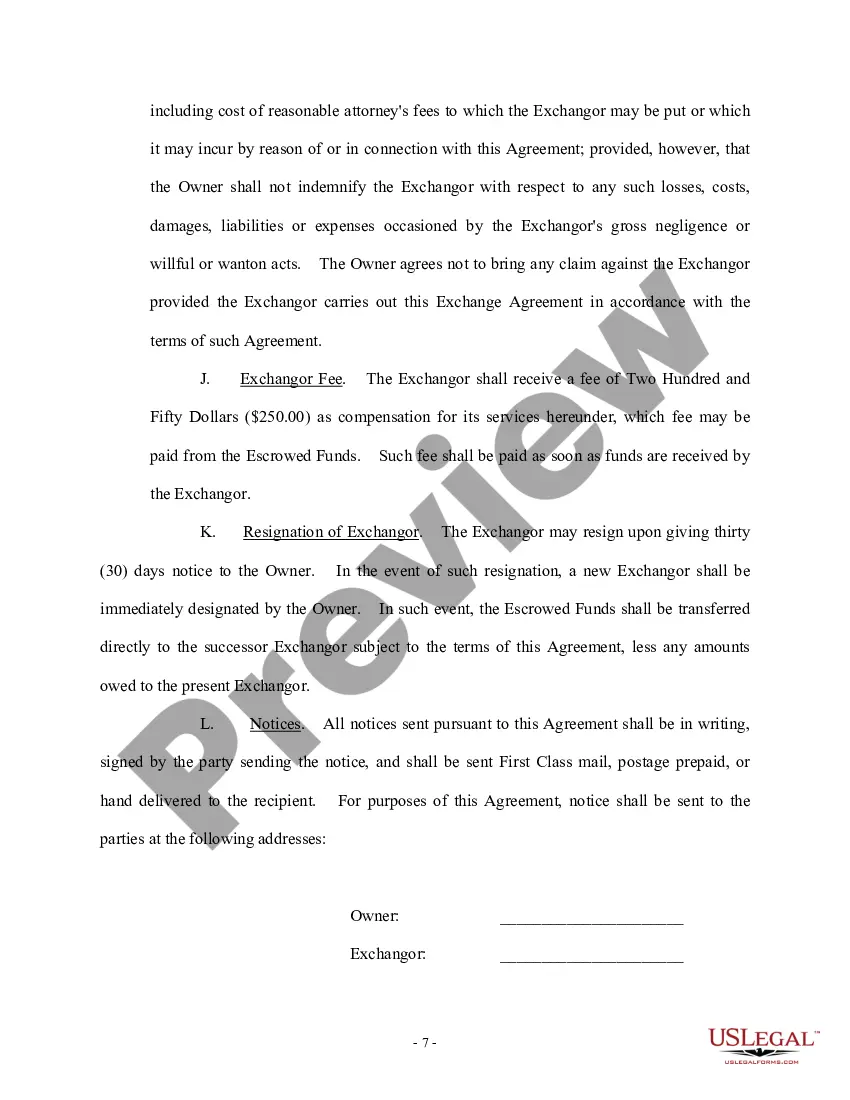
What Is a Qualified Intermediary? Qualified Intermediary (QI) is someone a property seller selects to oversee the 1031 exchange process and its funds. They hold the funds from the previous property and use them to acquire the new replacement property to ensure compliance with IRS regulations.
While it may be tempting to ask your CPA to act as your Qualified Intermediary, a CPA cannot facilitate a 1031 exchange between investors. Under IRC Section 1031 guidelines, CPAs, attorneys, investment bankers, and real estate agents/brokers fall under the 'agent' category.
A 1031 exchange does not obviate the need for a realtor. Quite to the contrary, in most cases an Exchanger has an even greater need for a realtor due to the time constraints placed on Exchangers.
Appraisals are an integral part of the 1031 exchange process as they provide an unbiased estimate of the property's value.
