Homestead Exemption With In Florida
Description





Get your form ready online
Our built-in tools help you complete, sign, share, and store your documents in one place.
Make edits, fill in missing information, and update formatting in US Legal Forms—just like you would in MS Word.
Download a copy, print it, send it by email, or mail it via USPS—whatever works best for your next step.
Sign and collect signatures with our SignNow integration. Send to multiple recipients, set reminders, and more. Go Premium to unlock E-Sign.
If this form requires notarization, complete it online through a secure video call—no need to meet a notary in person or wait for an appointment.
We protect your documents and personal data by following strict security and privacy standards.

Make edits, fill in missing information, and update formatting in US Legal Forms—just like you would in MS Word.

Download a copy, print it, send it by email, or mail it via USPS—whatever works best for your next step.

Sign and collect signatures with our SignNow integration. Send to multiple recipients, set reminders, and more. Go Premium to unlock E-Sign.

If this form requires notarization, complete it online through a secure video call—no need to meet a notary in person or wait for an appointment.

We protect your documents and personal data by following strict security and privacy standards.
Looking for another form?








Form popularity
FAQ
When someone owns property and makes it his or her permanent residence or the permanent residence of his or her dependent, the property owner may be eligible to receive a homestead exemption that would decrease the property's taxable value by as much as $50,000. Property Tax - Taxpayers - Exemptions - Florida Dept. of Revenue floridarevenue floridarevenue
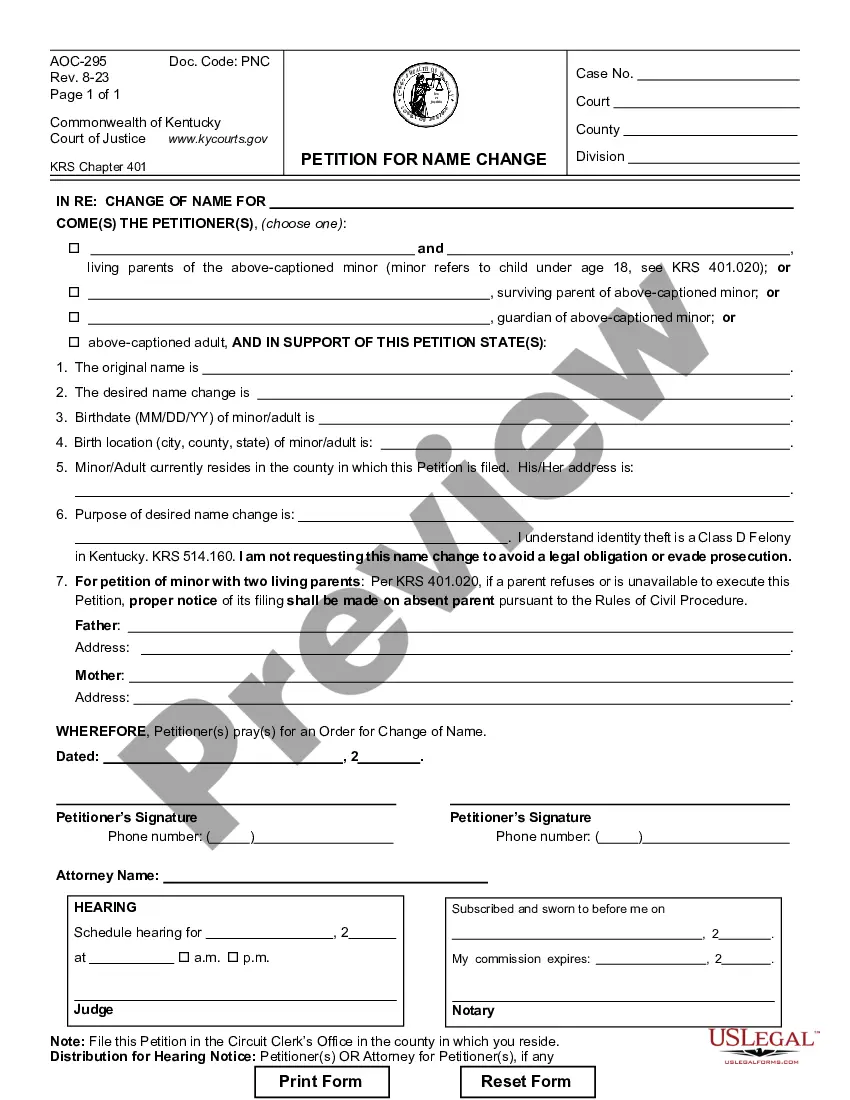
To apply for the Florida Homestead Property Tax Exemption, the property owner must complete Form DR-501 and submit it to the property appraiser in the county where the property is located by March 1, or if in Brevard County, by using the above links.
Required Documentation for Homestead Exemption Application Your recorded deed or tax bill. Florida Drivers License or Identification Card. Will need to provide ID# and issue date. Vehicle Registration. Will need to provide tag # and issue date. Permanent Resident Alien Card. Will need to provide ID# and issue date.
You are 65 years of age, or older, on January 1; You qualify for, and receive, the Florida Homestead Exemption; Your total 'Household Adjusted Gross Income' for everyone who lives on the property cannot exceed statutory limits.
Where can I find information on my homestead exemption? Tax exemption information can be found on the Property Appraiser's website .mcpafl.
To qualify for homestead exemption, you have to declare Florida as your permanent residence. For example, if you vote, you must vote in Florida. If you drive, you must have a Florida driver's license. Your home address on your federal income tax return should be Florida. Homestead Exemption Frequently Asked Questions martin.fl martin.fl
Do I need to re-apply for my Homestead Exemption every year? No, you do not. The Property Appraiser mails out in January an “Automatic Residential Renewal Receipt” to every homesteaded property owner. If you do not have any changes, you can keep the receipt as proof that you are eligible for the automatic renewal.
When someone owns property and makes it his or her permanent residence or the permanent residence of his or her dependent, the property owner may be eligible to receive a homestead exemption that would decrease the property's taxable value by as much as $50,000.
To get a homestead deduction on your Florida taxes, you have to fill out an application form, the DR-501, and demonstrate proof of residence by March 1 of the year for which you wish to qualify.
Homestead Exemption: Every person who has legal or equitable title to real property in the State of Florida and who resides thereon and in good faith makes it his or her permanent home is eligible to receive a homestead exemption of up to $50,000. The first $25,000 applies to all property taxes.