Exemption Form Homestead With Multiple Owners In Cook
Description





Get your form ready online
Our built-in tools help you complete, sign, share, and store your documents in one place.
Make edits, fill in missing information, and update formatting in US Legal Forms—just like you would in MS Word.
Download a copy, print it, send it by email, or mail it via USPS—whatever works best for your next step.
Sign and collect signatures with our SignNow integration. Send to multiple recipients, set reminders, and more. Go Premium to unlock E-Sign.
If this form requires notarization, complete it online through a secure video call—no need to meet a notary in person or wait for an appointment.
We protect your documents and personal data by following strict security and privacy standards.
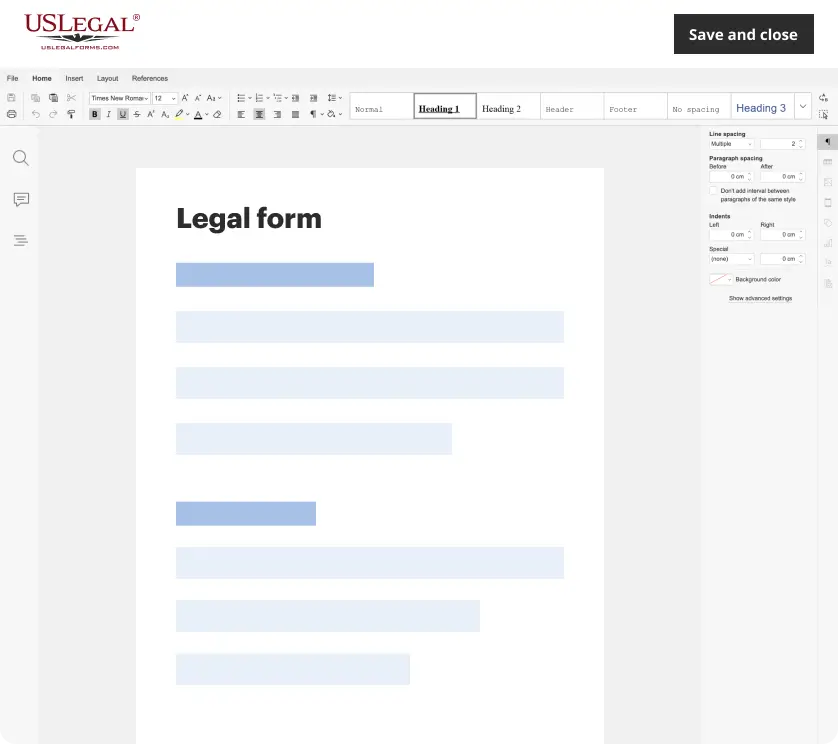
Make edits, fill in missing information, and update formatting in US Legal Forms—just like you would in MS Word.
Download a copy, print it, send it by email, or mail it via USPS—whatever works best for your next step.
Sign and collect signatures with our SignNow integration. Send to multiple recipients, set reminders, and more. Go Premium to unlock E-Sign.

If this form requires notarization, complete it online through a secure video call—no need to meet a notary in person or wait for an appointment.
We protect your documents and personal data by following strict security and privacy standards.
Looking for another form?


Form popularity
FAQ
The U.S. tax code provides tax advantages for married couples who file jointly and own a home. While duplicating these tax benefits with another residence would help your bottom line when you file taxes, it's not possible to claim two primary residences because of tax regulations from the IRS.
Both owners must sign the application form and, if both owners otherwise qualify, the homestead exemption will be granted for the entire home. This process is as simple as any other married couple or single individual applying for the exemption.
You must own the property and have an equity interest in it. This includes houses, condominiums, co-ops, and mobile homes. Your home equity must fall within the exemption limits for your county: $179,950 for the counties of Kings, Queens, New York, Bronx, Richmond, Nassau, Suffolk, Rockland, Westchester, and Putnam.
The Homeowner Exemption reduces the Equalized Assessed Value (EAV) of a property by $10,000.
Every individual is entitled to an estate of homestead to the extent in value of $15,000 of his or her interest in a farm or lot of land and buildings thereon, a condominium, or personal property, owned or rightly possessed by lease or otherwise and occupied by him or her as a residence, or in a cooperative that owns ...
Taxpayers are only entitled to one homestead exemption on their primary residence for any given tax year. If you received a notice of discovery for your primary residence, please contact the Assessor's Office if you have not already done so.
This annual exemption is available for property that is occupied as a residence by a person 65 years of age or older who is liable for paying real estate taxes on the property and is an owner of record of the property or has a legal or equitable interest therein as evidenced by a written instrument, except for a ...
How do I change my property taxes? You can get your property taxes lowered by proving that your house is worth less than the assessor says it is. In Cook County, you can appeal the value of your property with the Cook County Assessor. You can also appeal the value of your property to the Cook County Board of Review.


