Letter Instruction Sample With Enclosure In Wayne
Description

Form popularity
FAQ
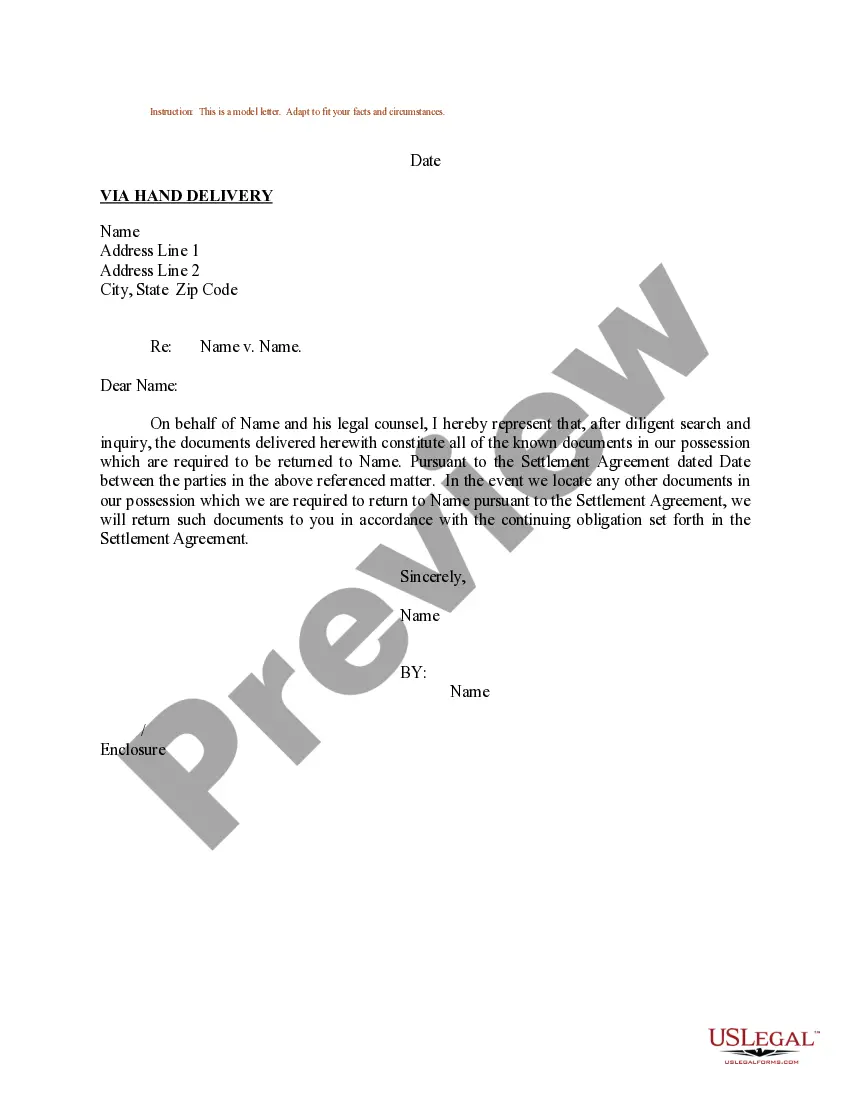
If something is enclosed with a letter, the notation “Enclosure” is typed a double-space below the writer's initials and/or typist's initials. If more than one item is enclosed, the word is made plural and followed by the number of items (e.g., “Enclosures 2”).
Here are six steps to write a letter of instruction: Create a header. Before you write the content of the letter, create a header at the top left-hand corner of the document. Address the reader. Explain the project or task. List each step. Conclude your letter. Revise the document.
If you need to note enclosures in a letter, leave a double space under your signature and salutation, then write “Enclosure.” To signify that your letter has more than 1 document enclosed, use the plural, “Enclosures” followed by a colon and the number of documents.
Find your name at the end of your cover letter and double space after that. Type the word “Enclosure:” for one document, “Enclosures:” for two or more. It's also ok to use the cover letter enclosure notation “Encl.:”.
REFERENCES The primary reference is the Department of the Navy Correspondence Manualalso known as the Correspondence Manual. A supplement to the Manual is Marine Corps Order 5216.20 published as Chapter 13 of the Correspondence Manual.
Left and right margins are always set at 1 inch. Times New Roman 12 pitch font is preferred for Navy correspondence. Single spacing between lines. Double spacing between paragraphs/subparagraphs.
Explanation: The first line of the letterhead should be centered from the top of the page based on specific formatting requirements. In constructing formal letters, a common guideline is to center the letterhead between the top one-inch margin and the first line where the body text begins.
