Notice Of Serving Interrogatories Form In Utah
Description










Form popularity
FAQ
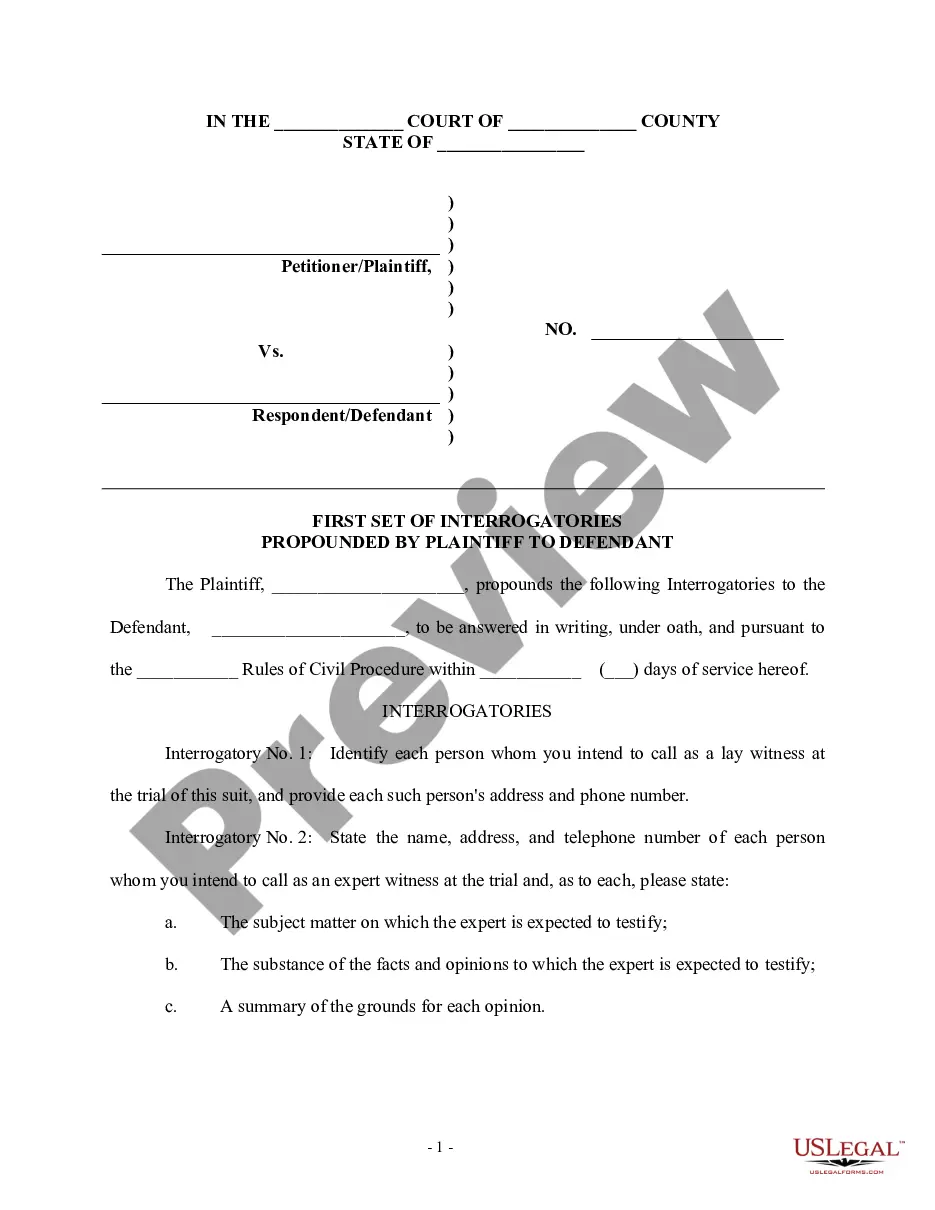
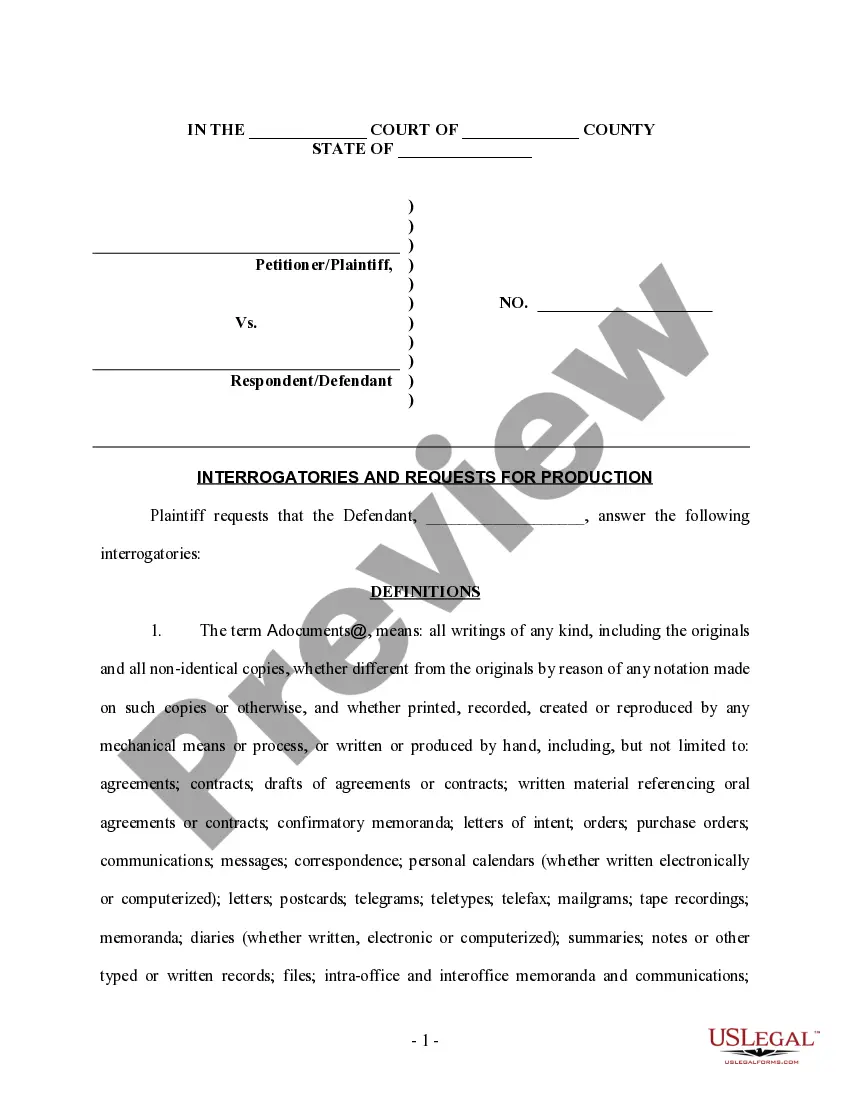
Interrogatories are lists of questions sent to the other party that s/he must respond to in writing. You can use interrogatories to find out facts about a case but they cannot be used for questions that draw a legal conclusion.
If you have received interrogatories, you have thirty days to prepare your written answers (unless the court has ordered something else). You do not file your written answers with the court. You simply mail the original back to the other side.
Read the question very carefully. Answer only the question that is asked, and avoid the temptation to over-explain your answer. If the question contains several parts, you may break your answer into parts as well. It is also possible that you might object to the question.
However, you can object to interrogatories that call for legal conclusions. You can also object to questions if they are not at all related to the court case. To object, you need to write out the reasons for the objection instead of answering the question.
How to fill out Form Interrogatories Fill in basic information at the top of the form. Provide basic information about your case. Select the questions. On Page 2, check the box next to each question you want to ask your spouse to answer. Make copies. Make 1 copy of the completed Form Interrogatories – Family Law.
Draft Interrogatories Strategically Only ask specific questions that address the crux of the matter where possible. Avoid board or vague questions. The opposing party's legal team may simply file objections against these, citing irrelevance, wasting your time. Also, ask questions sequentially.
Read the question very carefully. Answer only the question that is asked, and avoid the temptation to over-explain your answer. If the question contains several parts, you may break your answer into parts as well. It is also possible that you might object to the question.
Interrogatories may, without leave of court, be served upon the plaintiff after filing of the complaint and upon any other party with or after service of the summons and complaint upon that party.
Without leave of court or written stipulation, any party may serve upon any other party written interrogatories, not exceeding 25 in number including all discrete subparts, to be answered by the party served or, if the party served is a public or private corporation, a partnership, an association, or a governmental ...