Notice Discovery Template With Time In Salt Lake
Description












Form popularity
FAQ
Essentially, a party must disclose to the other parties the information, documents and witnesses that support the party's claims and defenses. Discovery refers to the procedures by which each party learns about the information, documents and witnesses that the other party does not have to disclose.
(i) The party who bears the burden of proof on the issue for which expert testimony is offered must serve on the other parties the information required by paragraph (a)(4)(A) within 14 days after the close of fact discovery.
Discovery is shocking, unplanned, overwhelming, and usually only a portion of the betrayal is revealed and acknowledged. Disclosure is the exact opposite. In disclosure, the cheating partner voluntarily tells the betrayed partner the full scope and details about his behavior.
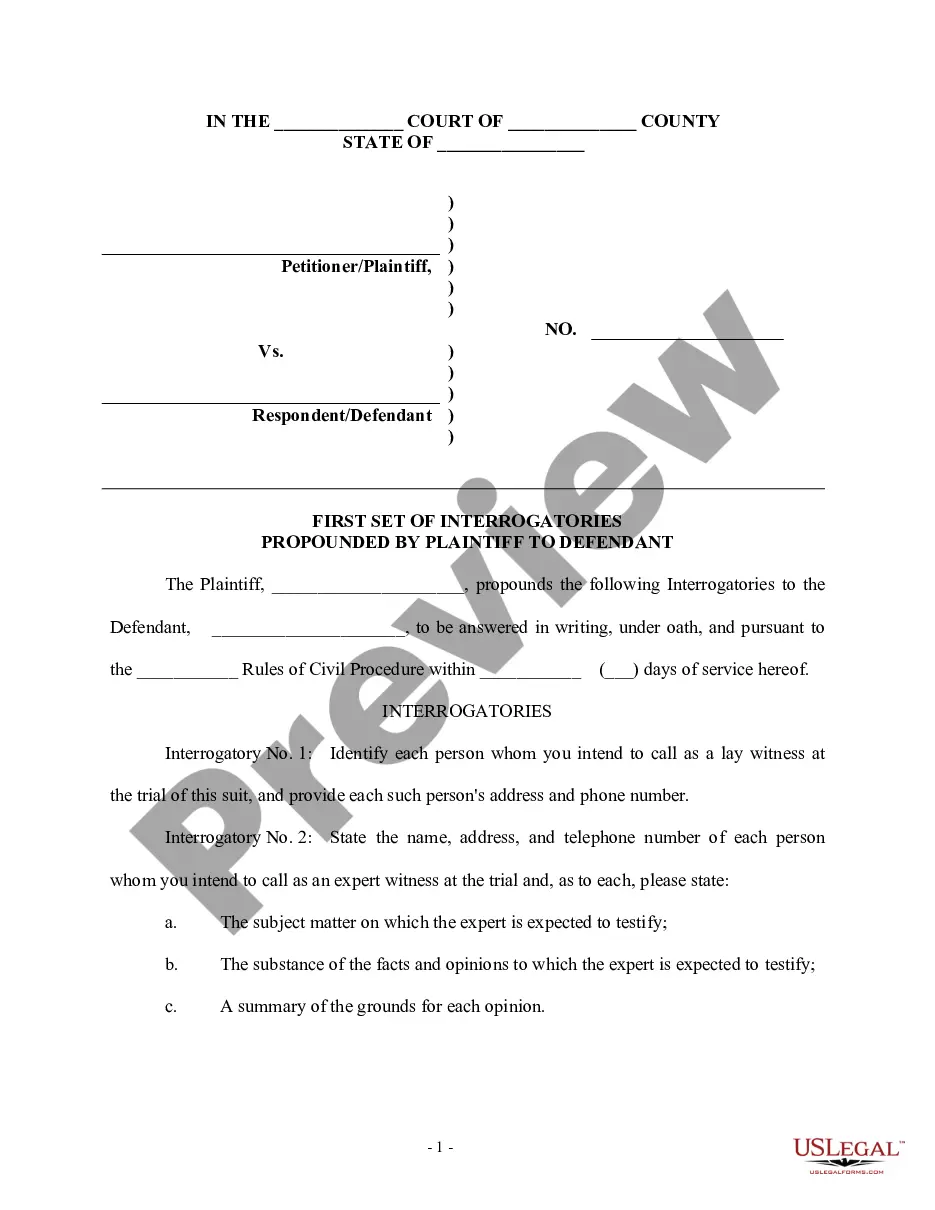
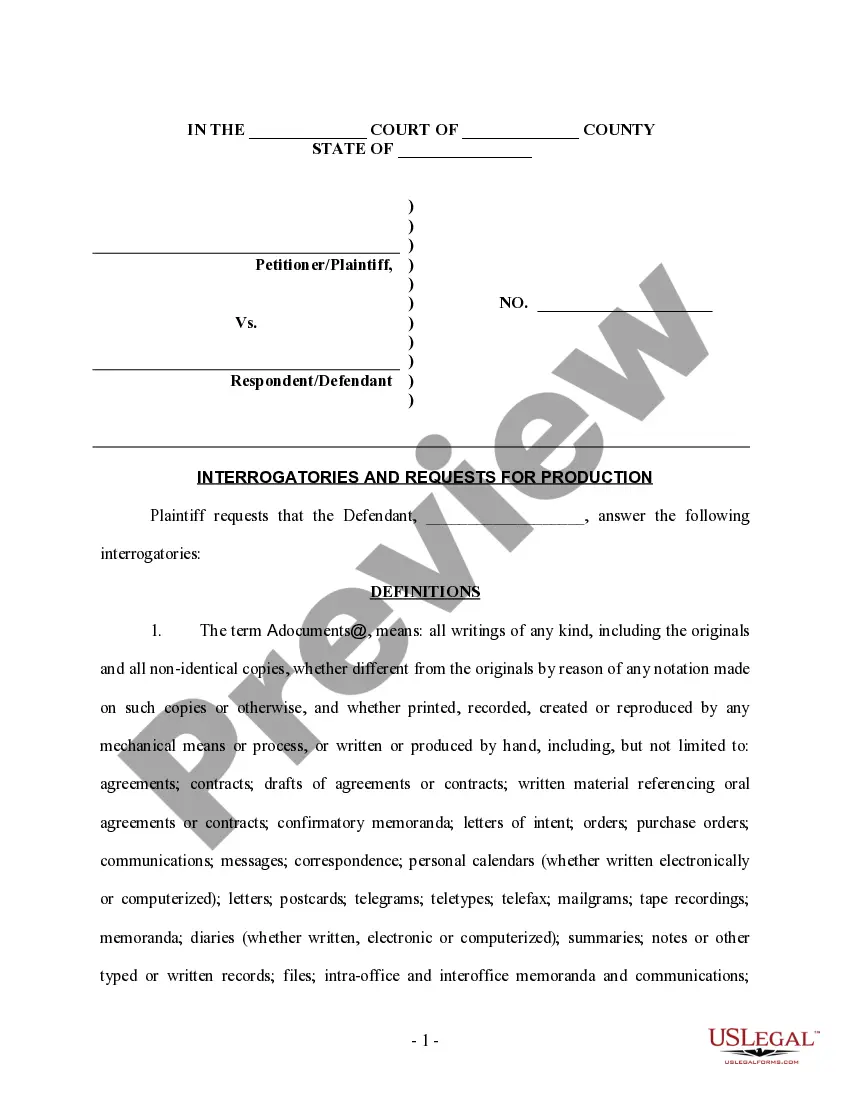
Disclosure is accomplished through a methodical process called "discovery." Discovery takes three basic forms: written discovery, document production, and depositions.
In the federal courts, disclosure requires parties to automatically share routine evidentiary information that would otherwise be available during discovery. Disclosure comes in three stages. First, at the beginning of the suit, each party must disclose: Basic information about each witness the party plans to call.
Essentially, a party must disclose to the other parties the information, documents and witnesses that support the party's claims and defenses. Discovery refers to the procedures by which each party learns about the information, documents and witnesses that the other party does not have to disclose.
The response must be filed within 10 days after service of the motion unless the court shortens or extends the time.
Generally, though, the initial disclosures are not a place for gamesmanship. See, e.g., POL. The Rule lists four categories of information that are required in the initial disclosures: 1) witnesses; 2) documents; 3) damages calculations; and 4) insurance agreements.
Rule 11 was designed to highlight the importance of constitutional rights by requiring the judge in district court to discuss these rights with the defendant before accepting his plea. In other words, Rule 11 was created to help the defendant understand the basic consequences of the decision to plead guilty.
For too long to sum it up while there is no fixed time limit for a judge to rule on a motion.MoreFor too long to sum it up while there is no fixed time limit for a judge to rule on a motion. Several factors influence the timeline hearings can speed up the process.