Notice Discovery Template With Calculator In Pennsylvania
Description


Get your form ready online
Our built-in tools help you complete, sign, share, and store your documents in one place.
Make edits, fill in missing information, and update formatting in US Legal Forms—just like you would in MS Word.
Download a copy, print it, send it by email, or mail it via USPS—whatever works best for your next step.
Sign and collect signatures with our SignNow integration. Send to multiple recipients, set reminders, and more. Go Premium to unlock E-Sign.
If this form requires notarization, complete it online through a secure video call—no need to meet a notary in person or wait for an appointment.
We protect your documents and personal data by following strict security and privacy standards.

Make edits, fill in missing information, and update formatting in US Legal Forms—just like you would in MS Word.

Download a copy, print it, send it by email, or mail it via USPS—whatever works best for your next step.

Sign and collect signatures with our SignNow integration. Send to multiple recipients, set reminders, and more. Go Premium to unlock E-Sign.

If this form requires notarization, complete it online through a secure video call—no need to meet a notary in person or wait for an appointment.

We protect your documents and personal data by following strict security and privacy standards.
Looking for another form?








Form popularity
FAQ
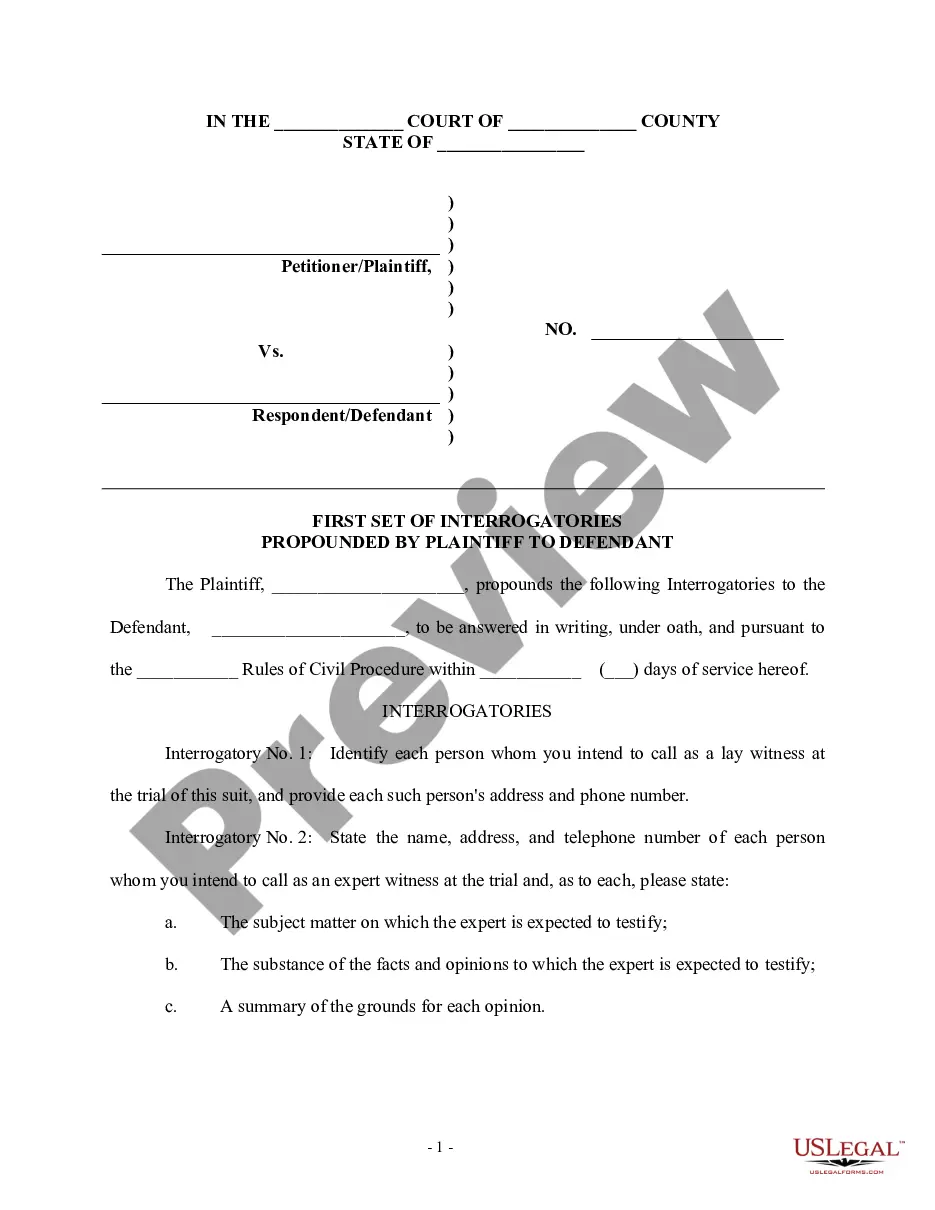
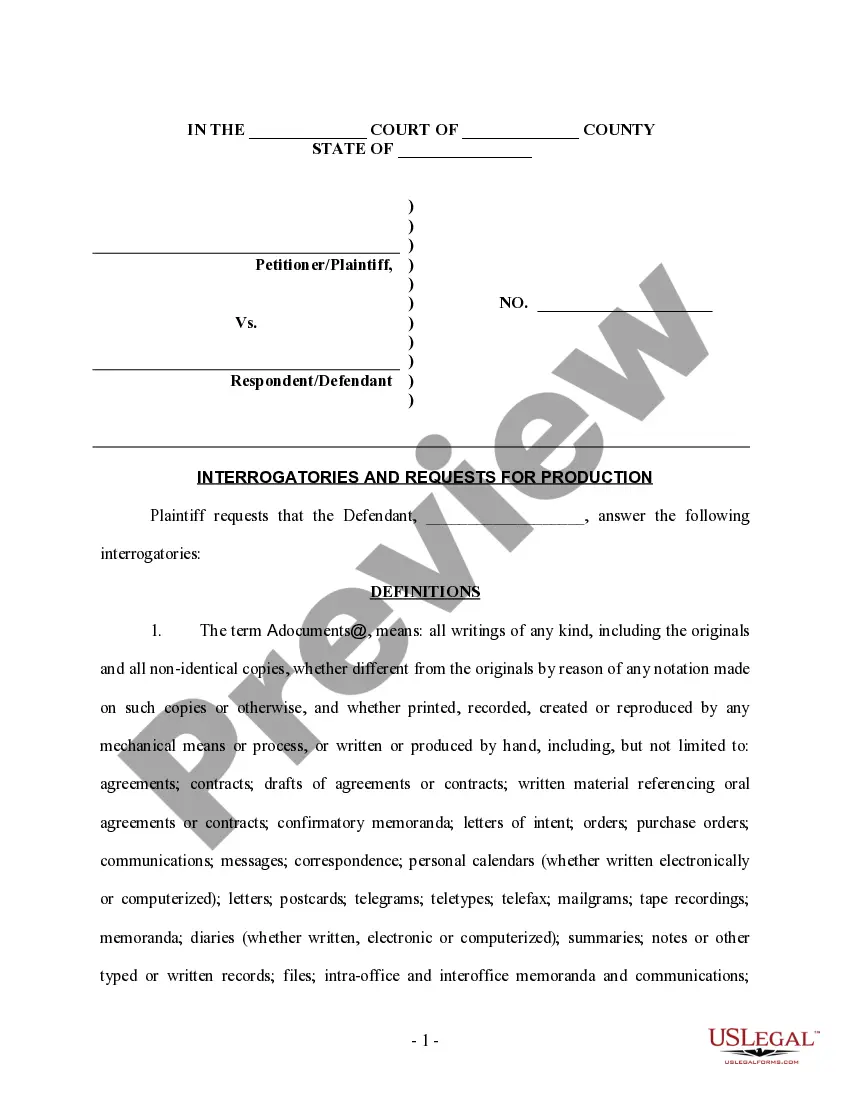
You must respond to each request individually. You do not need to repeat the text of the question, but your responses must be in the same order as the requests, and each response should be labeled with the same number or letter as the request.
Under the Pennsylvania statute of limitations, a plaintiff must bring a medical negligence claim within two years after an injury occurs. There is an exception, deemed the “discovery rule,” which allows extra time to file the claim if the plaintiff was unaware of the injury until after two years had passed.
Here's what every lawyer should consider when creating a discovery plan: 1) Agree on timelines for your discovery plan. 2) Provide a list of custodians. 3) Lay out parameters for information disclosure. 4) Keep legal holds in mind. 5) Make sure preservation methods are forensically sound. 6) Define protective orders.
An objection that a discovery request is not relevant must include a specific explanation describing why the request lacks relevance and/or why the requested discovery is disproportionate in light of the factors enumerated in Federal Rule of Civil Procedure 26(b)(1).
Under the Pennsylvania statute of limitations, a plaintiff must bring a medical negligence claim within two years after an injury occurs. There is an exception, deemed the “discovery rule,” which allows extra time to file the claim if the plaintiff was unaware of the injury until after two years had passed.
You may object if the request would result in “unwarranted annoyance, embarrassment." The key word is “unwarranted.” The judge will weigh the amount of annoyance or embarrassment against the relevance of the evidence, and the need for the evidence in the case.
Rule 4003.2. A party may obtain discovery of the existence and terms of any insurance agreement under which any person carrying on an insurance business may be liable to satisfy part or all of a judgment which may be entered in the action or to indemnify or reimburse for payments made to satisfy the judgment.
(1) A party is under a duty seasonably to supplement the response with respect to any question directly addressed to the identity and location of persons having knowledge of discoverable matters and the identity of each person expected to be called as an expert witness at trial, the subject matter on which each person ...
Under the Pennsylvania statute of limitations, a plaintiff must bring a medical negligence claim within two years after an injury occurs. There is an exception, deemed the “discovery rule,” which allows extra time to file the claim if the plaintiff was unaware of the injury until after two years had passed.
Under Rule 4001 et seq. of the Pennsylvania Rules of Civil Procedure, discovery may begin as soon as a lawsuit is filed.