Notice For Discovery In Middlesex
Description

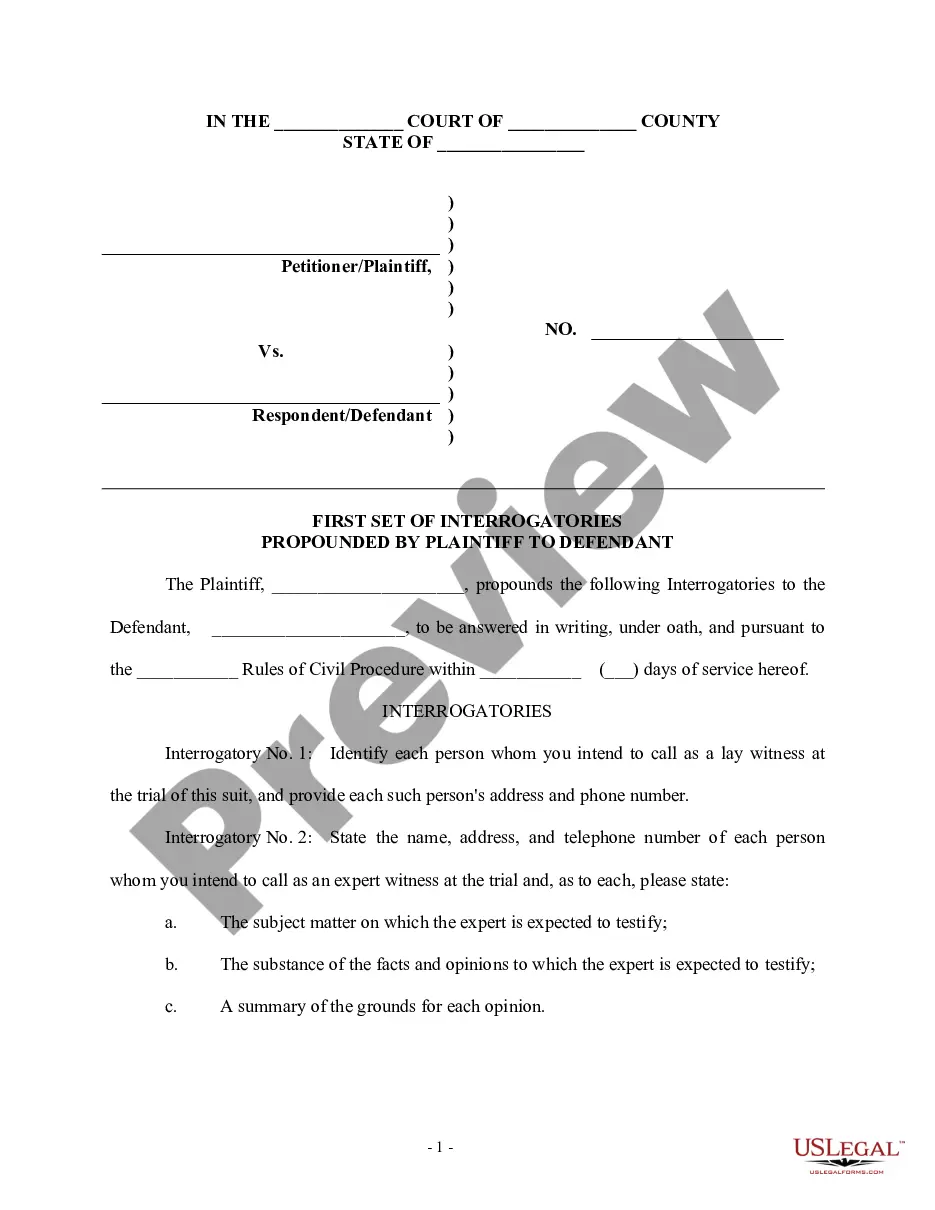
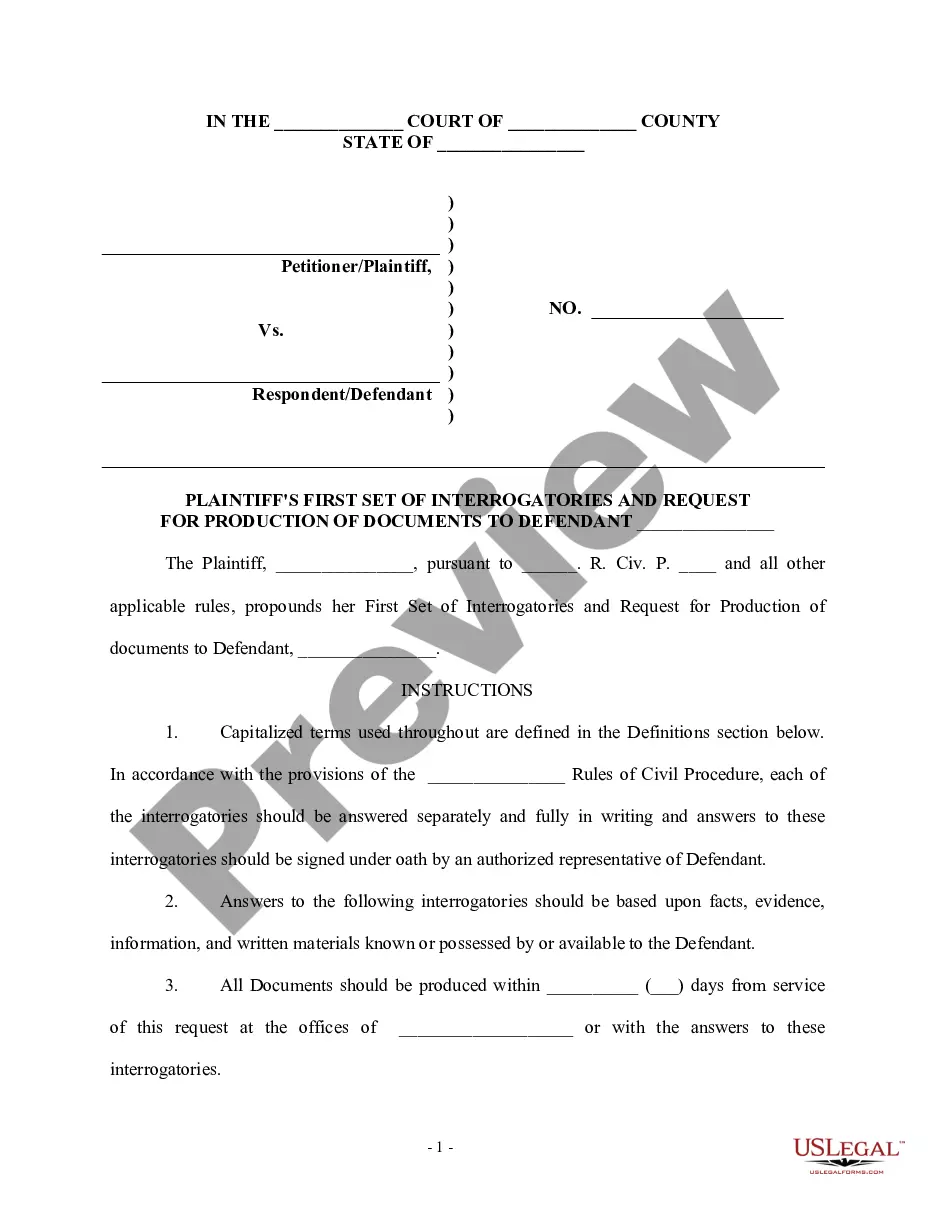
Get your form ready online
Our built-in tools help you complete, sign, share, and store your documents in one place.
Make edits, fill in missing information, and update formatting in US Legal Forms—just like you would in MS Word.
Download a copy, print it, send it by email, or mail it via USPS—whatever works best for your next step.
Sign and collect signatures with our SignNow integration. Send to multiple recipients, set reminders, and more. Go Premium to unlock E-Sign.
If this form requires notarization, complete it online through a secure video call—no need to meet a notary in person or wait for an appointment.
We protect your documents and personal data by following strict security and privacy standards.

Make edits, fill in missing information, and update formatting in US Legal Forms—just like you would in MS Word.

Download a copy, print it, send it by email, or mail it via USPS—whatever works best for your next step.

Sign and collect signatures with our SignNow integration. Send to multiple recipients, set reminders, and more. Go Premium to unlock E-Sign.

If this form requires notarization, complete it online through a secure video call—no need to meet a notary in person or wait for an appointment.

We protect your documents and personal data by following strict security and privacy standards.
Looking for another form?







Form popularity
FAQ
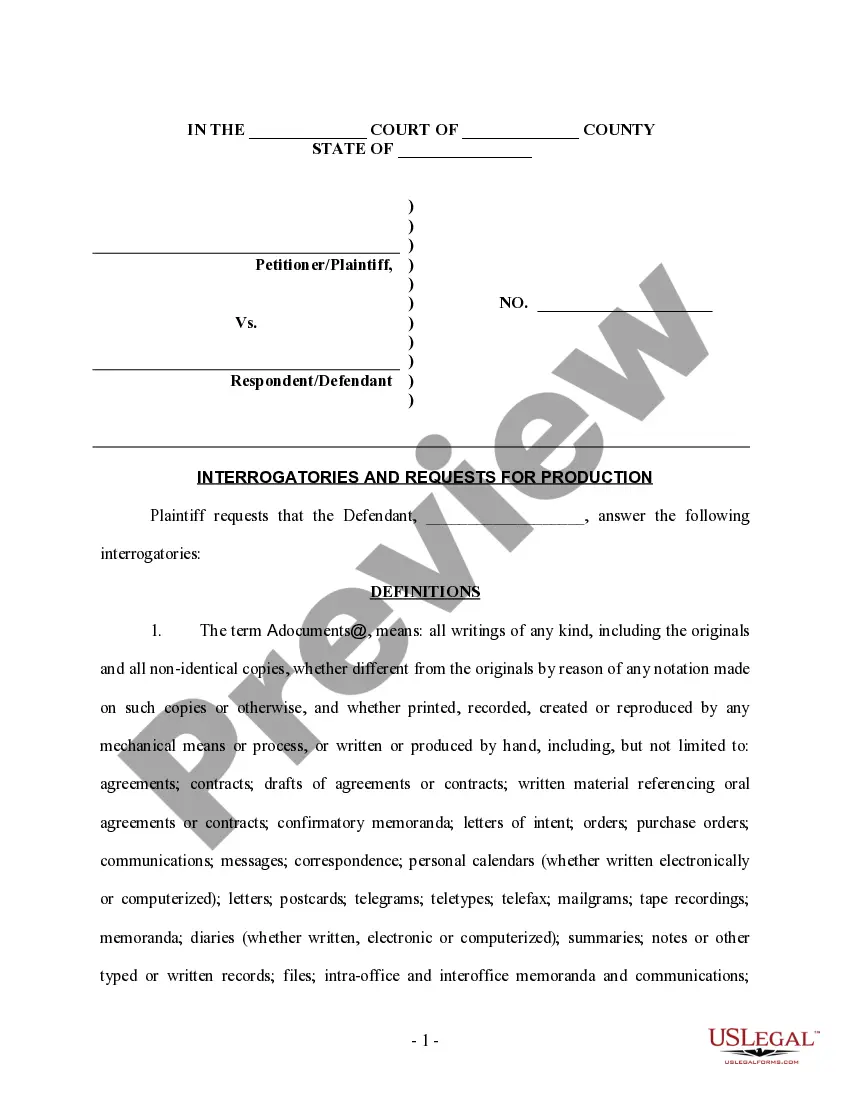
For example, a discovery demand might be for production of the names of witnesses, witness statements, information about evidence, a request for opportunity to inspect tangible evidence, and for any reports prepared by expert witnesses who will testify at trial.
Parties may obtain discovery regarding any matter, not privileged, which is relevant to the subject matter involved in the pending action, whether it relates to the claim or defense of the party seeking discovery or to the claim or defense of any other party, including the existence, description, nature, custody, ...
The discovery rule is a rule of equity that provides, in appropriate cases, that a personal injury claim does not accrue until an injured person discovers, or should discover by exercise of reasonable diligence, that he or she has a claim.
All discovery shall be completed within 60 days following receipt of the demand for alternative resolution or the entry of a final order compelling alternative resolution.
A deposition is a witness's sworn out-of-court testimony. It is used to gather information as part of the discovery process and, in limited circumstances, may be used at trial.
Write out each fact you wish the other party to admit is true. When writing these facts, be as clear and concise as possible. Each request must be for a single fact; do not include multiple facts, compound questions, or subparts.
The length of the discovery phase varies depending on the case's complexity, the amount of evidence to be collected, and the level of cooperation between the parties. In personal injury cases, the discovery process can last anywhere from a few months to over a year.
Steps Check if the court has blank motion forms. Some courts have "check the boxes" or "fill in the blank" motion forms. Create your caption. Title your motion. Draft the introductory paragraph to the body of the motion. Request relief. Lay out the applicable facts. Make your legal argument. Insert a signature block.
The discovery rule is a rule of equity that provides, in appropriate cases, that a personal injury claim does not accrue until an injured person discovers, or should discover by exercise of reasonable diligence, that he or she has a claim.
Notices to produce are requests for documents held by one party, such as leases, contracts, or communications. The deadline to respond to a notice to produce is usually within 60 days after service of the initial notice. After interrogatories and notices to produce often come admissions.