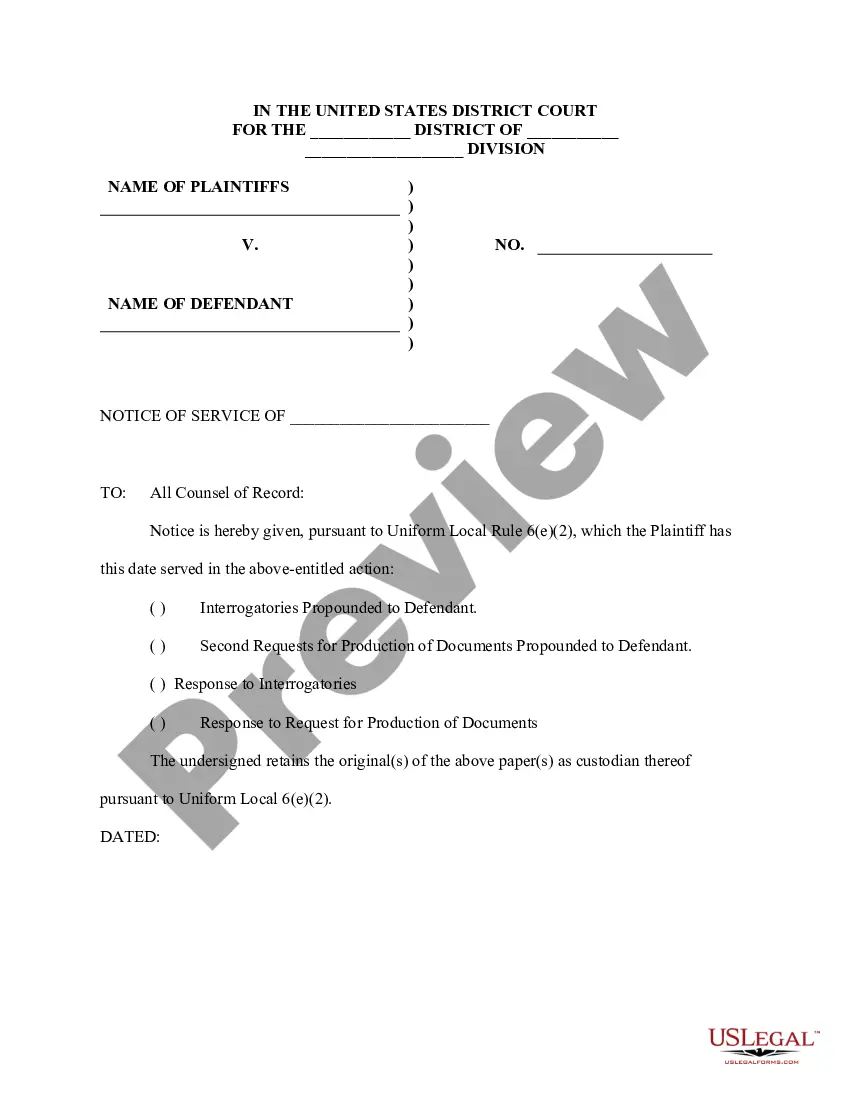
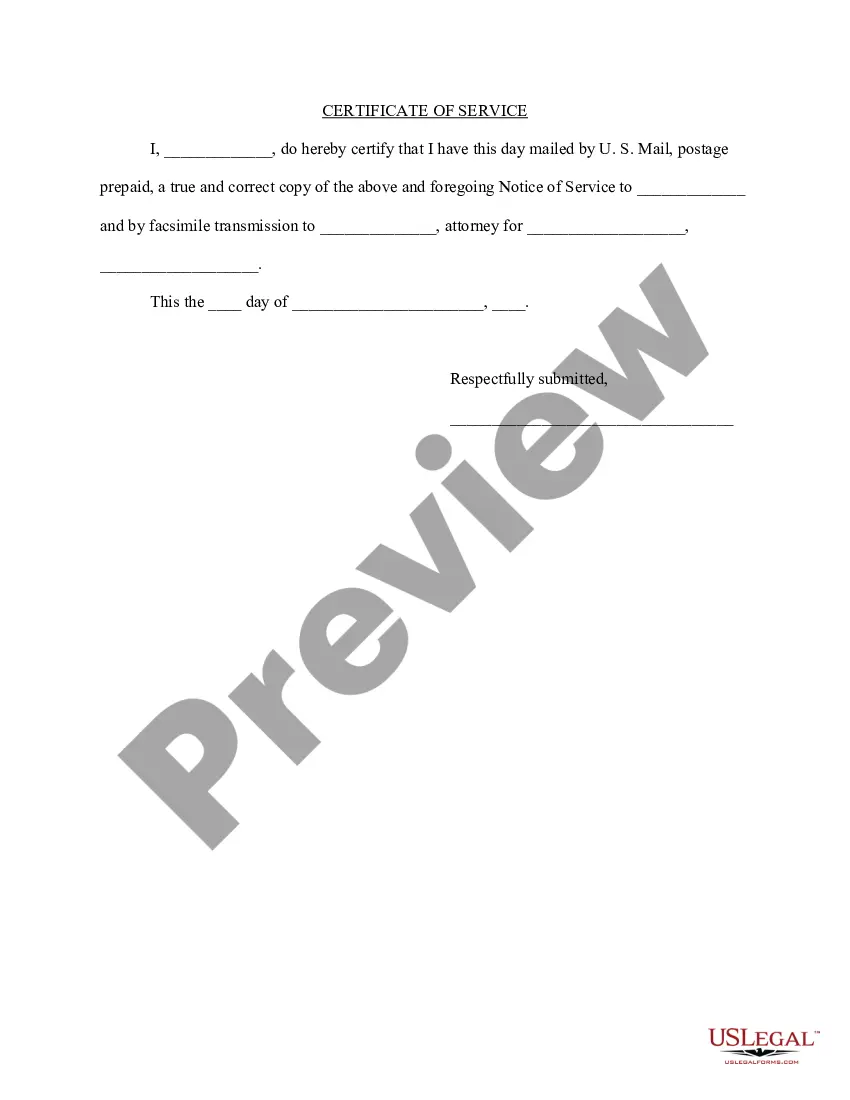
Notice Of Service Of Discovery Example In Maricopa
Description

Get your form ready online
Our built-in tools help you complete, sign, share, and store your documents in one place.
Make edits, fill in missing information, and update formatting in US Legal Forms—just like you would in MS Word.
Download a copy, print it, send it by email, or mail it via USPS—whatever works best for your next step.
Sign and collect signatures with our SignNow integration. Send to multiple recipients, set reminders, and more. Go Premium to unlock E-Sign.
If this form requires notarization, complete it online through a secure video call—no need to meet a notary in person or wait for an appointment.
We protect your documents and personal data by following strict security and privacy standards.

Make edits, fill in missing information, and update formatting in US Legal Forms—just like you would in MS Word.

Download a copy, print it, send it by email, or mail it via USPS—whatever works best for your next step.

Sign and collect signatures with our SignNow integration. Send to multiple recipients, set reminders, and more. Go Premium to unlock E-Sign.

If this form requires notarization, complete it online through a secure video call—no need to meet a notary in person or wait for an appointment.

We protect your documents and personal data by following strict security and privacy standards.
Looking for another form?
Form popularity
FAQ
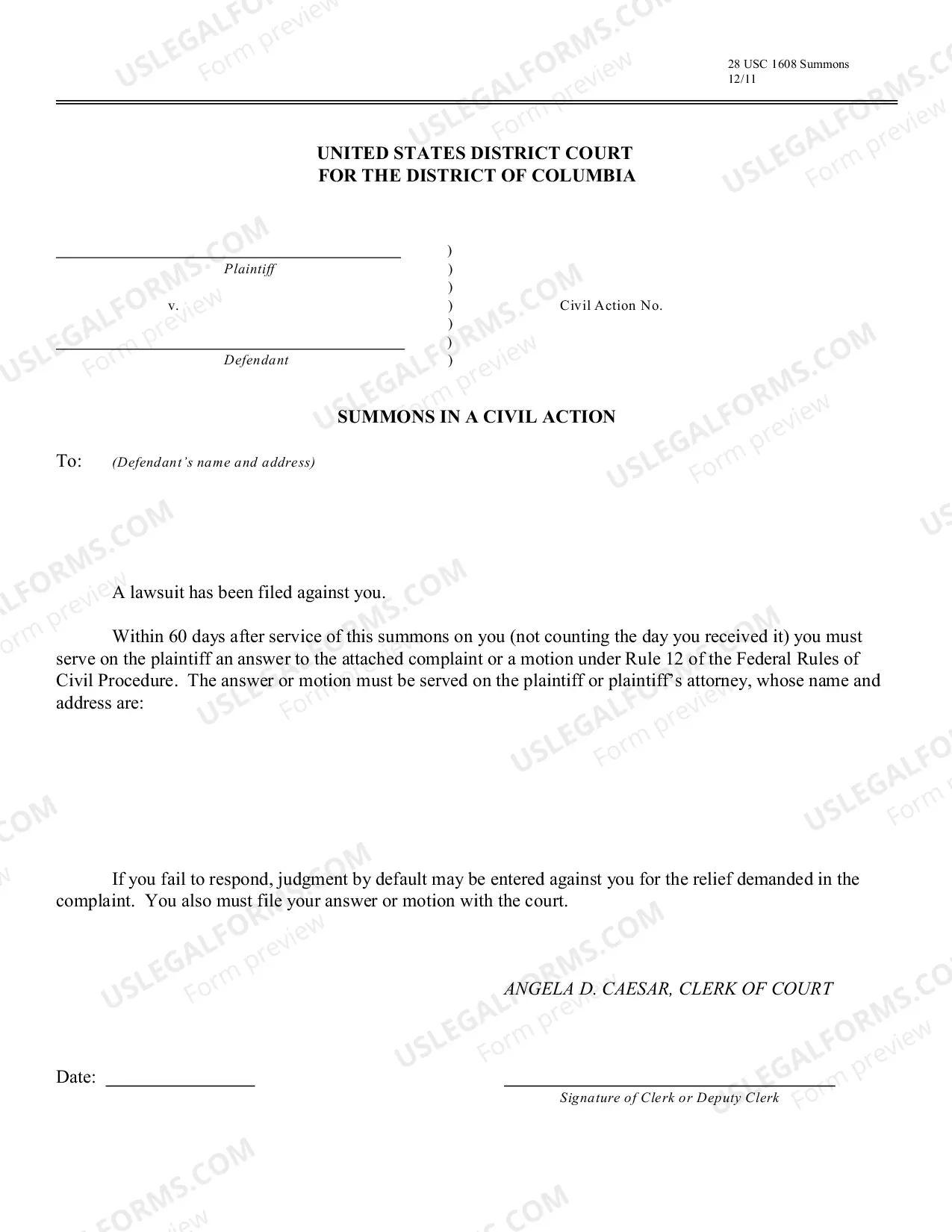
The plaintiff files a document (complaint) with the clerk of the court stating the reasons why the plaintiff is suing the defendant, and what action the plaintiff wants the court to take. A copy of the complaint and a summons are delivered to (served on) the defendant.
Follow Federal Rules of Civil Procedure Rule 45(b). Pursuant to Rule 45(d)(2)(B), the party has 14 days to respond after service of the subpoena, or the party must respond before the time specified for compliance in the subpoena if it is less than 14 days.
FRCP Rule 45: Subpoena Section (A) sets general requirements for subpoenas. It basically says that a subpoena must include information about the court from where it originated, as well as the title of the action and its civil action number.
Unless excused from doing so by the party or attorney serving a subpoena, by a court order, or by any other provision of this Rule 45, a person who is properly served with a subpoena must attend and testify at the date, time, and place specified in the subpoena.
Personal Service: Pursuant to FRCP Rule 45(b)(1) a subpoena must be personally delivered to the person whose attendance is required by the subpoena. A person who serves the subpoena must be at least 18 years of age. A person who serves the subpoena cannot be a party to the proceeding under which the subpoena is issued.
You may not split a claim and file two separate actions. You may file for the "court costs"in addition to the $10,000 maximum. Civil lawsuits in Arizona are governed by the Justice Court Rules of Civil Procedure (PDF).
Ing to Arizona Rule of Family Law Procedure 76.1 (Rule 76.1), the court must hold a scheduling conference to formulate a plan for trial, including procedures for admitting evidence, presenting witnesses, and filing a pretrial statement.
In conclusion, charges can be dropped before trial under certain circumstances, such as insufficient evidence, witness cooperation issues, or legal deficiencies in the prosecution's case.
You should provide a clear and concise summary of the facts, highlighting the most critical details that support your case. For example, if you are involved in a personal injury case, you would want to present the details of the accident, including the date, time, location, and how the accident occurred.
trial review is held if the case is complex or the trial is expected to be lengthy. The aim is to make sure the trial will proceed efficiently, particular areas of dispute being identified and narrowed down as far as possible.