Service Interrogatories With Questions In King
Description



Get your form ready online
Our built-in tools help you complete, sign, share, and store your documents in one place.
Make edits, fill in missing information, and update formatting in US Legal Forms—just like you would in MS Word.
Download a copy, print it, send it by email, or mail it via USPS—whatever works best for your next step.
Sign and collect signatures with our SignNow integration. Send to multiple recipients, set reminders, and more. Go Premium to unlock E-Sign.
If this form requires notarization, complete it online through a secure video call—no need to meet a notary in person or wait for an appointment.
We protect your documents and personal data by following strict security and privacy standards.

Make edits, fill in missing information, and update formatting in US Legal Forms—just like you would in MS Word.

Download a copy, print it, send it by email, or mail it via USPS—whatever works best for your next step.

Sign and collect signatures with our SignNow integration. Send to multiple recipients, set reminders, and more. Go Premium to unlock E-Sign.

If this form requires notarization, complete it online through a secure video call—no need to meet a notary in person or wait for an appointment.

We protect your documents and personal data by following strict security and privacy standards.
Looking for another form?










Form popularity
FAQ
However, the U.S. Supreme Court ruled in Seattle Times Co. v. Rhinehart that “pretrial depositions and interrogatories are not public components of a civil trial. Such proceedings were not open to the public at common law, and, in general, they are conducted in private as a matter of modern practice.”
You have to respond to interrogatories in writing to the best of your ability. If you do not answer an interrogatory question, and then the other side learns that you did in fact know the answer, it could have a negative impact on your case at trial.
For interrogatories, action words such as “list,” “describe,” “identify,” or “state” are very useful. You may ask the other side to identify a document but you cannot use this form of discovery to get them to give it to you. Requesting documents requires a different kind of discovery process.
However, the U.S. Supreme Court ruled in Seattle Times Co. v. Rhinehart that “pretrial depositions and interrogatories are not public components of a civil trial. Such proceedings were not open to the public at common law, and, in general, they are conducted in private as a matter of modern practice.”
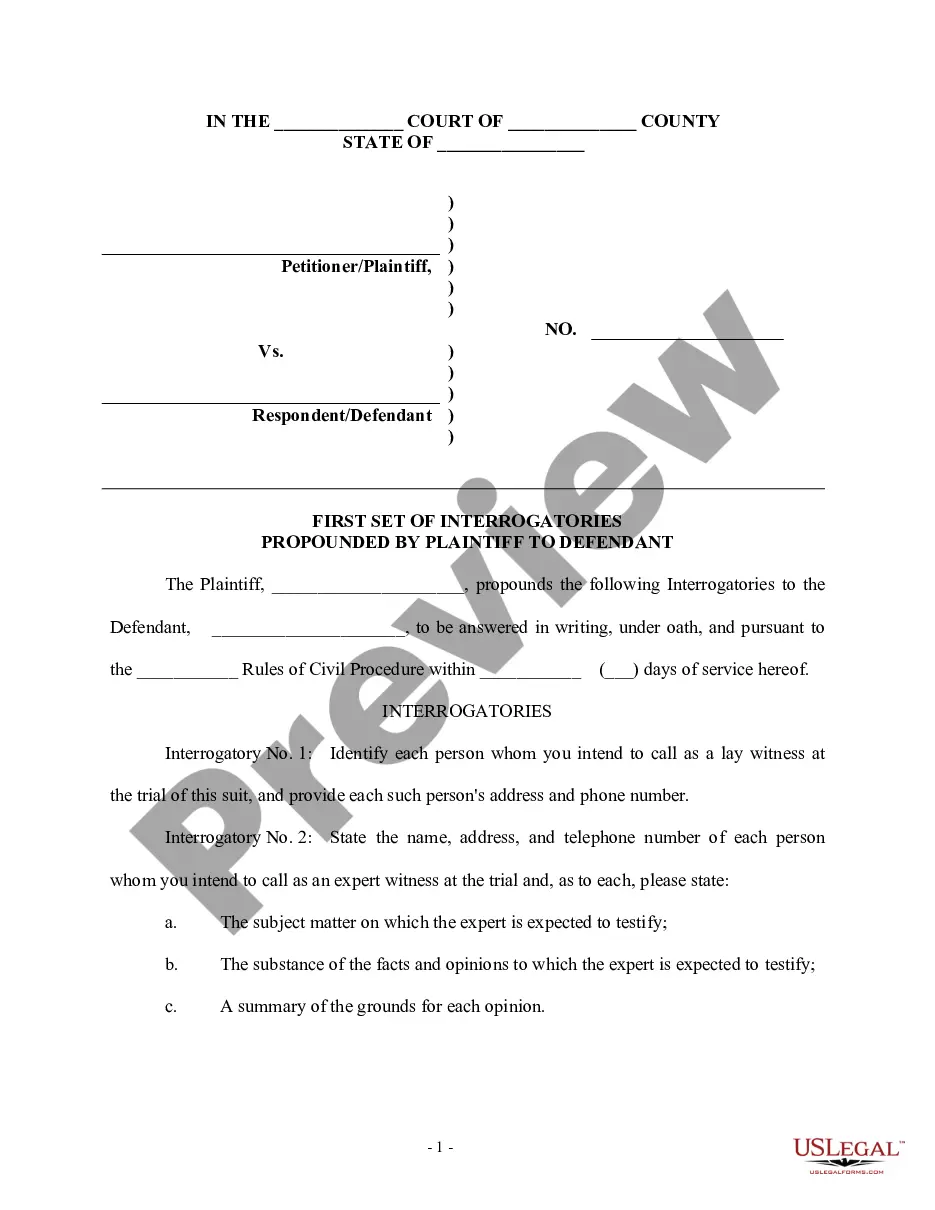
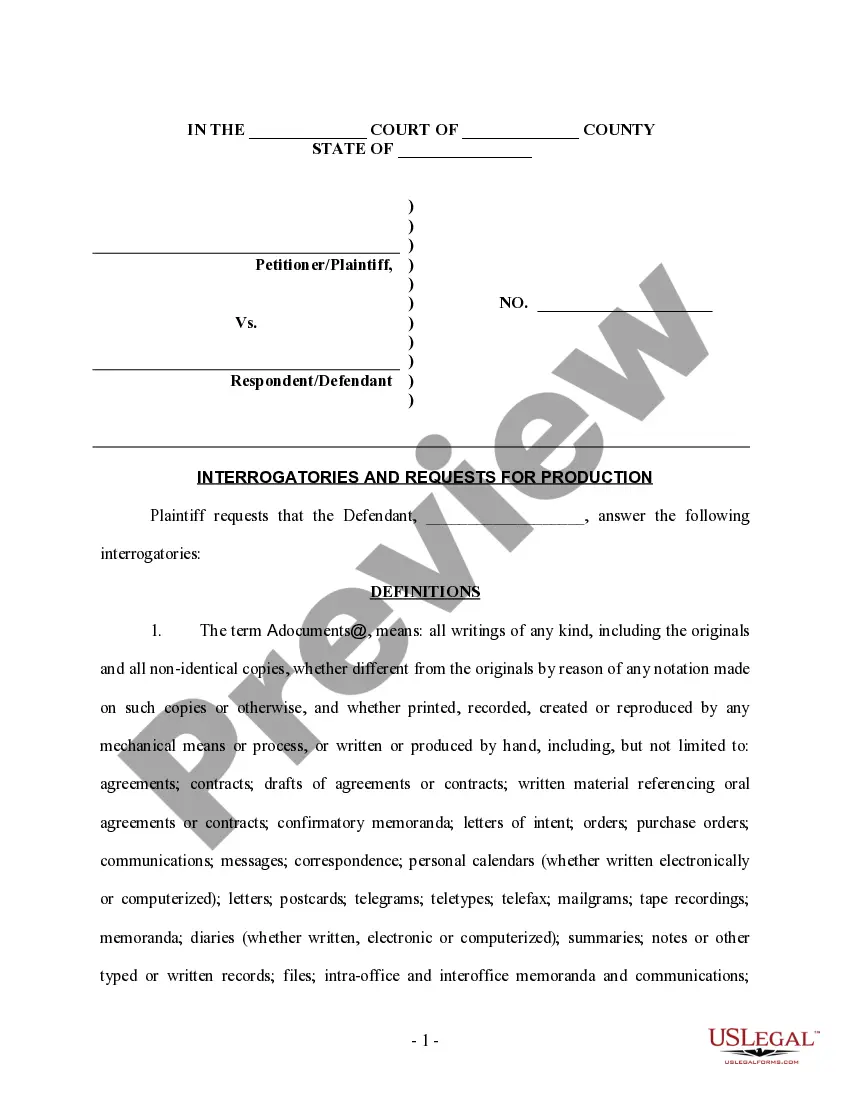
Interrogatories are written questions sent by one party in a lawsuit to another party in that same suit, which the responding party must answer under penalty of perjury. Interrogatories allow the parties to ask who, what, when, where and why questions, making them a good method for obtaining new information.
It is important for the legal system to ensure transparency, and thus, the law considers discovery in a criminal case as a public record.
In cases where a party has not propounded pattern interrogatories pursuant to LCR 33, a party may serve no more than 40 interrogatories, including all discrete subparts.
When a party to a civil case needs to get information from the other side, she can serve the other side with written requests called “discovery requests.” These requests might include: Interrogatories, which are written questions about things that are relevant or important to the case. (NRCP 33; JCRCP 33)
Make a List of Questions Brainstorm questions to include in your interrogatories. Identify questions that are relevant to the issues in the case. Consider if the questions are legally permissible. Make sure the questions are direct, specific, and clear. Decide if the questions will help you gain any necessary information.
Select questions If your case is a limited civil case ($35,000 or less) you can request up to a total of 35 combined request for admissions, form interrogatories , special interrogatories, and requests for production.