Certificate Of Service For Discovery In Georgia
Description


Get your form ready online
Our built-in tools help you complete, sign, share, and store your documents in one place.
Make edits, fill in missing information, and update formatting in US Legal Forms—just like you would in MS Word.
Download a copy, print it, send it by email, or mail it via USPS—whatever works best for your next step.
Sign and collect signatures with our SignNow integration. Send to multiple recipients, set reminders, and more. Go Premium to unlock E-Sign.
If this form requires notarization, complete it online through a secure video call—no need to meet a notary in person or wait for an appointment.
We protect your documents and personal data by following strict security and privacy standards.

Make edits, fill in missing information, and update formatting in US Legal Forms—just like you would in MS Word.

Download a copy, print it, send it by email, or mail it via USPS—whatever works best for your next step.

Sign and collect signatures with our SignNow integration. Send to multiple recipients, set reminders, and more. Go Premium to unlock E-Sign.

If this form requires notarization, complete it online through a secure video call—no need to meet a notary in person or wait for an appointment.

We protect your documents and personal data by following strict security and privacy standards.
Looking for another form?
Form popularity
FAQ
Discovery is the process through which a party learns or discovers the evidence and arguments the adversary intends to rely on in the law suit. The documentary discovery rule directs what must be disclosed and produced, the form and process for that disclosure, and the possible reasons for non-disclosure.
Parties may obtain discovery regarding any matter, not privileged, which is relevant to the subject matter involved in the pending action, whether it relates to the claim or defense of the party seeking discovery or to the claim or defense of any other party, including the existence, description, nature, custody, ...
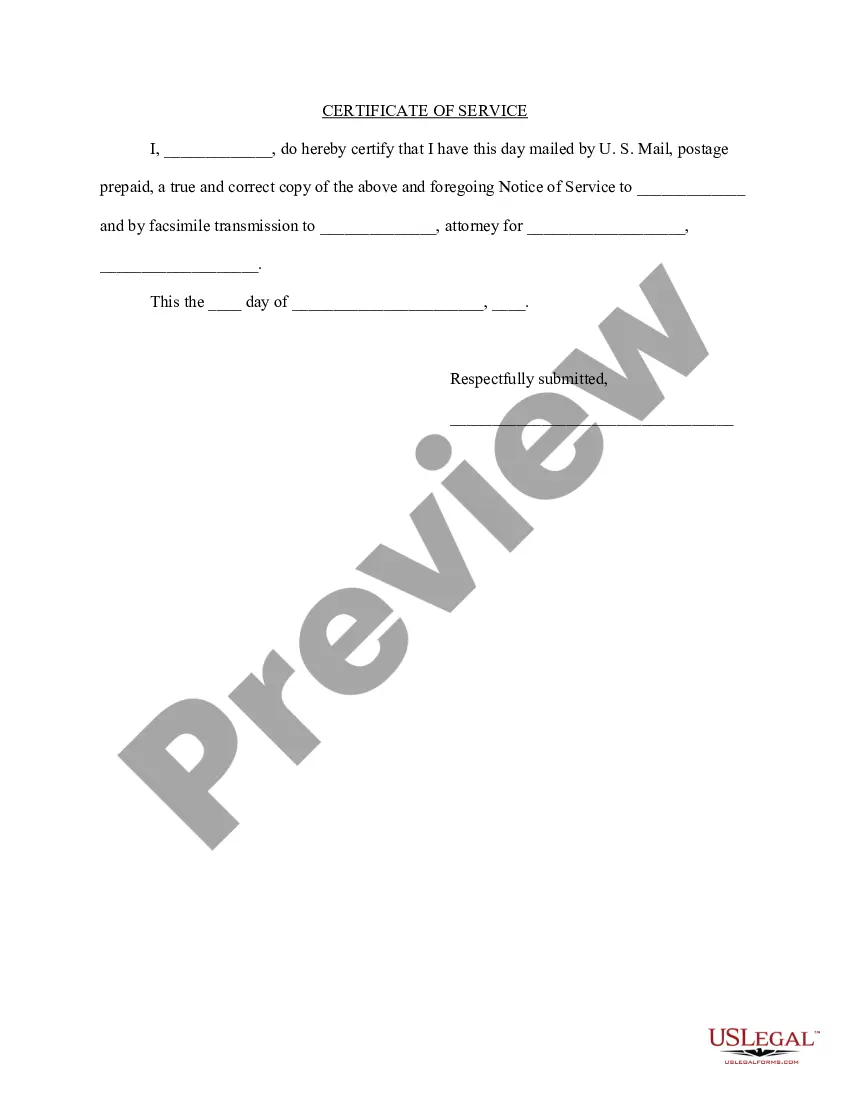
Service by mail is complete upon mailing. Proof of service may be made by certificate of an attorney or of his or her employee, by written admission, by affidavit, or by other proof satisfactory to the court. Failure to make proof of service shall not affect the validity of service. Same - Numerous defendants.
The party upon whom the request is served shall serve a written response within 30 days after the service of the request, except that a defendant may serve a response within 45 days after service of the summons and complaint upon that defendant. The court may allow a shorter or longer time.
Discovery can be obtained through depositions, written interrogatories, physical and mental examinations, and requests for admission. The general rules of discovery can be found in O.C.G.A. §9-11-26.
Service upon the attorney or upon a party shall be made by delivering a copy to the person to be served or by mailing it to the person to be served at the person's last known address or, if no address is known, by leaving it with the clerk of the court.
The prosecuting attorney shall, no later than ten days prior to trial, or at such time as the court orders but in no event later than the beginning of the trial, provide the defendant with notice of any evidence in aggravation of punishment that the state intends to introduce in sentencing.
Service by mail is complete upon mailing. Proof of service may be made by certificate of an attorney or of his or her employee, by written admission, by affidavit, or by other proof satisfactory to the court. Failure to make proof of service shall not affect the validity of service. Same - Numerous defendants.
The discovery process is an important part of criminal justice system. The discovery process enables the accused to know about any and all evidence that may be used to prosecute the. A defense lawyer uses the benefits of this knowledge to prepare a defense strategy.