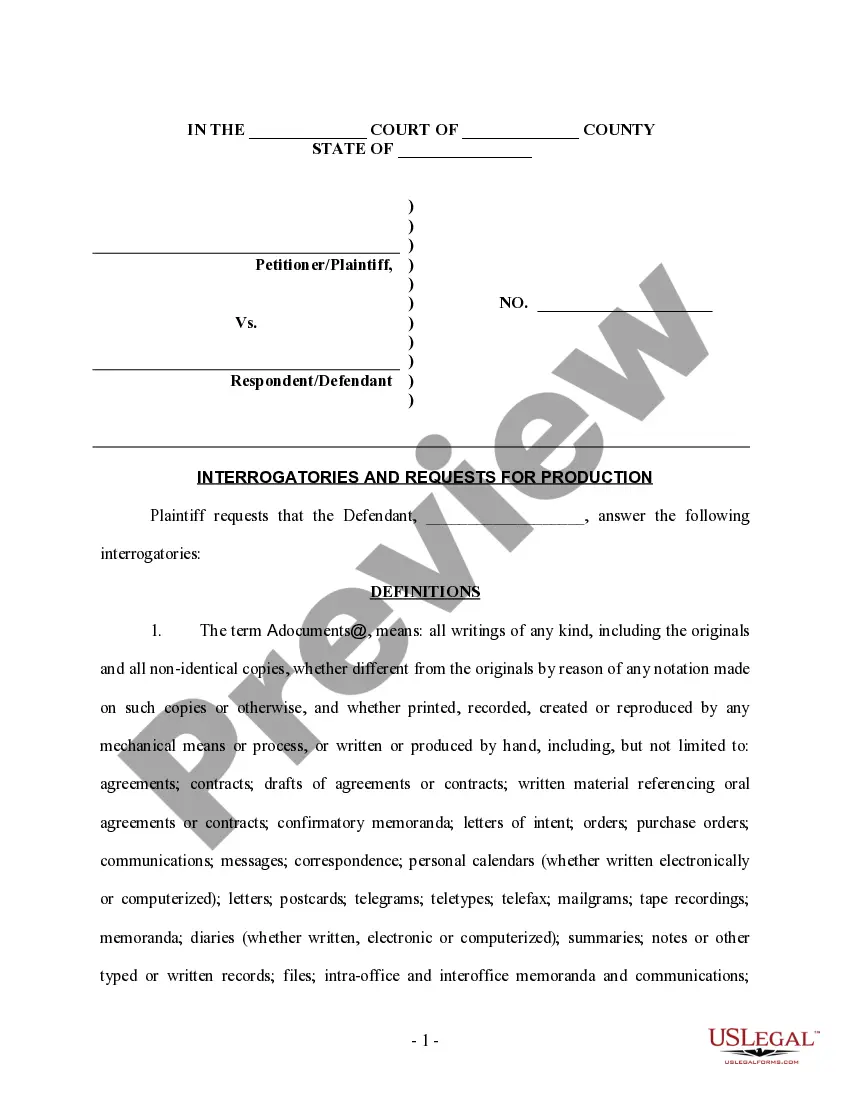
Notice Of Examination For Discovery Ontario In Florida
Description



Get your form ready online
Our built-in tools help you complete, sign, share, and store your documents in one place.
Make edits, fill in missing information, and update formatting in US Legal Forms—just like you would in MS Word.
Download a copy, print it, send it by email, or mail it via USPS—whatever works best for your next step.
Sign and collect signatures with our SignNow integration. Send to multiple recipients, set reminders, and more. Go Premium to unlock E-Sign.
If this form requires notarization, complete it online through a secure video call—no need to meet a notary in person or wait for an appointment.
We protect your documents and personal data by following strict security and privacy standards.

Make edits, fill in missing information, and update formatting in US Legal Forms—just like you would in MS Word.

Download a copy, print it, send it by email, or mail it via USPS—whatever works best for your next step.

Sign and collect signatures with our SignNow integration. Send to multiple recipients, set reminders, and more. Go Premium to unlock E-Sign.

If this form requires notarization, complete it online through a secure video call—no need to meet a notary in person or wait for an appointment.

We protect your documents and personal data by following strict security and privacy standards.
Looking for another form?





Form popularity
FAQ
You serve the notice of examination on the debtor or other person to be examined at least 30 days before the hearing. If the debtor to be examined is an individual, you will also need to serve a blank Financial Information Form Form 20I. If the debtor is a business, no financial information form is required.
A party who discovers additional evidence or material before or during trial must promptly disclose its existence to the other party or the court if: (1) the evidence or material is subject to discovery or inspection under this rule; and. (2) the other party previously requested, or the court ordered, its production.
If you are a defendant in a case, you have to raise enough doubt about the strength of the plaintiff's case to make the judge (or jury) decide your side is stronger. Discovery is how you gather the evidence you will need to prove your case as plaintiff, or defeat the plaintiff's case as a defendant.
The discovery process starts soon after criminal charges are instituted. Once your plea is filed following your arraignment, you can file a Notice of Discovery along with a Demand for Jury Trial. Your discovery notice triggers the prosecutor's duty to give you all evidence they've collected against you.
Examination for discovery is the out-of-court examination (questioning) under oath of the parties to an action (lawsuit). Every party to the dispute is entitled to examine every other adverse (opposing) party.
Parties may obtain discovery regarding any nonprivileged matter that is relevant to any party's claim or defense and proportional to the needs of the case, considering the importance of the issues at stake in the action, the amount in controversy, the parties' relative access to relevant information, the parties' ...
In Florida, the discovery phase typically begins after the defendant files an answer to the plaintiff's complaint. It can last several months to a year or more.
Generally, the prosecution must provide discovery within a set period after the defense's formal request, often ranging from a few weeks to several months. Evidence should be available to the defense either at the preliminary hearing or after the accused has been indicted by a grand jury.
This is a document telling you what you have been charged with and the details of your first appearance in court. These are usually given in less serious matters.
You serve the notice of examination on the debtor or other person to be examined at least 30 days before the hearing. If the debtor to be examined is an individual, you will also need to serve a blank Financial Information Form Form 20I. If the debtor is a business, no financial information form is required.