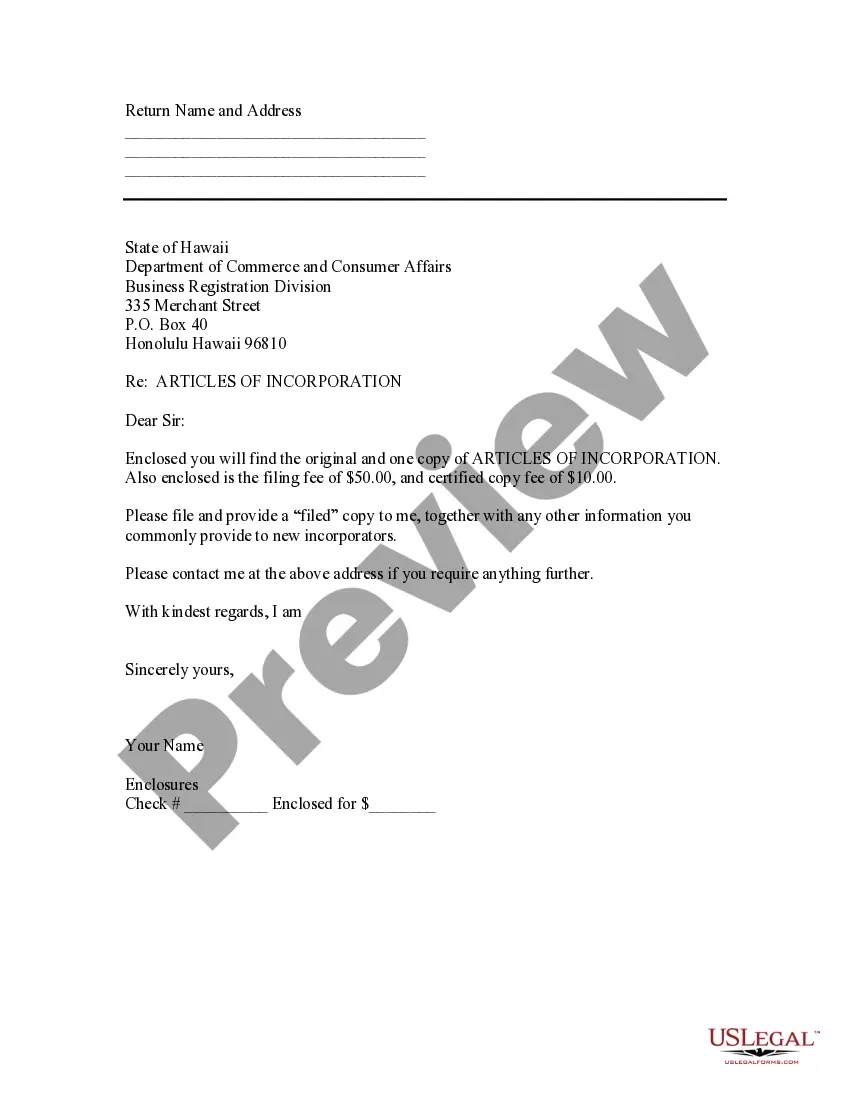
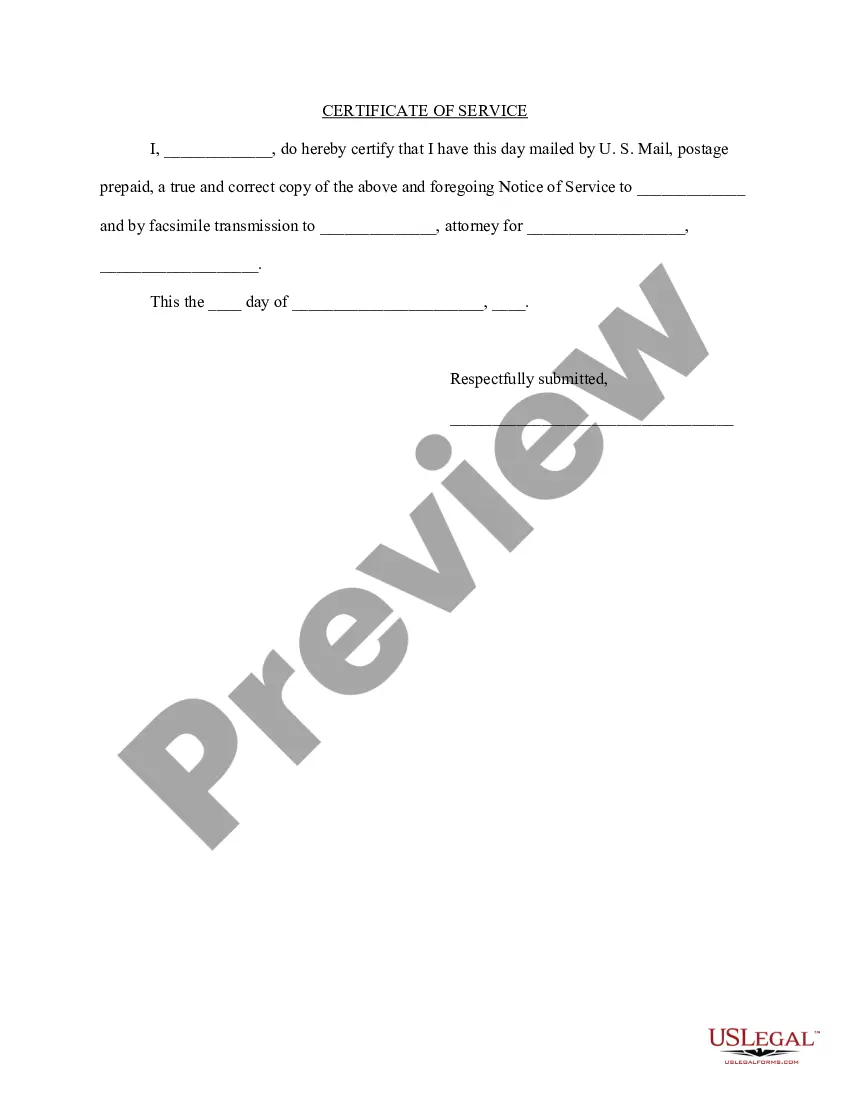
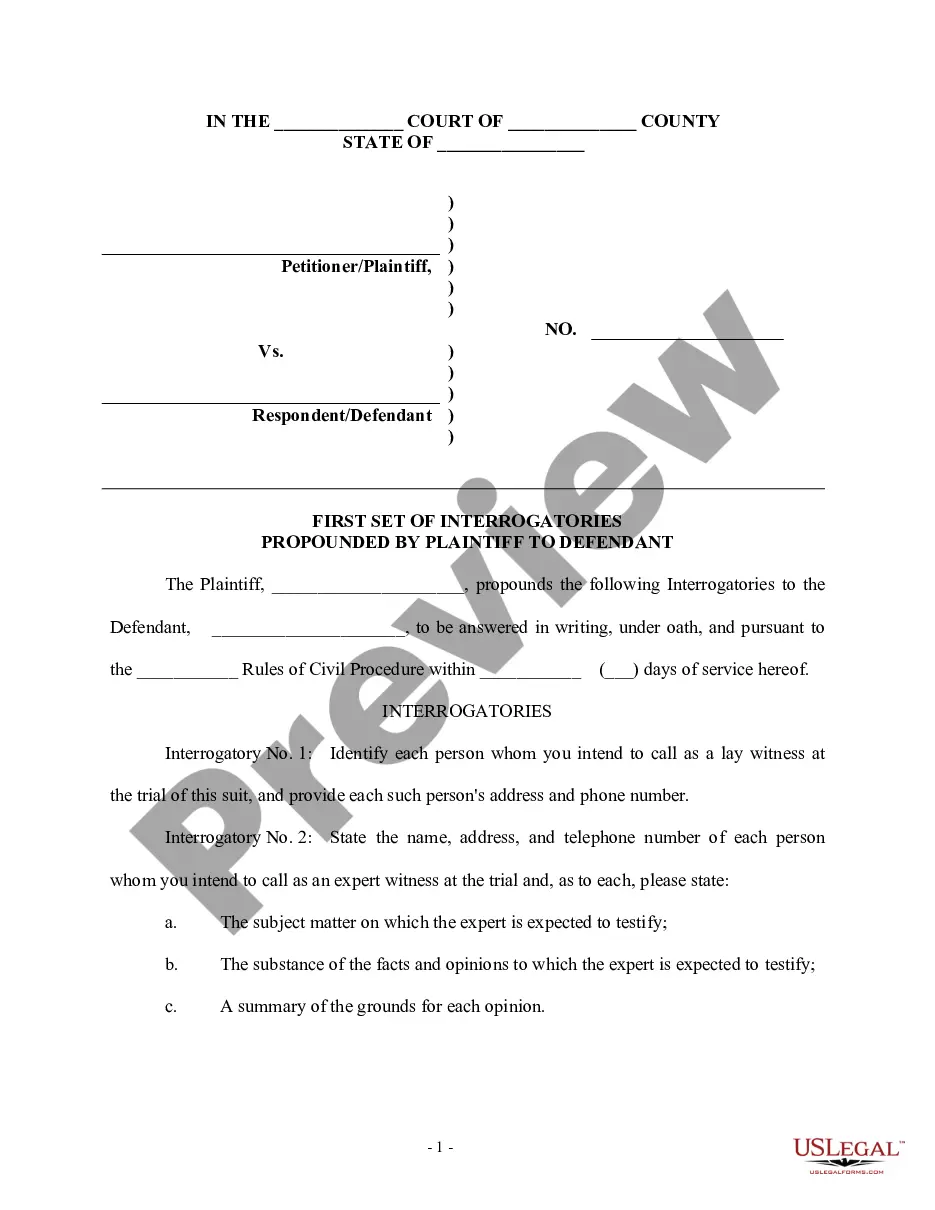
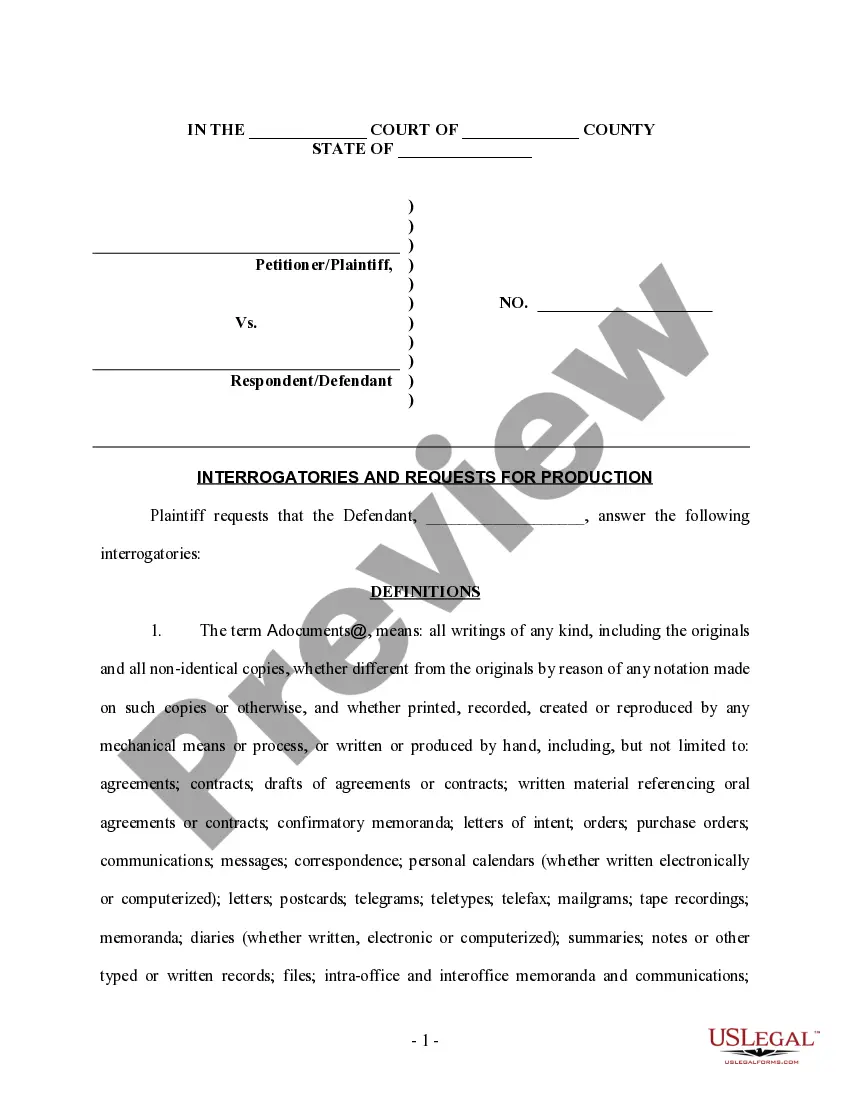
Notice For Discovery And Inspection In Dallas
Description



Get your form ready online
Our built-in tools help you complete, sign, share, and store your documents in one place.
Make edits, fill in missing information, and update formatting in US Legal Forms—just like you would in MS Word.
Download a copy, print it, send it by email, or mail it via USPS—whatever works best for your next step.
Sign and collect signatures with our SignNow integration. Send to multiple recipients, set reminders, and more. Go Premium to unlock E-Sign.
If this form requires notarization, complete it online through a secure video call—no need to meet a notary in person or wait for an appointment.
We protect your documents and personal data by following strict security and privacy standards.

Make edits, fill in missing information, and update formatting in US Legal Forms—just like you would in MS Word.

Download a copy, print it, send it by email, or mail it via USPS—whatever works best for your next step.

Sign and collect signatures with our SignNow integration. Send to multiple recipients, set reminders, and more. Go Premium to unlock E-Sign.

If this form requires notarization, complete it online through a secure video call—no need to meet a notary in person or wait for an appointment.

We protect your documents and personal data by following strict security and privacy standards.
Looking for another form?




Form popularity
FAQ
Additionally, the new rules that went into effect September 1, 2023, require disclosure of the expert's qualifications to include all publications authored by the expert in the last 10 years, a list of cases in which the expert testified as an expert at trial or deposition (unless the expert is an attorney testifying ...
Beginning September 1, 2021, the Texas Rules of Civil Procedure created Mandatory Initial Disclosures. These Mandatory Initial Disclosures applied to all cases filed after September 1, 2021. In family law cases, each party had to provide information and documentation described by Texas Rule of Civil Procedure 194.4.
An attorney can request discovery as soon as they do what's called an entry of appearance, which is a notice to the court saying that they are going to be the attorney on the case. Once an attorney has done that, they can typically notify the prosecutor, and she will begin releasing evidence to them.
One limitation is the scope of discovery, which refers to the limits placed on the types of information that can be requested during the discovery phase. For example, parties cannot request information that is not relevant or proportional to the needs of the case.
A discovery response is essentially a choice that you make after receiving a request for information. The question then becomes, Should you comply or not?
The discovery period depends on what type of discovery plan your case falls under. For example, in Level 2 discovery, which is the most common type, discovery begins when the suit is filed and continues until 30 days before the trial is set (in family law cases).
Generally, the party receiving the discovery request has 30 days to respond. Some exceptions and variations apply, so make sure you review how much time you have to respond depending on the type of case, the rules, and the type of discovery method used.
Every case filed in Texas state court requires the plaintiff to choose a discovery plan: Level One, which applies only for cases where the plaintiff seeks less than $100,000 in damages; Level Two, which applies by default to all other cases and has its own specific set of deadlines; and Level Three, which allows the ...
If the parties are having a dispute, either party can file a motion with the court asking the judge to order the other side to respond to discovery requests or punish the other side for failing to respond to discovery requests or for making unreasonable discovery requests.
When a party requests documents or answers to questions from the opposing party in a lawsuit, you must do so in the form of a Motion for Discovery. A Motion for Discovery may be filed with the Court via E-File, Email, in person, or by US Mail.