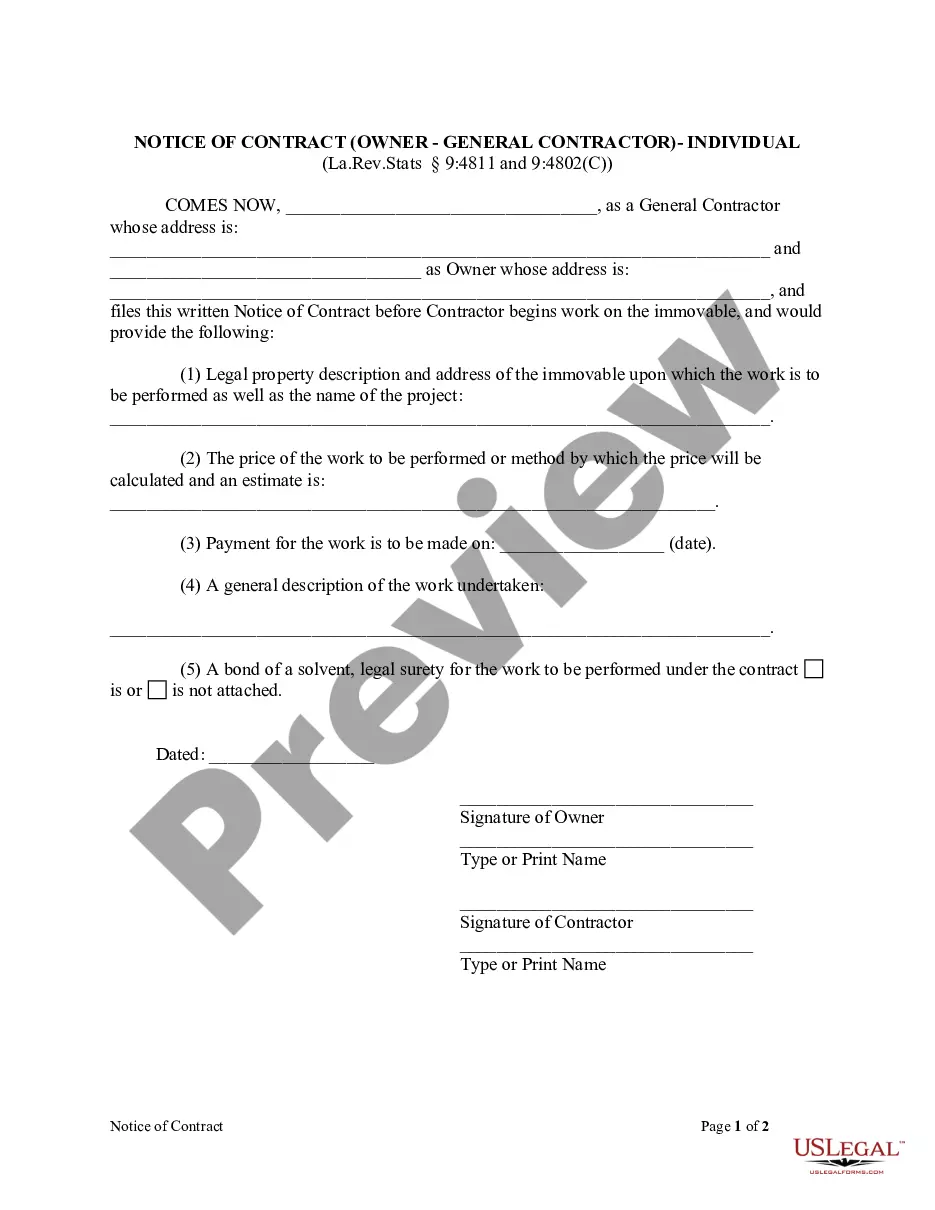
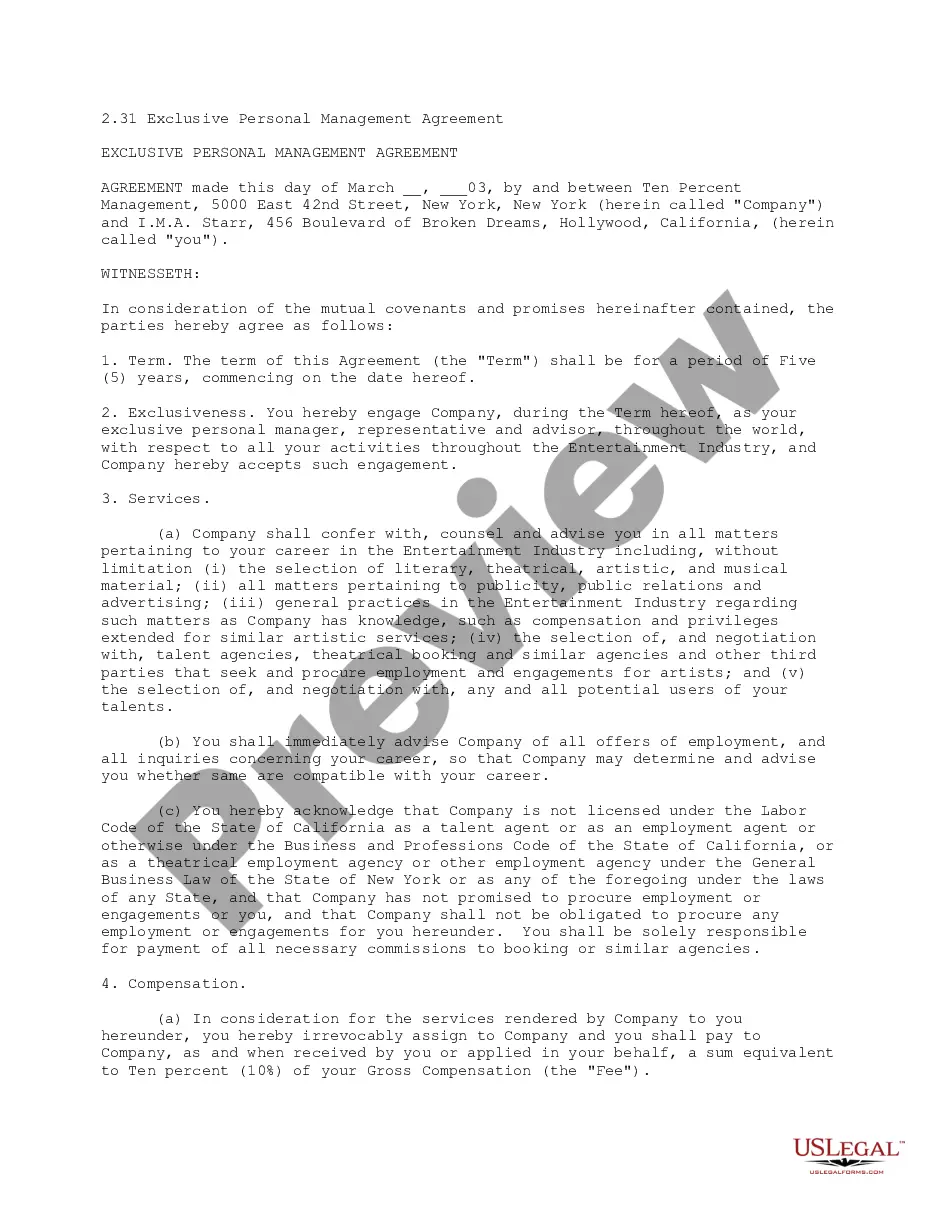
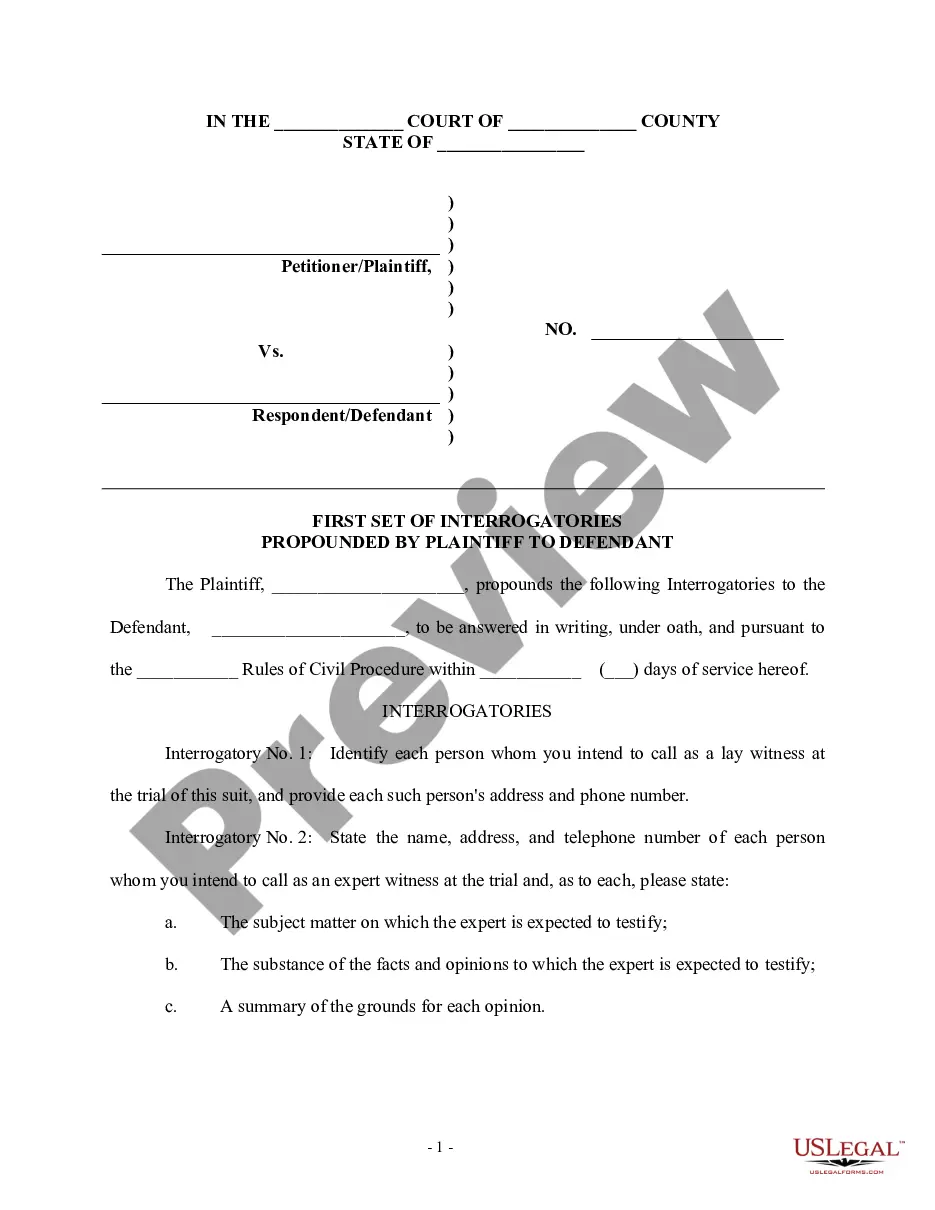
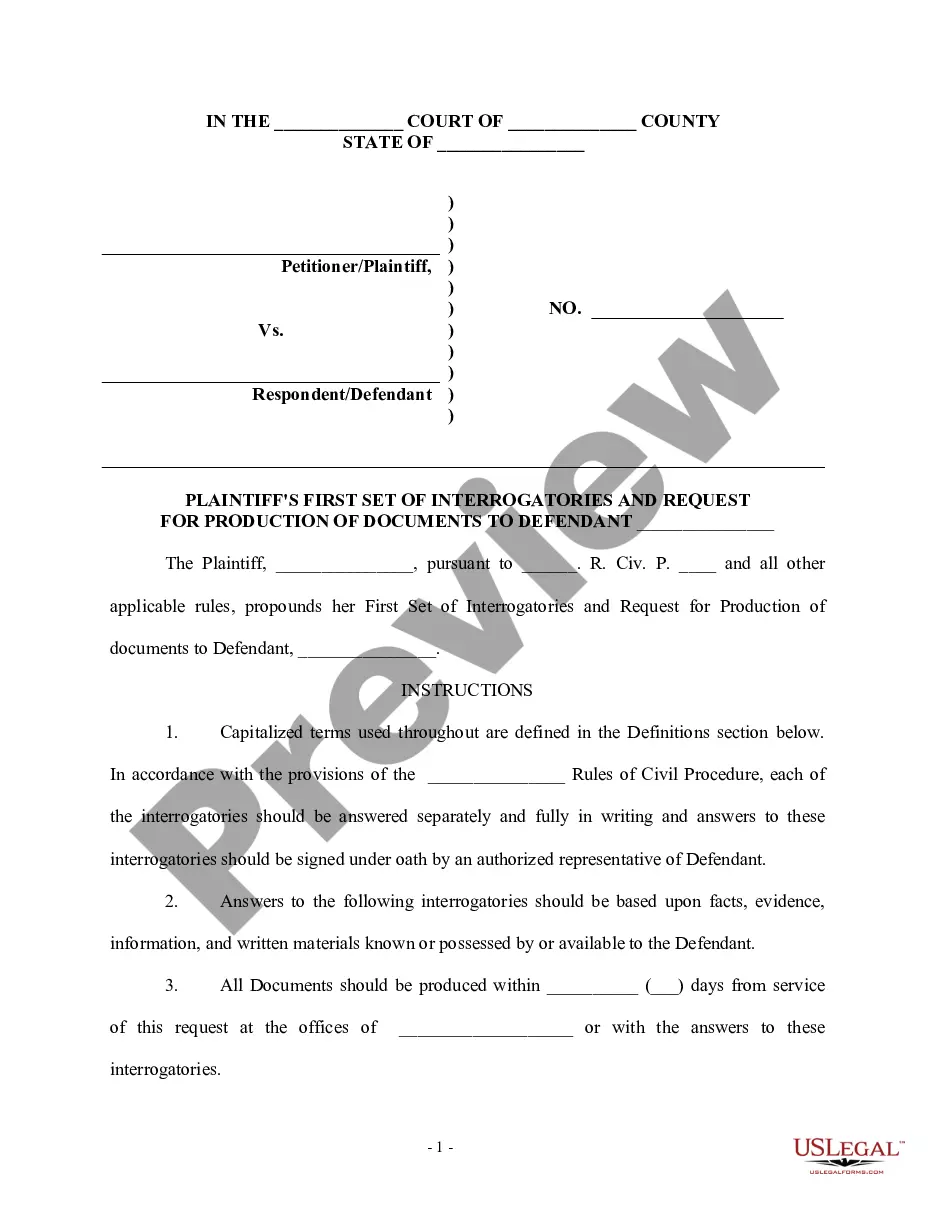
Notice Of Discovery Form Florida In Cook
Description


Get your form ready online
Our built-in tools help you complete, sign, share, and store your documents in one place.
Make edits, fill in missing information, and update formatting in US Legal Forms—just like you would in MS Word.
Download a copy, print it, send it by email, or mail it via USPS—whatever works best for your next step.
Sign and collect signatures with our SignNow integration. Send to multiple recipients, set reminders, and more. Go Premium to unlock E-Sign.
If this form requires notarization, complete it online through a secure video call—no need to meet a notary in person or wait for an appointment.
We protect your documents and personal data by following strict security and privacy standards.

Make edits, fill in missing information, and update formatting in US Legal Forms—just like you would in MS Word.

Download a copy, print it, send it by email, or mail it via USPS—whatever works best for your next step.

Sign and collect signatures with our SignNow integration. Send to multiple recipients, set reminders, and more. Go Premium to unlock E-Sign.

If this form requires notarization, complete it online through a secure video call—no need to meet a notary in person or wait for an appointment.

We protect your documents and personal data by following strict security and privacy standards.
Looking for another form?








Form popularity
FAQ
Parties may obtain discovery regarding any nonprivileged matter that is relevant to any party's claim or defense and proportional to the needs of the case, considering the importance of the issues at stake in the action, the amount in controversy, the parties' relative access to relevant information, the parties' ...
You may object if the request would result in “unwarranted annoyance, embarrassment." The key word is “unwarranted.” The judge will weigh the amount of annoyance or embarrassment against the relevance of the evidence, and the need for the evidence in the case.
The discovery process starts soon after criminal charges are instituted. Once your plea is filed following your arraignment, you can file a Notice of Discovery along with a Demand for Jury Trial. Your discovery notice triggers the prosecutor's duty to give you all evidence they've collected against you.
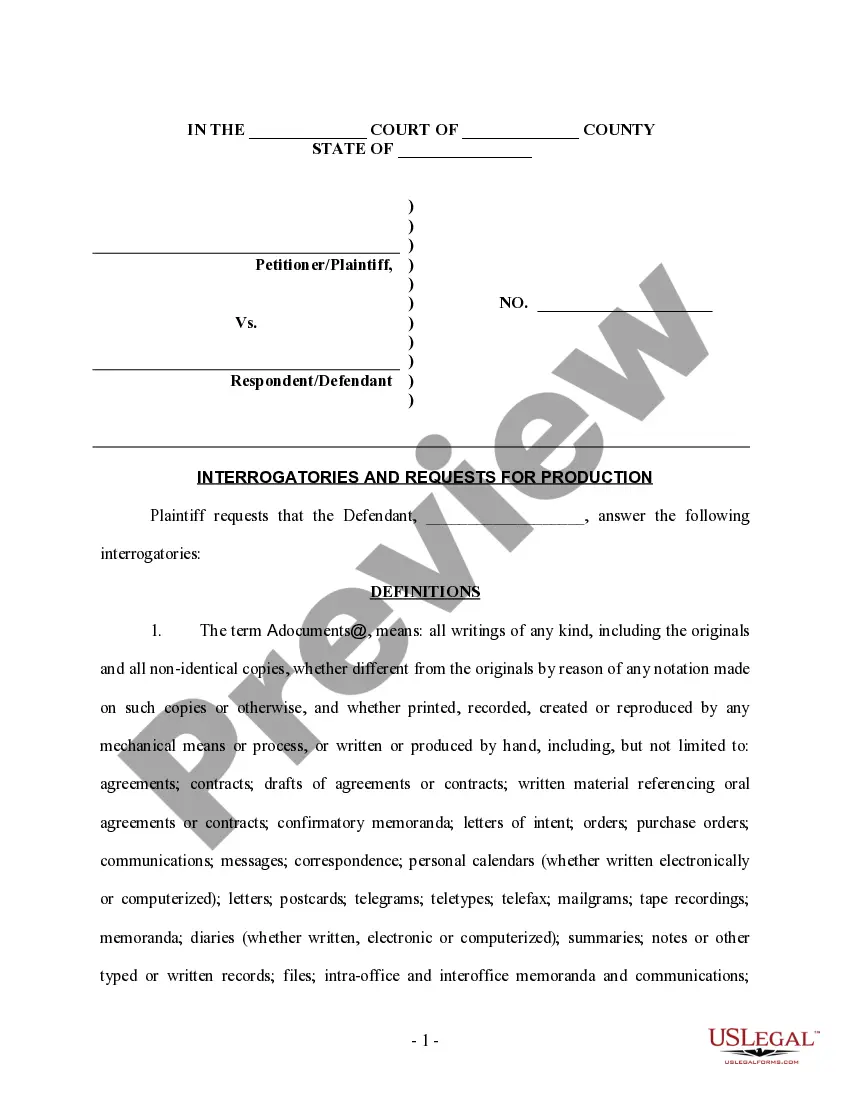
How Does Discovery Work? There are four main types of discovery requests: (1) depositions; (2) interrogatories; (3) requests for admissions; and (4) requests for the production of documents. Depositions are formal witness interviews.
Discovery generally begins after the defendant files an answer, the parties hold a discovery planning conference, and the judge issues a scheduling order. The discovery process is designed to go forward between the parties with minimal court involvement.
Steps Of The Discovery Process. There are four key actions in the discovery process which include interrogatories, request for documents, request for admissions, and depositions.
The discovery process can be divided into two stages: data collection and data processing. The stages are subdivided into phases. Topology deduction takes place during the data processing stage, as the information from the data collection stage is analyzed, interpreted and processed by the stitchers.
In the United States, there are five basic forms of discovery: depositions, interrogatories, requests for production of documents (or permission to inspect), physical and mental examinations, and requests for admission.
Discovery materials are filed only in limited circumstances, including if ordered by the Court, if necessary to the presentation or defense of a motion, or if required by law or rule.
Florida's statute of limitations for personal injury cases is generally two years from the date of the injury. However, the discovery rule allows for an exception: the statute of limitations may begin on the date you first discovered (or reasonably should have discovered) the injury.