Notice Discovery Template For School In Cook
Description

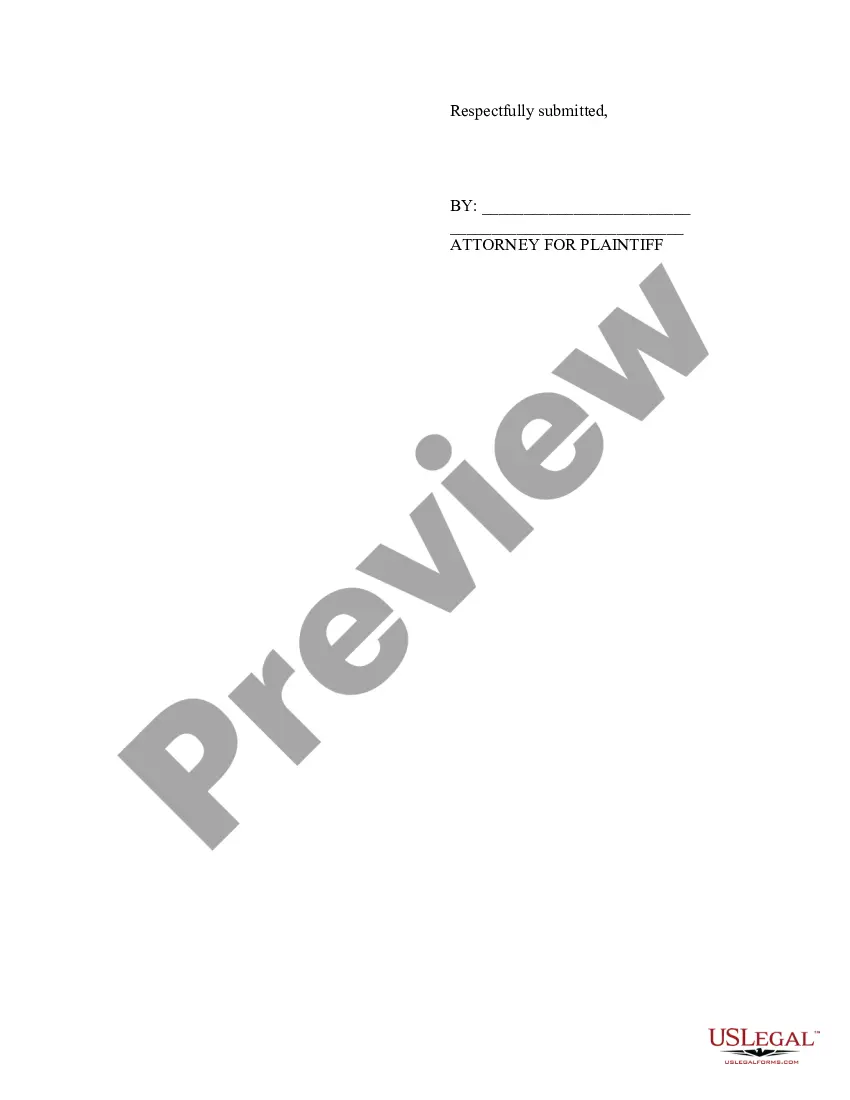
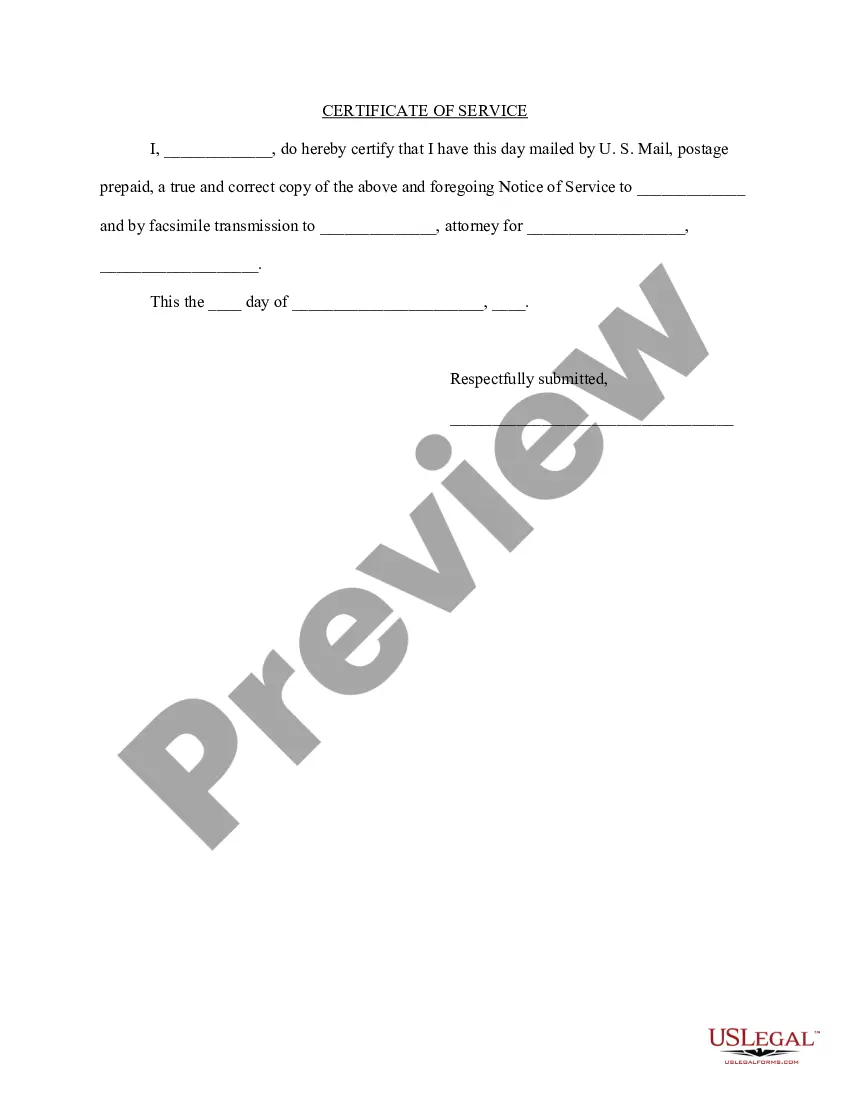
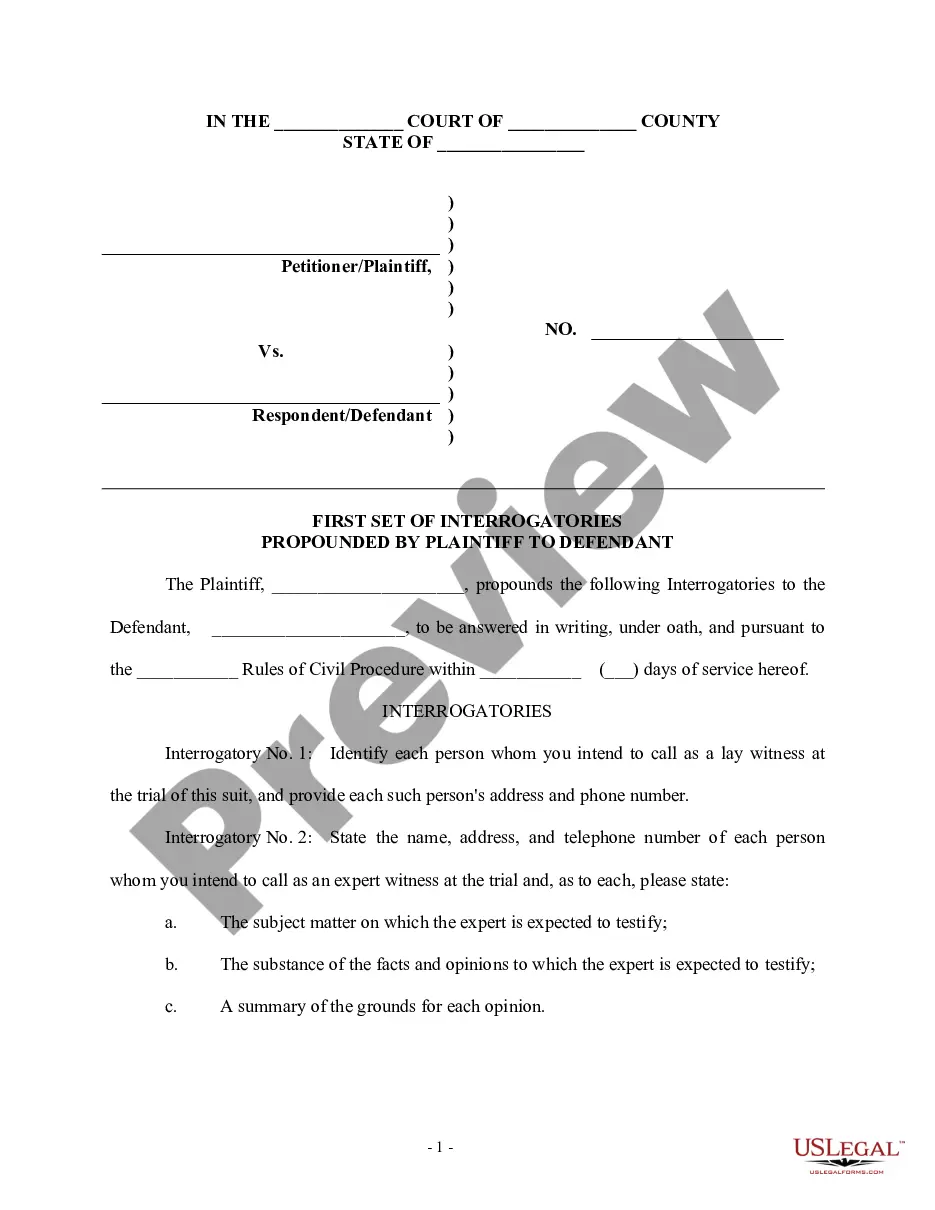
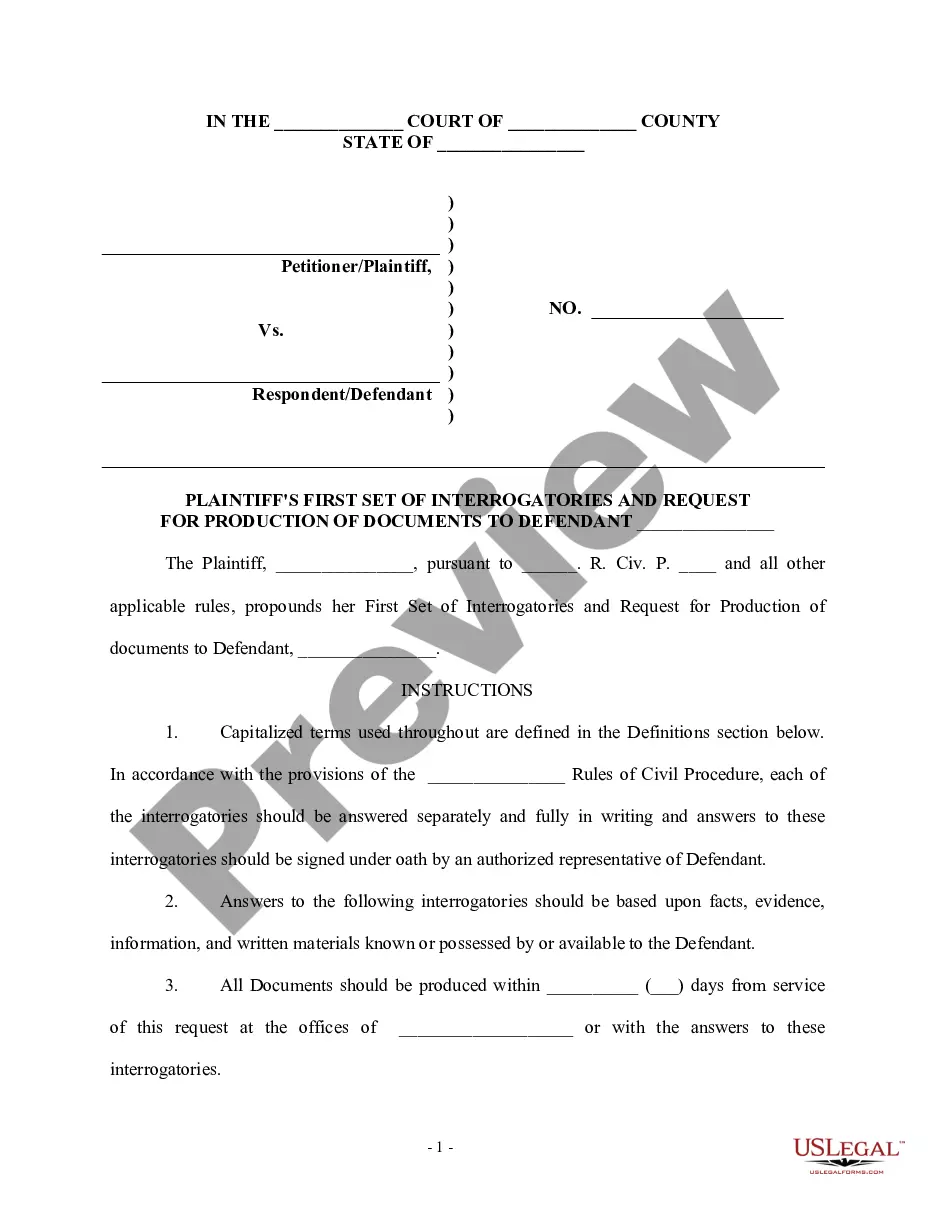
Get your form ready online
Our built-in tools help you complete, sign, share, and store your documents in one place.
Make edits, fill in missing information, and update formatting in US Legal Forms—just like you would in MS Word.
Download a copy, print it, send it by email, or mail it via USPS—whatever works best for your next step.
Sign and collect signatures with our SignNow integration. Send to multiple recipients, set reminders, and more. Go Premium to unlock E-Sign.
If this form requires notarization, complete it online through a secure video call—no need to meet a notary in person or wait for an appointment.
We protect your documents and personal data by following strict security and privacy standards.

Make edits, fill in missing information, and update formatting in US Legal Forms—just like you would in MS Word.

Download a copy, print it, send it by email, or mail it via USPS—whatever works best for your next step.

Sign and collect signatures with our SignNow integration. Send to multiple recipients, set reminders, and more. Go Premium to unlock E-Sign.

If this form requires notarization, complete it online through a secure video call—no need to meet a notary in person or wait for an appointment.

We protect your documents and personal data by following strict security and privacy standards.
Looking for another form?







Form popularity
FAQ
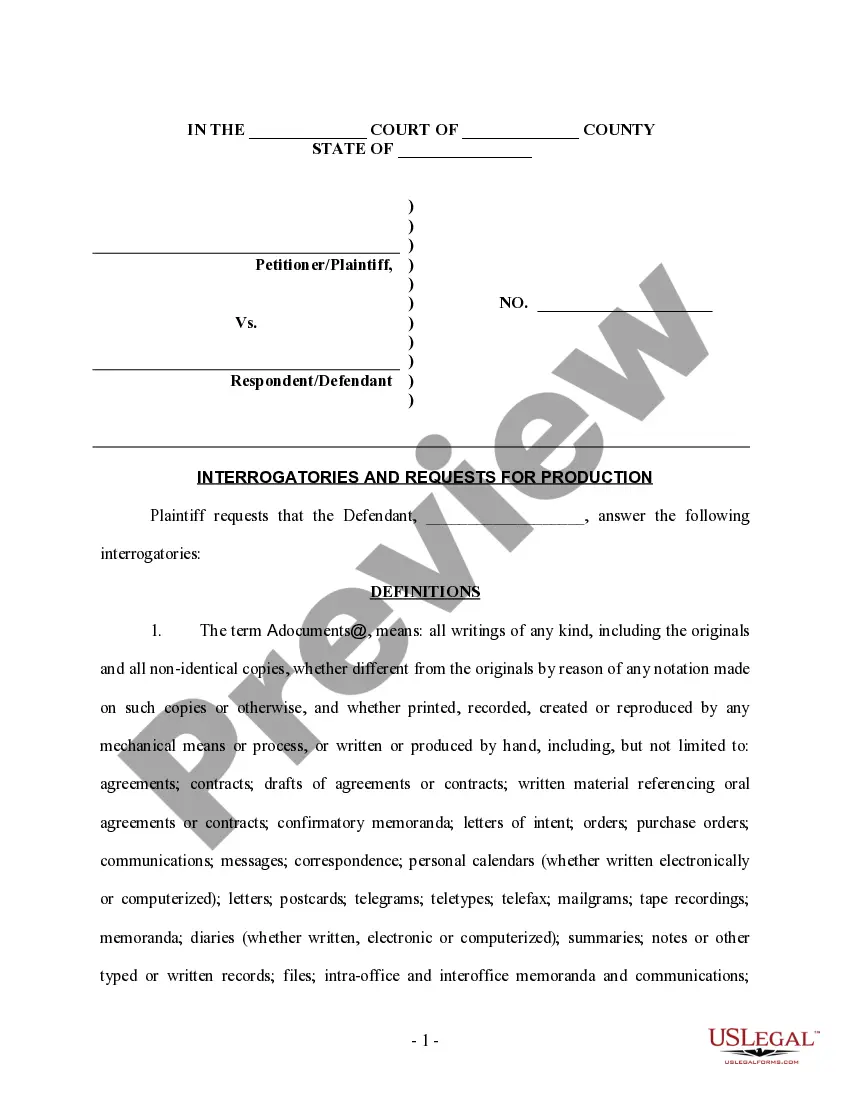
202.20 Interrogatories. Interrogatories are limited to 25 in number, including subparts, unless the court orders otherwise. This limit applies to consolidated actions as well.
In California, you have 30 days to respond to an interrogatory. If you do not respond within this time, the opposing side can file a motion to compel with the court. The court may require them to first consult with you about your failure to respond before officially filing a motion to compel.
Think of discovery as obtaining and disclosing the evidence and position of each side of a case so that all parties involved can decide what their best options are – move forward toward to trial or negotiate an early settlement.
If you don't respond within the time given, the opposing party may file a motion to compel your compliance with the court.
If you do not respond, then the other side will request entry of default. The Court will then wait a period of time and then assume that you have waived the right to contest the allegations--they will be deemed proven true.
Standard Timeframe in NY: Under NY CPLR 3130, a party may serve written interrogatories upon another party after the commencement of an action. Typically, the recipient has 30 days from the date of service to respond.
(b) Document Demand: As the name indicates, this is a written demand in which one party demands that the other produce certain documents for inspection and copying. (This device is also referred to as a notice of discovery and inspection). The demand must define the items sought with reasonable particularity.
Any student who scored a 491 or above is not eligible for the Discovery program. Participation is through invitation only. Eligible students will only be considered for Discovery programs at the Specialized High School(s) they listed on their SHSAT registration.
The Discovery program is a summer enrichment program that helps high- performing, disadvantaged students gain admission to a SHS. Score right below the cutoff score on the SHSAT. Attend a high-poverty school. A high-poverty schoolhas an Economic Need Index(ENI) of at least 60%.
Discovery is how you gather the evidence you will need to prove your case as plaintiff, or defeat the plaintiff's case as a defendant. You use discovery to find out things like: What the other side plans to say about an issue in your case. What facts or witnesses support their side.