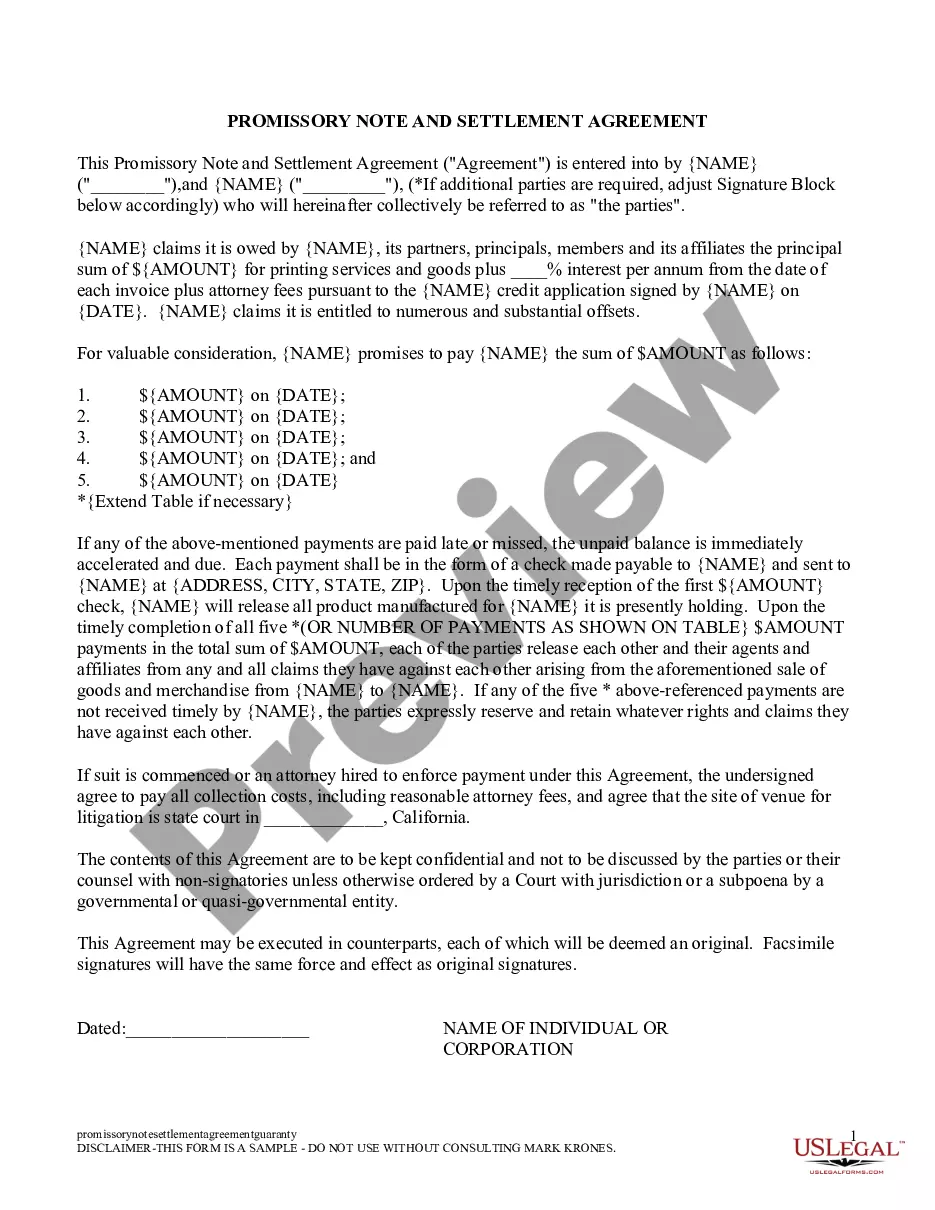
Corporate Resolution With Raised Seal In Washington
Description

Get your form ready online
Our built-in tools help you complete, sign, share, and store your documents in one place.
Make edits, fill in missing information, and update formatting in US Legal Forms—just like you would in MS Word.
Download a copy, print it, send it by email, or mail it via USPS—whatever works best for your next step.
Sign and collect signatures with our SignNow integration. Send to multiple recipients, set reminders, and more. Go Premium to unlock E-Sign.
If this form requires notarization, complete it online through a secure video call—no need to meet a notary in person or wait for an appointment.
We protect your documents and personal data by following strict security and privacy standards.

Make edits, fill in missing information, and update formatting in US Legal Forms—just like you would in MS Word.

Download a copy, print it, send it by email, or mail it via USPS—whatever works best for your next step.

Sign and collect signatures with our SignNow integration. Send to multiple recipients, set reminders, and more. Go Premium to unlock E-Sign.

If this form requires notarization, complete it online through a secure video call—no need to meet a notary in person or wait for an appointment.

We protect your documents and personal data by following strict security and privacy standards.
Looking for another form?







Form popularity
FAQ
Corporate seals in the past were imprinted on wax upon a document. As time passed, rubber stamps were preferred and today, most corporate seals are embossed upon a document. Although no longer required, the corporate seal still retains a sense of authenticity and a mark of identity for a corporation.
A corporate resolution document does not need to be notarized, although if it involves other transactions then those might have to be notarized. Once the document has been signed off and dated by the chairperson, vice-chairperson, corporate treasurer, and secretary, it becomes a binding document.
Since the legal requirement for seals was abolished in 1989, we don't see them around much anymore. However, some businesses still like to use them, especially if they are conducting business abroad or if they wish to exude an air of old-world authority.
There are alternatives to a corporate seal for official documentation. ing to state corporation laws, authorized signatures, digital signatures, or embossed stamps can be used as substitutes. These alternatives have legal validity and are recognized as acceptable alternatives to a traditional company seal.
However, a seal could also take other forms, such as the word “seal” placed between brackets after a signature, or the letters “L.S.” (short for locus sigilli, meaning in “the place of the seal”) adjacent to the contracting parties' signatures.
That's it your company seal is ready for.MoreThat's it your company seal is ready for.
In California, the decision to use a corporate seal is entirely optional, as it is not a legal requirement for businesses. ing to California Corporations Code section 207(a), corporations have the flexibility to adopt, use, and even alter a corporate seal as they see fit.
State corporation statutes continue to authorize corporations to adopt and use corporate seals. But do you really need one for your company? In California and New York, the answer is clearly “no.”
Examples of corporate resolutions include the adoption of new bylaws, the approval of changes in the board members, determining what board members have access to certain finances, such as bank accounts, deciding upon mergers and acquisitions, and deciding executive compensation.
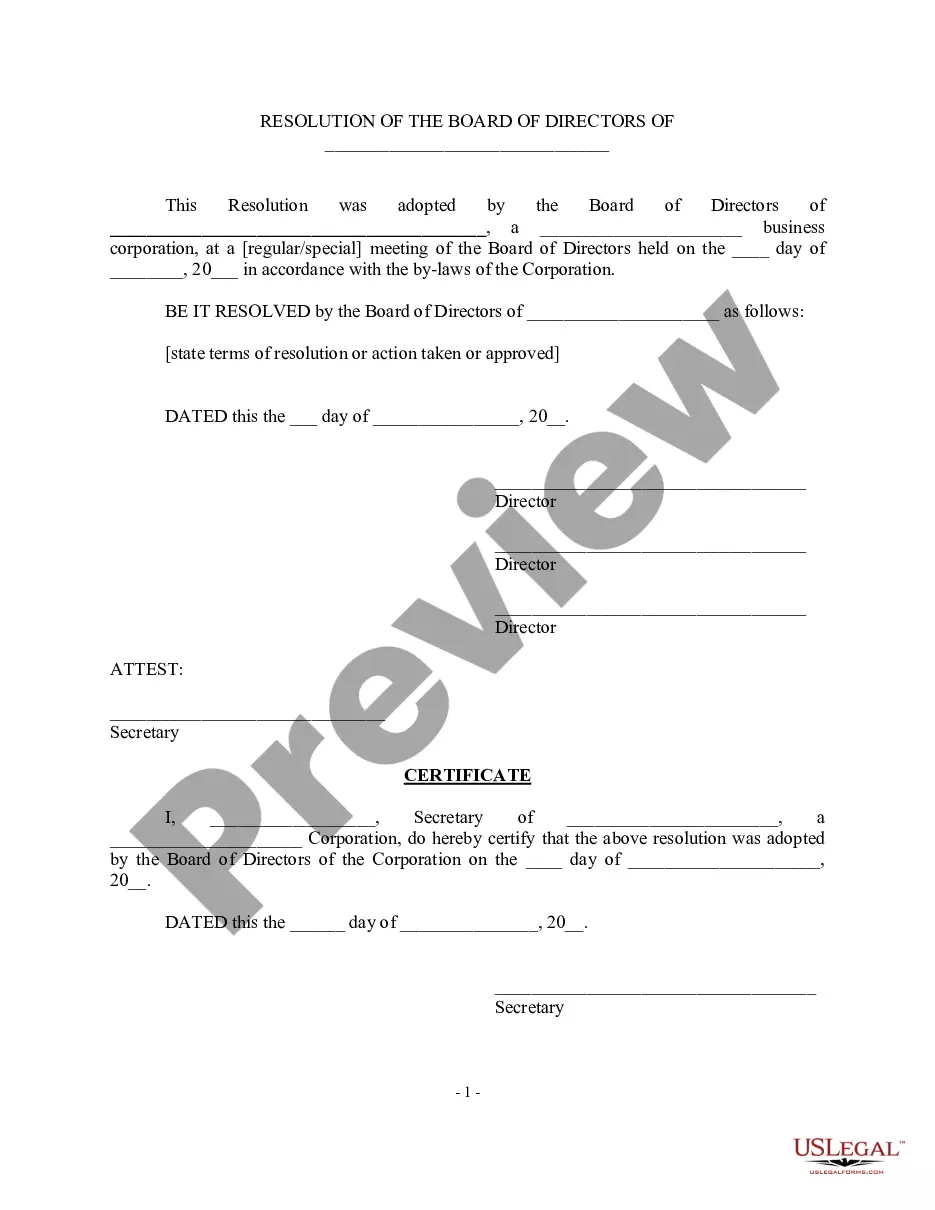
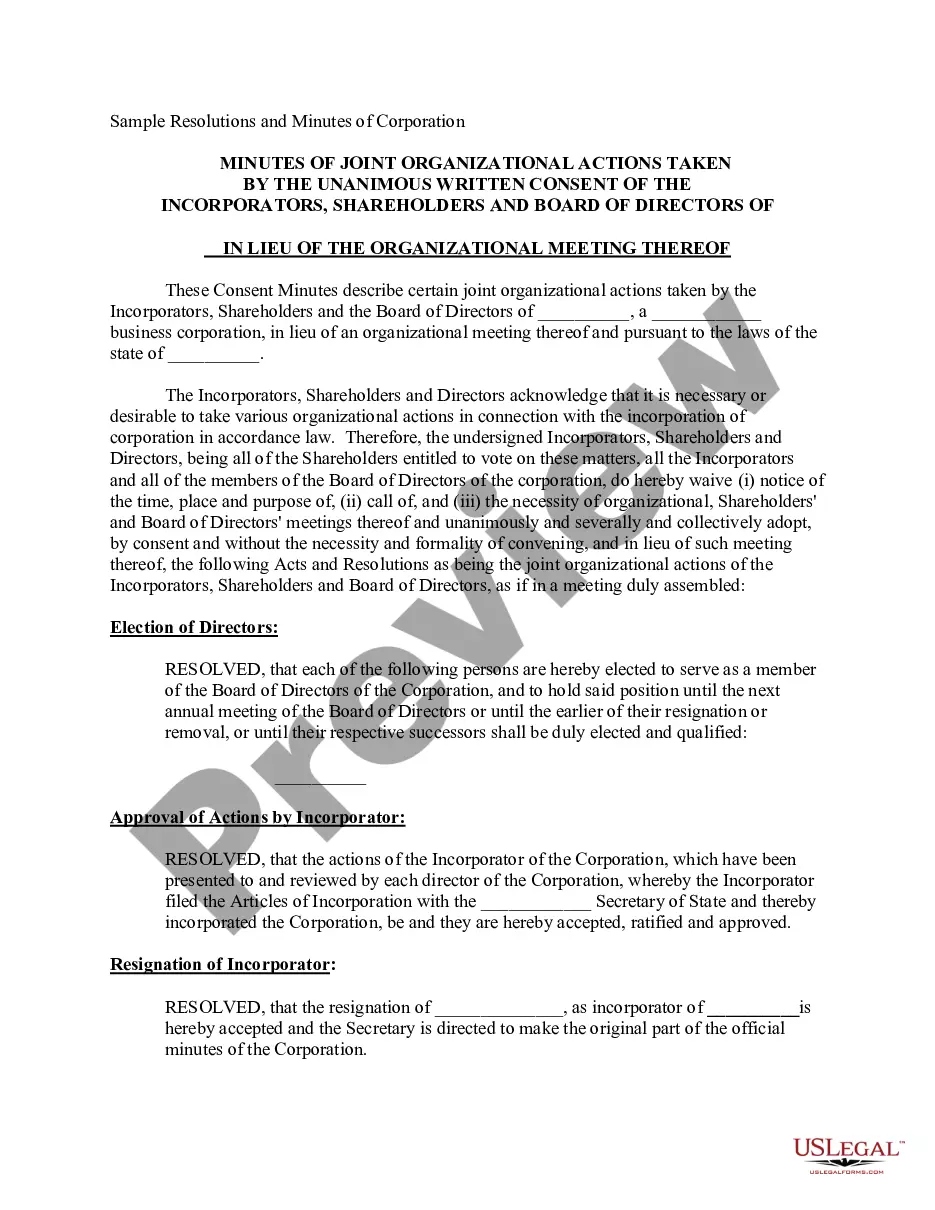
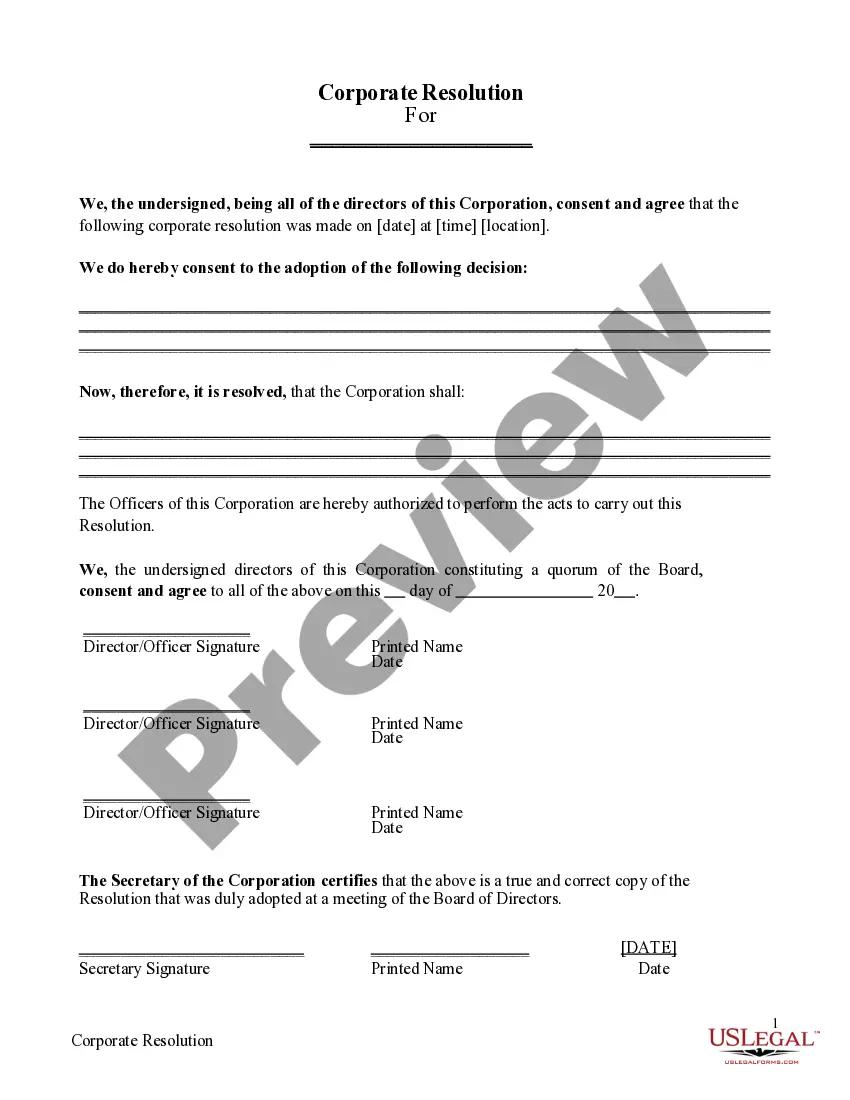
What should corporate resolutions include? Your corporation's name. Date, time and location of meeting. Statement of unanimous approval of resolution. Confirmation that the resolution was adopted at a regularly called meeting. Resolution. Statement authorizing officers to carry out the resolution.