Corporate Resolution For Sole Owner In Salt Lake
Description

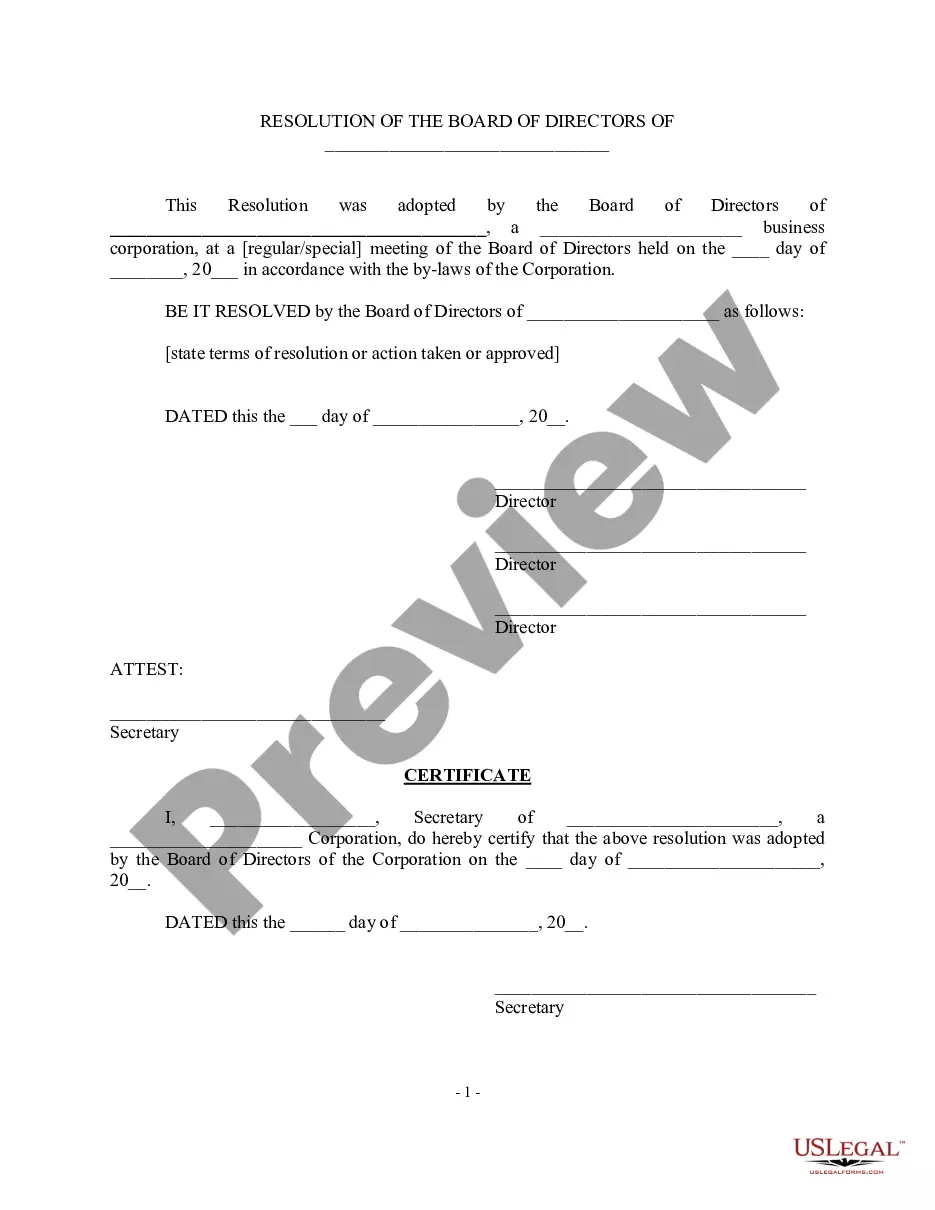
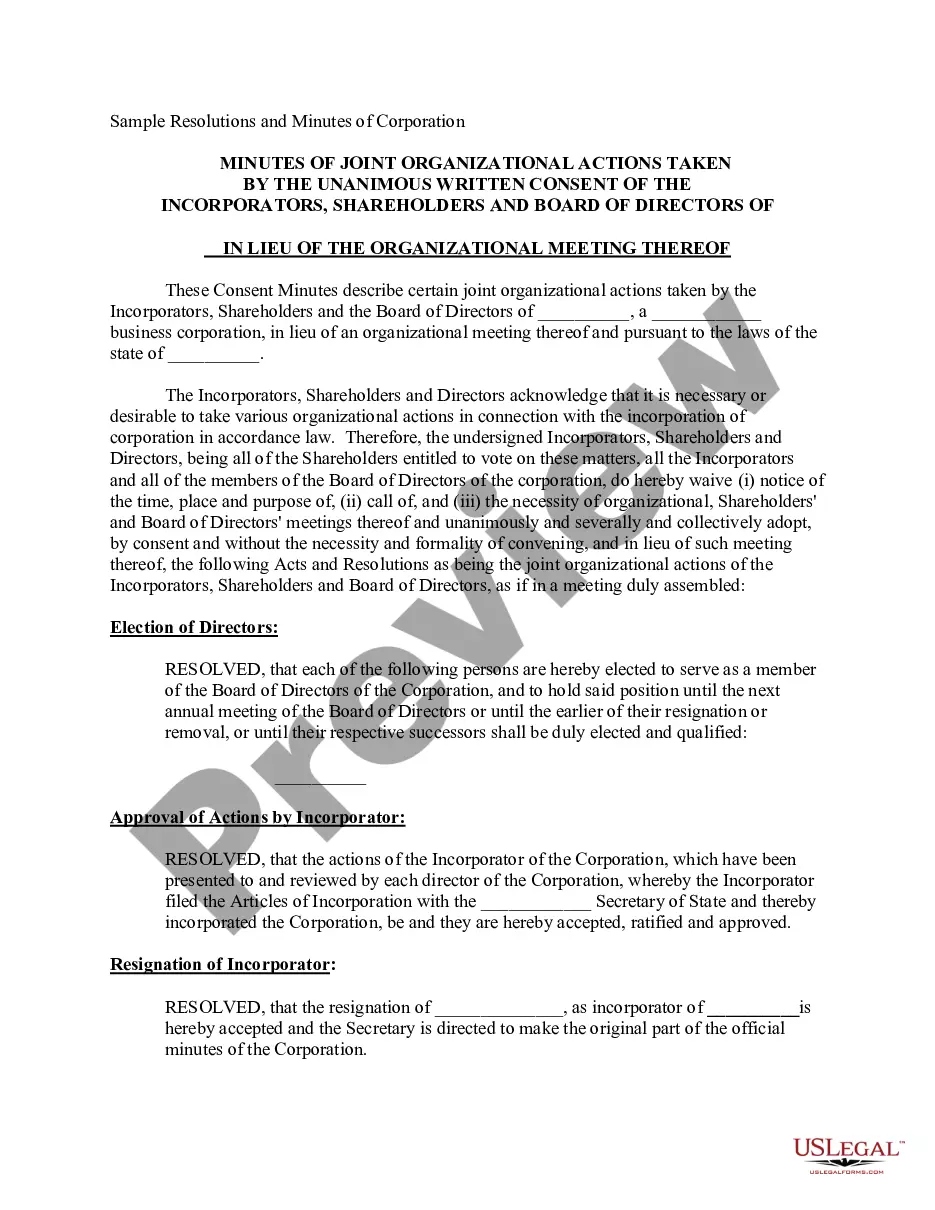
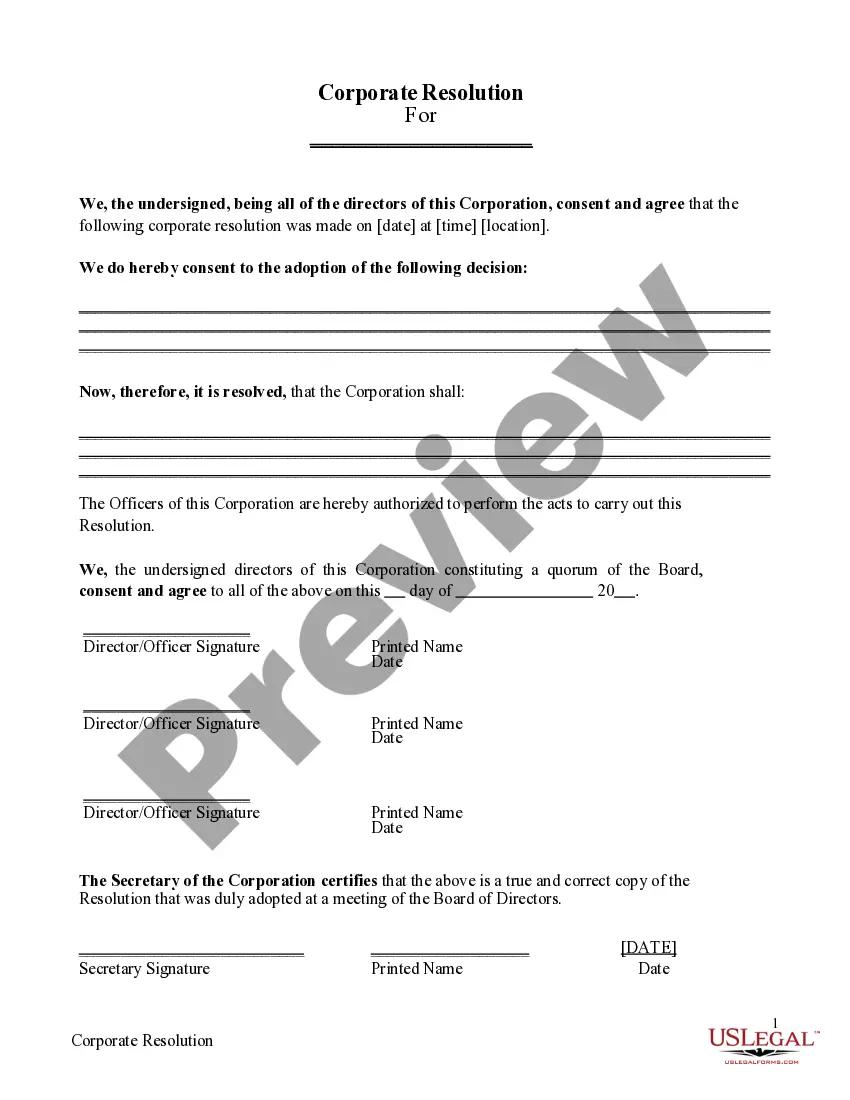
Get your form ready online
Our built-in tools help you complete, sign, share, and store your documents in one place.
Make edits, fill in missing information, and update formatting in US Legal Forms—just like you would in MS Word.
Download a copy, print it, send it by email, or mail it via USPS—whatever works best for your next step.
Sign and collect signatures with our SignNow integration. Send to multiple recipients, set reminders, and more. Go Premium to unlock E-Sign.
If this form requires notarization, complete it online through a secure video call—no need to meet a notary in person or wait for an appointment.
We protect your documents and personal data by following strict security and privacy standards.

Make edits, fill in missing information, and update formatting in US Legal Forms—just like you would in MS Word.

Download a copy, print it, send it by email, or mail it via USPS—whatever works best for your next step.

Sign and collect signatures with our SignNow integration. Send to multiple recipients, set reminders, and more. Go Premium to unlock E-Sign.

If this form requires notarization, complete it online through a secure video call—no need to meet a notary in person or wait for an appointment.

We protect your documents and personal data by following strict security and privacy standards.
Looking for another form?
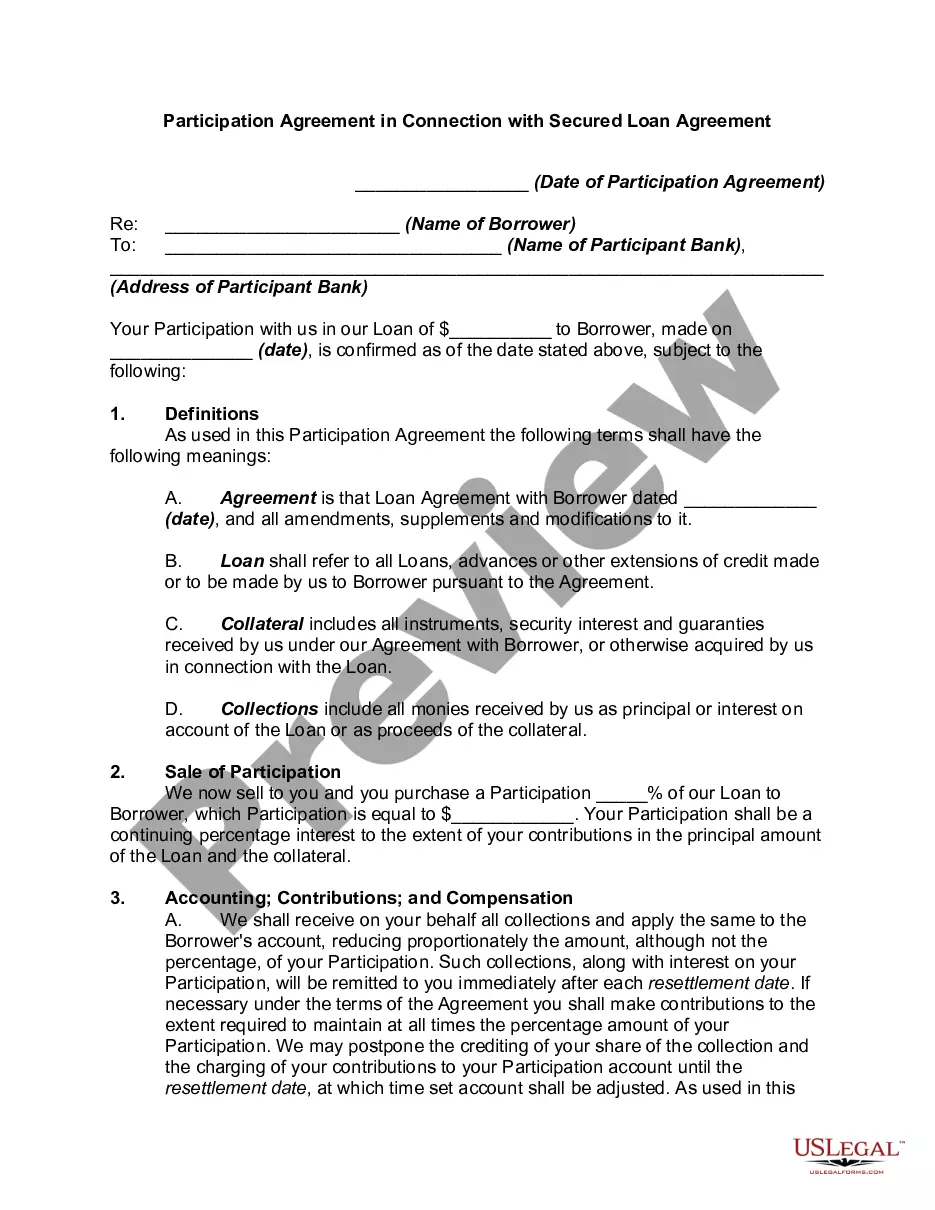
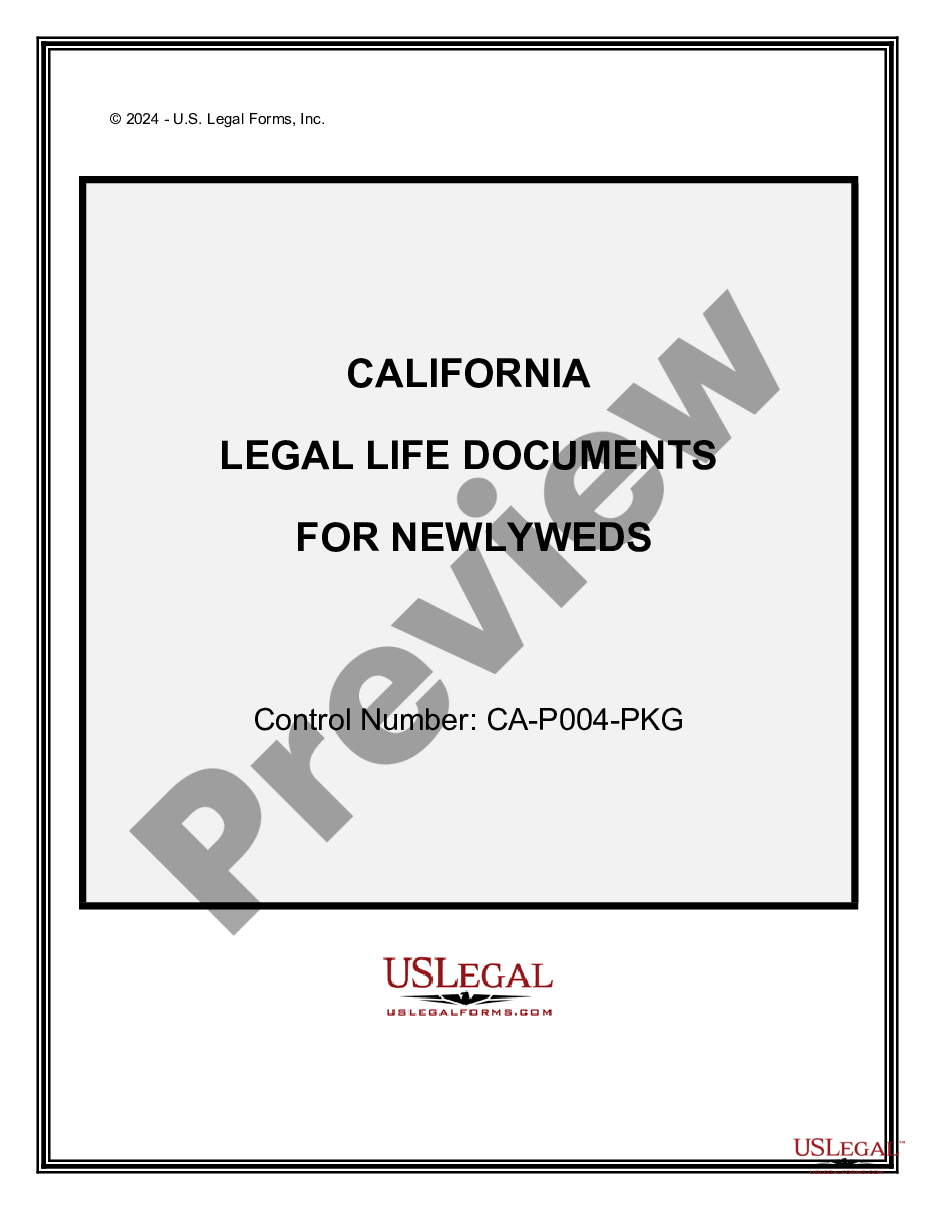






Form popularity
FAQ
If members representing at least 75% of the company's voting rights agree to the motion, the special resolution is passed and the decision is legally binding.
A sole proprietorship resolution must include the name of the business, its purpose, the name of the proprietor, their address, the name of the registered agent (if any), and the effective date of the resolution. It should also include any other relevant information as determined by the proprietor.
These decisions can be 'ratified' by a written resolution or board meeting. However, remember – if a board meeting is called to do this, the sole director must have taken 1 of the 2 steps above to ensure that a quorum is present, and the decision to ratify can itself be validly made.
There are two main types of shareholders' resolution: 'ordinary' and 'special'. An ordinary resolution is passed by a simple majority of members, while a special resolution requires not less than 75% of the total voting rights of eligible members.
Single-member LLCs do not need resolutions, but they can still come in handy in certain situations, like if the company must defend itself in court. Documenting changes or actions not covered in the original bylaws or articles of incorporation can help an LLC protect itself from lawsuits or judicial investigations.
A special resolution is a method of passing a company decision that requires at least 75% of the votes cast by shareholders to be in favour of it.
A special resolution must be passed by at least 75% of the votes cast by shareholders of the company entitled to vote on the resolution and who vote at the meeting in person or by proxy (if proxies are allowed). The sole shareholder of a company may pass a resolution by recording and signing their decision.
Passing a special resolution without holding a meeting A proprietary company with only one member of the company can pass a special resolution by signing a document that sets out the details of the resolution.
You don't often think of corporations as a one-person show, but guess what? It's totally possible. Your business can be comprised of only you—provided you get along well with yourself. You can be the CEO, Treasurer, Secretary, and the only shareholder of the company.
Operating as a single owner S Corporation has several advantages. Registering as an S-Corp avoids double taxation by labeling the business a pass-through entity. This means you're not considered self-employed as an owner, and can avoid paying self-employment taxes.
