Nonprofit Profit Board Resolution Template For Responsibilities In Clark
Description

Get your form ready online
Our built-in tools help you complete, sign, share, and store your documents in one place.
Make edits, fill in missing information, and update formatting in US Legal Forms—just like you would in MS Word.
Download a copy, print it, send it by email, or mail it via USPS—whatever works best for your next step.
Sign and collect signatures with our SignNow integration. Send to multiple recipients, set reminders, and more. Go Premium to unlock E-Sign.
If this form requires notarization, complete it online through a secure video call—no need to meet a notary in person or wait for an appointment.
We protect your documents and personal data by following strict security and privacy standards.

Make edits, fill in missing information, and update formatting in US Legal Forms—just like you would in MS Word.

Download a copy, print it, send it by email, or mail it via USPS—whatever works best for your next step.

Sign and collect signatures with our SignNow integration. Send to multiple recipients, set reminders, and more. Go Premium to unlock E-Sign.

If this form requires notarization, complete it online through a secure video call—no need to meet a notary in person or wait for an appointment.

We protect your documents and personal data by following strict security and privacy standards.
Looking for another form?



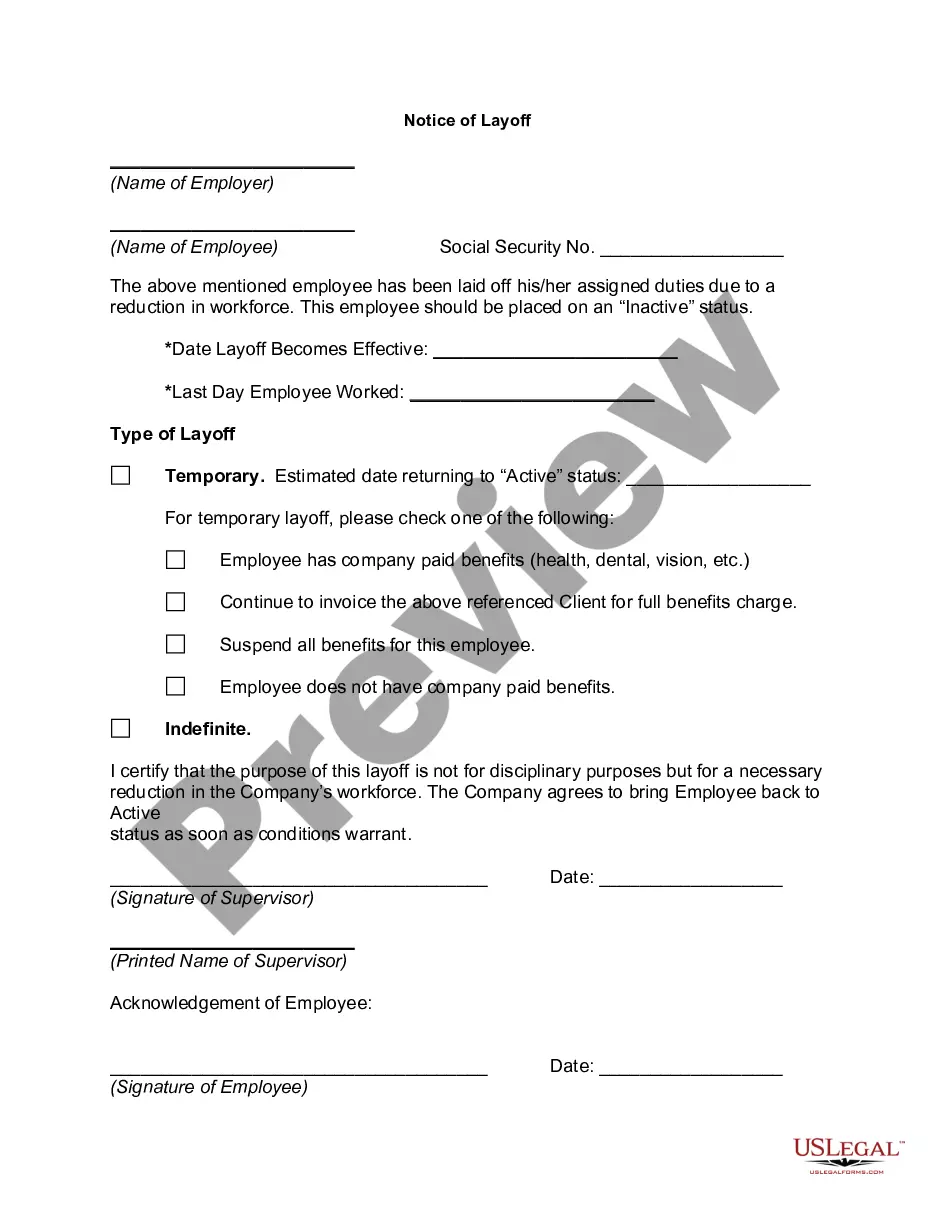


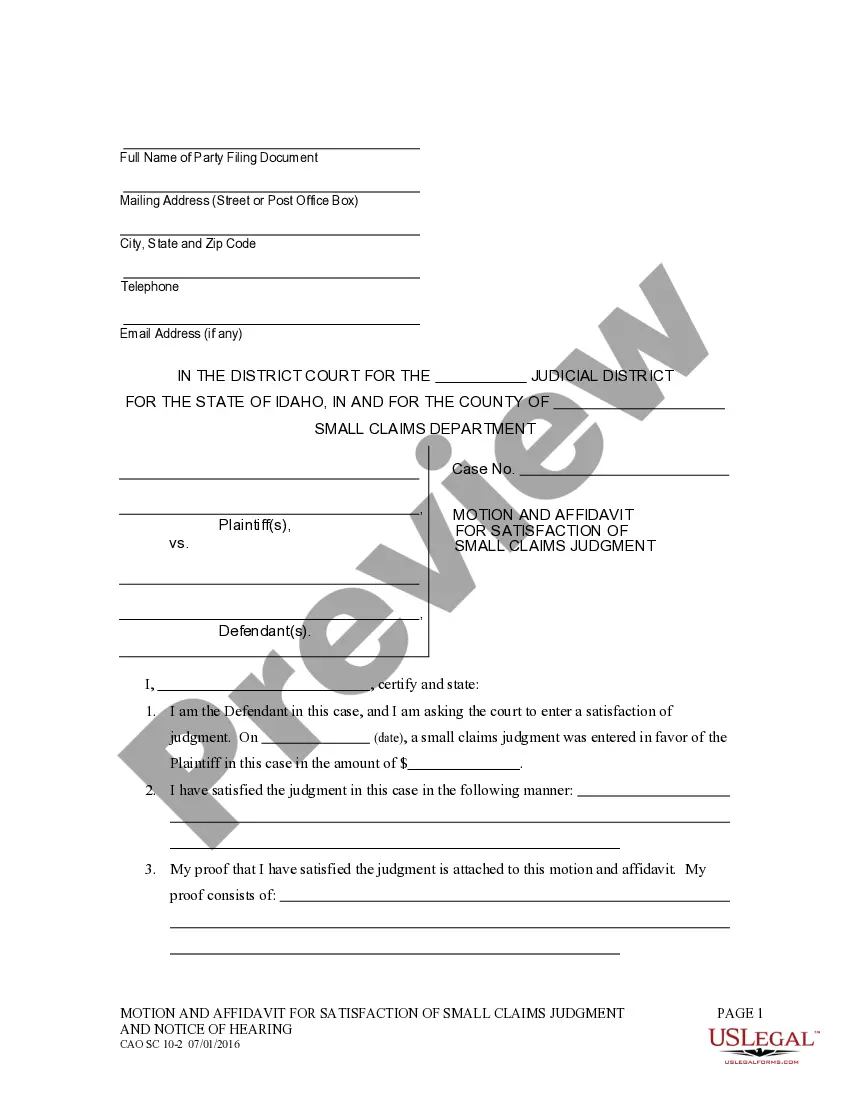
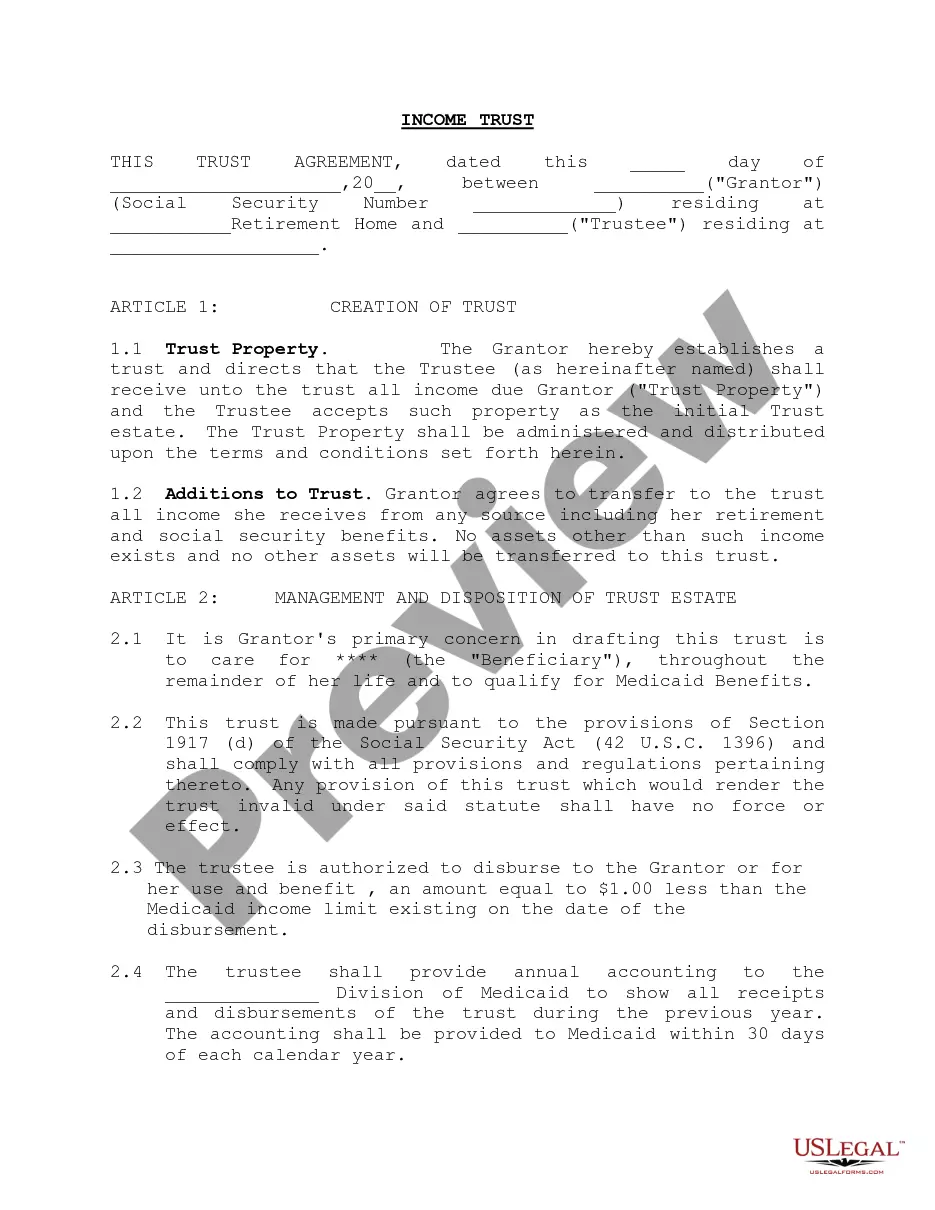
Form popularity
FAQ
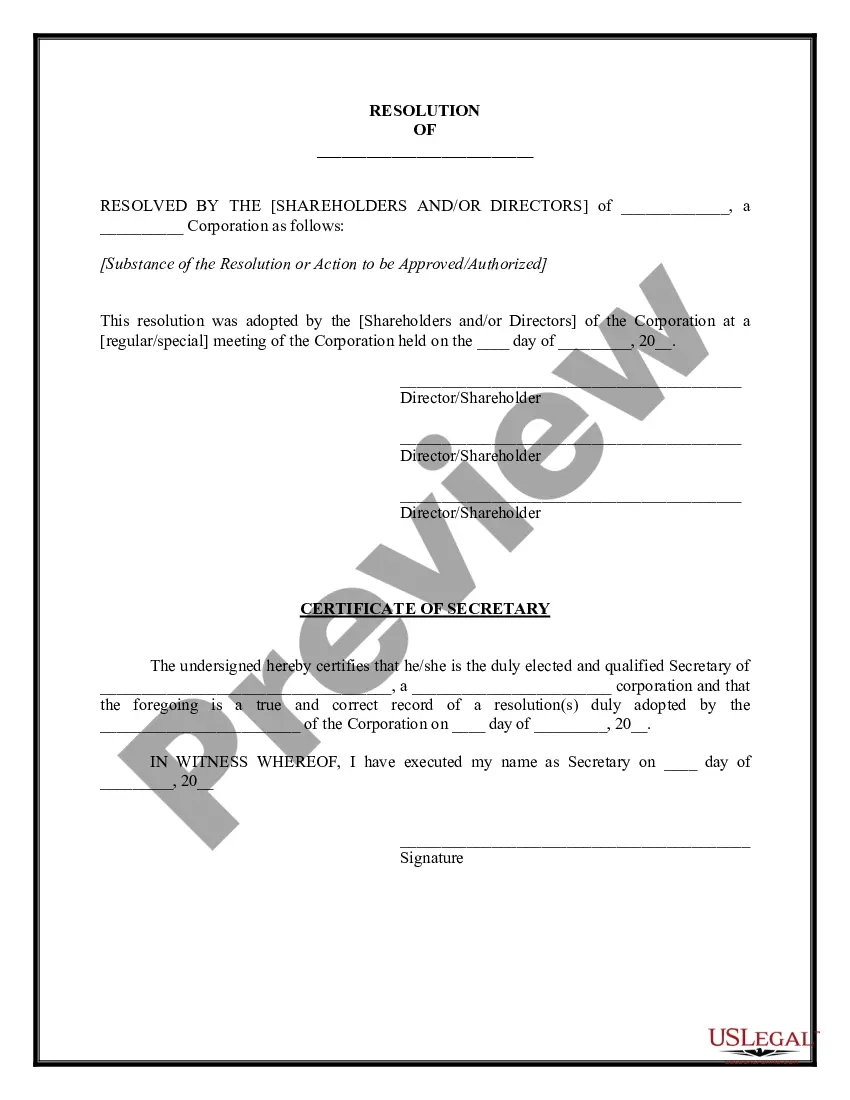
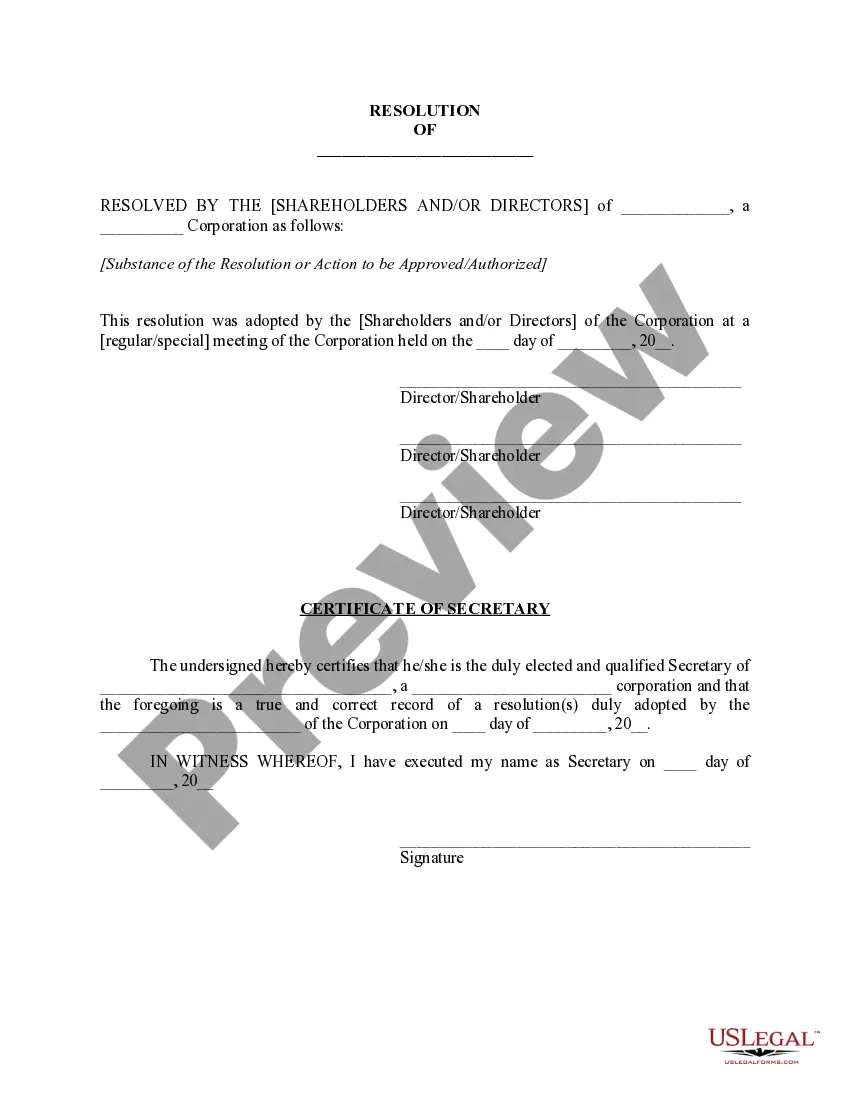
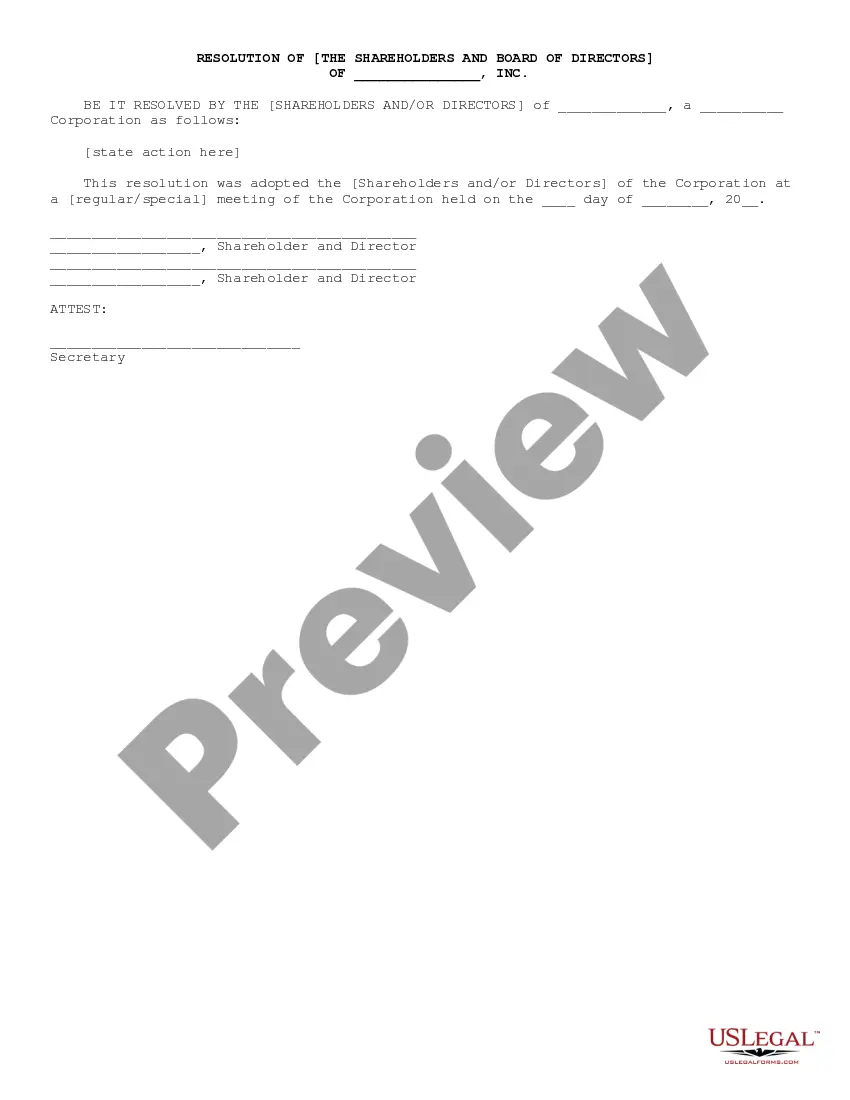
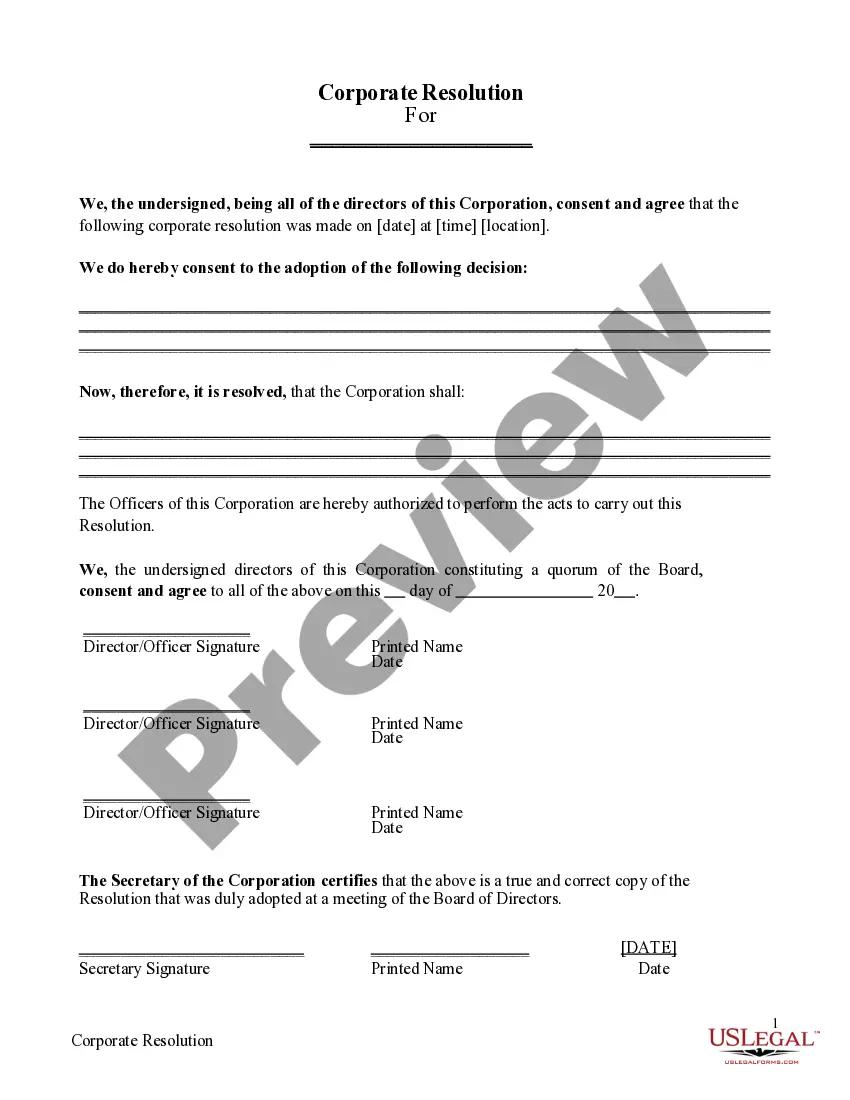
How to write a board resolution Put the date and resolution number at the top. Give the resolution a title that relates to the decision. Use formal language. Continue writing out each critical statement. Wrap up the heart of the resolution in the last statement.
A board governance/board development committee sets the pace, creates systems to wire in accountability, and ensures that the rules established for board members are followed, including ensuring that all nonprofit funds are accounted for in a transparent and compliant manner.
The main purpose of for-profit and nonprofit entities is starkly different, but they also share one important similarity. For-profit corporations serve their shareholders, and board directors are accountable to them. Nonprofit board members serve the members of their organization, their cause and their communities.
One of the board's foremost responsibilities is to secure adequate resources for the organization to fulfill its mission. Protect assets and provide proper financial oversight. The board must assist in developing the annual budget and ensuring that proper financial controls are in place.
The title of the resolution must appropriately reflect the intent. Resolutions begin with "Whereas" statements, which provides the basic facts and reasons for the resolution, and conclude with "Resolved" statements which, identifies the specific proposal for the requestor's course of action.
Leadership Due to this, for-profit leaders are primarily concerned with profit and increasing revenue for the organization. By contrast, nonprofit organizations tend to be led and directed by a board of directors who guide the future of the organization without possessing direct financial ownership.
Nonprofit board members have the legal responsibility to meet the duty of care, the duty of loyalty, and the duty of obedience. Under well-established principles of nonprofit corporation law, a board member must meet certain standards of conduct and attention in carrying out their responsibilities to the organization.
Generally, for-profit companies seek to provide a product or service to consumers and make a profit by doing so. A nonprofit organization's purpose is to provide a service or benefit to the community with no intention of earning a profit.
How to write a board resolution Put the date and resolution number at the top. Give the resolution a title that relates to the decision. Use formal language. Continue writing out each critical statement. Wrap up the heart of the resolution in the last statement.
The title of the resolution must appropriately reflect the intent. Resolutions begin with "Whereas" statements, which provides the basic facts and reasons for the resolution, and conclude with "Resolved" statements which, identifies the specific proposal for the requestor's course of action.