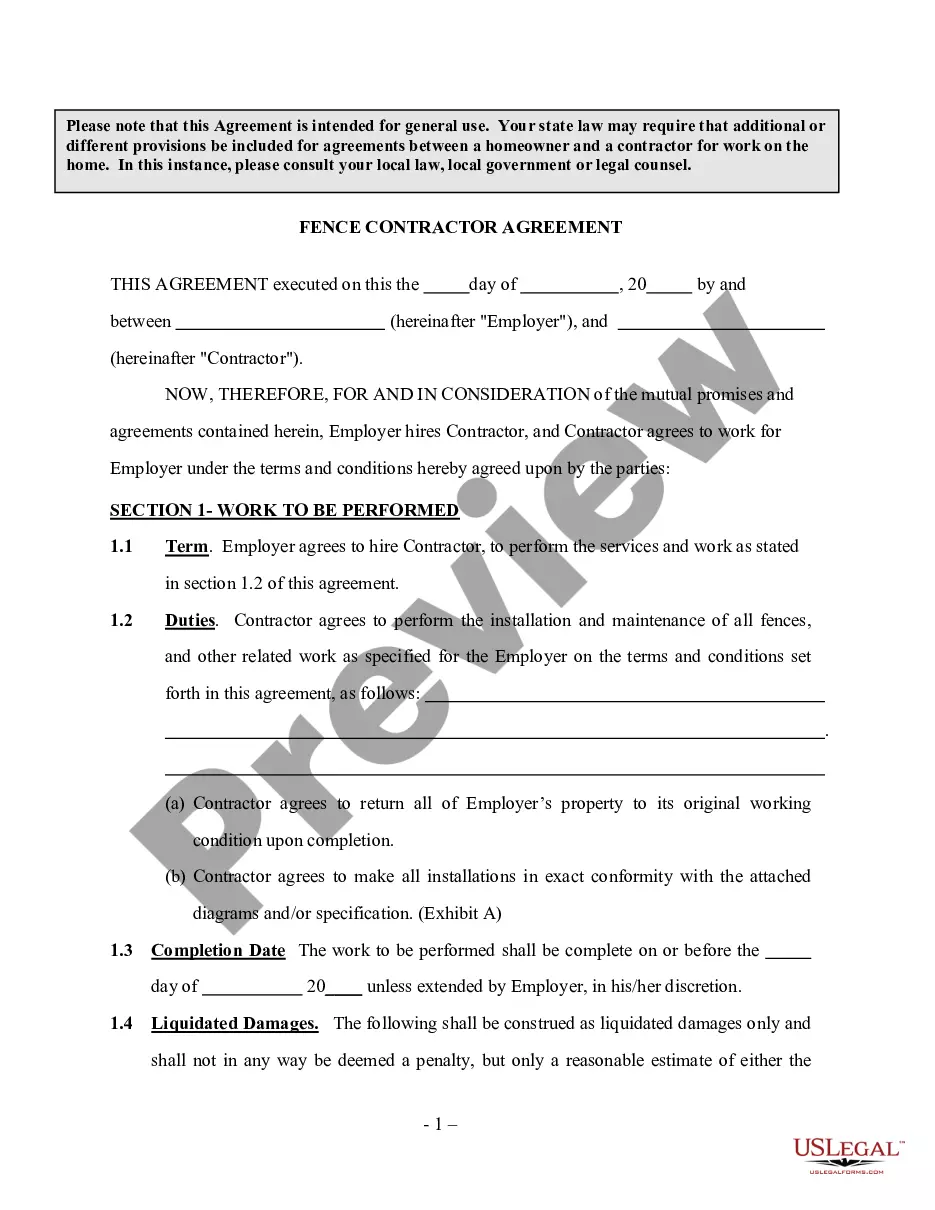
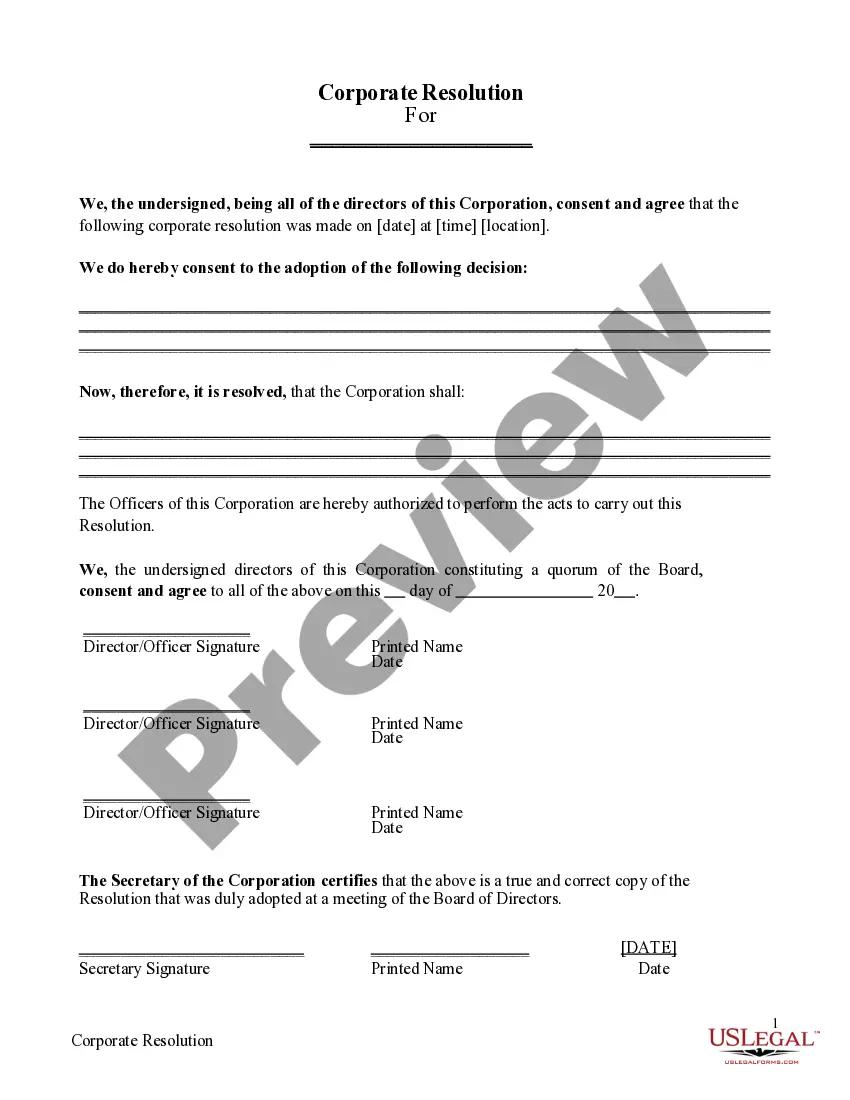
Non Profit Corporate Resolution Example For Funeral Flowers In Bexar
Description
Get your form ready online
Our built-in tools help you complete, sign, share, and store your documents in one place.
Make edits, fill in missing information, and update formatting in US Legal Forms—just like you would in MS Word.
Download a copy, print it, send it by email, or mail it via USPS—whatever works best for your next step.
Sign and collect signatures with our SignNow integration. Send to multiple recipients, set reminders, and more. Go Premium to unlock E-Sign.
If this form requires notarization, complete it online through a secure video call—no need to meet a notary in person or wait for an appointment.
We protect your documents and personal data by following strict security and privacy standards.

Make edits, fill in missing information, and update formatting in US Legal Forms—just like you would in MS Word.

Download a copy, print it, send it by email, or mail it via USPS—whatever works best for your next step.

Sign and collect signatures with our SignNow integration. Send to multiple recipients, set reminders, and more. Go Premium to unlock E-Sign.

If this form requires notarization, complete it online through a secure video call—no need to meet a notary in person or wait for an appointment.

We protect your documents and personal data by following strict security and privacy standards.
Looking for another form?





Form popularity
FAQ
How to write a board resolution Put the date and resolution number at the top. Give the resolution a title that relates to the decision. Use formal language. Continue writing out each critical statement. Wrap up the heart of the resolution in the last statement.
The first sentence should reference the board's responsibility. For example, “Whereas it is the responsibility of the Board to designate funds for a specific purpose…” Continue writing out each critical statement. Use a separate paragraph for each important point.
What Are the Components of a Nonprofit Board Resolution Template? The board meeting date. The number of the resolution. A title of the resolution. The resolution itself (what is being voted on) The name and vote of each voting member of the board. The Chairperson's name and signature.
The title of the resolution must appropriately reflect the intent. Resolutions begin with "Whereas" statements, which provides the basic facts and reasons for the resolution, and conclude with "Resolved" statements which, identifies the specific proposal for the requestor's course of action.
A resolution has two parts: the heading and the body. The heading is the administrative/organizational portion of a resolution and contains the name of the committee, the topic, and the names of the sponsoring countries, the countries that are signatories, and the committee code.
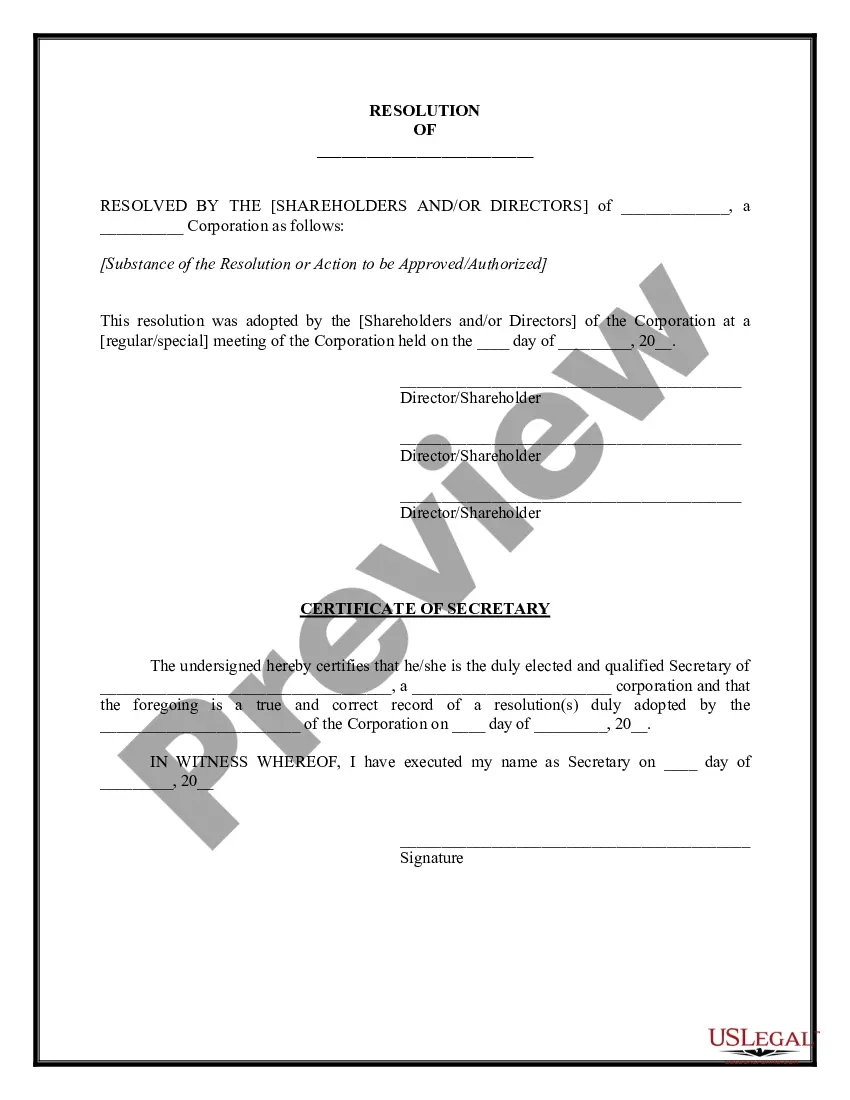
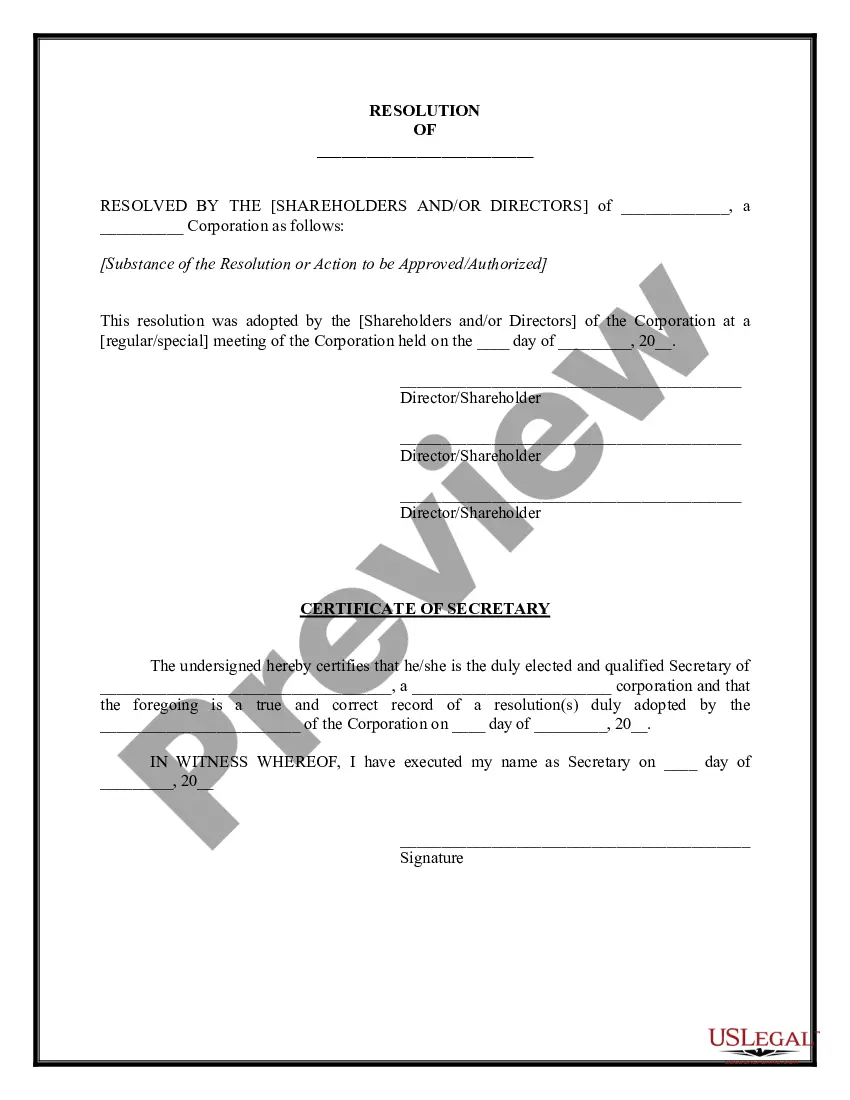
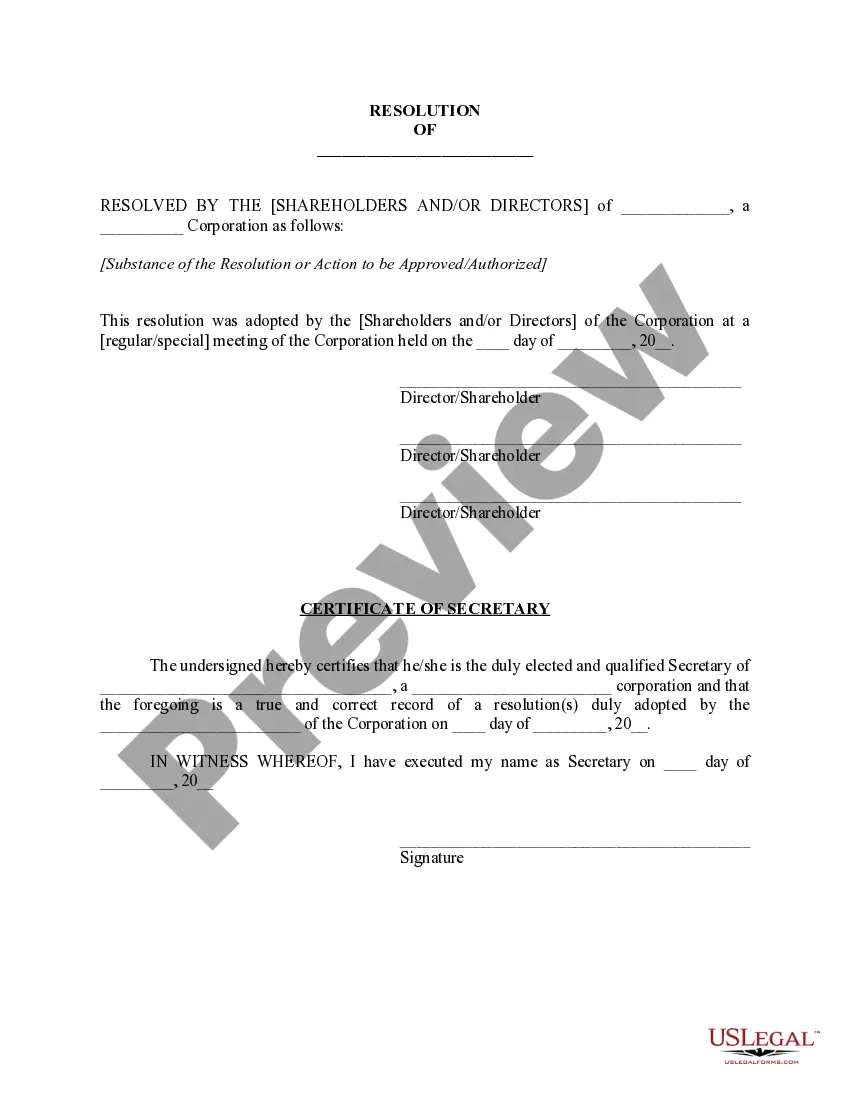
A corporate resolution formally documents specific decisions or actions taken by a company's board of directors or shareholders. It typically addresses key issues like authorizing contracts, appointing officers, or approving major business transactions.
A corporate resolution is a legal, written document created by a board of directors to describe and declare major corporate decisions. A board of directors can use a corporate resolution to guide actions in various circumstances.
How to write a corporate resolution Hold a board meeting. Board members typically create corporate resolutions at their board meetings to summarize what they discussed. Include introductory elements. Write a statement of consent. List the resolutions. Conclude with a statement of resolution. Proofread the document.
7 steps for writing a resolution Put the date and resolution number at the top. Give the resolution a title that relates to the decision. Use formal language. Continue writing out each critical statement. Wrap up the heart of the resolution in the last statement.
Bylaws document the rules for how the corporation shall be governed. Resolutions are prepared as needed to document important decisions and actions taken by the board of directors on behalf of the corporation.