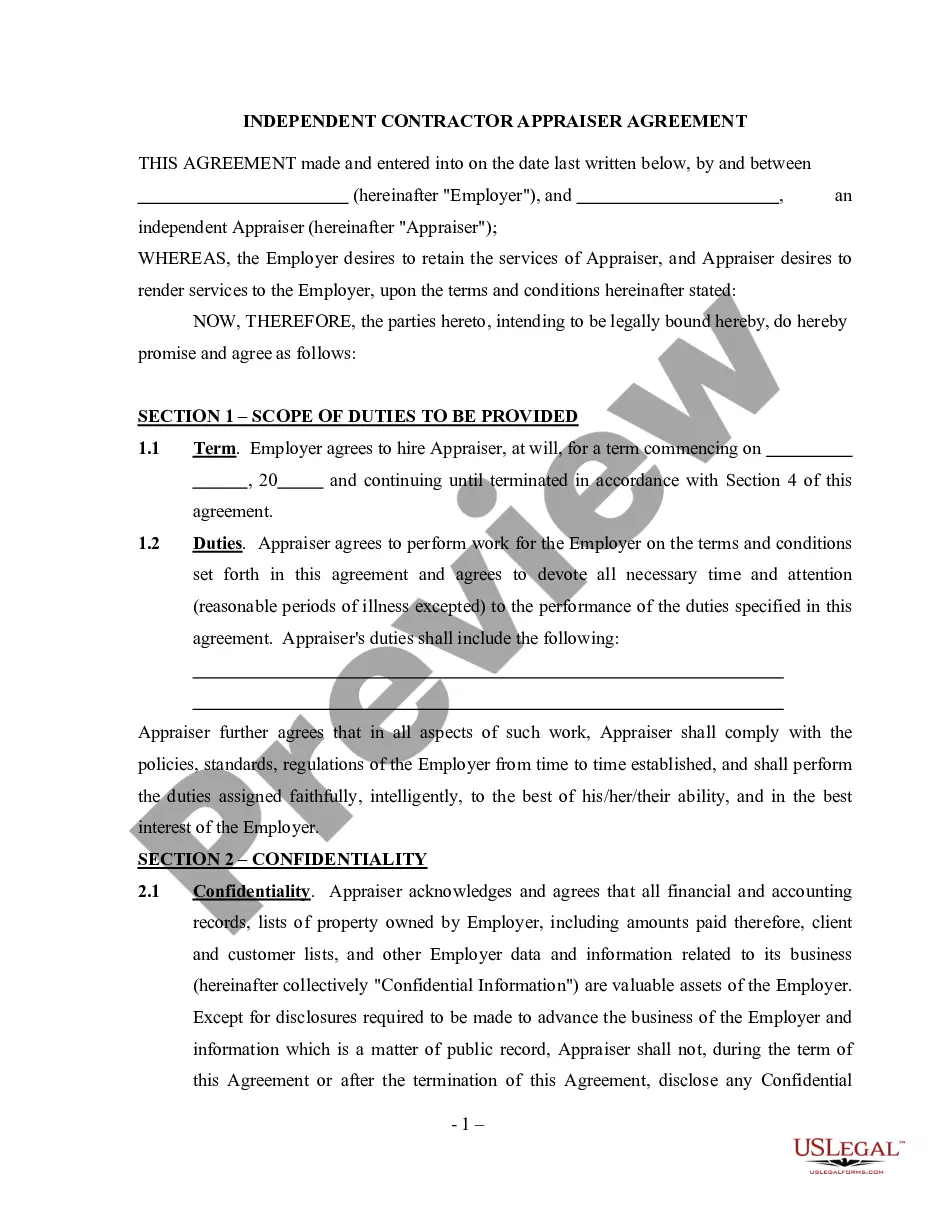
Corporate Resolution Signing Without Meeting In Utah
Description
Get your form ready online
Our built-in tools help you complete, sign, share, and store your documents in one place.
Make edits, fill in missing information, and update formatting in US Legal Forms—just like you would in MS Word.
Download a copy, print it, send it by email, or mail it via USPS—whatever works best for your next step.
Sign and collect signatures with our SignNow integration. Send to multiple recipients, set reminders, and more. Go Premium to unlock E-Sign.
If this form requires notarization, complete it online through a secure video call—no need to meet a notary in person or wait for an appointment.
We protect your documents and personal data by following strict security and privacy standards.

Make edits, fill in missing information, and update formatting in US Legal Forms—just like you would in MS Word.

Download a copy, print it, send it by email, or mail it via USPS—whatever works best for your next step.

Sign and collect signatures with our SignNow integration. Send to multiple recipients, set reminders, and more. Go Premium to unlock E-Sign.

If this form requires notarization, complete it online through a secure video call—no need to meet a notary in person or wait for an appointment.

We protect your documents and personal data by following strict security and privacy standards.
Looking for another form?







Form popularity
FAQ
Members and directors can pass resolutions without a meeting. These are called 'circulating resolutions'. The proposed resolution is written down and sent to all the people who can vote on it.
A resolution or other instrument in writing signed by Limited Partners holding the requisite number of Units required to pass such resolution is as valid and as effective as if it had been passed at a meeting of the Partners called in ance with this Agreement.
“Written Consent in Lieu of Meeting” is a legal mechanism that allows the board of directors, shareholders, or members of an organization to make a decision or approve a resolution without actually convening a physical or virtual meeting.
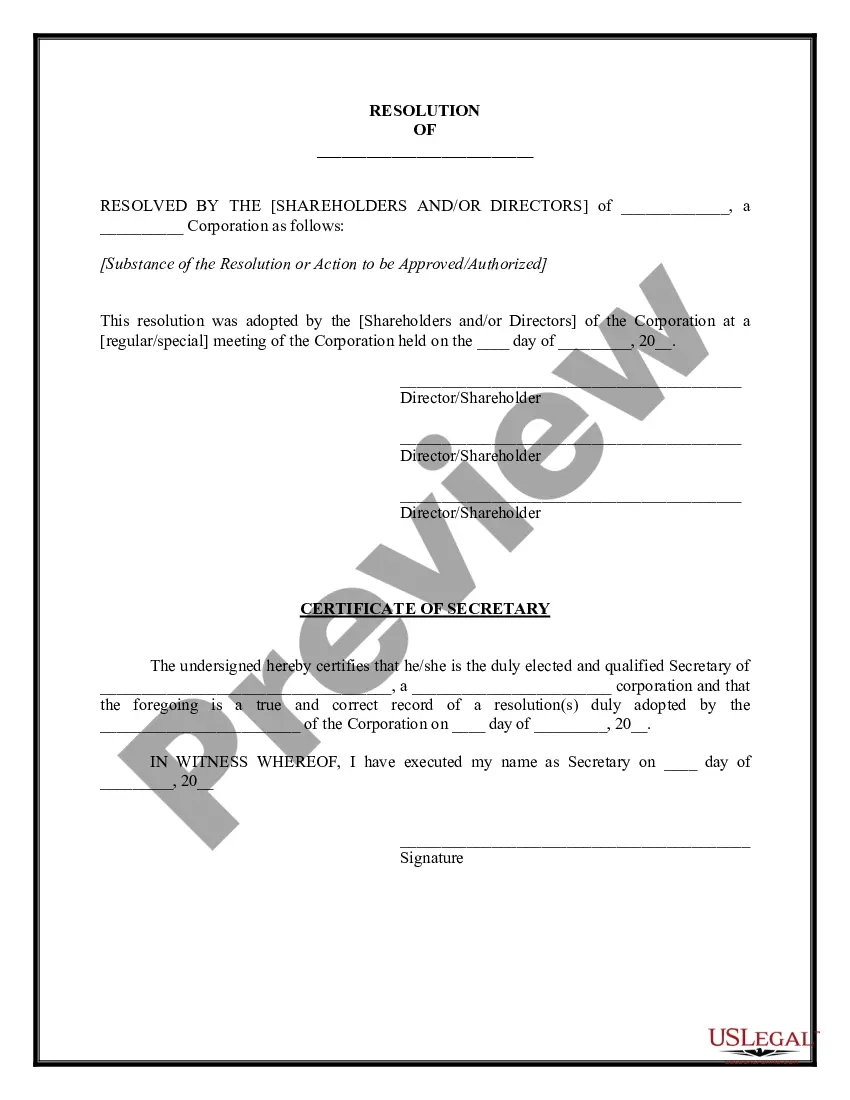
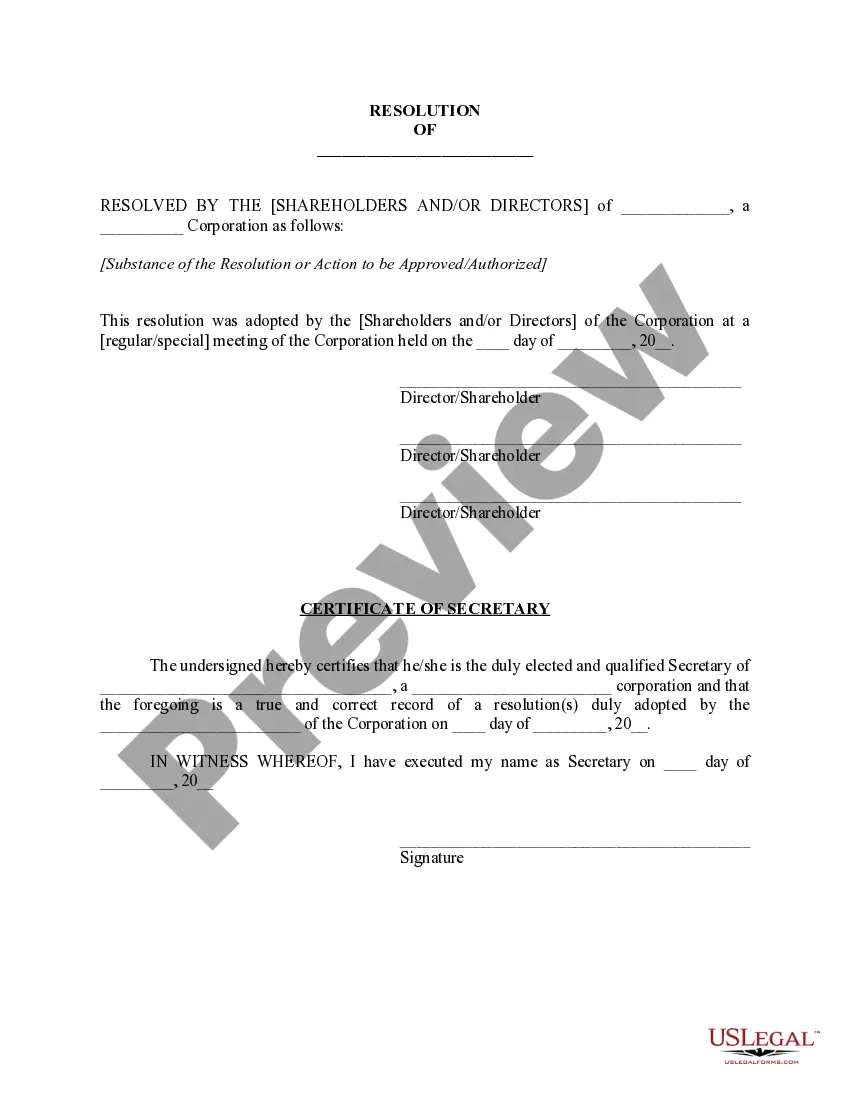
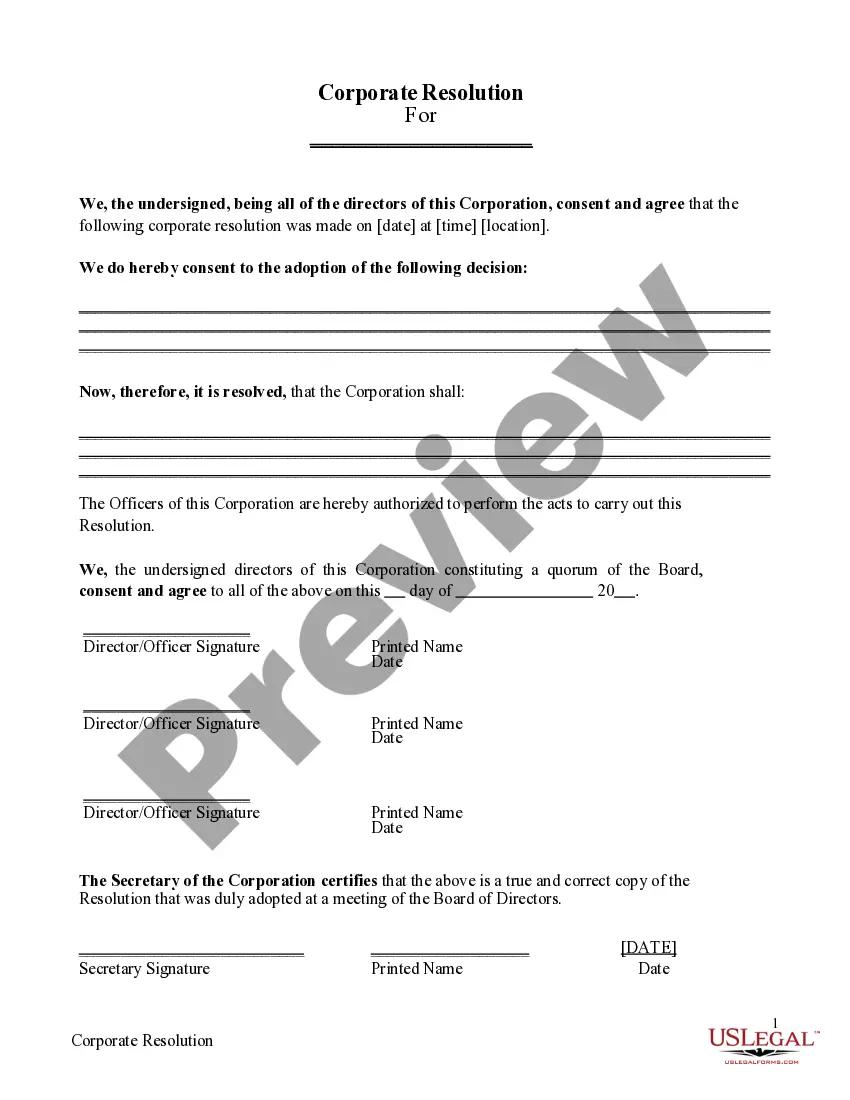
Corporate resolution (also known as a board resolution) is a written legal document , issued by the board of directors of a corporation , documenting a binding decision made on behalf of the corporation.
Form of shareholder resolutions in writing that can be used in lieu of a meeting for a non-distributing corporation (also called a private corporation) incorporated or continued under the Canada Business Corporations Act (CBCA). These shareholder resolutions approve a corporation's annual matters.
The corporate resolution must include the signature of the corporate officer and the corporate seal or the articles of incorporation.
Meeting minutes describe actions taken during a meeting, while a resolution describes actions that a corporation's board of directors have authorized.
Public notice informs members of the general public of government or government-related activities which may concern their local area, municipality, county, or state. The Open and Public Meetings Act (Utah Code Title 52, Chapter 4) mandates that notice and the agendas of public meetings be available to the public.
What does "quiet enjoyment" mean in the context of Utah tenancy? Quiet enjoyment means tenants have the right to use their property without unreasonable disturbances. Landlords must not interfere with this right, and tenants must respect the peaceful environment for others residing in the property.
Governmental proceedings at which the public has the right to attend.