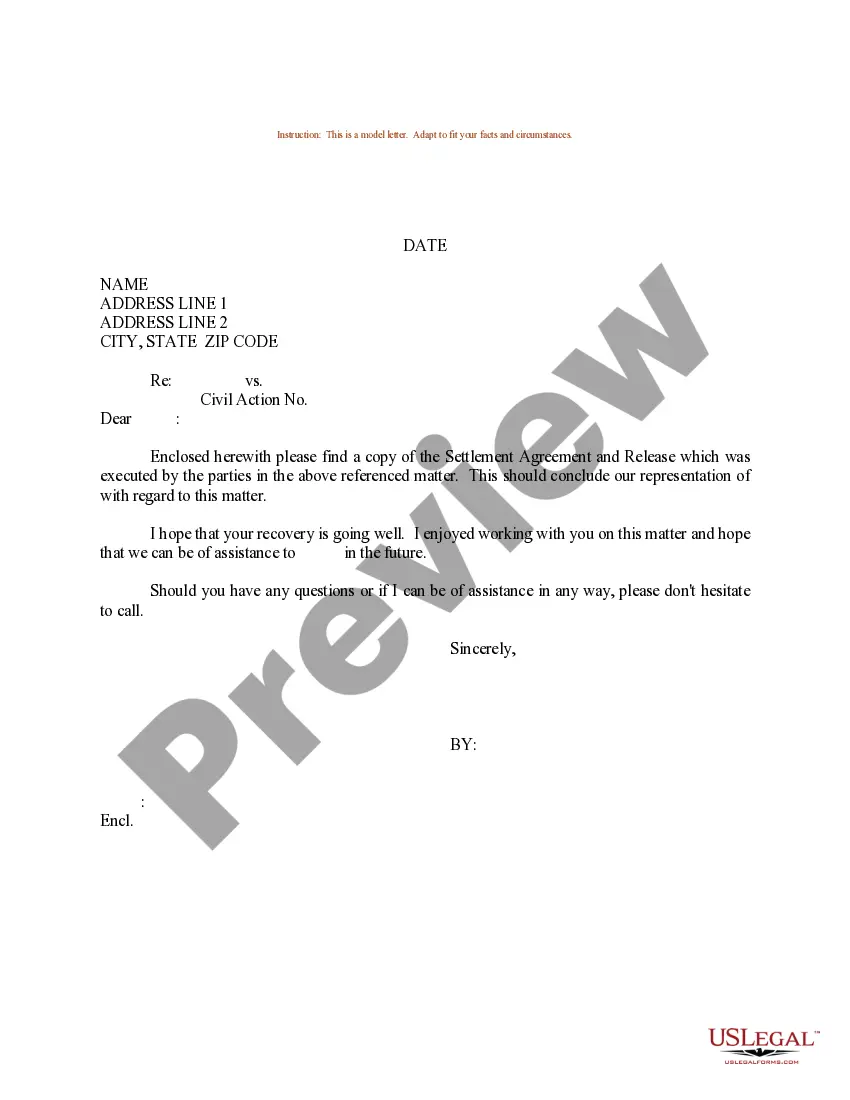
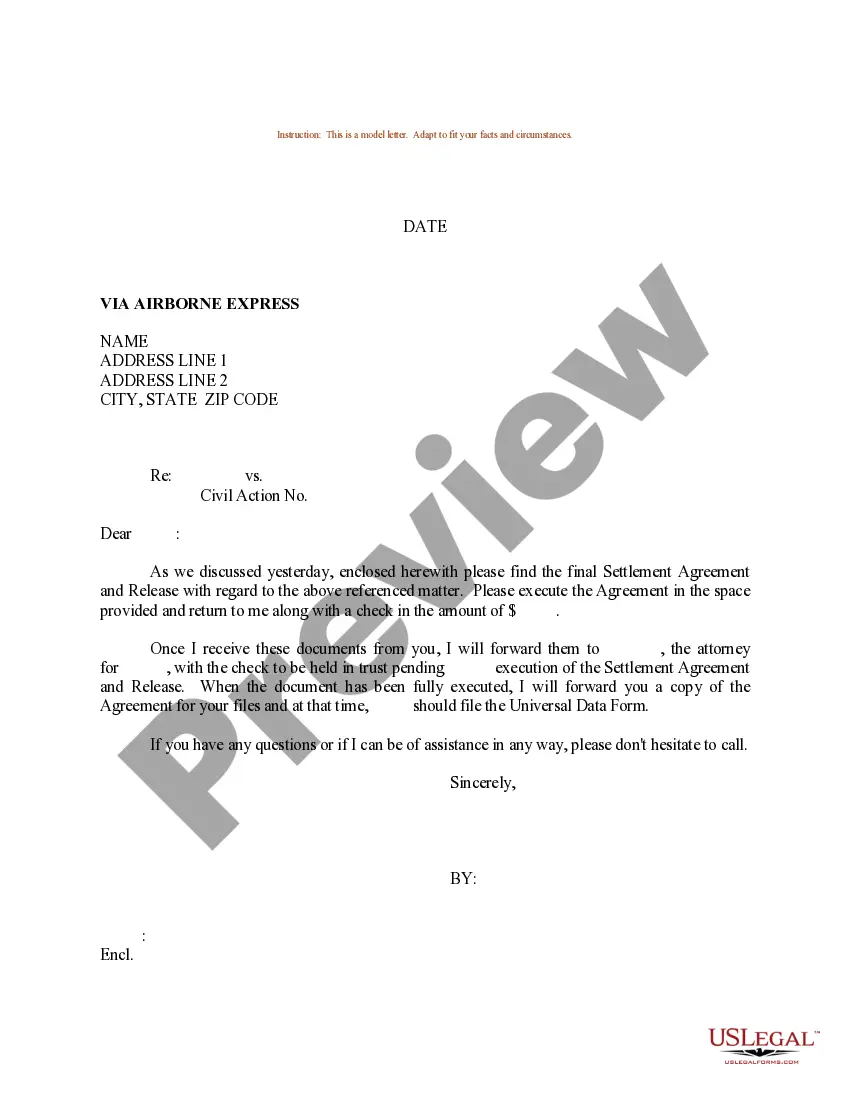
Confirmation Of Settlement Letter For Payment In Washington
Description





Form popularity
FAQ
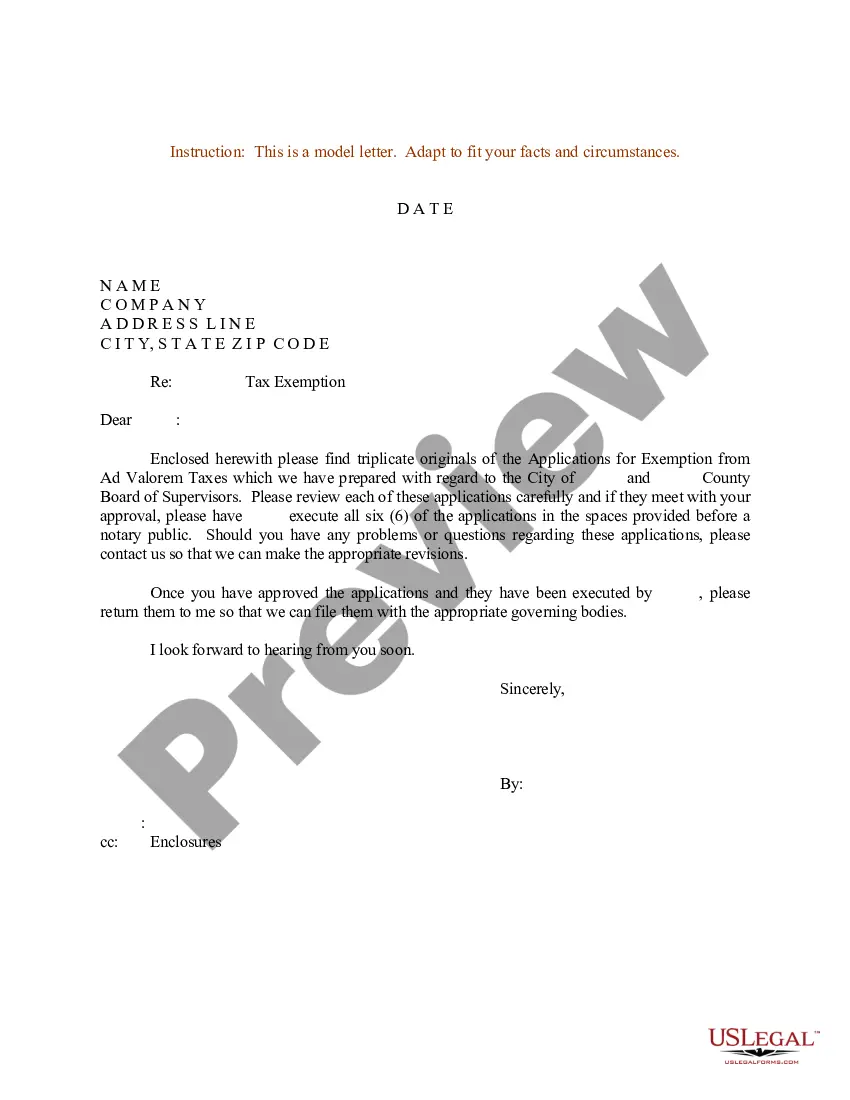
Demand Letter Components Facts of the case. An outline of what happened. Statement of the issue. A brief description of the problem. Demand. The dollar amount or action necessary to resolve the case. Response deadline. The date by which the recipient must respond. Noncompliance consequences.
The Nuts and Bolts of a Demand Letter Gather complete information before you start writing. Describe your injuries and medical treatment. List your medical expenses, lost wages, and non-economic damages. Make a settlement demand. Include a deadline for legal action if you want to, but don't bluff.
The Nuts and Bolts of a Demand Letter Gather complete information before you start writing. Describe your injuries and medical treatment. List your medical expenses, lost wages, and non-economic damages. Make a settlement demand. Include a deadline for legal action if you want to, but don't bluff.
No uniform timeframe exists between sending the demand letter and arriving at a settlement. In addition to the insurance company's review, there will be negotiations between the insurance company and your attorney, and those can take a long time. You can count on the process taking more than two months.
Many Washington State courts have a public access terminal in the courthouse where you can view JIS public record case information such as an index of filed cases and a list of documents filed in each case. Contact your local court to see if they have a public access terminal.
A notice of discontinuance is used when a plaintiff or applicant (someone who has commenced proceedings), or an appellant (someone who is appealing a case) decides to 'drop the case'. This means that they won't continue pursuing the case.
Well, when a case is dismissed, it means the issue is truly settled and can't be brought back to court. On the other hand, if the case is just discontinued, there's a chance it could come back in the future.
Complete the “Notice of Discontinuance” Petition To cancel your divorce petition, you will need to complete and file a “Notice of Discontinuance” with the court where your divorce was initially filed. This document informs the court that you and your spouse have decided not to proceed with the divorce.