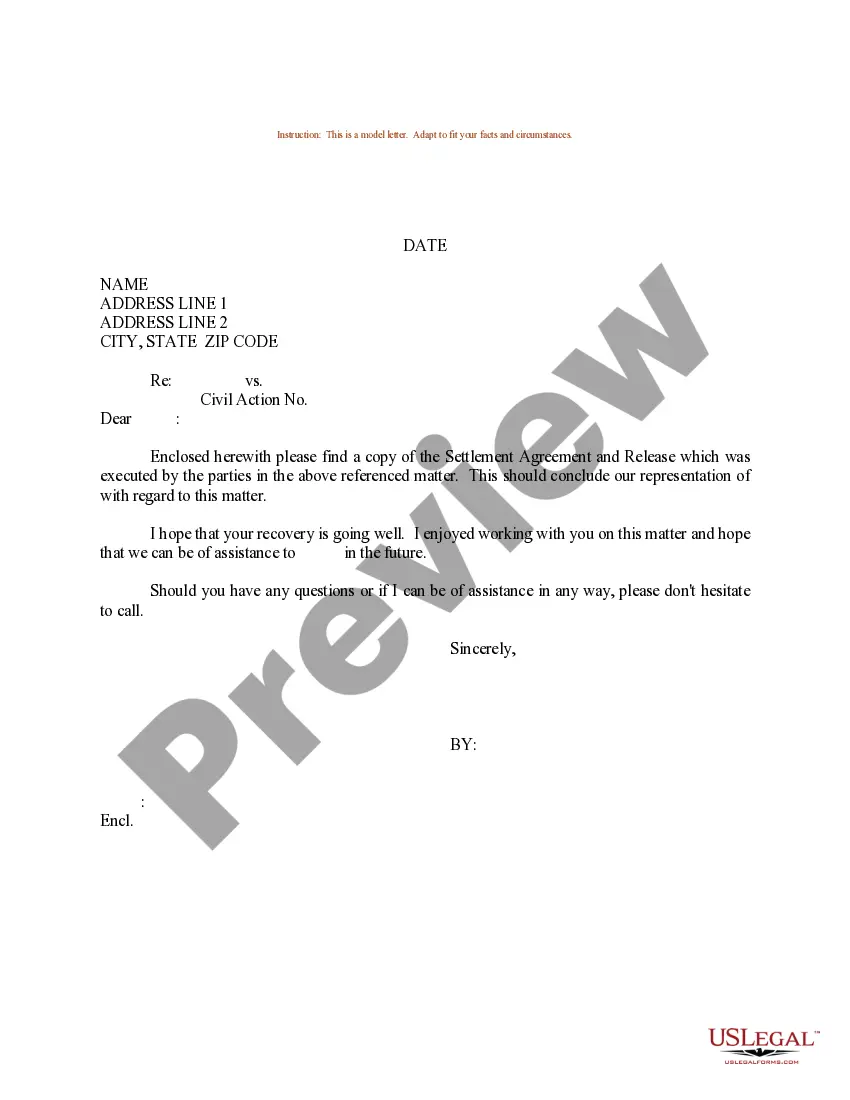
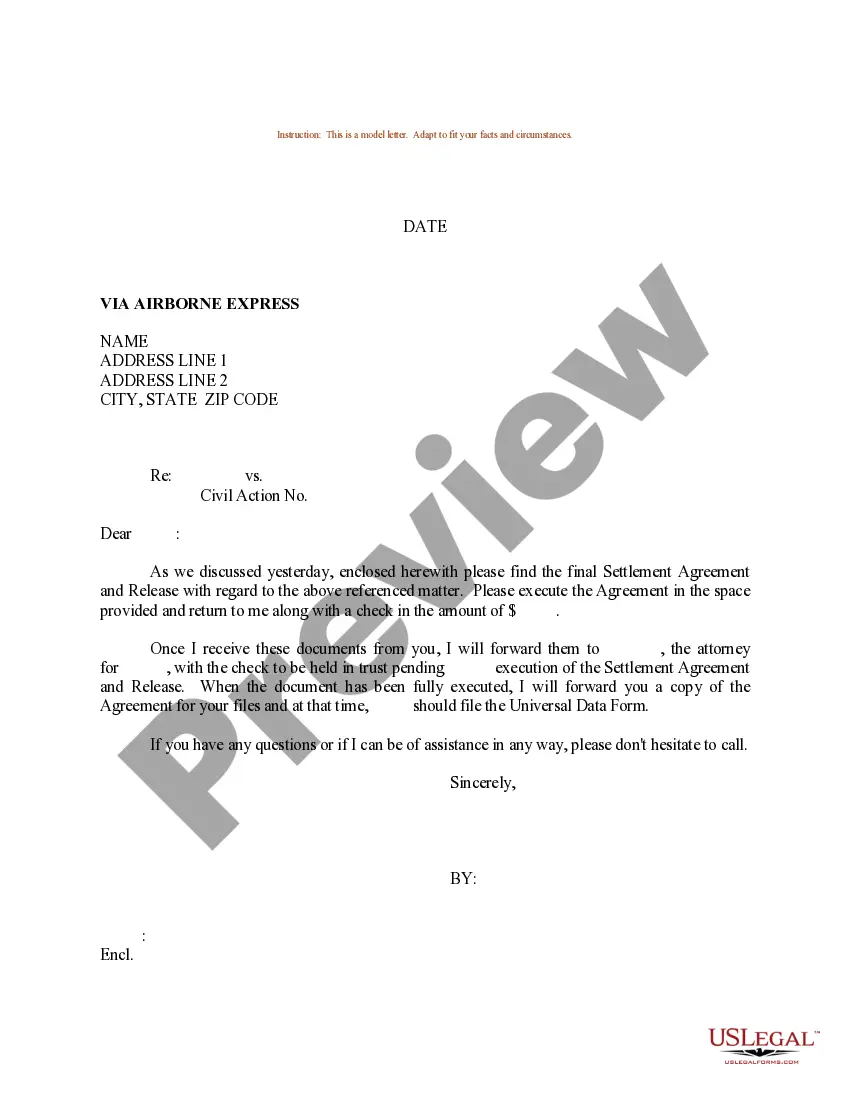
Confirmation Of Settlement Letter Without Prejudice In Utah
Description


Get your form ready online
Our built-in tools help you complete, sign, share, and store your documents in one place.
Make edits, fill in missing information, and update formatting in US Legal Forms—just like you would in MS Word.
Download a copy, print it, send it by email, or mail it via USPS—whatever works best for your next step.
Sign and collect signatures with our SignNow integration. Send to multiple recipients, set reminders, and more. Go Premium to unlock E-Sign.
If this form requires notarization, complete it online through a secure video call—no need to meet a notary in person or wait for an appointment.
We protect your documents and personal data by following strict security and privacy standards.

Make edits, fill in missing information, and update formatting in US Legal Forms—just like you would in MS Word.

Download a copy, print it, send it by email, or mail it via USPS—whatever works best for your next step.

Sign and collect signatures with our SignNow integration. Send to multiple recipients, set reminders, and more. Go Premium to unlock E-Sign.

If this form requires notarization, complete it online through a secure video call—no need to meet a notary in person or wait for an appointment.

We protect your documents and personal data by following strict security and privacy standards.
Looking for another form?




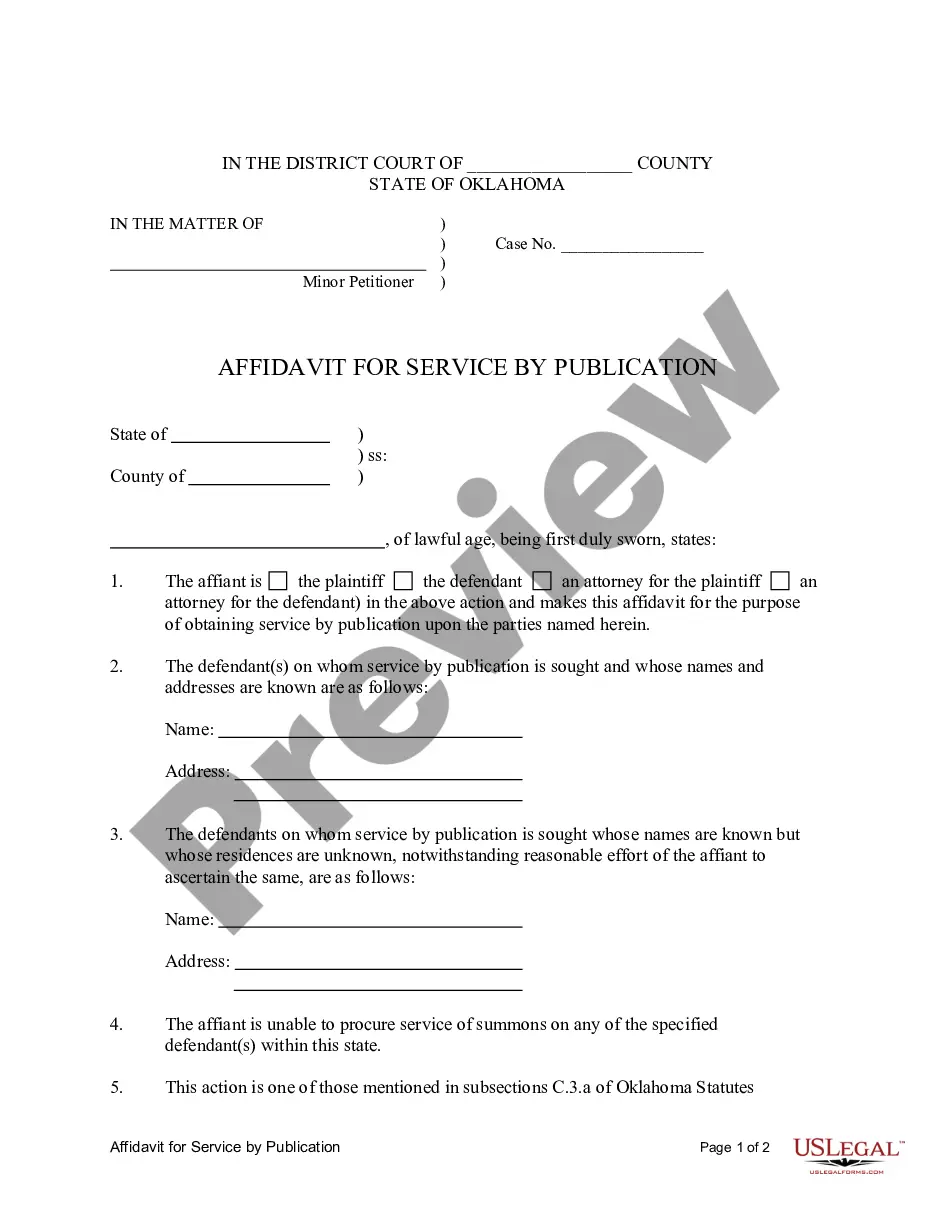

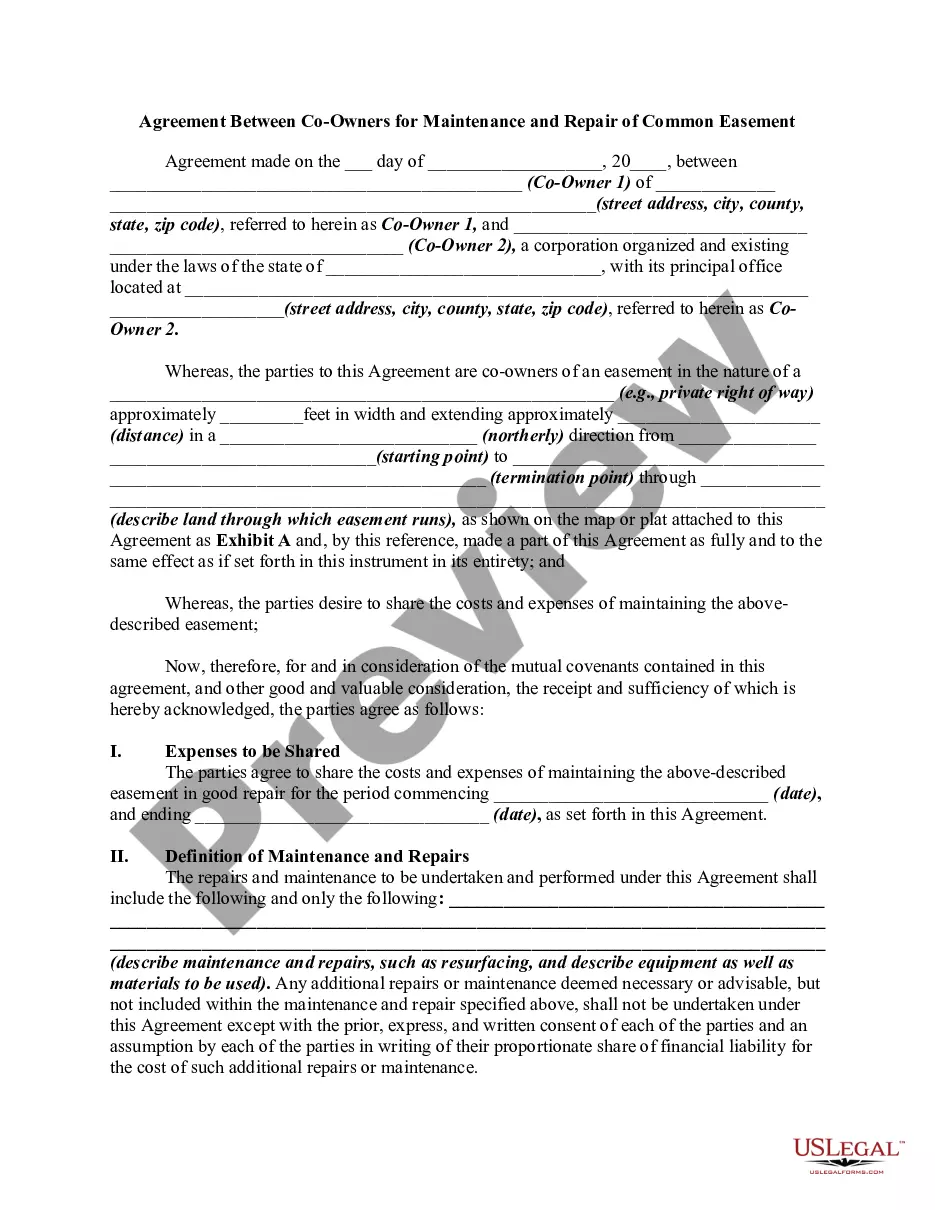
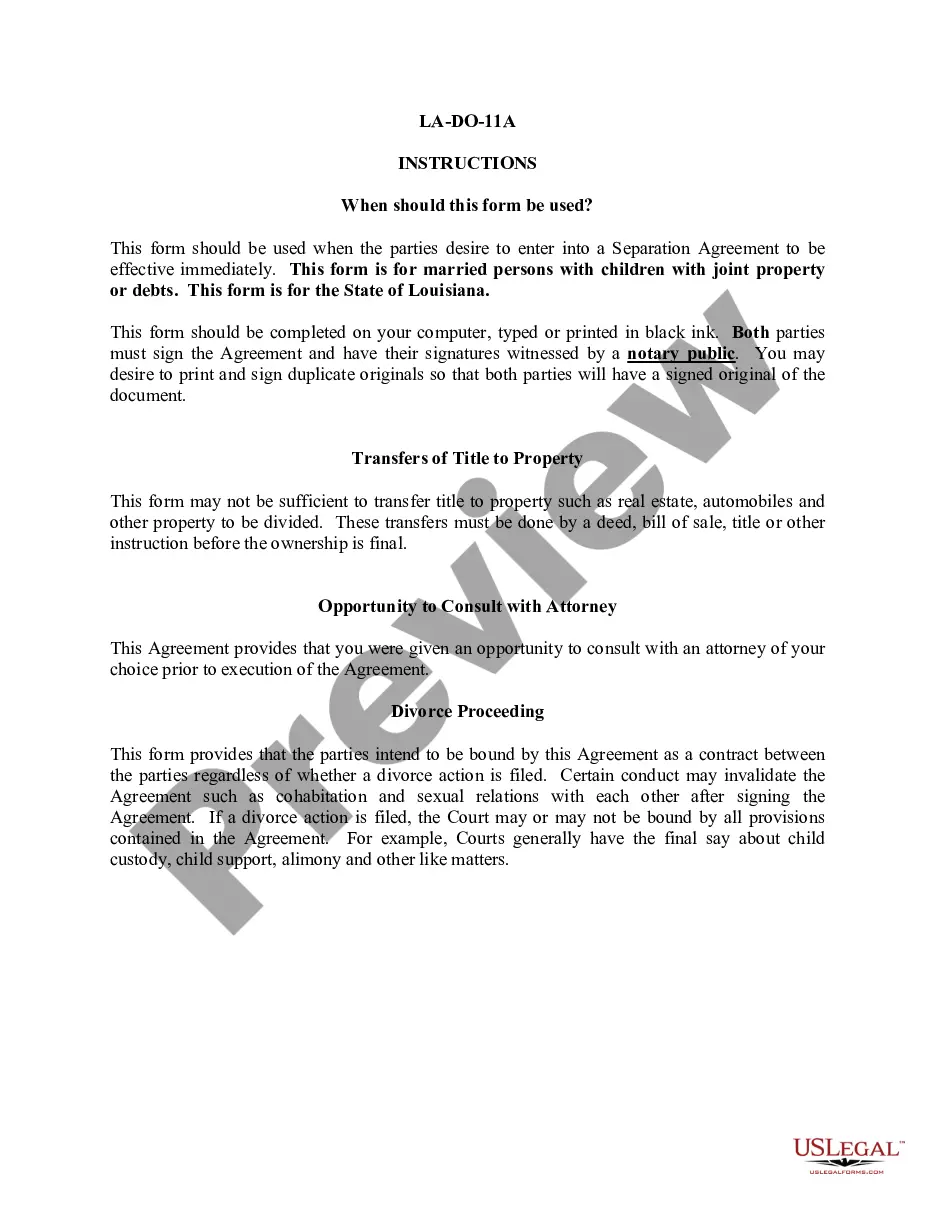
Form popularity
FAQ
Reaching Out to Legal Entities You can also reach out to local legal entities. This could be the court's clerk office. Simply ask if there are any legal documents with your name on them that haven't been delivered yet. This is like calling customer service to check if they've dispatched that order you forgot you made.
If the defendant or respondent can't be found to be served personally, the papers can be given to an adult who lives in the defendant's or respondent's home.
Rule 11 was designed to highlight the importance of constitutional rights by requiring the judge in district court to discuss these rights with the defendant before accepting his plea. In other words, Rule 11 was created to help the defendant understand the basic consequences of the decision to plead guilty.
These papers can be served by: Mailing them to the last known address provided. Handing them to the person. Emailing them to the most recent email address provided.
Rebuttal evidence After the defendant has called all of their witnesses and offered all of their exhibits, the plaintiff may call witnesses to rebut, or challenge, any new information introduced by the defendant's witnesses. The judge may allow surrebuttal (a rebuttal to the rebuttal) by the defendant.
However, plaintiffs who opt for this approach also need to post or hand deliver a certificate notifying the recipient that they have received an email with a court summons, effectively still requiring the sending of a hard copy version of the summons.
How Can I Serve Someone Electronically? The party requesting electronic service must first file a motion with the court and include a supporting affidavit stating the reasons why the recipient likely owns a specific email address, cellphone number, or social media account.
This rule applies to the dismissal of any counterclaim, crossclaim, or third-party claim. A claimant's voluntary dismissal under paragraph (a)(1) must be made before a responsive pleading is served or, if there is no responsive pleading, before evidence is introduced at a trial or hearing.
The without prejudice (WP) rule will generally prevent statements made in a genuine attempt to settle an existing dispute, whether made in writing or orally, from being put before the court as evidence of admissions against the interests of the party which made them.
What does 'without prejudice' mean? Without prejudice is a legal term which means 'without detriment to any right or claim'. In non-legal speak, this means that whatever is said or done on a without prejudice basis cannot later be used to your disadvantage should you decide to enforce your rights against your employer.