Settlement Agreement Cover Letter With Example In Tarrant
Description


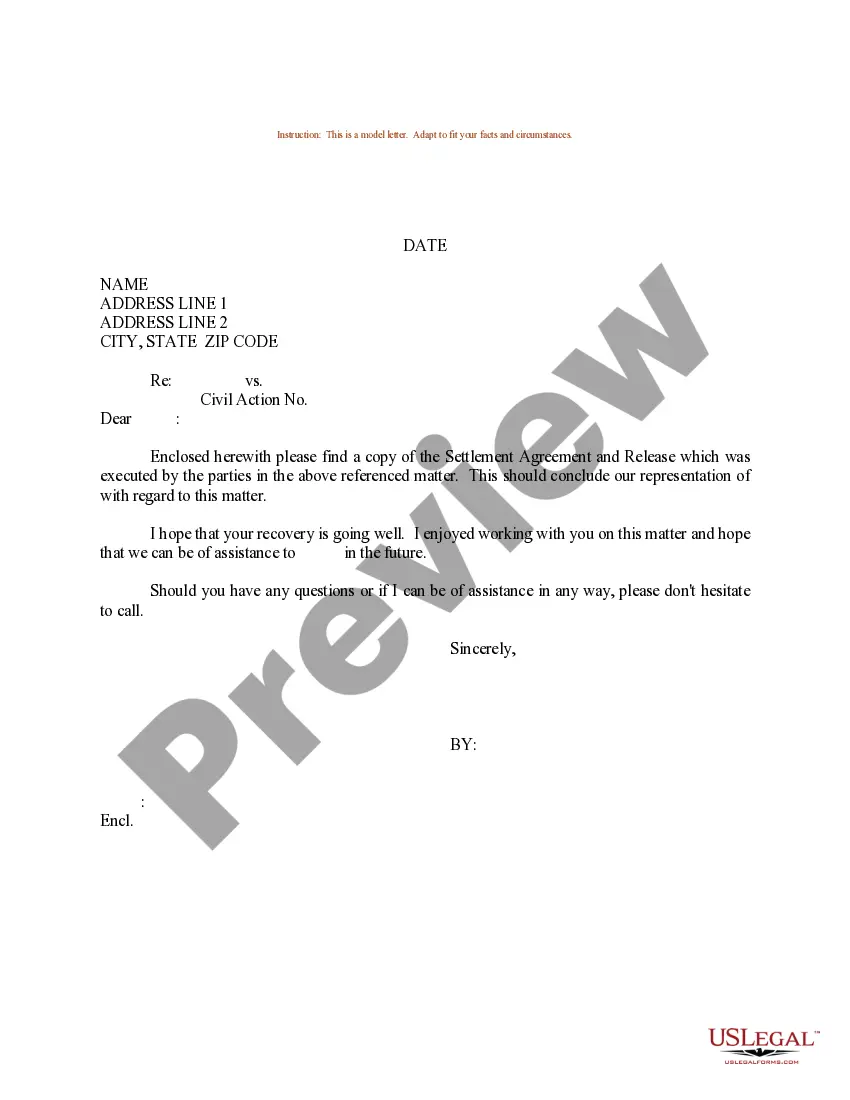
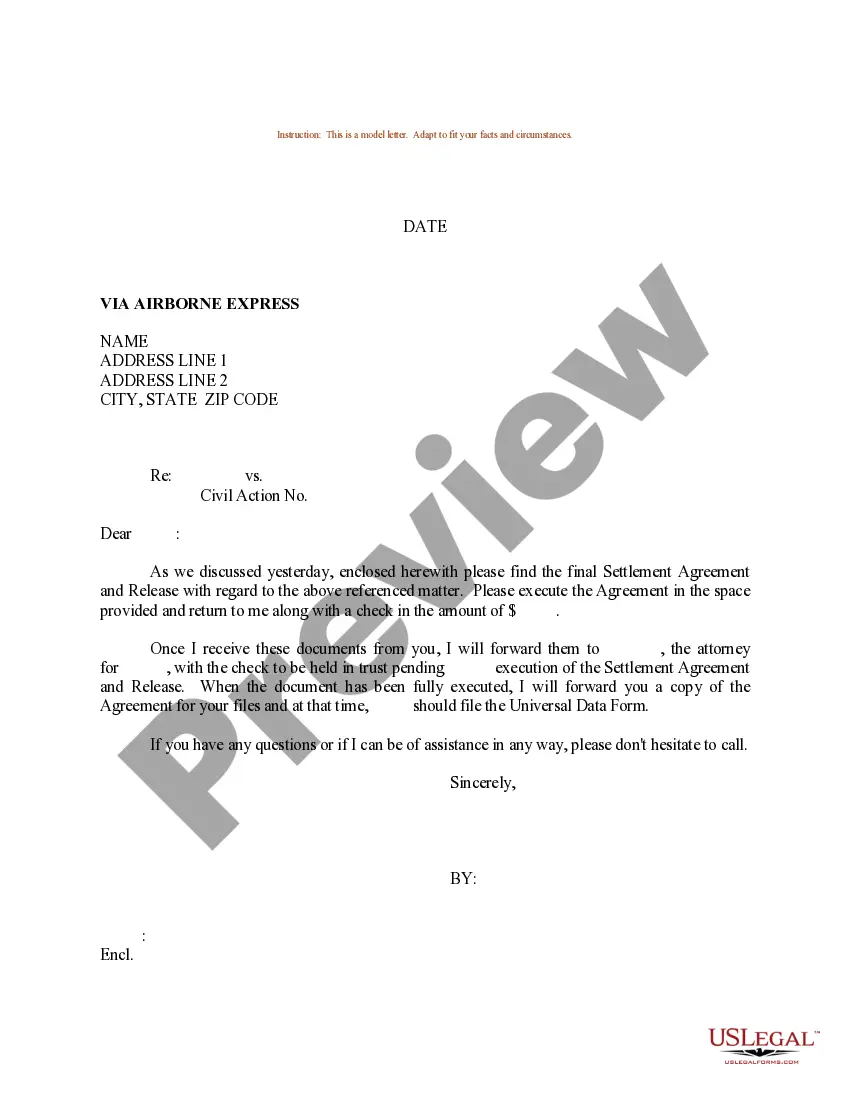
Get your form ready online
Our built-in tools help you complete, sign, share, and store your documents in one place.
Make edits, fill in missing information, and update formatting in US Legal Forms—just like you would in MS Word.
Download a copy, print it, send it by email, or mail it via USPS—whatever works best for your next step.
Sign and collect signatures with our SignNow integration. Send to multiple recipients, set reminders, and more. Go Premium to unlock E-Sign.
If this form requires notarization, complete it online through a secure video call—no need to meet a notary in person or wait for an appointment.
We protect your documents and personal data by following strict security and privacy standards.

Make edits, fill in missing information, and update formatting in US Legal Forms—just like you would in MS Word.

Download a copy, print it, send it by email, or mail it via USPS—whatever works best for your next step.

Sign and collect signatures with our SignNow integration. Send to multiple recipients, set reminders, and more. Go Premium to unlock E-Sign.

If this form requires notarization, complete it online through a secure video call—no need to meet a notary in person or wait for an appointment.

We protect your documents and personal data by following strict security and privacy standards.
Looking for another form?




Form popularity
FAQ
The Tarrant County Family Courts are in the Tarrant County Family Law Center at 200 East Weatherford Street, Fort Worth, Texas 76196. For parking, look at the parking information provided on the county website. Hours of Operation: Monday–Friday, 8 a.m. to 5 p.m.
Your divorce. The 61-day waiting period is required by law and there are no exceptions.
Here is a divorce court in Tarrant County that you may bring your case to: Court Name: 231st District Court · 233rd District Court · 322nd District Court · 324th District Court · 325th District Court · 360th District Court. Clerk Name: Thomas A. Court Address: 401 W Belknap, Fort Worth, Texas 76196. Phone: 817-884-1111.
As clerk of the three County Courts at Law, the County Clerk is responsible for the intake, processing and maintenance of civil cases with a jurisdictional limit up to $250,000; including debt, breach of contract, garnishments, temporary restraining orders, injunctions, automotive/personal injury cases and eminent ...
A party may obtain discovery of the existence and contents of any relevant portions of a settlement agreement. Information concerning a settlement agreement is not by reason of disclosure admissible in evidence at trial.
No, signing a contract in front of a notary is not required. A notary's involvement does not make a contract somehow more binding or more enforceable than it otherwise would be. (To learn what makes a contract legally valid, see the "What makes a contract legally enforceable?" section in Understanding Contracts.)
A settlement agreement is always in writing, and both parties must agree to the provisions in the settlement agreement. Also, both parties must sign the settlement agreement for it to be legally binding. A settlement agreement will resolve a civil lawsuit.
In California, a Motor Vehicle Accident Release Agreement, or any settlement agreement related to a motor vehicle accident, needs to be signed by both parties but does not necessarily need to be notarized to be legally binding.
SIGNING AND FILING THE AGREEMENT Once you and your spouse agree on the terms of the Agreement, it must be properly signed (executed). Note: Signatures must be certified by a Notary Public, but the parties do not have to sign the document at the same time, or in the presence of the same Notary.
Drafting a Settlement Agreement Checklist (Federal) ✔ Retain relevant documents. ✔ Decide whether (and when) to make offer. ✔ Evaluate the reasons for settling. ✔ Assess motivating factors to settle. ✔ Confirm client's ability to settle. ✔ List all covered parties. ✔ List all legal issues to be settled.