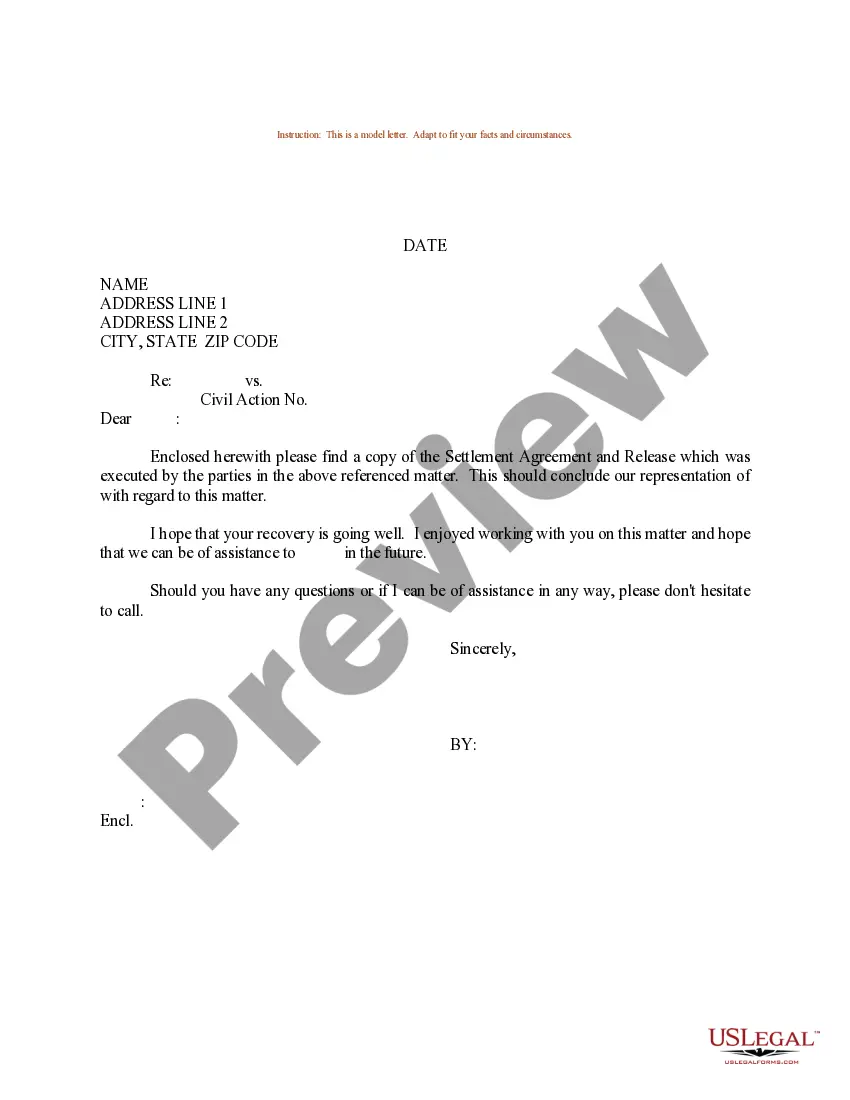
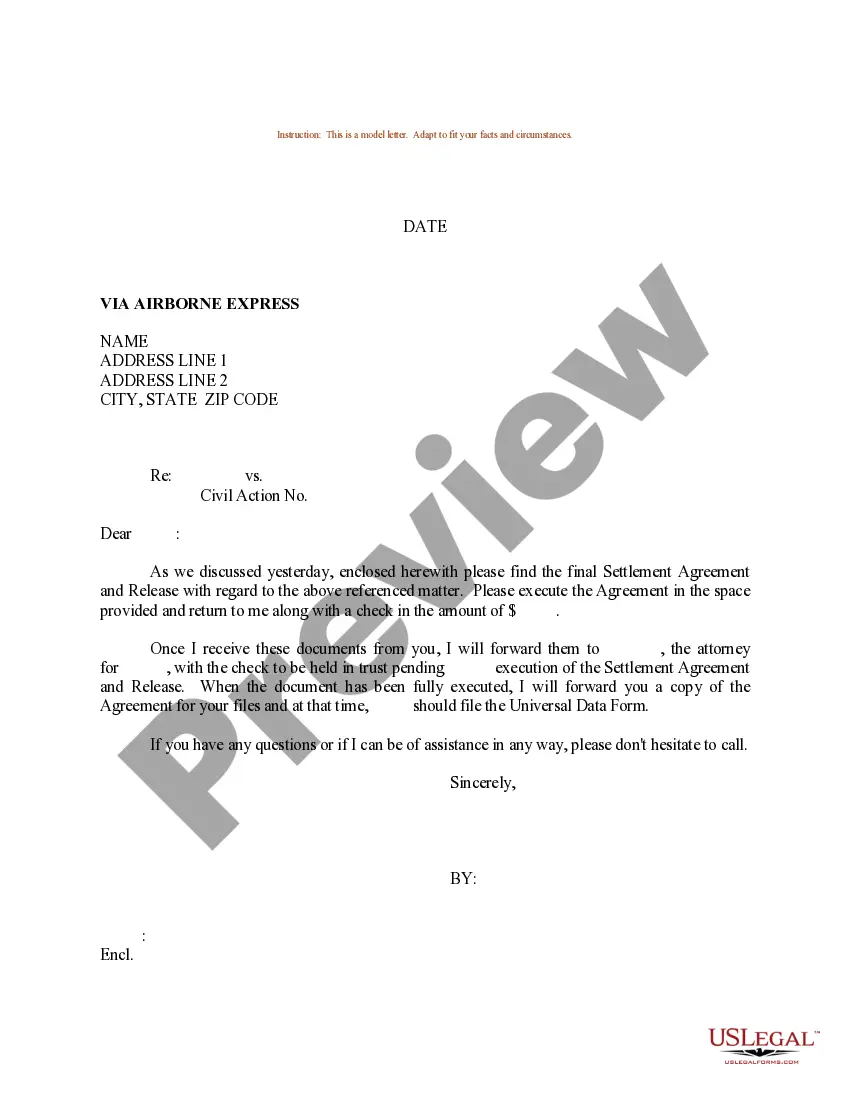
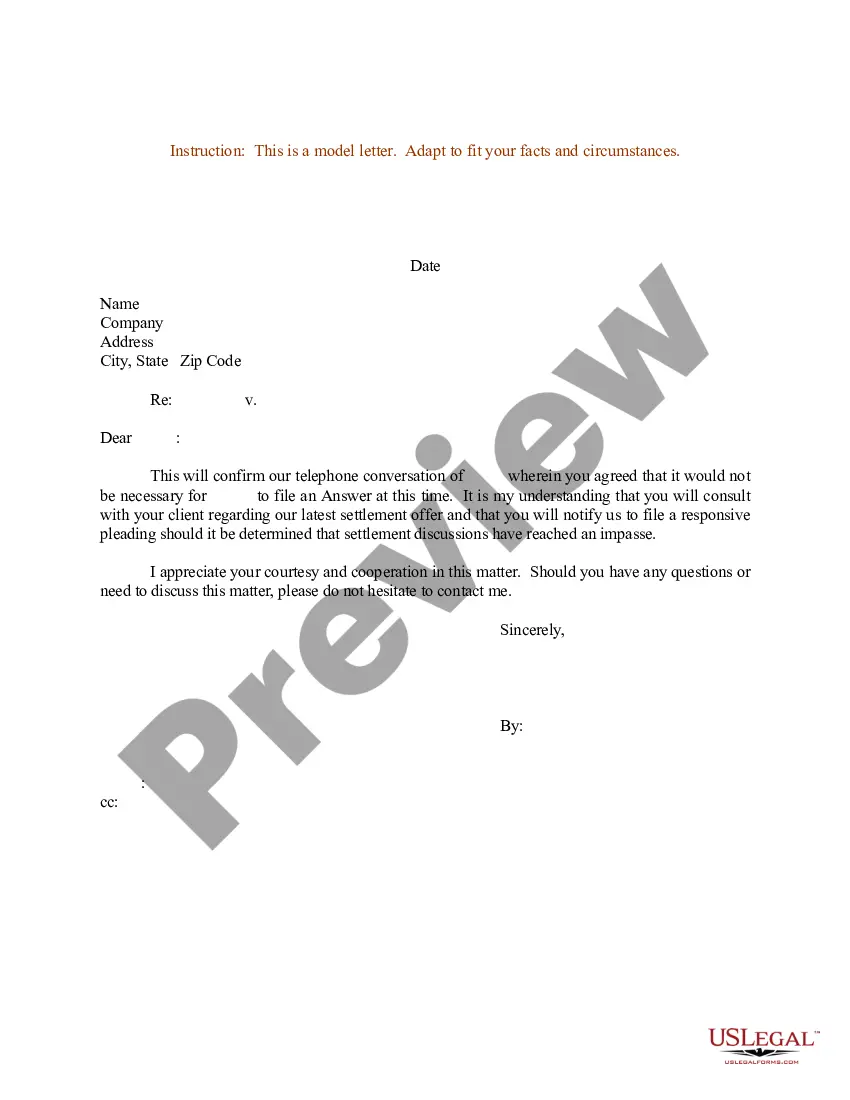
Settlement Confirmation Letter Without Prejudice In Minnesota
Description


Get your form ready online
Our built-in tools help you complete, sign, share, and store your documents in one place.
Make edits, fill in missing information, and update formatting in US Legal Forms—just like you would in MS Word.
Download a copy, print it, send it by email, or mail it via USPS—whatever works best for your next step.
Sign and collect signatures with our SignNow integration. Send to multiple recipients, set reminders, and more. Go Premium to unlock E-Sign.
If this form requires notarization, complete it online through a secure video call—no need to meet a notary in person or wait for an appointment.
We protect your documents and personal data by following strict security and privacy standards.

Make edits, fill in missing information, and update formatting in US Legal Forms—just like you would in MS Word.

Download a copy, print it, send it by email, or mail it via USPS—whatever works best for your next step.

Sign and collect signatures with our SignNow integration. Send to multiple recipients, set reminders, and more. Go Premium to unlock E-Sign.

If this form requires notarization, complete it online through a secure video call—no need to meet a notary in person or wait for an appointment.

We protect your documents and personal data by following strict security and privacy standards.
Looking for another form?
Form popularity
FAQ
Rule 60. Clerical mistakes in judgments, orders, or other parts of the record and errors therein arising from oversight or omission may be corrected by the court at any time upon its own initiative or on the motion of any party and after such notice, if any, as the court orders.
Rule 69. In aid of the judgment or execution, the judgment creditor, or successor in interest when that interest appears of record, may obtain discovery from any person, including the judgment debtor, in the manner provided by these rules.
Rule 21. Parties may be dropped or added by order of the court on motion of any party or upon the court's own initiative at any stage of the action and on such terms as are just. Any claim against a party may be severed and proceeded with separately.
Rule 69. In aid of the judgment or execution, the judgment creditor, or successor in interest when that interest appears of record, may obtain discovery from any person, including the judgment debtor, in the manner provided by these rules.
Rule 507(b) requires that all courts accept a statement of claim or counterclaim properly completed on the form set forth in the appendix. Rule 507(a) authorizes a court to tailor the forms that it makes available to litigants for use in that court or to approve forms prepared by the litigants.
Courts and Court Administration. The district courts are deemed open at all times for the purpose of filing any proper document, issuing and returning or certifying process, and making motions and orders.
Rule 63. Disability or Disqualification of Judge; Notice to Remove; Assignment of a Judge.
See Rule 5.04 of the MN Rules of Civil Procedure. Unless the parties sign a written agreement to extend the filing deadline, failure to file within the year may result in the case being "dismissed with prejudice," which means that it can never be filed again in District Court.