Settlement Agreement Example In Illinois
Description


Get your form ready online
Our built-in tools help you complete, sign, share, and store your documents in one place.
Make edits, fill in missing information, and update formatting in US Legal Forms—just like you would in MS Word.
Download a copy, print it, send it by email, or mail it via USPS—whatever works best for your next step.
Sign and collect signatures with our SignNow integration. Send to multiple recipients, set reminders, and more. Go Premium to unlock E-Sign.
If this form requires notarization, complete it online through a secure video call—no need to meet a notary in person or wait for an appointment.
We protect your documents and personal data by following strict security and privacy standards.

Make edits, fill in missing information, and update formatting in US Legal Forms—just like you would in MS Word.

Download a copy, print it, send it by email, or mail it via USPS—whatever works best for your next step.

Sign and collect signatures with our SignNow integration. Send to multiple recipients, set reminders, and more. Go Premium to unlock E-Sign.

If this form requires notarization, complete it online through a secure video call—no need to meet a notary in person or wait for an appointment.

We protect your documents and personal data by following strict security and privacy standards.
Looking for another form?


Form popularity
FAQ
In Colorado, a motion to enforce is a legal tool that can be used to ensure that an existing court order or agreement is followed. When one party fails to comply with the terms of a court order or agreement, the other party may file a motion to enforce to seek enforcement of the terms.
Drafting a settlement agreement Consult with legal counsel. Always get legal advice when drafting or entering into a settlement agreement. Detail the dispute. Clearly outline the nature of the dispute and the reasons for the settlement. Specify terms. Include a release. Maintain confidentiality. Sign and date.
Under Texas law, the party seeking to enforce a settlement agreement in a pending action may amend his pleadings to bring a breach of contract action against the non-settling party, and the judge may enforce the settlement as a written contract upon demonstration of proof. Lefevre v. Keaty, 191 F. 3d 596, 598 n.
The most common and effective strategy to utilise is to make a 'Part 36 offer'. This is a formal offer made by the claimant or defendant as a strategic way to convince the other party to settle rather than going to court.
A motion to enforce settlement is a legal recourse often utilized to compel adherence to agreed-upon terms. By filing this motion, parties seek judicial intervention to ensure compliance with the settlement agreement.
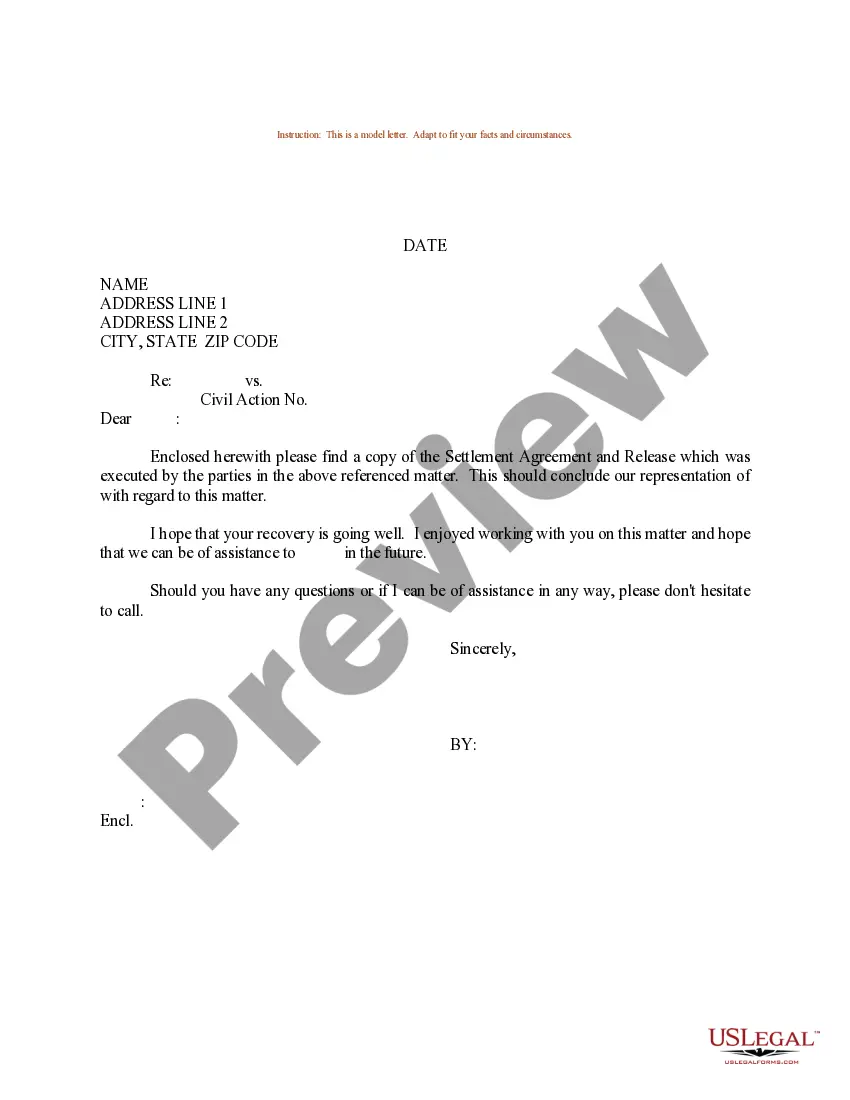
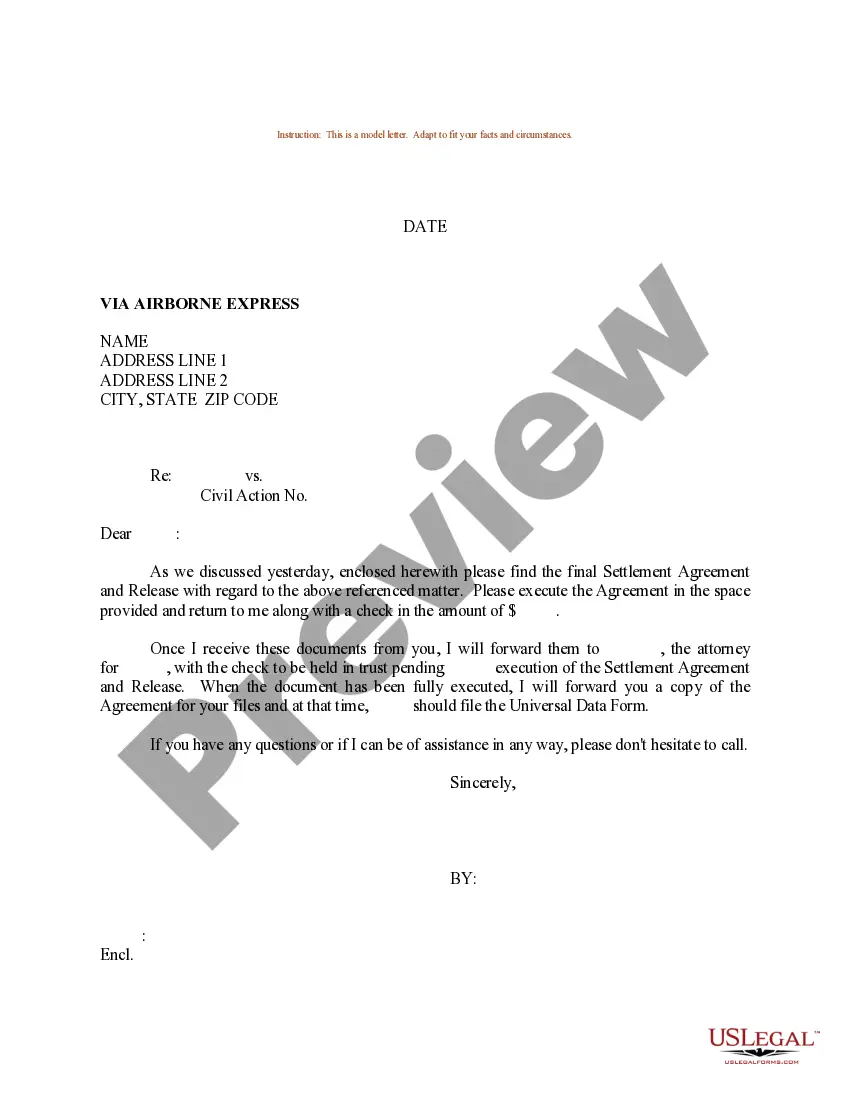
A settlement agreement should clearly state the amount that the defendant is paying to resolve the plaintiff's claims. The agreement should also stipulate the method of payment and the date on which payment is due.
A settlement agreement should clearly outline the terms agreed upon by the parties. This includes specifying any financial settlements, such as lump sum payments or structured payments over time in cases like employment disputes or medical malpractice.
Default and Enforcement These provisions should specify what constitutes a default under the agreement (i.e., failure to make a settlement payment when due), and they should specify how the non-defaulting party is entitled to enforce performance (i.e., through a confession of judgment).
The “Judgment for Dissolution of Marriage” need not be signed in front of a Notary, but should be completed and signed by both parties (below the words “Approved as to Form and Content”) before your hearing. The Judge will complete the “Entered” line and sign the Judgment if the dissolution is granted.
Payments agreed under a settlement agreement may be made up of various elements. For example, a sum to compensate the employee for agreeing not to pursue an employment tribunal claim, plus a payment for outstanding holiday entitlement at the end of the employment.