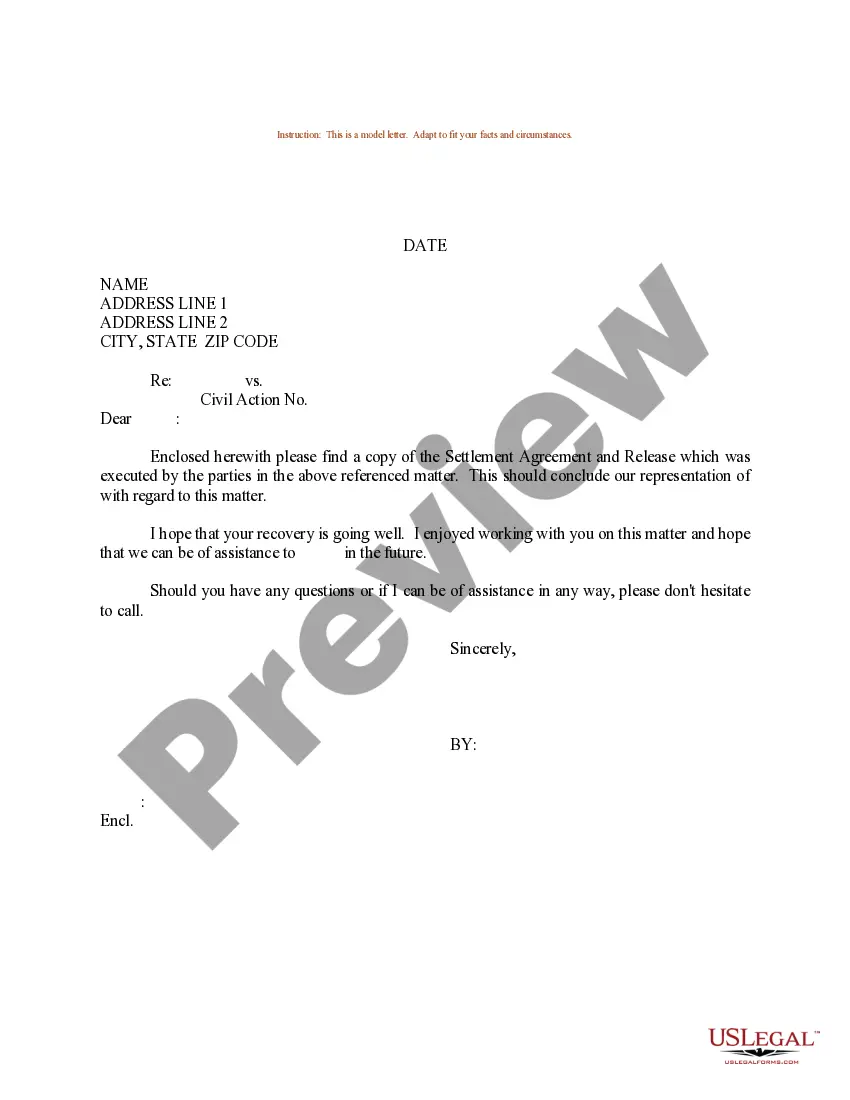
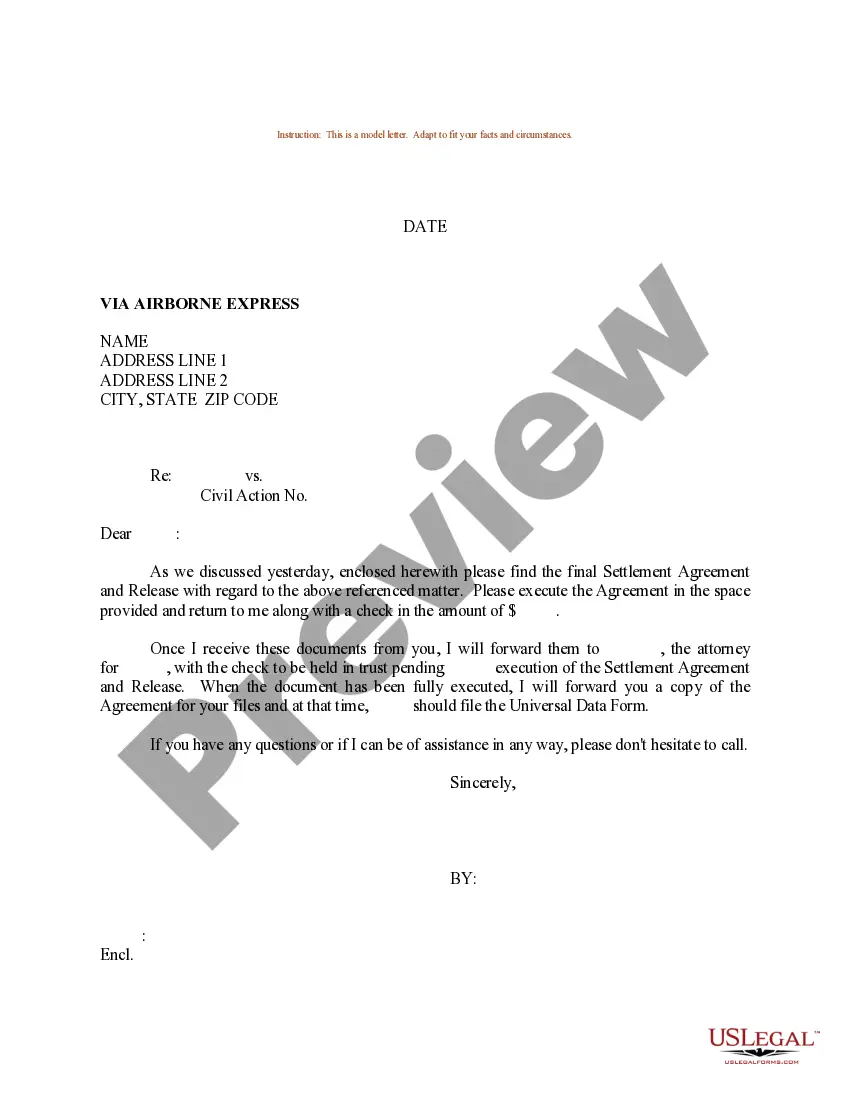
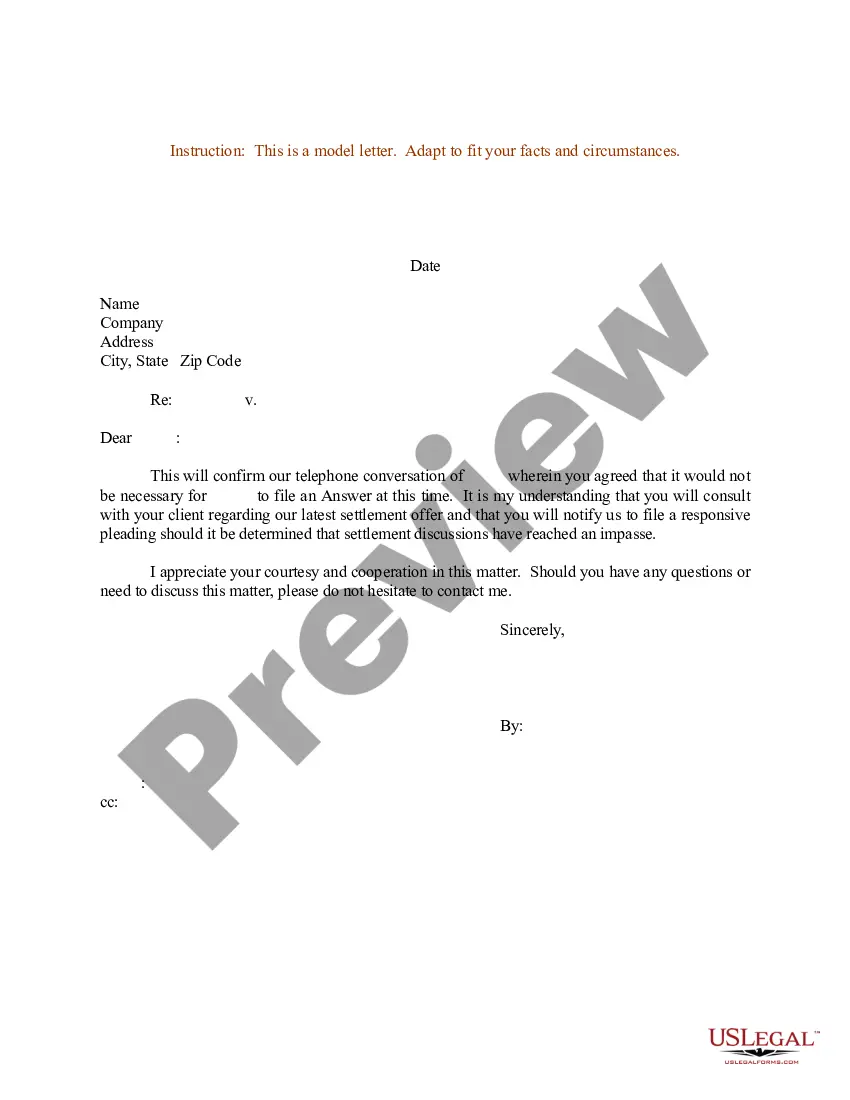
Cover Letter For Settlement Agreement In Illinois
Description


Get your form ready online
Our built-in tools help you complete, sign, share, and store your documents in one place.
Make edits, fill in missing information, and update formatting in US Legal Forms—just like you would in MS Word.
Download a copy, print it, send it by email, or mail it via USPS—whatever works best for your next step.
Sign and collect signatures with our SignNow integration. Send to multiple recipients, set reminders, and more. Go Premium to unlock E-Sign.
If this form requires notarization, complete it online through a secure video call—no need to meet a notary in person or wait for an appointment.
We protect your documents and personal data by following strict security and privacy standards.

Make edits, fill in missing information, and update formatting in US Legal Forms—just like you would in MS Word.

Download a copy, print it, send it by email, or mail it via USPS—whatever works best for your next step.

Sign and collect signatures with our SignNow integration. Send to multiple recipients, set reminders, and more. Go Premium to unlock E-Sign.

If this form requires notarization, complete it online through a secure video call—no need to meet a notary in person or wait for an appointment.

We protect your documents and personal data by following strict security and privacy standards.
Looking for another form?







Form popularity
FAQ
The opening paragraph of a cover letter or CV typically serves as an introduction to the applicant, highlighting their interest in the position and summarizing their qualifications. ``I am writing to express my interest in the (Job Title) position at (Company Name), as advertised on (where you found the job listing).
In a competitive job market, hiring managers at law firms read cover letters to help determine which candidates may be the best fit. A well-written legal cover letter can entice the reader to review your resume—and, hopefully, invite you for an interview—by showcasing how your experience and skills align with the role.
Here are some action verbs and keywords to consider using in your cover letter as they relate to your past work experience: Spoke. Collaborated. Communicated. Presented. Instructed. Developed. Motivated. Implemented.
A cover letter should be between a half and a full page long. Generally, you should aim for a cover letter word count of 250 to 400 words and about three to six paragraphs. A short, concise cover letter serves as a written introduction to a prospective employer and outlines why you're the best fit for the job.
Dear First Name Last Name or Hiring Manager: I am writing to apply for your position in wine wholesale as advertised on Handshake. This exciting opportunity appears to be a wonderful fit with my professional experience, personal interests, and career goals.
Your cover letter should answer who, what, when, where and why you are applying for the opportunity. Introduction. State the position for which you are applying. Body Paragraphs. These paragraphs will highlight your qualifications and strengths that are most relevant to the organization and position. Conclusion.
Your cover letter should accomplish the following: Introduce yourself to the hiring managers. Provide details about your qualifications. Tell employers why you want to work for them. Illustrate why you're the best match for the job. Explain circumstances like job hopping or gaps in employment.
How to write an attorney cover letter Format your letter. The first step to writing a good attorney cover letter is to format it properly. Create a header. Once you settle on an appropriate format, create a header. Write an introduction. Describe your qualifications. Add a call to action. Conclude with a closing remark.
What Should Be Included in a Settlement Agreement? Identifying information for all involved parties. A description of the issue you're seeking to settle. An offer of resolutions that both parties agree to. Proof of valid consideration from both parties without coercion or duress. Legal purpose.
The best benefit of having a Terms agreement is that you get to set out the rules for using your platform. Include a clause that lists what isn't allowed, such as spamming other users, violating laws, or reverse engineering your software.