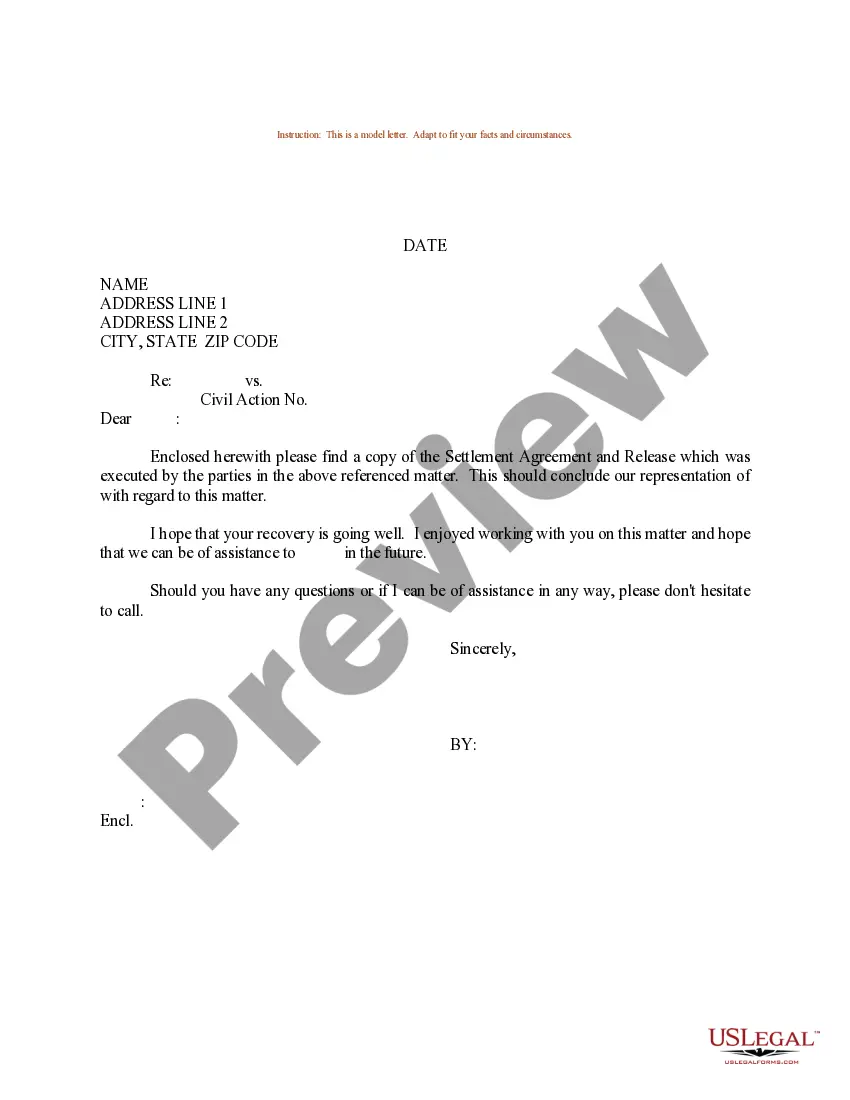
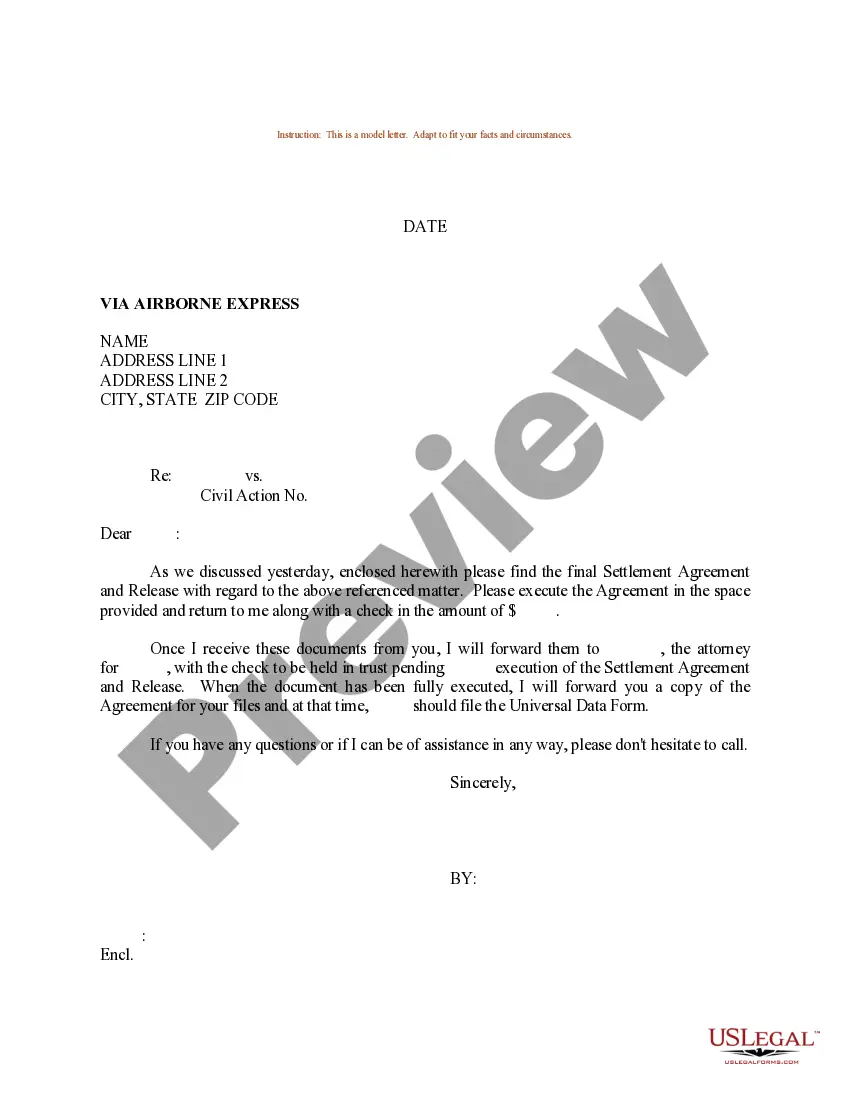
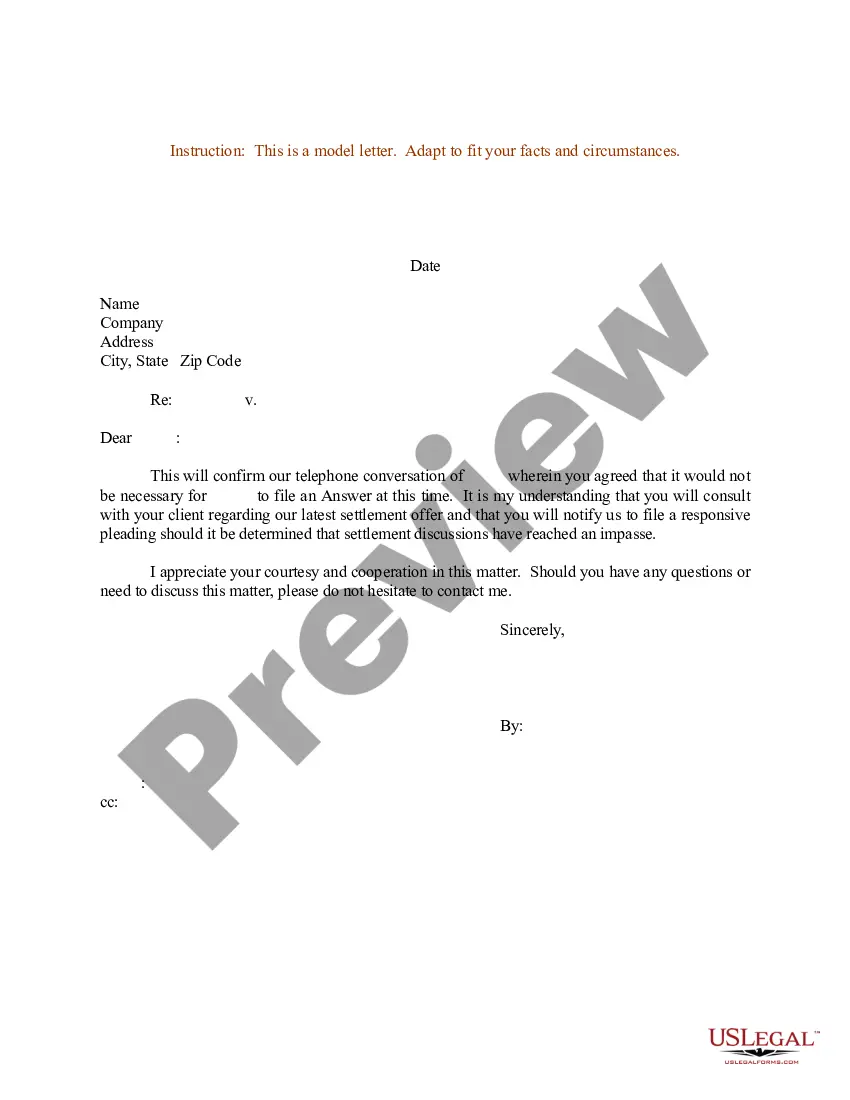
Cover Letter For Settlement Agreement In Fairfax
Description

Get your form ready online
Our built-in tools help you complete, sign, share, and store your documents in one place.
Make edits, fill in missing information, and update formatting in US Legal Forms—just like you would in MS Word.
Download a copy, print it, send it by email, or mail it via USPS—whatever works best for your next step.
Sign and collect signatures with our SignNow integration. Send to multiple recipients, set reminders, and more. Go Premium to unlock E-Sign.
If this form requires notarization, complete it online through a secure video call—no need to meet a notary in person or wait for an appointment.
We protect your documents and personal data by following strict security and privacy standards.

Make edits, fill in missing information, and update formatting in US Legal Forms—just like you would in MS Word.

Download a copy, print it, send it by email, or mail it via USPS—whatever works best for your next step.

Sign and collect signatures with our SignNow integration. Send to multiple recipients, set reminders, and more. Go Premium to unlock E-Sign.

If this form requires notarization, complete it online through a secure video call—no need to meet a notary in person or wait for an appointment.

We protect your documents and personal data by following strict security and privacy standards.
Looking for another form?






Form popularity
FAQ
Anyone can draft their own separation agreement and as long as it includes certain information, is signed by both spouses and witnessed it is legally binding.
Legal Separation: There is no such thing in Virginia. People are either 1) married and living together; 2) married and living apart; or 3) divorced. Mediation: In mediation, a neutral person helps resolve disputes, such as custody and visitation, support, and property division.
The Fairfax Circuit Court serves the residents of Fairfax County and Fairfax City. The Fairfax Circuit Court (19th Judicial Circuit) is the trial court of general jurisdiction and is the largest trial court in Virginia, composed of fifteen full-time trial judges.
During a separation period, you are still legally married to your spouse. In Virginia, this means you can't legally remarry or have sexual relations with a dating partner. If you do, you may be charged with adultery, which could potentially affect your rights to spousal support or division of marital assets.
Many states require that couples go through a court process of legal separation before they can file for divorce. Virginia does not have that requirement. In fact, in most uncontested divorces, the court does not get involved until the divorce stage.
How do I obtain a Legal Separation in Virginia? The short answer is: You can't because Virginia courts cannot grant legal separation. The only way to end legally a marriage in Virginia is through divorce. Unlike many other states, Virginia law does not recognize legal separations.