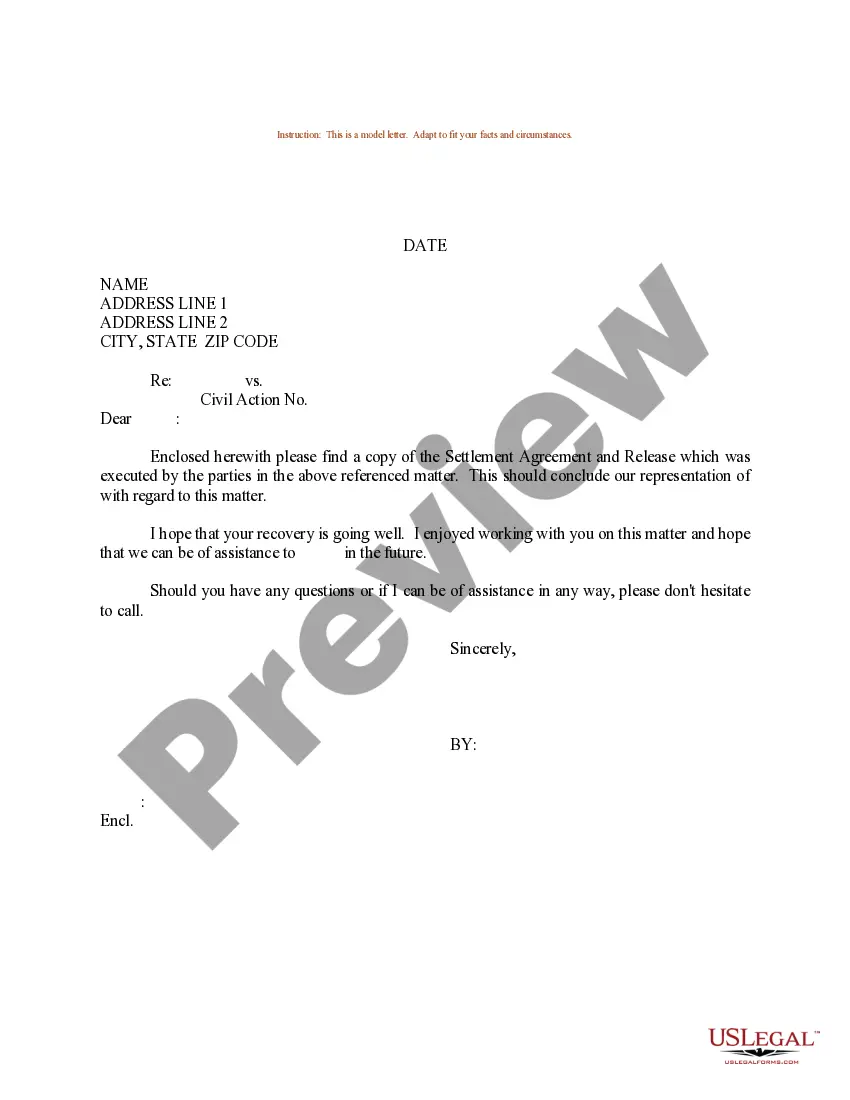
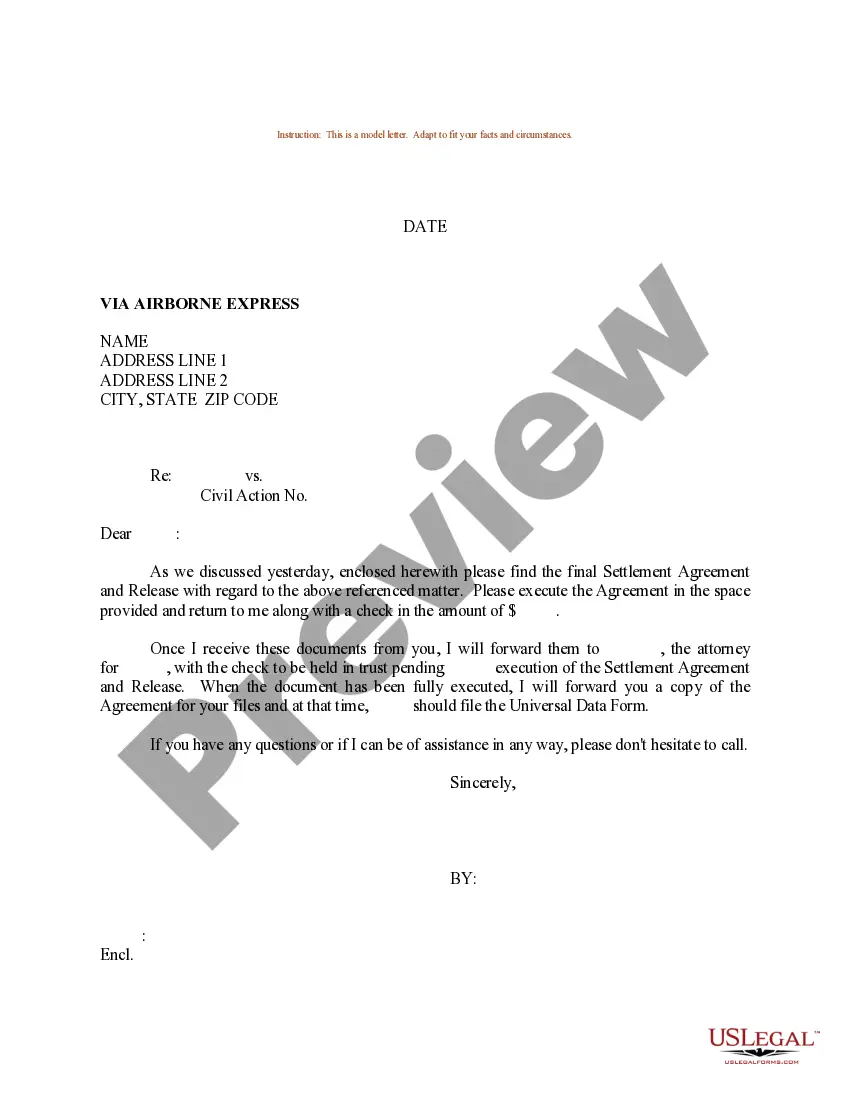
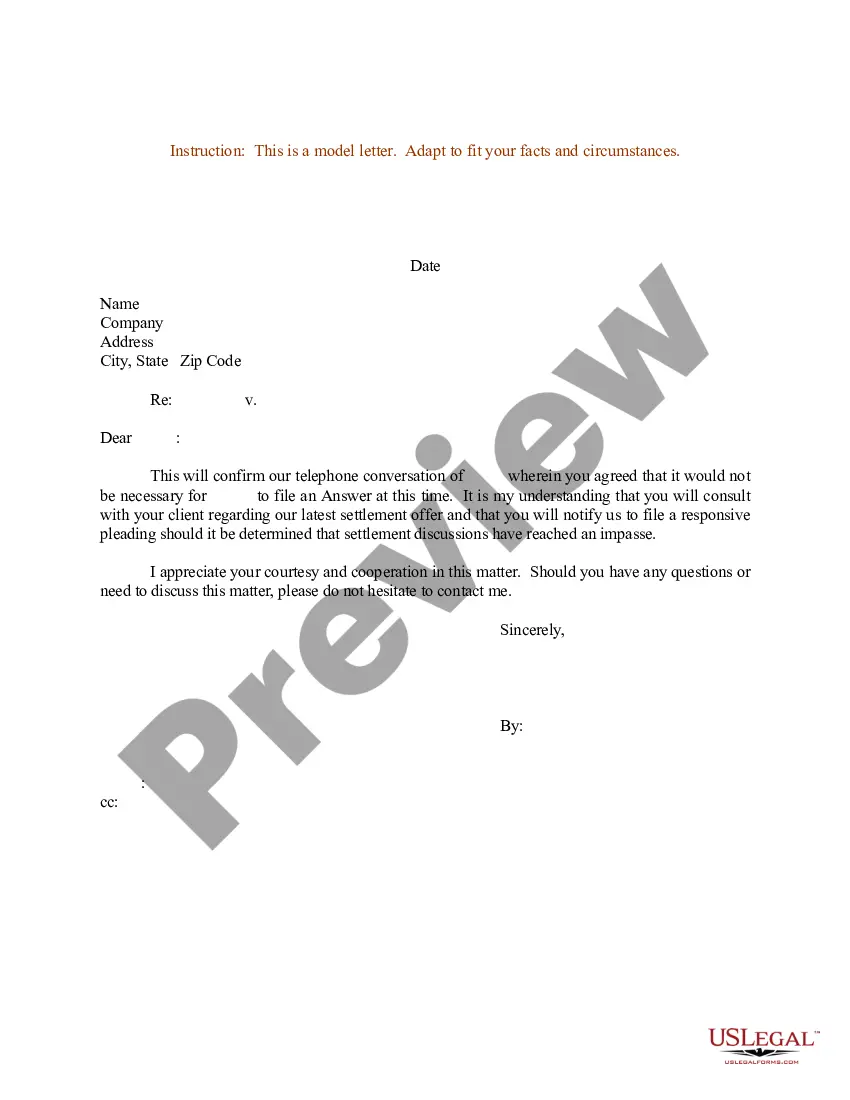
Confirmation Of Settlement Letter Without Prejudice In Chicago
Description


Get your form ready online
Our built-in tools help you complete, sign, share, and store your documents in one place.
Make edits, fill in missing information, and update formatting in US Legal Forms—just like you would in MS Word.
Download a copy, print it, send it by email, or mail it via USPS—whatever works best for your next step.
Sign and collect signatures with our SignNow integration. Send to multiple recipients, set reminders, and more. Go Premium to unlock E-Sign.
If this form requires notarization, complete it online through a secure video call—no need to meet a notary in person or wait for an appointment.
We protect your documents and personal data by following strict security and privacy standards.

Make edits, fill in missing information, and update formatting in US Legal Forms—just like you would in MS Word.

Download a copy, print it, send it by email, or mail it via USPS—whatever works best for your next step.

Sign and collect signatures with our SignNow integration. Send to multiple recipients, set reminders, and more. Go Premium to unlock E-Sign.

If this form requires notarization, complete it online through a secure video call—no need to meet a notary in person or wait for an appointment.

We protect your documents and personal data by following strict security and privacy standards.
Looking for another form?








Form popularity
FAQ
A motion is an application to the court made by the prosecutor or defense attorney, requesting that the court make a decision on a certain issue before the trial begins. The motion can affect the trial, courtroom, defendants, evidence, or testimony. Only judges decide the outcome of motions.
To change a court date, you must get a judge's permission. You ask the judge's permission by filing a motion. This motion asks the judge to reschedule a court date. If you are asking for a new court date, it is called a continuance.
A notice of motion is simply the form a party files with the court telling the court that all of the parties to a case have been informed that a motion has been filed.
If you want to file a motion, the process is generally something like this: You write your motion. You file your motion with the court clerk. The court clerk inserts the date and time your motion will be heard by the judge. You “serve” (mail) your motion to the other side.
The Motion and the Notice of Motion need to be e-filed with the Clerk of the Court. The e-Filing system will reject your filing if you do not enter a court date on the form before e-filing it.
“Without Prejudice” means that you are sending a communication in an honest attempt to compromise a matter, in which you might make a concession (either expressly or implicitly) to the other side that cannot be later put into evidence in Court.
Critical Elements of a Settlement Demand Letter Introduction and Background Information. Start by introducing yourself and providing a brief overview of the incident. Statement of Facts. Liability. Injuries and Medical Treatment. Damages. Settlement Demand. Deadline for Response. Closing.
In your first without prejudice letter, be selective and keep some issues in reserve for the final negotiating stages. Try not to over-emphasise all the ways you think they've mistreated you. Instead stop and think if there is a way in which you can more subtly mention their behaviour.
Dismissal without prejudice means that the judge dismissed the plaintiff's or prosecutor's case without damaging their right to have their matter heard in court later. A prosecutor may ask to withdraw the case against a person to have more time to make a case stronger, find more evidence or question other witnesses.
Example of a Claim Settlement Letter We are writing to inform you that we have completed our evaluation of your claim filed under policy number Policy Number regarding Brief Description of the Claim. We are pleased to offer a settlement amount of Settlement Amount.