Severance Agreement Form With Non-disparagement Clause In Utah
Description


Form popularity
FAQ
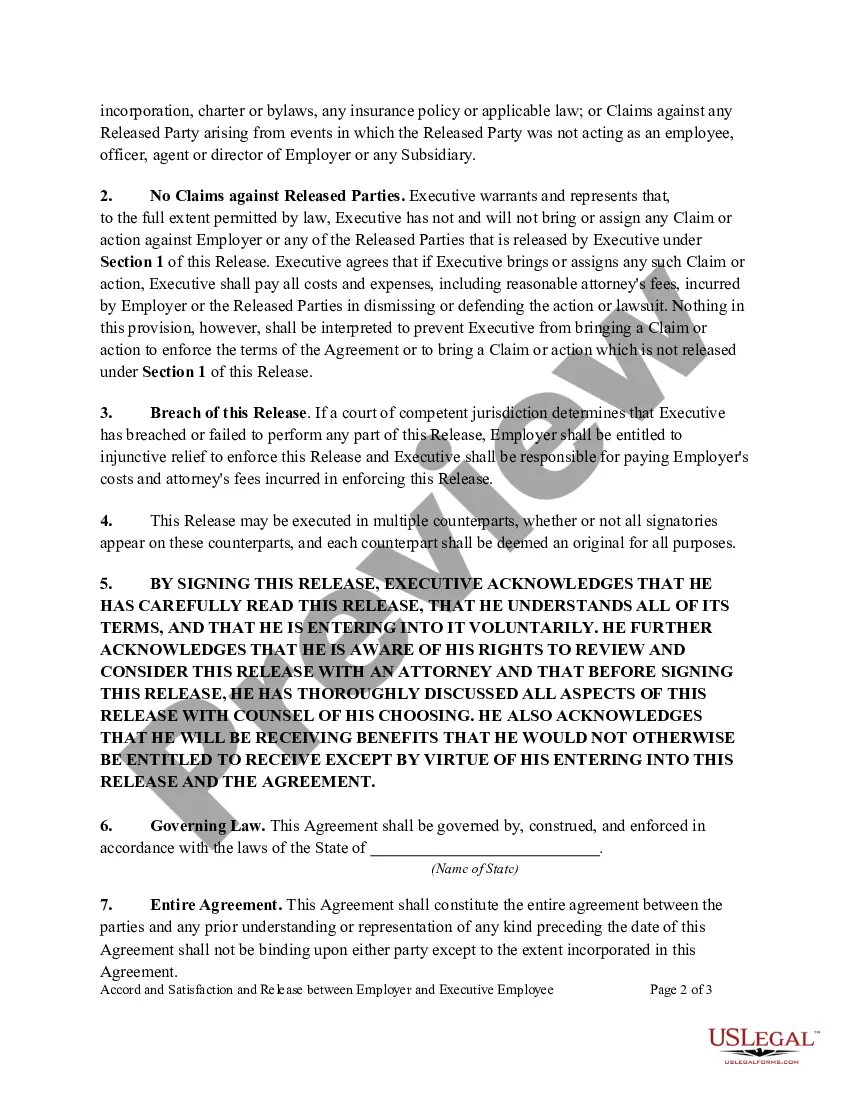
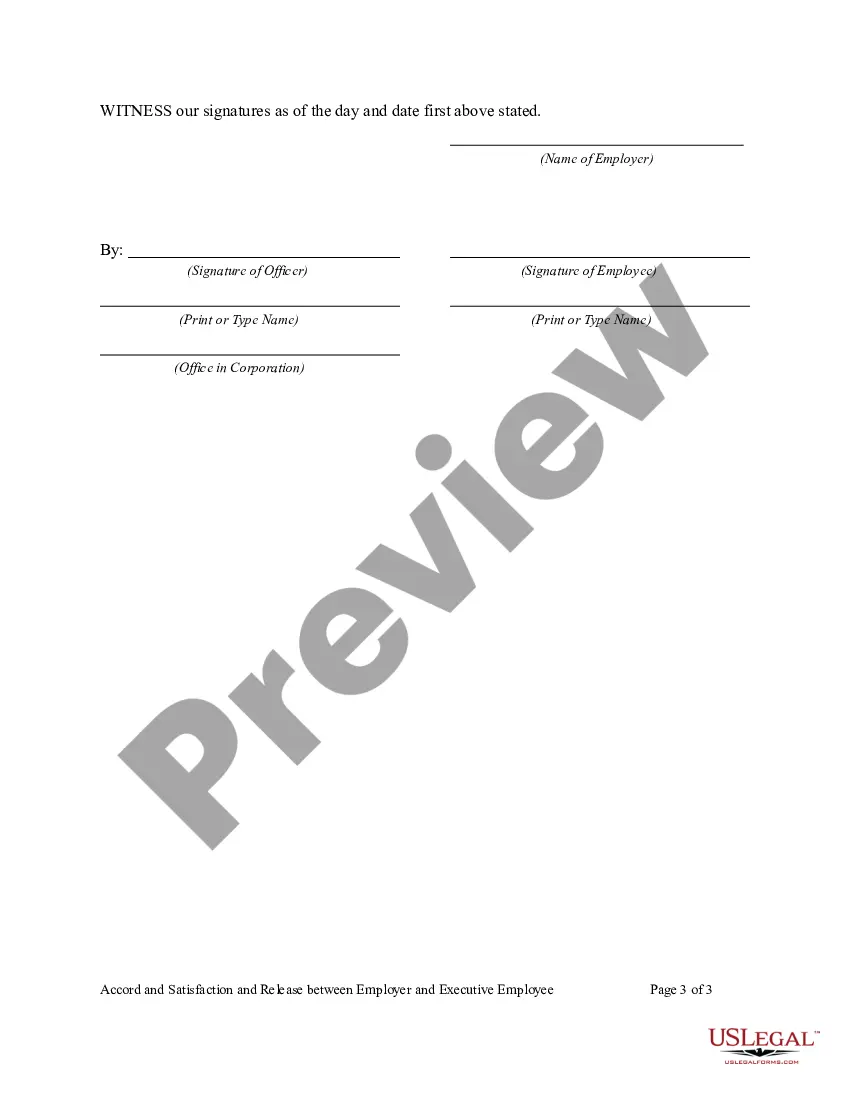
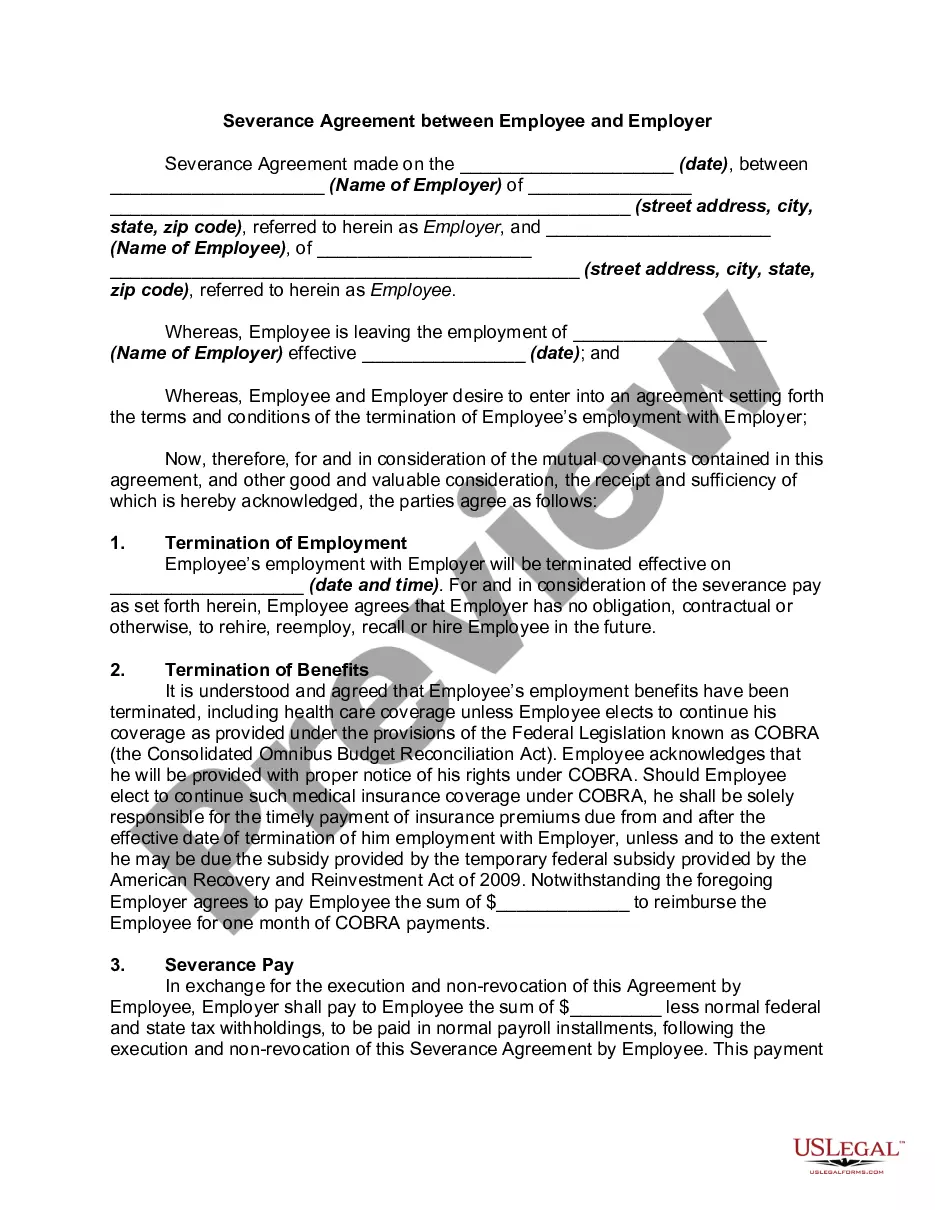
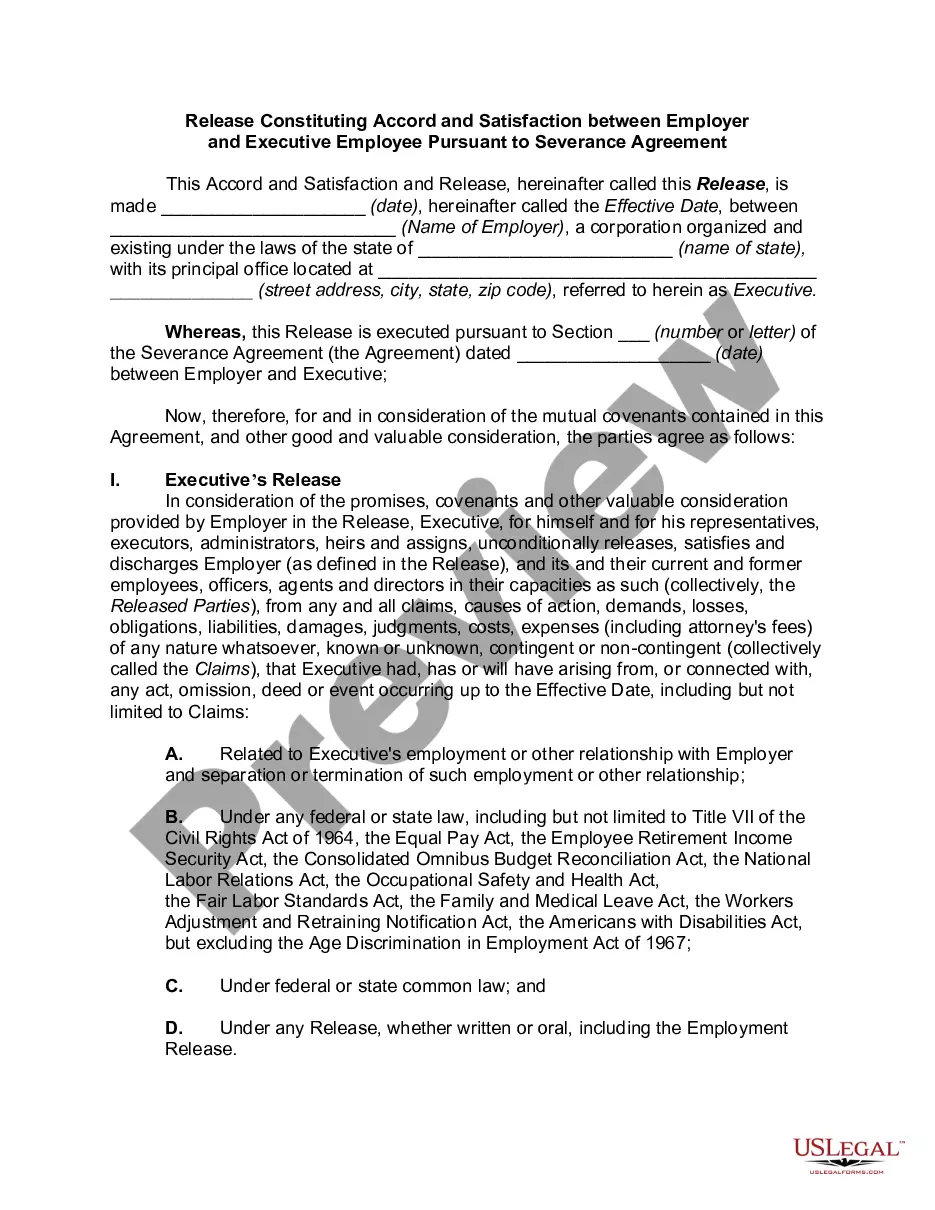
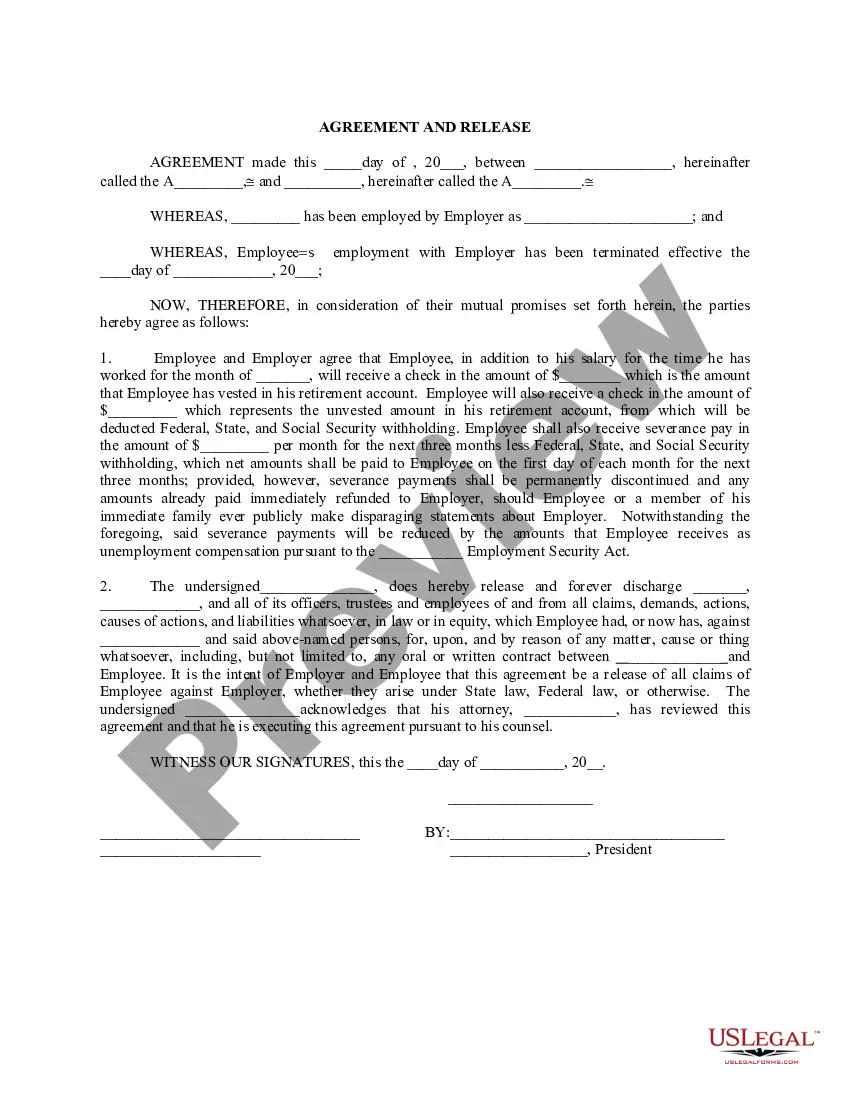
When settling a lawsuit or pre-litigation disputes, parties sometimes insist on including non-disparagement clauses in their settlement or severance agreements. Broadly speaking, these clauses prevent one or both parties to the agreement from making negative comments about each other.
Non-waivable claims: Certain claims, such as workers' compensation and unemployment insurance claims, cannot be waived by the employee. No prevailing party and attorney's fees: Ensure that the agreement does not include provisions that would allow either party to claim attorney's fees if legal disputes arise.
Lack of Voluntary Consent: Under California law, a severance agreement can be considered valid and enforceable only if the parties entered into it voluntarily. If your consent was obtained through coercion, duress, or fraud, the agreement will be deemed invalid.
It is generally unlawful in California for an employer's severance agreement to state that you may not compete against the employer in a future job.
Example: The following non-disparagement clause would be unlawful under Government Code section 12964.5: “Former Employee agrees that they will not make any statement, directly or indirectly, verbally or in writing, that would cause harm or embarrassment to the Company.” claims in a separation agreement?
On the opposite end of the employment agreement spectrum, non-solicitation clauses forbid you from soliciting or appealing to your former employer's clients or customers after leaving a company. These clauses are intended to shield the employer's relationships and associations and prevent unfair competition.
As to whether the non-disparagement clause is lawful, that depends on whether certain exceptions are provided for. There should be exceptions that allow a party to provide truthful testimony in legal proceedings, communicate truthfully with any government agency, or enforce the agreement the parties signed.
Subject to the Protected Activity Not Prohibited section, Employee agrees to refrain from any disparagement, defamation, libel, or slander of any of the Releasees, and agrees to refrain from any tortious interference with the contracts and relationships of any of the Releasees.