Termination With Severance In Maryland
Description

Form popularity
FAQ
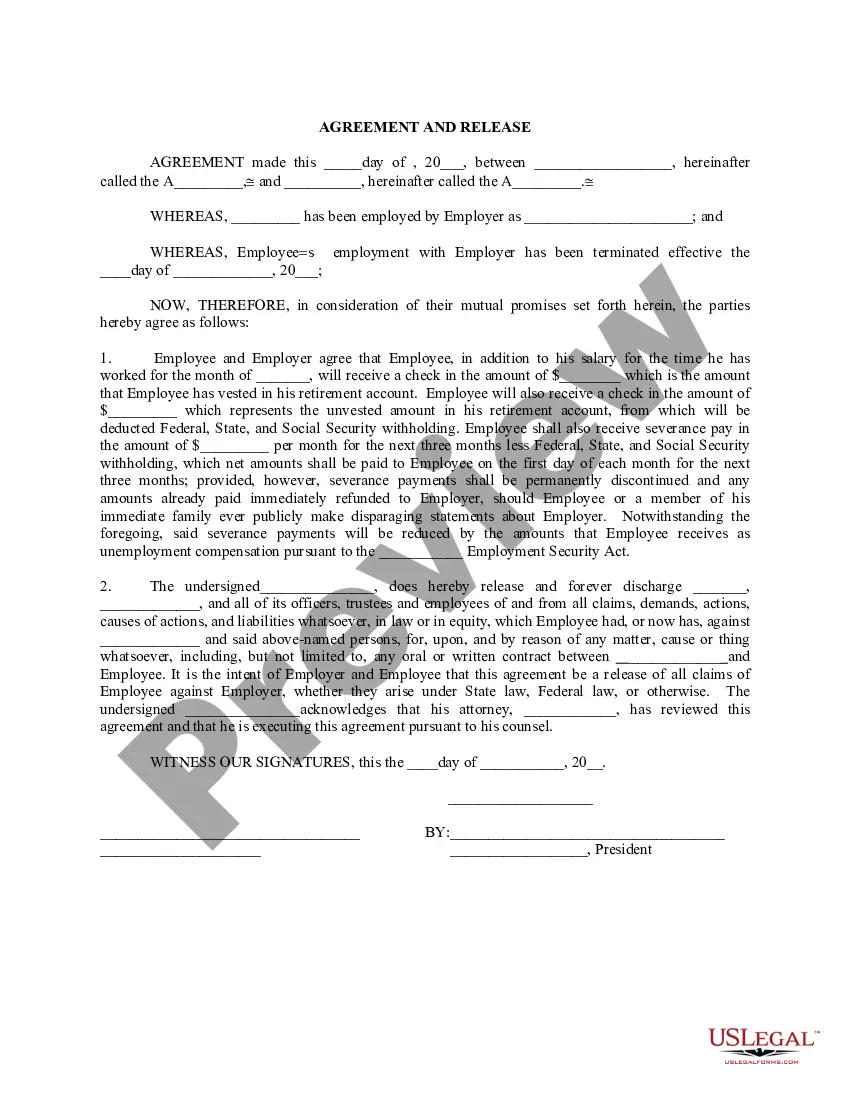
A termination clause is a provision in the employment contract that defines the rights of the employee at the termination of the employment relationship. It typically determines how much notice period and severance an employee is entitled to when the termination is on a without-cause basis.
Do You Get Severance If You Get Fired? There are no legal requirements or federal law for employers to offer a dismissal or redundancy package at the time of termination of employment. The Fair Labor Standards Act (FLSA) does not have any such provisions either.
Generally speaking, employees who are fired are not offered a severance package—particularly when they are fired for misconduct. However, some fired employees are offered a severance package in the hope that they will “go away” after receiving the package.
Extension of Benefits Under Rule of 70 To be eligible to retire, you must be at least age 55 with 10 years of service or age 65. Years of service for the “Rule of 70” eligibility purposes, means total years of employment from date of hire to date of termination.
While it is unusual for an employer to withdraw a severance offer, it is important to understand that the offer may be rescinded, even if it is covered by the OWBPA. Employers need to be cognizant of their rights in the event of bad behavior by the employee before the agreement is signed.
The vast majority of employment relationships in Maryland and D.C. are what the law refers to as “at-will.” This generally means that an employer may terminate an employee for any reason or no reason, while an employee may leave his or her job for any reason or no reason.
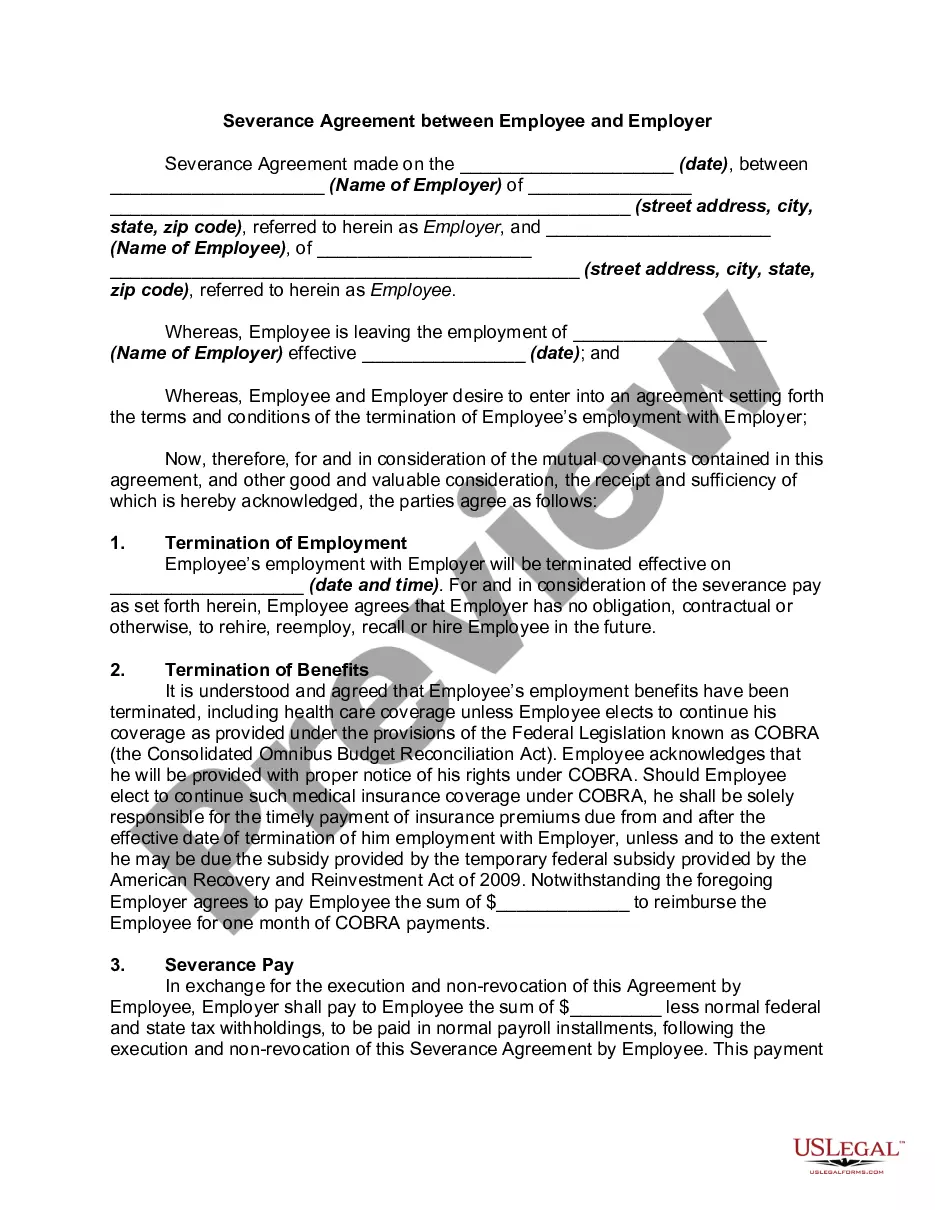
Present the employee with the severance agreement, worked on by your HR manager, and walk through each section. Leave time for the employee to ask questions and make clear the time frame during which the employee has time to meet with their lawyer, as well as their last day.