Termination With Severance Letter In Kings
Description






Form popularity
FAQ
What information should be included? The names and contact information of both parties involved in the contract. The date when the contract was signed and its original duration. The reason for terminating the contract, if necessary. The specific date when the contract will end.
A termination clause is a provision in the employment contract that defines the rights of the employee at the termination of the employment relationship. It typically determines how much notice period and severance an employee is entitled to when the termination is on a without-cause basis.
Be crisp and clear that the company has terminated the services of the employee. Remember to clearly specify the date from when the termination comes into effect. List out all the reasons that led to the termination, and include evidence to support the claims if possible.
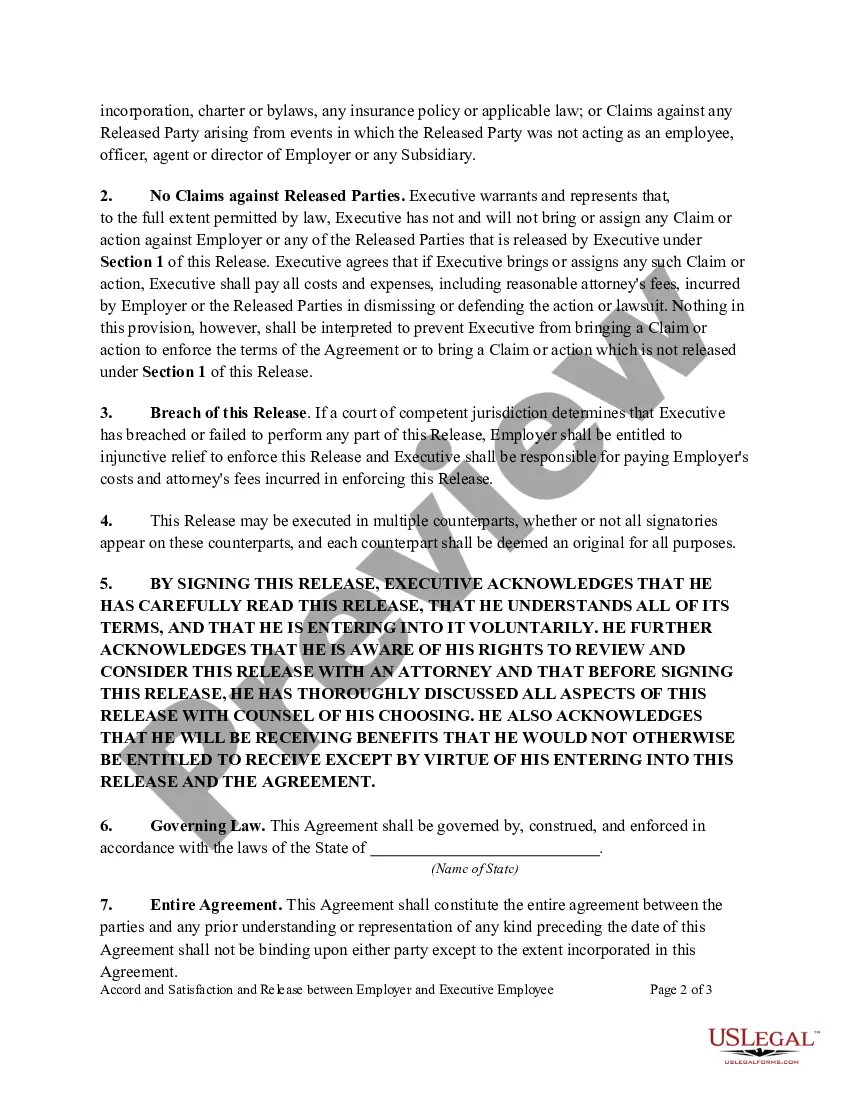
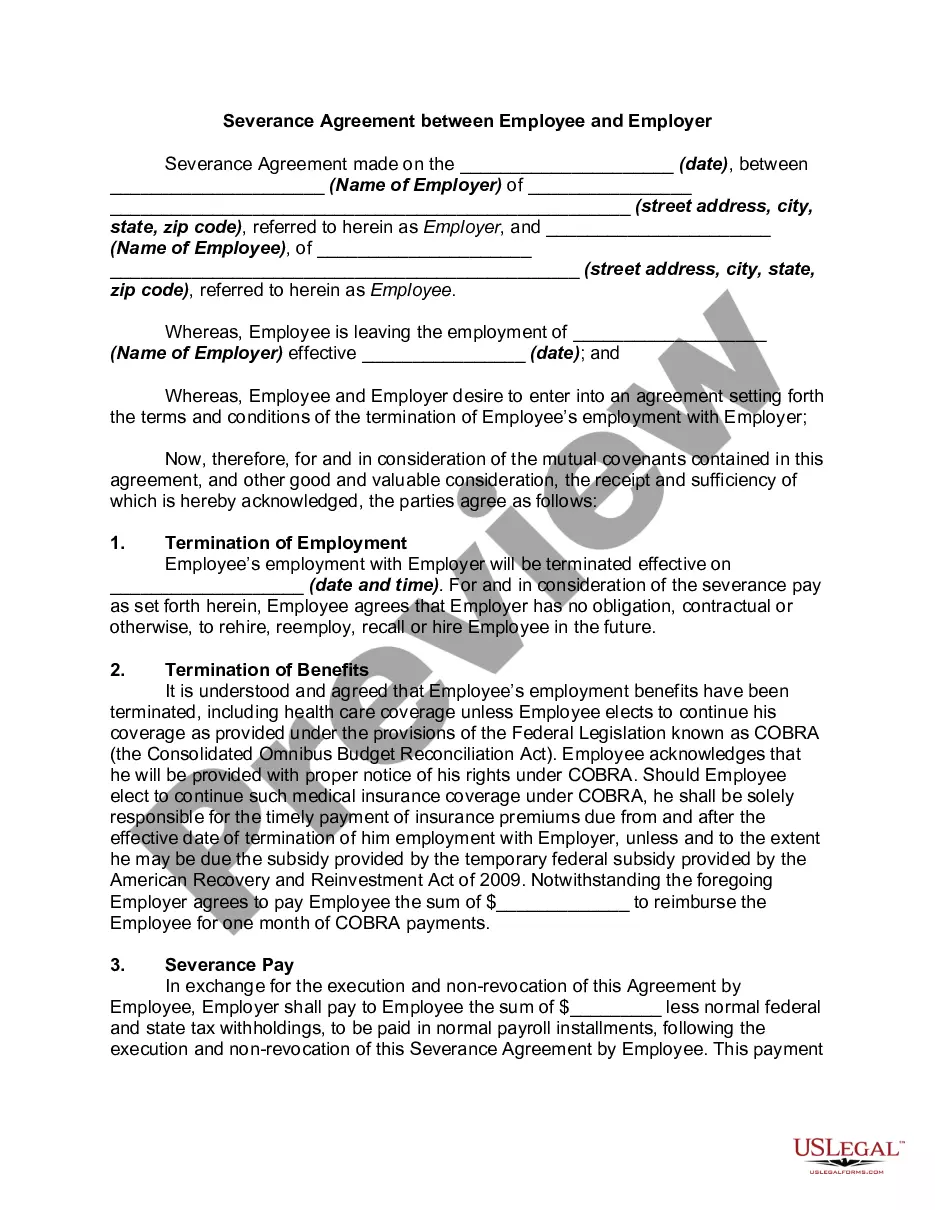
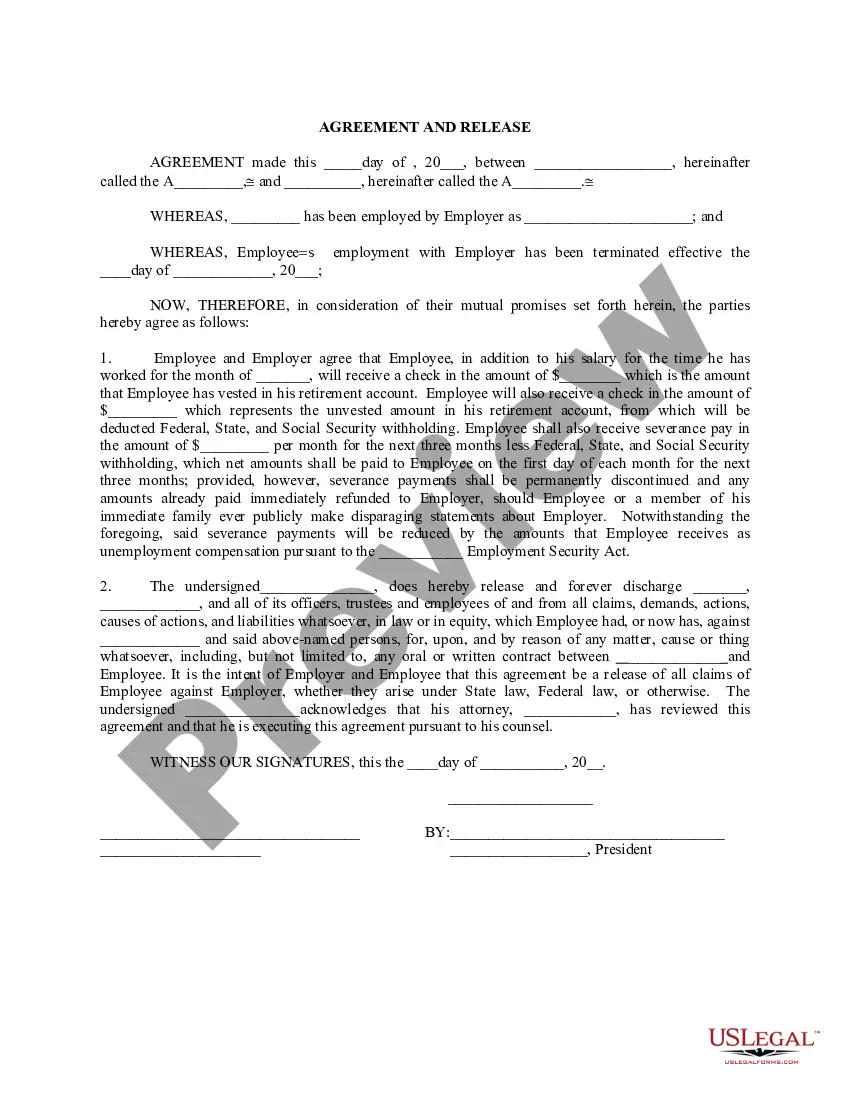
This Termination Agreement (the “Agreement”) is entered into this day of month, year (the “Effective Date”), between name of party (“Party A”), with offices located at address, and name of party (“Party B”) with offices located at address.
How do you write a Termination Agreement? Provide the names and mailing addresses of each party involved. Provide details from the original contract. Select a termination date after which the contract will no longer be in effect. State if either party is providing compensation as part of the Termination Agreement.
Directly state your purpose for writing in the first paragraph of your letter. While maintaining a respectful tone, succinctly state why you've chosen to terminate the contract. In addition, specify the date you intend to officially end your working relationship.
What is the downside to severance? The downside to severance includes financial drawbacks such as loss of steady income, potential loss of benefits, and uncertainty about future job prospects, as well as the impact on retirement savings and benefits.
The best approach is to reach out politely and directly to your previous supervisor, the HR department, or the person who communicated your termination. In a brief email or letter, simply explain that you need an official termination letter for your records, specifying the date of termination and the stated reason.
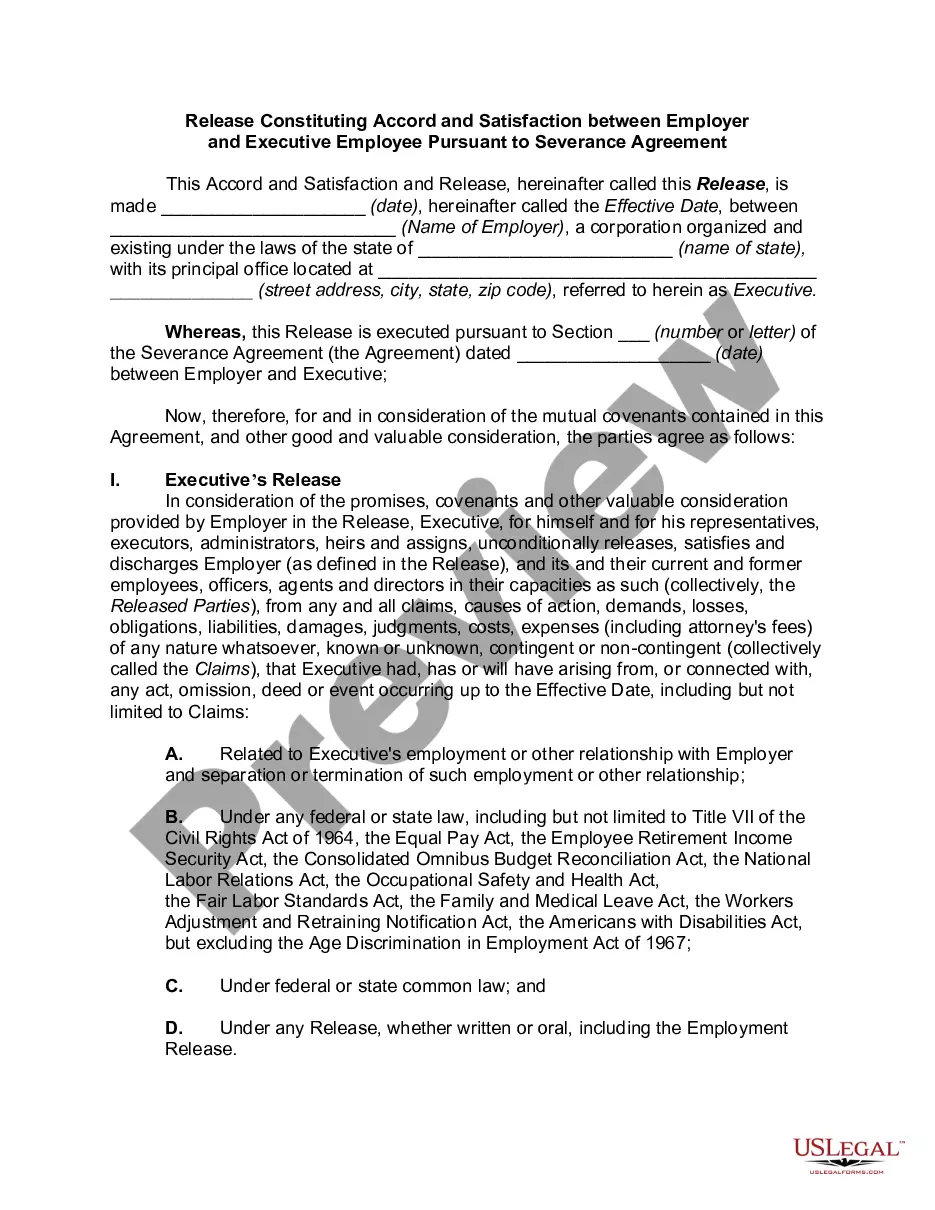
Basically, a severance agreement is a waiver or release of liability that the outgoing employee signs, protecting the business from lawsuits. These agreements are usually part of a larger severance package that includes compensation, outplacement services, and other benefits in exchange for the employee's signature.
11 Things You Should Never Say When Firing an Employee “This is really hard for me.” ... “I'm not sure how to say this.” ... “We've decided to let you go.” ... “We've decided to go in a different direction.” ... “We'll work out the details later.” ... “Compared to Susan, your performance is subpar.”