Termination Without Severance In Florida
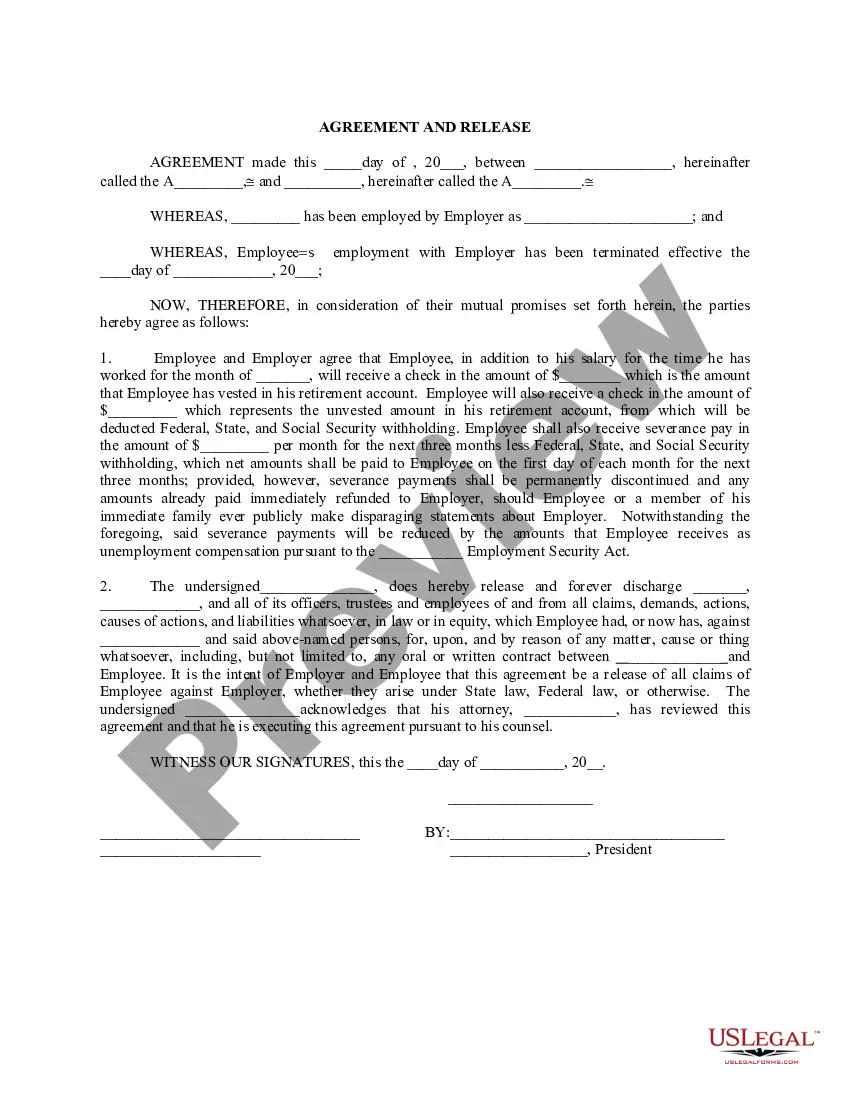
Description



Form popularity
FAQ
This means that an employer can dismiss an employee without notice and without having to establish “just cause” for termination. In other words, you don't necessarily need a specific reason for firing an employee in Florida, provided your justification is not illegal or discriminatory.
To legally terminate an employee in Florida, start by documenting the reasons for termination, ensuring they are valid and not discriminatory. Review your company's policies or employee handbook for specific procedures. Provide the employee with a clear explanation of the reasons for termination.
Wrongful termination settlements are determined case-by-case. Workers who prevail in a wrongful termination claim often get awarded between $5,000 and $100,000 in compensation. However, each case is different.
In Florida, employment is “at will”, meaning that either the employer or the employee can end the employment relationship at any time without reason unless you have an employment contract or union agreement governing the terms of your employment or work for a government employer.
The standard “two weeks' notice” is not required. (Although, unless you are leaving a hostile environment or unsafe working conditions, agreeing to a “notice” work period when quitting is usually better than burning bridges.)
In Florida, which is an at-will employment state, an employer can fire you for any reason or no reason at all, as long as it's not illegal (e.g., discrimination). Florida law does not require employers to provide a reason for termination.
Because Florida is an at-will state, you can generally fire employees without cause or notice.
—An employer who discloses information about a former or current employee to a prospective employer of the former or current employee upon request of the prospective employer or of the former or current employee is immune from civil liability for such disclosure or its consequences unless it is shown by clear and ...