Installment Contract Meaning In Michigan
Description

Get your form ready online
Our built-in tools help you complete, sign, share, and store your documents in one place.
Make edits, fill in missing information, and update formatting in US Legal Forms—just like you would in MS Word.
Download a copy, print it, send it by email, or mail it via USPS—whatever works best for your next step.
Sign and collect signatures with our SignNow integration. Send to multiple recipients, set reminders, and more. Go Premium to unlock E-Sign.
If this form requires notarization, complete it online through a secure video call—no need to meet a notary in person or wait for an appointment.
We protect your documents and personal data by following strict security and privacy standards.

Make edits, fill in missing information, and update formatting in US Legal Forms—just like you would in MS Word.

Download a copy, print it, send it by email, or mail it via USPS—whatever works best for your next step.

Sign and collect signatures with our SignNow integration. Send to multiple recipients, set reminders, and more. Go Premium to unlock E-Sign.

If this form requires notarization, complete it online through a secure video call—no need to meet a notary in person or wait for an appointment.

We protect your documents and personal data by following strict security and privacy standards.
Looking for another form?







Form popularity
FAQ
An installment sale is a sale of property where you receive at least one payment after the tax year of the sale. If you dispose of property in an installment sale, you report part of your gain when you receive each installment payment. You cannot use the installment method to report a loss.
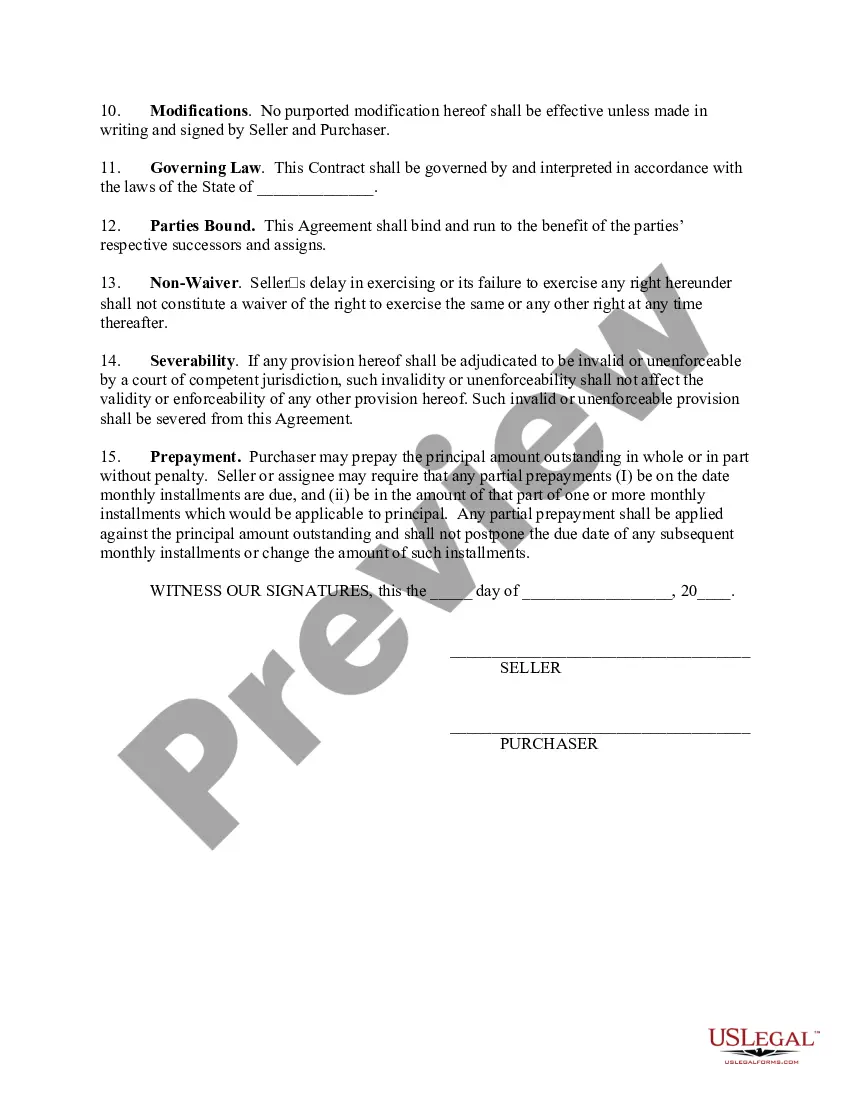
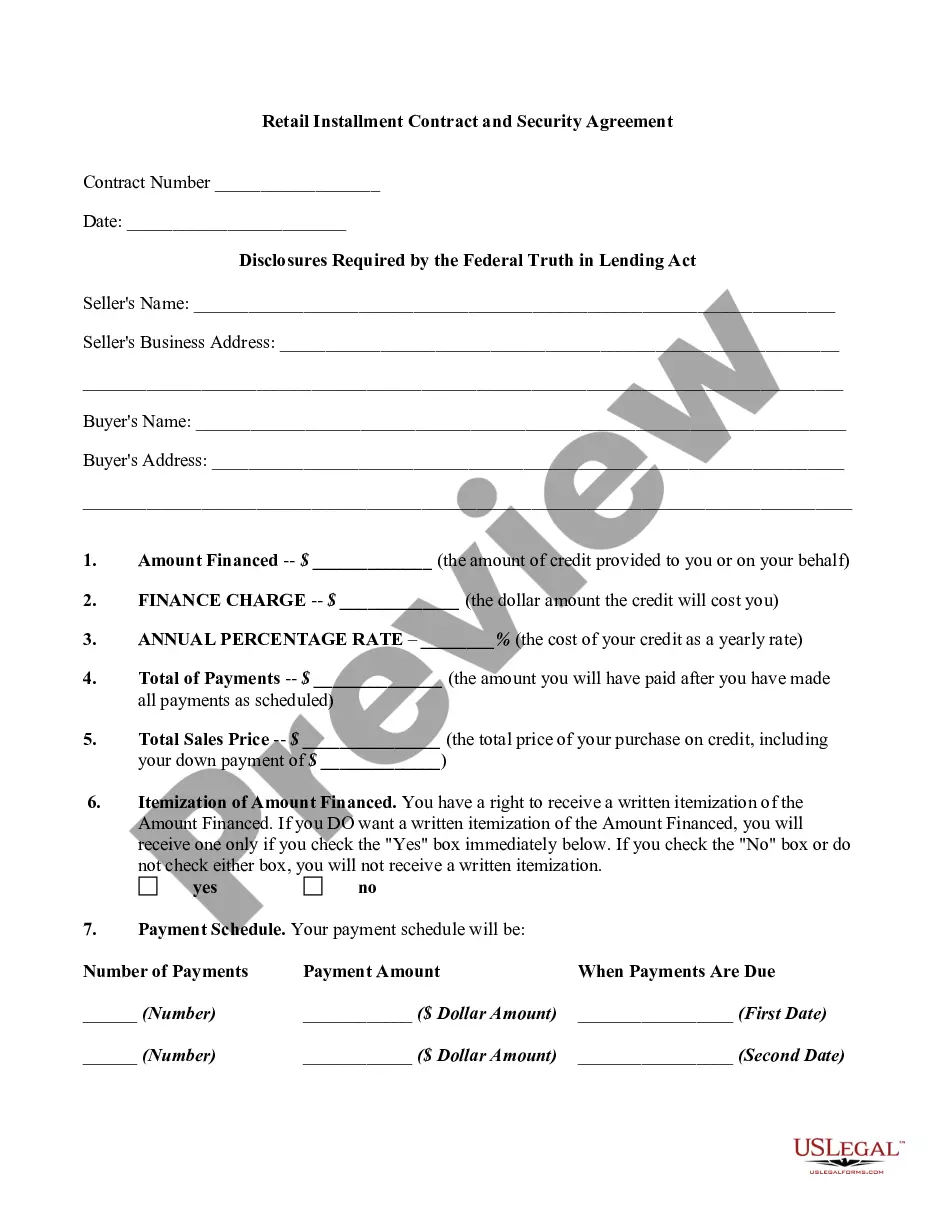
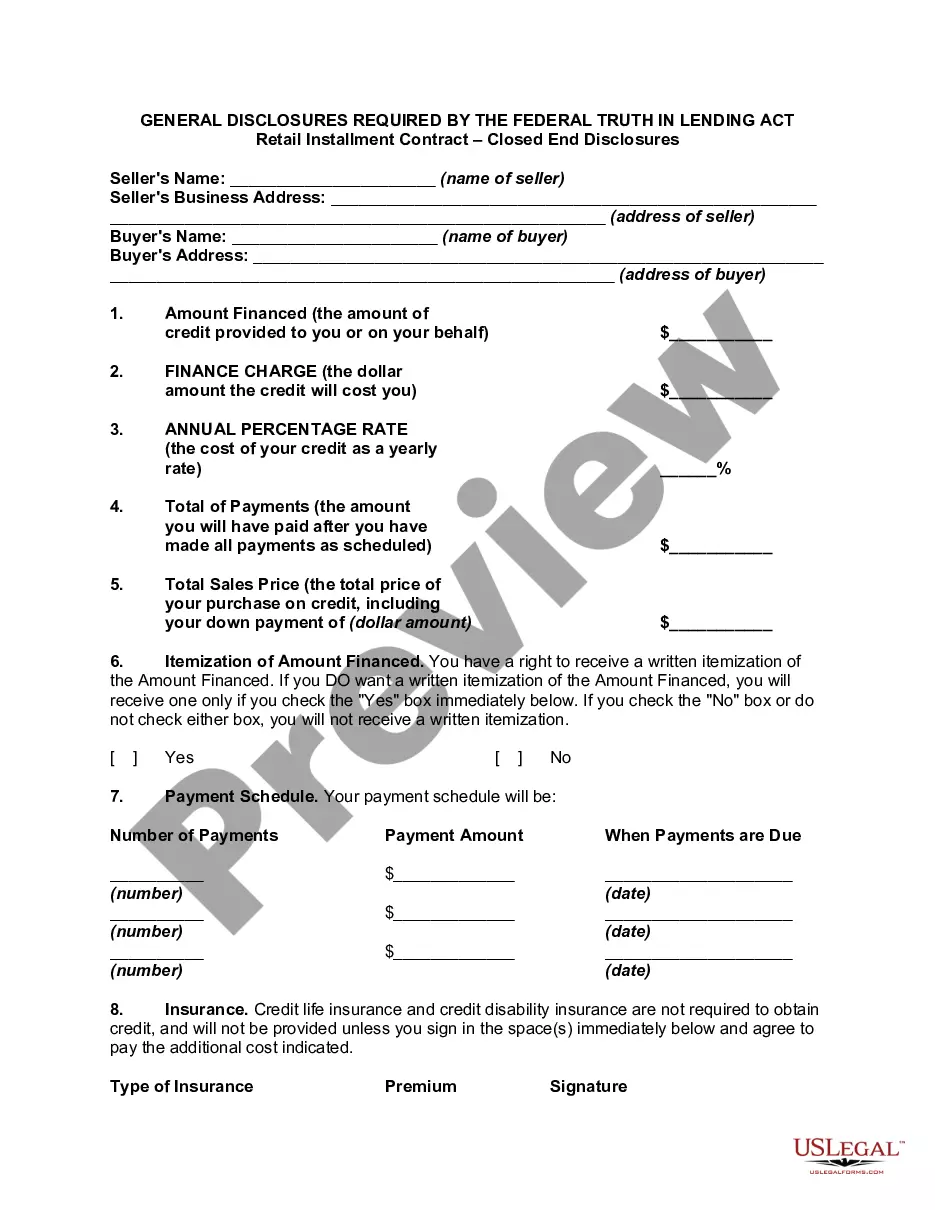
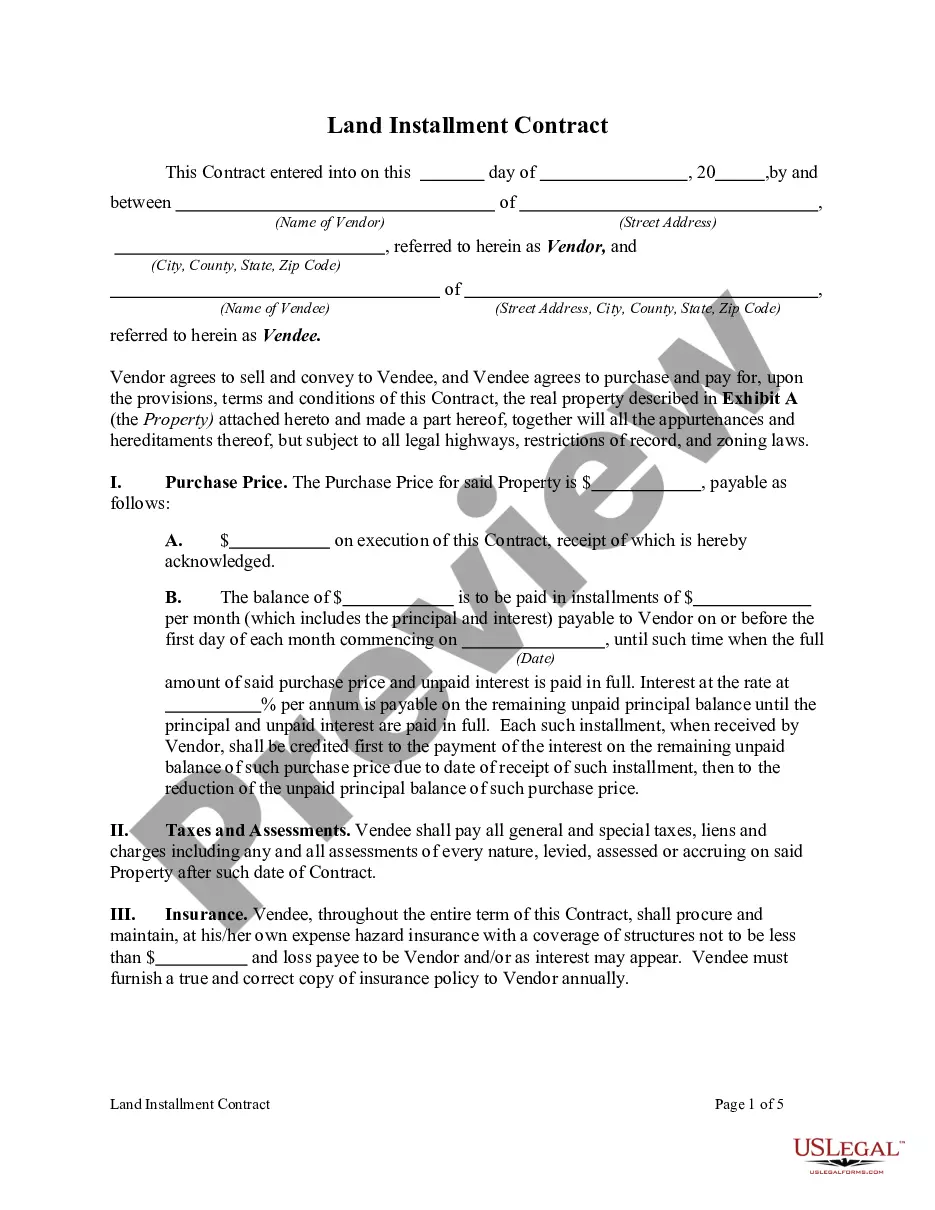
An installment contract is a single contract that is completed by a series of performances –such as payments, performances of a service, or delivery of goods–rather than being performed all at one time. Installment contracts can provide that installments are to be performed by either one or both parties .
An installment contract offers a buyer less protection than a traditional mortgage. This is true mainly because of forfeiture provisions, which give the buyer no right of redemption and allow a buyer to lose all interest in the property for even the slightest breach.
A contract is only legally binding if it is mutually beneficial to both parties involved. This is commonly referred to as consideration. When a party promises to do something without getting something in return, the deal will usually be unenforceable in court.
An installment contract is a single contract that is completed by a series of performances –such as payments, performances of a service, or delivery of goods–rather than being performed all at one time.
In Michigan, contract law specifically refers to the set of laws that govern the formation, execution and breach of contracts, which are legally enforceable agreements between individuals or entities.
An instalment sale agreement between you and a credit provider allows you to buy a vehicle or asset using the principal debt, which you repay by means of regular instalments over an agreed period, with fees and interest.
Michigan law recognizes verbal contracts as valid and enforceable, but only if certain conditions are met. To be considered legal, a verbal contract must include the following: Offer. One party extends an offer to another party.
No Michigan law requires employers to offer meal and/or rest breaks to employees over the age of 18. If an employer chooses to provide breaks to employees, they must align with the federal requirements: Breaks may be unpaid if they last 30+ minutes and relieve the employee of all duties.
For a contract to be binding it needs to satisfy four principles, offer, acceptance, consideration, and the intention to create legal relations. Generally, the law believes that an agreement is made when one party makes an offer and the other party accepts it.