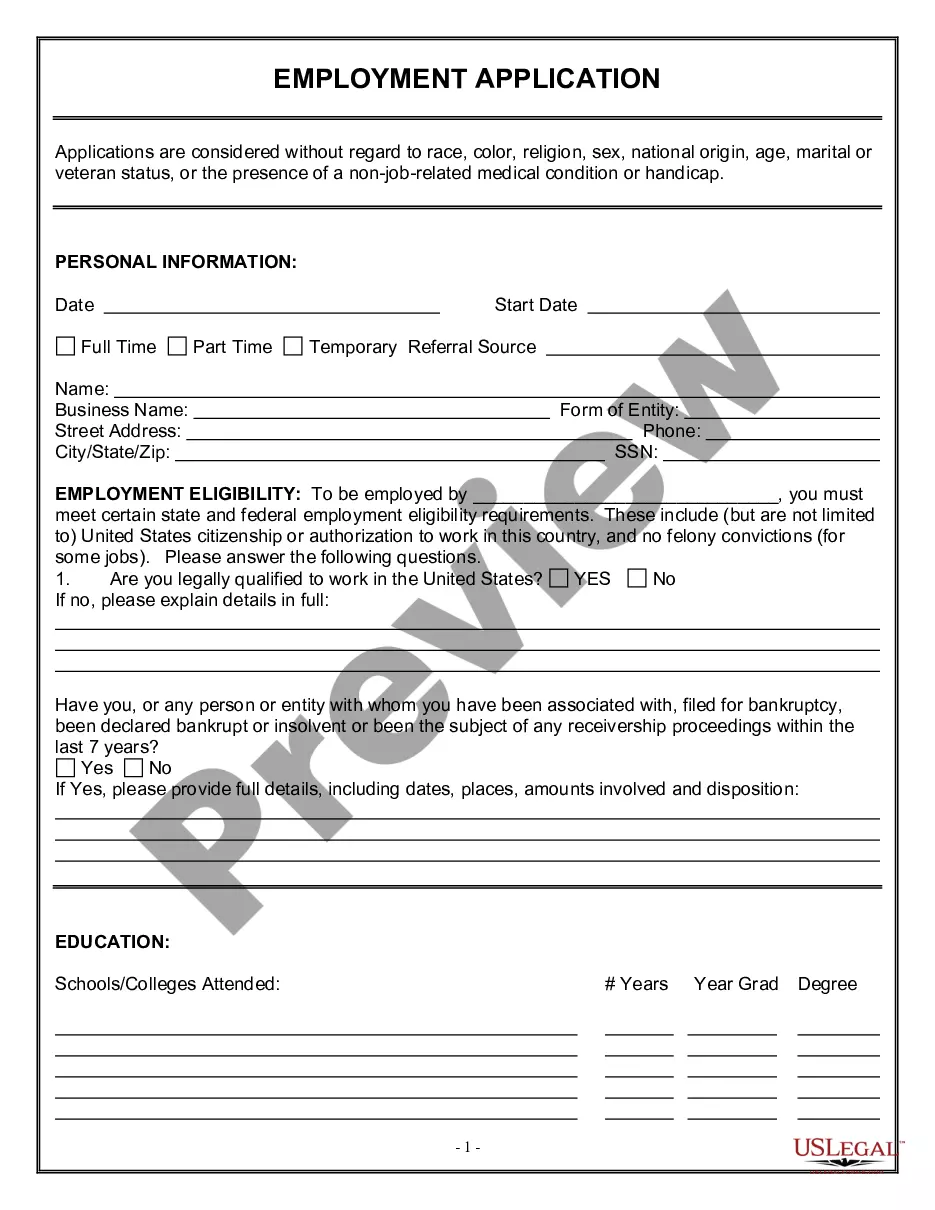
State Specific Employment Laws For India In Georgia
Description
















Get your form ready online
Our built-in tools help you complete, sign, share, and store your documents in one place.
Make edits, fill in missing information, and update formatting in US Legal Forms—just like you would in MS Word.
Download a copy, print it, send it by email, or mail it via USPS—whatever works best for your next step.
Sign and collect signatures with our SignNow integration. Send to multiple recipients, set reminders, and more. Go Premium to unlock E-Sign.
If this form requires notarization, complete it online through a secure video call—no need to meet a notary in person or wait for an appointment.
We protect your documents and personal data by following strict security and privacy standards.

Make edits, fill in missing information, and update formatting in US Legal Forms—just like you would in MS Word.

Download a copy, print it, send it by email, or mail it via USPS—whatever works best for your next step.

Sign and collect signatures with our SignNow integration. Send to multiple recipients, set reminders, and more. Go Premium to unlock E-Sign.

If this form requires notarization, complete it online through a secure video call—no need to meet a notary in person or wait for an appointment.

We protect your documents and personal data by following strict security and privacy standards.
Looking for another form?





Form popularity
FAQ
Many people assume at-will employment gives absolute power to employers, but that isn't entirely true. While an employer can fire an employee for no reason, they cannot fire someone for an illegal reason. Laws at both the state and federal levels restrict when and why an employer can terminate someone.
Exceptions to Employment at Will Courts have established three basic exceptions to the at will doctrine: public policy, implied contract, and implied covenant of good faith.
Indiana officially became a right-to-work state in 2012, joining a growing number of states that have adopted similar legislation. The enactment was part of a wider trend in the Midwest aimed at reshaping the relationship between employees, unions, and employers.
Some states, like California and New York, recognize an implied covenant of good faith and fair dealing in employment relationships, which prevents employers from terminating employees in bad faith or with malice. Often called the good faith exception, it's found in common law rather than a specific statute.
The Employment Act of India The right to be aware of all laws and regulations relevant to their employment; The right to a fair and equitable compensation; The right to a safe and healthy working environment; and. The right to receive timely notice upon termination.
These include right to work of one's choice, right against discrimination, prohibition of child labour, just and humane conditions of work, social security, protection of wages, redress of grievances, right to organize and form trade unions, collective bargaining and participation in management.
Federal U.S. employment laws generally apply only to those employees who work in the United States or its territories. There are a few exceptions though, as the following four major U.S. employment laws have some application abroad: Title VII of the Civil Rights Act. The Age Discrimination in Employment Act (ADEA).
Georgia Labor Laws Guide Georgia Labor Laws FAQ Georgia minimum wage$5.15 or $7.25 Georgia overtime 1.5 times the regular wage for any time worked over 40 hours/week ($7.72 or $10.87 for minimum wage workers) Georgia breaks Breaks not required by law
The provisions of the Fair Labor Standards Act (FLSA) regarding minimum wage and overtime requirements do not apply to any employee whose services during the workweek are performed in a workplace within a foreign country or within territory under the jurisdiction of the United States, except for the following: Puerto ...
U.S. legal protections are not transferable to other countries. Your rights as an American are not transferable to other countries — you'll be judged by the local laws. For example, you could be arrested in Singapore for jaywalking or littering, or even caned for vandalizing property.
